Age 5–7 Science, Social Studies, and Language Arts
Learning Through Connection
Children between the ages of five and seven are naturally curious. They ask endless questions, notice tiny details, make surprising connections, and learn best when ideas feel meaningful and connected to real life. At this stage, children are not meant to experience learning as a set of isolated subjects divided neatly into separate boxes. They are trying to understand how the world fits together.
That is why this curriculum is built around interdisciplinary units that weave together science, social studies, literature, writing, vocabulary, discussion, art, hands-on projects, and critical thinking into one connected learning experience.
When students study weather, they do not simply memorize facts about clouds or seasons. They observe the sky, track patterns, conduct experiments, read stories, write observations, make predictions, and begin understanding how weather affects people, animals, and the environment. When they study communities, they are not only learning social studies concepts. They are reading books about communities, discussing responsibility and citizenship, creating maps and models, building vocabulary, writing reflections, and participating in meaningful projects that connect learning to their own lives.
This approach matters because young children learn deeply when subjects support one another naturally. Literature opens the door to science. Science creates opportunities for writing and discussion. Geography strengthens understanding of stories and cultures. Art, movement, and projects help children process and remember what they learn.
Instead of asking children to memorize disconnected facts, the curriculum helps them build understanding through relationships between ideas.
The result is learning that feels richer, more memorable, and more meaningful.
Language Arts Beyond Reading Instruction
At this age, many programs focus almost entirely on phonics, handwriting, and learning to read. Those skills are important, which is why we recommend pairing this curriculum with our separate Age 5–7 Reading program for families who want a complete language arts experience. Together, the programs support both formal reading instruction and the broader language development that young children need during these foundational years.
But strong language arts development includes far more than learning how to decode words.
Long before children become advanced independent readers, they are already building the foundation for communication, comprehension, storytelling, reasoning, and written expression. These years are incredibly important for developing the broader language skills that support future academic success.
Throughout the curriculum, students develop language arts skills through meaningful experiences connected to literature, discussion, science, history, and hands-on learning.
Students practice:
- Listening comprehension and discussion
- Vocabulary development through stories and real-world topics
- Oral narration and retelling
- Descriptive language
- Sequencing and organization of ideas
- Early grammar and sentence structure
- Creative storytelling
- Poetry, rhyming, and language play
- Observation and descriptive writing
- Comparing and contrasting ideas
- Critical thinking and questioning
- Expressing opinions and explaining reasoning
- Building background knowledge that strengthens later reading comprehension
Children also begin learning that writing has purpose. They write to describe, explain, compare, record observations, share ideas, tell stories, and respond to what they are learning.
Because language arts skills are taught within engaging interdisciplinary units, students see communication as something useful and meaningful instead of a disconnected workbook exercise.
How the Curriculum Is Organized
The curriculum is organized around four broad concepts that help young learners make meaningful connections across subjects:
- Environment
- Similarities and Differences
- Patterns
- Change
Each concept contains three interdisciplinary units that combine science, social studies, language arts, creative projects, and hands-on exploration.
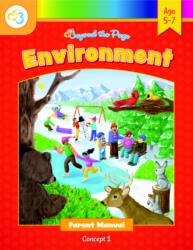
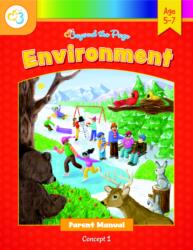
Concept 1: Environment
Young children are naturally interested in the world around them: animals, weather, homes, neighborhoods, and the people who help communities function. These units help students understand how living things depend on their environments and how people care for the world around them.

Unit 1
Habitats and Homes
Students explore forests, deserts, oceans, polar regions, and other habitats while learning how living things depend on food, water, and shelter to survive. Children sort animals into habitats, create mini-habitats in shoeboxes, observe local environments, and think carefully about what animals need to thrive.
Literature, science, and language arts come together naturally as students discuss stories like The Salamander Room, create animal books, practice descriptive language, and strengthen observation skills. Through projects and discussions, children also begin developing empathy, environmental responsibility, and appreciation for biodiversity.
Unit 2
Weather
This unit helps children understand weather, seasons, and how environmental changes affect plants, animals, and people. Students become junior meteorologists as they observe the weather, track patterns, make forecasts, and conduct hands-on science experiments.
Activities include building tornado bottles, creating rain gauges, crafting snowflakes, growing plants from seeds, and exploring cloud formation. Alongside science learning, students practice recording observations, discussing predictions, building vocabulary, and organizing information through charts, calendars, and writing activities.
Unit 3
Community
Children explore what makes a healthy community and how people work together to meet one another’s needs. Students learn about community helpers, laws, natural and manmade resources, citizenship, and environmental responsibility.
Hands-on projects include designing a “perfect” community, building neighborhood models, participating in community scavenger hunts, and planning a simple community improvement project. Literature and discussion help students think deeply about kindness, cooperation, responsibility, and belonging while strengthening vocabulary, comprehension, and communication skills.
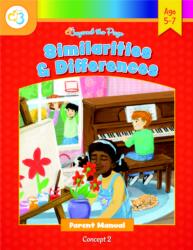
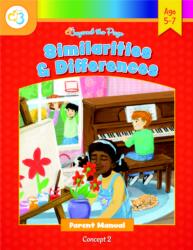
Concept 2: Similarities and Differences
These units help children notice, describe, compare, and classify the world around them. Through science exploration, sensory experiences, geography, and cultural studies, students strengthen observation skills while learning to appreciate both differences and shared human experiences.
Unit 1
Amazing Attributes
Students investigate the properties of objects through hands-on science experiments and classification activities. They compare size, shape, color, texture, weight, capacity, magnetism, and states of matter while developing vocabulary and descriptive language.
Children conduct sink-or-float experiments, explore solids and liquids, build Venn diagrams, classify objects, and experiment with ice and temperature changes. These activities naturally strengthen both scientific thinking and language development as students learn to describe and compare what they observe.
Unit 2
Senses
This highly interactive unit helps students understand how sight, sound, smell, taste, and touch help us experience the world. Through experiments, sensory art, listening walks, taste tests, and nature exploration, children build strong observational and descriptive skills.
Students create sensory reports, design “senses” projects, explore how the body works, and use rich language to describe experiences. The unit strengthens vocabulary, discussion, reading comprehension, writing, and scientific observation all at once.
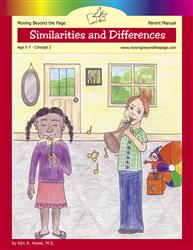
Unit 3
We’re the Same, We’re Different
This unit introduces children to cultures, families, traditions, and daily life around the world. Students compare their own lives with the lives of children from other countries while learning geography, social studies, and cultural appreciation.
Children create comparison books, explore maps, study holidays and traditions, learn greetings in new languages, complete cultural art projects, and take virtual tours of other countries. These experiences help students build empathy, curiosity, and a growing understanding of the wider world.
Concept 3: Patterns
Patterns help children make sense of the world. In these units, students explore visual patterns, sound patterns, story patterns, mathematical patterns, and natural cycles through art, music, language, science, and movement.
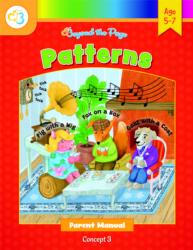
Unit 1
Identifying and Creating Visual Patterns
Students begin with simple visual patterns and gradually work toward more complex sequences involving shapes, colors, numbers, and objects. Through games, crafts, storytelling, and hands-on exploration, children strengthen logical thinking and mathematical reasoning.
Activities include creating bead necklaces, building caterpillar patterns, identifying patterns in nature, and designing pattern posters. Students also practice explaining and discussing patterns using clear language and descriptive vocabulary.
Unit 2
Patterns in Sounds, Words, and Actions
Children discover that patterns exist not only in math, but also in music, language, movement, and stories. Students create sound patterns with homemade instruments, act out nursery rhymes, identify rhyming patterns, and explore sentence structure through hands-on language activities.
This unit strongly supports early language arts development by helping children notice rhythm, rhyme, sequencing, story structure, and word relationships in playful and memorable ways.
Unit 3
Patterns in Your World
Students investigate patterns in nature, routines, seasons, symmetry, life cycles, and numbers. Through scavenger hunts, symmetry art, lapbooks, sequencing projects, and counting activities, children learn to recognize order and repetition in the world around them.
The unit helps students strengthen observation, organization, prediction, and reasoning skills while making meaningful connections between science, math, art, and everyday life.
Concept 4: Change
Young children are constantly growing and changing, and they are naturally interested in how people, places, and the world transform over time. These units help children think about growth, history, emotions, and change in thoughtful, age-appropriate ways.
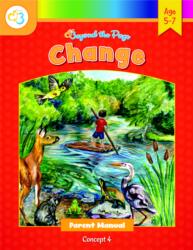
Unit 1
Changes on Planet Earth
This unit explores how the Earth changes over time through weather, erosion, landforms, natural events, and environmental processes. Students observe changes in nature, investigate how water and wind shape the Earth, and begin understanding how the planet is constantly changing around them.
Hands-on activities, observation projects, and discussions help students connect science concepts to the world they experience every day while strengthening vocabulary, critical thinking, and communication skills.
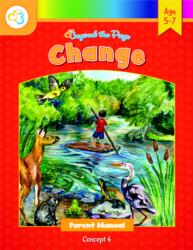
Unit 2
Characters Change
Through carefully selected stories, students explore how characters respond to challenges, emotions, and new experiences. Children discuss character growth, feelings, perspective, and problem-solving while strengthening vocabulary, comprehension, and storytelling skills.
Activities include nature sketching, figurative language exploration, story comparisons, creative writing, and hands-on projects connected to the literature. Students also begin experimenting with richer language and more thoughtful discussion about stories and emotions.
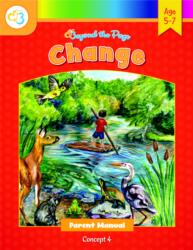
Unit 3
A First Look at History: Change Over Time
This introductory history unit helps children understand the idea of past, present, and future. Students explore how families, homes, transportation, clothing, and communities change over time while developing early historical thinking skills.
Projects include family timelines, personal growth charts, interviews with older family members, historical art projects, and comparing life long ago with life today. These activities help history feel personal, understandable, and connected to children’s own experiences.
A Rich Foundation for Future Learning
The early elementary years are about far more than simply learning to read words on a page. They are years for building curiosity, language, knowledge, confidence, observation skills, empathy, and the ability to think deeply about the world.
This curriculum gives children opportunities to ask questions, make connections, create projects, discuss ideas, and build understanding across subjects in a way that feels meaningful and engaging.
Students leave these years not only with growing academic skills, but with a stronger sense that learning is connected, interesting, and full of discovery.


