


First Grade - ELA
1: Environment

Unit 1: Habitats and Homes
Lesson 2
What Is a Map?
Students are read Me On the Map and are asked specific comprehension questions such as "What is the name of our country? What is the name of our state? What is the name of our town? What is our address?" Students answer repeated questions over time to build recall. In Activities 2 and 3 students locate items on maps and answer location questions like "What is beside the refrigerator?" and "What is in front of the couch?" and are asked to describe the environment in which they live.
Lesson 3
Guide to Animal Habitats
Students are asked to listen to a read-aloud and to stop and point out the animals and plants in each habitat and count them, providing practice answering questions about text details. Before reading, students are prompted to identify the title, author, and make predictions (e.g., What do you think this book is about? Who do you think this man is?). Activities ask students to arrange habitats in the order visited and to answer prompts about a chosen habitat (What do you see? What would it feel like? Which animals would you be most interested in seeing?), which require citing key details from the text and illustrations.
Lesson 4
Animals Live and Grow
Students are asked to read Up in the Garden and Down in the Dirt aloud and then answer explicit comprehension questions (QUESTION #1–#7) that target key details such as season, watering, and how animals help plants. Multiple prompts ask students to tell what animals and plants need, to analyze the living things they recorded for each habitat, and to find consumer/energy-source pairs from the text. Activities ask students to match animals to shelters and to fill graphic organizers with plants and animals from the book, requiring them to reference and respond to details in the text.
Lesson 5
Discovering Animal Habitats
The lesson asks the child to recall examples from Crinkleroot's Guide to Animal Habitats and to give examples of habitats, directly connecting student recall to a named informational text. Activity 2 provides multiple teacher prompts (e.g., "Do you know what we call the habitat where deer, bears, and foxes live?") that ask students to answer questions about habitat details. Activity 3 asks students to describe how animals' needs are met in a habitat and to label animals and their food and water sources, requiring students to respond about key factual details. Option 2 asks students to read habitat names in a word box and label pictures, prompting reading and identification tied to informational content.
Lesson 8
Animal Care
The lesson includes a read-aloud activity (Activity 2: The Salamander Room) followed by specific comprehension questions such as "What kind of animal did the boy find?", "Where did he find it?", and "What kind of environment did the salamander need?" The Skills section explicitly lists "Answer questions about a text (LA)." Activity 1 and other sections also instruct an adult to ask the child questions after hands-on activities (e.g., "What do pets need?" and "What would happen if we didn't provide a healthy environment for our pets?").
Lesson 9
Animal Designs
Students are prompted to answer guiding questions such as "What animals need to live and grow?" and the Questions to Explore, which requires them to respond orally. Students read short captions on the "Animals on the Move" pages, name the animal and habitat, analyze how each animal moves, circle body parts that help movement, and imitate movements to explain details. Students analyze the "You Can't Live There" panels to decide which animals do not belong in each habitat and explain or record reasons for their choices.
Lesson 10
Amazing Animals
Students are prompted to listen to or read informational text about animal changes and to analyze each illustrated example (Activity 1). Students are asked and expected to answer specific comprehension questions in the role-play scenarios (e.g., "What will happen to the starfish's arm?"; "What can lizards do to hide themselves?" in Activity 2). The skills list explicitly includes "Respond to critical questions about a text," and the wrapping-up prompt asks students to tell about animals they learned about, which requires recalling key details.
Final Project
Animal Research / My Environment
Students are asked oral comprehension questions in the Introduction (e.g., "Can you describe the environment in which you live?" and "What do habitats give to the animals that live in them?") that require them to answer key-detail questions. In Option 2 (Animal Research) students select an animal, use books/websites to find information, and complete pages that require factual answers (e.g., "Where in the World?", "What ___ Eats and Drinks", "___'s Habitat", "Interesting Facts about ___"). The project prompts require students to extract and record specific details from sources to fill the pages.
Unit 2: Weather
Lesson 1
Reading the Skies
The lesson asks an adult to read Whatever the Weather aloud and to ask the child questions such as "What type of weather is best for playing outside?" and "How does it make you feel when it rains?" The Skills list includes "Listen critically to text read aloud (LA)" and "Respond to text read aloud (LA)," indicating students will answer questions about a read-aloud. Activity 1 explicitly prompts the child to state what she thinks the story is about, providing practice with answering comprehension questions.
Lesson 2
Types of Precipitation
After reading Oh Say Can You Say What's the Weather Today?, students are asked specific questions about habitats and characters (e.g., What habitats did you see? What did the characters look like when they were hot/ cold?), prompting them to answer key details from the text. The lesson directs students to reread selected pages in both books and discuss the different types of precipitation, and to read and label words for precipitation while matching them to pictures. Wrapping up prompts ask students to explain why precipitation is important and where drinking water comes from, requiring answers based on text information.
Lesson 3
Measuring and Charting Weather
The lesson instructs an adult to "Look at the book, Crinkleroot's Guide to Knowing Animal Habitats, with your child and ask her to describe what the weather can be like in different habitats," prompting Q&A about a text. The opening "Questions to Explore" (e.g., "How does the weather affect living things in the environment?") and prompts during activities (e.g., "Ask your child what she thinks would happen if an animal's habitat got too warm or cold") require students to answer questions about key informational details. The "Wrapping Up" section tells the adult to "Ask your child to give you examples of how weather can be measured" and how weather helps plants and animals, which asks students to respond with details from the lesson content.
Lesson 4
Simulating Weather
Students are prompted to respond to Questions to Explore (e.g., How does the weather affect living things?) and are asked to explain what happens in the sky to cause rain. Students are asked to explain observations from the bottle cloud activity (what happens when you squeeze and release the bottle). Students are also asked to read the Weather Song aloud and answer teacher questions about words and letters on the page.
Lesson 5
Fall
Students are prompted to answer direct questions about an autumn picture (e.g., What are the people wearing? What do the plants and trees look like? What do you think the weather feels like?). Students are asked to read directions aloud for the graphing activity and then answer comprehension questions about the resulting graph (e.g., Which color has the fewest leaves? Which color has the most leaves?). The wrapping-up prompts ask students to explain what happens to the weather in the fall and to describe what they enjoy doing in the season.
Lesson 6
Winter
Students are asked to find the pages that look like winter in the book Whatever the Weather and to describe what they see in the pictures. Students are prompted to compare the environments in the pictures to the winter environment where they live and to answer questions such as how winter weather differs from summer. The lesson provides explicit question prompts (Questions to Explore) and asks students to describe winter environments and respond to prompts when dictating or reading a winter-related story.
Lesson 7
Spring
Students are asked to attempt to read each poem and then are asked what the poem was about, prompting them to answer questions about key details in those texts. The activity instructions have students draw or illustrate the poems to show understanding and to link pictures to poem details. The Wrapping Up prompts ask students what special things happen in spring and what a seed needs, eliciting short, text- or content-based answers.
Lesson 8
Summer
Students are asked directly what season follows spring in the Introduction and prompted to describe summer weather and activities. Activity 1 instructs students to answer specific questions about a pictured scene (describe the environment, what is happening, how the kids feel, could these activities happen in winter and why). Activity 2 has students fill in blanks in a short passage about a summer trip using context clues and then read the completed passage aloud. Activity 3 asks students to complete sentences (e.g., "_____ is the warmest season") based on a temperature continuum and season labels.
Final Project
Weather Games
Students are given chances to read and reread informational picture books (Whatever the Weather; Oh Say Can You Say What's the Weather Today?) and to look through pages and read aloud. Students are asked to pick the page in the book that looks most similar to the weather outside and to discuss that people have tried to predict the weather, connecting text content to real-world observations. The Weather Forecast graphic organizer lists guided questions that students use to report on weather after consulting text and other sources.
Unit 3: Community
Lesson 1
On the Town
Students are prompted to answer specific comprehension questions after reading On the Town, including "What is a community?", "What places did Charlie visit in his community?", and "Why did Charlie write down the places he visited...", which ask about key details in the text. The lesson also asks students to predict the book's content from the cover and to name their town and neighborhood, engaging them in pre-reading and text-related discussion. Activities ask students to draw and write or dictate a sentence about a new page for the book, connecting their responses to events and places in the text.
Lesson 2
My Community Environment
Students read the informational picture book Me on the Map and are asked to identify streets, buildings, and the river on the map and discuss the purpose of each place and the people who work there. The Skills list explicitly includes "Ask questions that lead to understanding (LA)." Activity 3 has students look through books in their home library, select three books with different communities, copy the titles, draw illustrations, and discuss ways the communities are similar and different. The Wrapping Up and Life Application sections direct adults to ask the child questions about important places and to allow the child to ask questions of community workers.
Lesson 3
Jobs in the Community
Students are prompted to read the names and look at illustrations on the "Community Workers" pages and are asked aloud what each worker does and how the job makes the community better. In Activity 5 students are asked to record one simple sentence about how each worker helps and to say each sentence aloud, linking text labels to worker functions. Activity 4 and Activity 6 ask students to read or listen to books and to attempt to read their own paragraph about a community worker, providing text-based material for discussion.
Lesson 6
A Good Community Citizen
Students are asked to listen to scenarios (a list of actions) and decide for each whether the person is being a good citizen, and to explain how they made their decision. The lesson instructs adults to ask children questions such as "How do citizens in your community help one another?" and "What does it mean to be a good citizen?" which prompt students to answer about details in the provided scenarios. In Option 2 and Activity 3 students label or describe pictures and write/dictate observations about family members' actions, tying explanations to specific depicted details.
Lesson 7
A Citizen with Character
Students read short texts ("A Lesson in Honesty" and "The Boy Who Cried Wolf") and answer specific comprehension prompts (e.g., "What do you think will happen next?", "Did Riley do anything wrong?", "What should Riley have done?"). Students retell beginning, middle, and end and write or dictate sentences to accompany drawings, and they discuss the moral of the fable. Activities ask students to describe characters' actions and consequences after reading other books and to predict events before/during reading.
Lesson 8
Rules and Laws
The lesson has students listen to or read the informational story "The House with No Rules" and then answer specific comprehension questions (e.g., "What kinds of things happen in the house with no rules?", "Would you stay in the house with no rules? Why or why not?"). Students read sentence strips of home rules and rank them by importance, explaining why they chose each rank. Students sort a list of statements (e.g., "Stop at a red light," "Share your toys") into "Rules" or "Laws," requiring them to identify and respond to key details in short texts/items.
Lesson 9
Caring for Our Communities
Students listen to the story "When One Person Cares" and are asked specific comprehension questions such as what happens at the beginning, middle, and end, where Katy lives, what she does to be a good citizen, and whether she helps people in her community. In Activity 2 students examine two community pictures and mark Xs or circles to identify good and bad community details. In Activities 3 and 4 students describe three things that make a community happy/healthy and answer questions about how they or others help in the community.
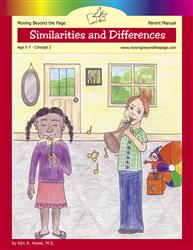
2: Similarities and Differences
Unit 1: Amazing Attributes
Lesson 2
Animal Attributes
The lesson includes explicit prompts for children to explain and justify choices (e.g., "Ask him to describe how he knows which objects are living" on the Living and Nonliving activity). It directs an adult to use a specific book (Crinkleroot's Guide to Knowing Animal Habitats) and to "ask your child to identify the body parts he sees" and "discuss how the animals use their different body parts," which requires answering questions about picture details. The Questions to Explore section lists inquiry prompts (e.g., "How can we describe things by similarities and differences?") that students are invited to consider and respond to.
Lesson 8
Amazing Attributes
The lesson includes a Facts and Definitions section that presents informational text about magnets, sinking/floating, and density. The Introduction and Wrapping Up prompts ask the child to describe measurements and to answer questions such as "what is a magnet?" and "what causes an object to sink or float?" The Activities ask students to make predictions, test objects, and then compare results and discuss which predictions were correct, which requires answering questions about observed details.
Lesson 10
Earth Materials: Rocks, Soil, and Water
The lesson includes multiple explicit question-and-answer prompts for the child (e.g., Question #1–#4 on Day 1 and the Day 2 reading questions) that ask students to name, describe, and locate details from the texts and illustrations. Activities direct students to find rocks and other details in the illustrations, compare covers, and use the glossary to locate key facts, which requires answering questions about text details. The Skills list also includes an objective to "Ask and answer questions about what a speaker says" and to use text features to locate key facts, supporting practice in responding to and locating information.
Unit 2: Senses
Lesson 1
My Five Senses
Students are prompted to find and read text features (title and author) and to predict what the story is about before reading. After reading, students are asked direct comprehension questions such as naming the five senses, identifying which body part is used for each sense, and which senses help determine color or shape. Students are encouraged to attempt reading the text and to refer to a provided "Senses Word List" to locate words in the book, connecting text words to meaning. The Senses Web and sorting activities require students to identify which sense applies to pictured/text items, reinforcing key details about senses from the text.
Lesson 2
Senses and Body Parts
Students listen to a read-aloud of "Jackie's Day at the Pet Store" and pick up and glue the sense organ when Jackie uses a sense, requiring them to identify details from the text. Activity 2 has an adult read situations and students point to the sense organ they would use, which requires answering questions about specific details in short passages. The introduction asks students to name their five senses and give examples, prompting students to respond with details about experiences.
Lesson 4
Hearing and Seeing
Students are read The Magic School Bus Explores the Senses and are asked specific questions about events and characters (e.g., what happened when the bus driver flipped the green switch; whose nose and mouth the bus traveled into). Students listen to two read-aloud descriptive passages and decide what place is being described, using details from the auditory text. Students reread pages about the eye and ear and discuss how those parts work, using text information to label diagrams and explain processes.
Lesson 7
Using All of Our Senses
The introduction directs an adult to read pages 21–end of My Five Senses and then ask the child which senses the boy used and how he used each sense, prompting students to answer about details in the text. The Skills list includes "Listen to stories and text read aloud" and "Interact with reader when text is read aloud (questions, comments, and ideas)," supporting student question-and-answer interaction. Activity 3 asks students to look through books and identify ways characters use their senses, which requires students to identify key textual details across multiple texts.
Lesson 8
Writing About Our Senses
In Activity 1 (Sensing Logic), students read short textual clues and use those key details to eliminate pictures and identify the correct item (putting Xs over non-matching items and coloring the remaining picture). The instructions tell students to reread the clues to confirm they all apply, which requires them to locate and use text details to support their answer.
Unit 3: We're the Same, We're Different
Lesson 2
Physical Characteristics
Students listen to the short story "Different Friends" and are asked explicit comprehension questions (e.g., retell the story, what happened at the beginning/middle/end, did Susan want to play with Casey, are they friends?). Students cut apart event boxes and put them in story order, demonstrating attention to key details and sequence. Activity 3 has students dictate and illustrate a three-part story (beginning, middle, end), reinforcing identification of key events in a text.
Lesson 4
Interests and Hobbies
In Activity 2 students are asked to "go to the library and find books about the subject" and then "answer the questions on the 'My Interest' sheet" using prior and new knowledge. The My Interest page includes prompts such as "What is something you already knew about your interest?" and "What is a question you have about _______?", which require students to read/research and respond. Activity 3 directs students to "read the questions aloud" when interviewing others, giving practice in asking questions aloud.
Lesson 5
Shapesville
Students are prompted to identify the title and shapes on the cover and to predict what the story might be about. During reading, students identify each character's shape, count sides and angles, and describe physical characteristics, personalities, and interests. After reading, students answer explicit comprehension questions (e.g., "Did you enjoy the story?", "What doesn't matter in Shapesville?", "How are the shapes' personalities different?"). Activities also have students explain why they chose a particular shape for themselves and for family members and share those explanations with others.
Lesson 6
Different Families
Students read specified pages of A Life Like Mine (pp. 6-13, 18-23, 26-31 and selected child profiles) and are prompted during reading to talk about the different people, foods, homes, and health needs shown in the book. Students are asked to identify pictures of families and describe clothing, physical characteristics, activities, and interactions from the text. Students complete structured response pages (similarity/difference sentences or a Venn diagram) that require them to answer questions about details in the book and to draw or write representations of those details.
Lesson 7
Different Homes
The lesson directs an adult to read pages 26–35 and asks the child to identify and describe the different homes shown in the book, which requires attending to key details. The lesson includes multiple explicit question prompts for the child (e.g., "Ask him why people have homes," "Ask him if he remembers what a natural resource is," and "Ask your child what he enjoys most about his house") that require answering text-based details. The top-of-lesson "Questions to Explore" provides discussion prompts that focus attention on similarities and differences drawn from the text and images.
Lesson 8
Different Holidays and Traditions
Students are prompted to read about holidays in encyclopedias or on websites and to match traditions with holidays (Activity 1), which requires locating details in a text or picture. In Activity 2 students are asked specific, text-focused questions while looking at online descriptions and pictures (e.g., "What are the people celebrating?" "What types of activities are they engaged in?"), directing them to ask and answer key-detail questions. Activity 3 asks students to write (or dictate) three sentences explaining what they enjoy about a holiday, which requires them to answer questions about specific details of that celebration.
Lesson 9
Different Modes of Transportation
Students are asked to look through books and websites and identify modes of transportation, and to find examples of transportation in the pictures of A Life Like Mine. The introduction prompts students to give examples of ways people get from place to place and to answer questions about how people travel great distances. Activity pages require students to identify and label transportation pictures and to choose or write which mode would be best for specific travel scenarios. Students are also asked to discuss reasons for selecting particular modes of transportation.
Lesson 10
Wants and Needs
Students are directed to read specific page ranges (pages 46–51, 56–61, 66–71) and discuss why children need education, play, and love and care, which asks them to answer questions about content in those texts. The lesson includes explicit prompts such as "Ask your child what animals need…" and "Ask your child what it means to want something," guiding students to respond to questions about the material. The opening "Questions to Explore" and the Wrapping Up prompts tell students to name and explain needs and wants, encouraging answering questions about key ideas from the readings.
Lesson 11
Being Part of a Group
Students are asked to read pages 98–113 of A Life Like Mine and to discuss what it means to have an identity, a nationality, and a religion, which engages them with information in a text. The activities prompt students to read or attempt to read their own paragraph about a group and to discuss ways their nationality or religion is similar to or different from children in the book. The skills list explicitly includes "Read or attempt to read own story or simple text (LA)," supporting text-based interaction.
Final Project
Differences Make the World Go 'Round
Students are asked to read about a chosen country in a book or on the Internet and to note specific details such as food, clothing, activities, transportation, environment, homes, and holidays. The activity pages prompt students to complete sentence stems (e.g., "I live in...", "I like to eat...", "My hobby is...", "One way that we are the same is...") that require extracting and recording those key details. The lesson includes a "Questions to Explore" list that frames inquiry about similarities and differences between people and families.
3: Patterns
Unit 1: Identifying and Creating Visual Patterns
Lesson 1
What Is a Pattern?
Students are asked to look at the cover and identify the title and author's name and to guess what the story is about, prompting text-based questions and answers. Students follow along as the story is read and are prompted on pages 6-11 to describe what types of patterns they see and on pages 12-25 to explain patterns found in the text. The lesson includes explicit question prompts (e.g., "Have you ever seen a pattern? Where?" and "What are some places where patterns can be found?") that require students to answer about details related to the book and its illustrations.
Lesson 2
Recognizing Types of Patterns
The Wrapping Up section instructs the adult to reread the book Busy Bugs and to ask the child to point out ABAB and AABB patterns, prompting the child to identify details in the text. The lesson also asks the child to explain the difference between an ABAB pattern and an AABB pattern, requiring the child to answer questions about pattern details encountered in the book.
Unit 2: Patterns in Sounds, Words, and Actions
Lesson 1
Word Patterns
Students are asked to identify animals named in the Bear Hugs text and to identify the habitat where each animal lives (Activity 4), which requires extracting and answering questions about details from the text. Students read nursery rhymes and are asked to identify and record rhyming words they hear (Activity 2), and they label pictures and circle repeating word parts on the Word Patterns pages (Activities 1 & 2), which requires responding to prompts about information in the text and illustrations. The materials include adult prompts such as "Ask her if she sees a pattern" and "Ask your child what we call words...," which require students to answer questions about presented content.
Lesson 3
Poetry Patterns
Students are prompted to answer comprehension questions such as "what each poem is about" after reading poems and songs. Students identify and circle rhyming words in poems and guess omitted rhyming words when lines are left blank. Students are asked to explain how to find rhyming words and to brainstorm and produce additional verses, demonstrating attention to details in the texts.
Lesson 5
Story Patterns
Students are prompted to answer questions about key events when they are asked "What happened at the beginning/middle/end of the story?" (Activity 1) Students practice describing and sequencing important story events by illustrating and writing or dictating a sentence for the beginning, middle, and end in Activities 2 and 3. Students also make predictions about what will happen next, which engages them in answering comprehension questions before and after reading.
Unit 3: Patterns in Your World
Lesson 1
Patterns in Nature
Students listen to a read-aloud of Pattern (pp. 1-11) and are asked to identify and describe the pattern in each picture, directly connecting their answers to details in the text and images. The lesson includes explicit spoken questions for students to answer after reading, such as which patterns they had seen before, which they had not, and what other patterns could be added to the book. The Getting Started 'Questions to Explore' and Skills list prompt students to activate prior knowledge and respond to text-based details.
Lesson 6
Seasonal Weather Patterns
Students are asked and answer direct factual questions such as "Which month comes after March?" and "Which season comes before summer?" in Activity 1. Students read and use a laminated calendar to write the date and select/circle the weather, and they look at a map of the United States and discuss state weather differences. In the Wrapping Up section, students identify the current month and season and describe observed weather, responding to teacher prompts.
Lesson 7
Patterns at Home
Students are read the Pattern book aloud and then asked to identify specific patterns from the book (checkerboard, patterns in nature, clothing, etc.) and to describe each pattern they find. The scavenger hunt explicitly directs the child to locate and name details in the book. Activity 5 asks students to write or dictate a sentence that describes a pattern they found, reinforcing answering questions about text details.
Lesson 9
Counting Patterns
Students listen to a short story about clowns and are asked to fill in blanks with the correct numbers as the story is read, directly practicing answering questions about story details. The Skills list explicitly includes "Listen to a story read aloud (LA)" and "Answer questions about a story read aloud (LA)." Students are also asked to retell or create their own version of the clown story and write a sentence about the clowns, which requires recalling and responding to details from the text.
Lesson 11
Patterns in Graphs
Students are asked to read titles and labels on bar graphs and charts, circle or color elements, and describe patterns they observe. The lesson includes explicit question-and-answer prompts such as "What does this chart tell us?," "How many types of people are on the chart?," and asking how many books John would read next Tuesday. In Activity 3 students decide which charts/graphs have patterns and describe the pattern type (ABAB, AABB, or ABC).
4: Change
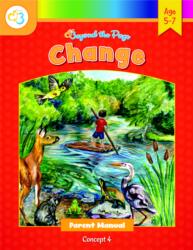
Unit 1: Changes on Planet Earth
Lesson 2
What Changed?
Activity 1 directs students to read "Part 1: Things Change" and explicitly prompts them to answer comprehension questions about the text (e.g., identifying the crushed cookie as a physical change on page 20 and the ripening banana as a chemical change on page 23). After reading, students are asked specific questions about key details in the text: examples of physical changes, the term for a change into something new, whether burning is physical or chemical, and which changes they have seen. The skills list also includes "Listen when someone is reading aloud," supporting guided question-and-answer about the text.
Lesson 3
Changing Position
Students are prompted to look at the book cover and answer what is happening and what the book will be about, practicing asking and answering questions about text meaning. The lesson provides four explicit comprehension questions (How do we get objects to start moving? Can you give two examples of a push/pull? What force keeps us on Earth?) that students answer from the text. Students also use the index to locate words like "gravity" and "inertia" and copy the sentences from those pages, directly linking answers to specific text details.
Lesson 4
Changes in the Environment
Activity 2 directs the student to read (or listen to) Part 2: Seasons Change and explicitly encourages the child to "answer the questions about the changes in the book," citing specific pages and details (water freezing/evaporating, pupa to butterfly, leaves making food, plants sprouting). The Skills section lists "Listen responsively to text read aloud (LA)," and the Wrapping Up section asks the child to "describe changes that take place in the natural environment" and to "explain what causes the changes," which prompt students to respond to text-based information and details.
Lesson 7
Living Things Change
Students review specific pages in an informational book and observe paired pictures, then answer adult-led questions about how and why animals changed (e.g., how the lizard changed color; whether the rabbit changes quickly or slowly). Students respond to explicit prompts on activity pages to identify what changed (number, size, shape, place), circle words that describe each change, and decide if changes are fast or slow. The lesson includes a list of "Questions to Explore" that students are asked about changes in nature and examples of short- and long-term changes.
Lesson 8
Plants and Change
Students read specified pages of National Geographic Readers: Seed to Plant and are then asked direct comprehension questions (Question #1 and Question #2) about what plants are used for and how plants compare to animals. Students are asked to locate the section "What Do Plants Need?" using the table of contents and to recall and say the plants' needs after watching a video. Students are prompted to list and describe plant parts and what plants need on handwriting paper and to make and record predictions about a plant experiment, comparing observations to those predictions.
Lesson 11
People Change the Environment
The Activities ask the child to describe what is happening in each illustration, explain how it is changing the environment, and decide if the change is positive, negative, or neutral, which requires answering questions about key details in the pictures. After watching the video, the child sorts pictured items into a recycling bin or trash can, which requires identifying and answering questions about which items are recyclable. The opening "Questions to Explore" and the Wrapping Up prompt the child to respond to questions such as "What causes change?" and to share ways people can reduce, reuse, and recycle.
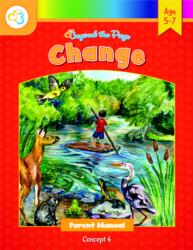
Unit 2: Characters Change
Lesson 1
What's in a Name
The lesson provides a Reading and Questions section with four explicit questions (and answers) about Chrysanthemum's feelings, why she changed her mind, how words affect others, and how Mrs. Twinkle changed classmates' feelings — tasks for students to answer about key story details. Activities ask students to identify feelings from specific phrases (Feeling Phrases) and to list characteristics of Chrysanthemum at the beginning and end of the story (Characters Change), requiring students to locate and explain key details. The lesson also includes teacher prompts (Questions to Explore, prediction) that require students to respond about the story.
Lesson 2
Why Worry?
Students watch a read-aloud of Wemberly Worried and then answer four explicit comprehension questions with provided answers (e.g., whether Wemberly needed to be worried about her party, Halloween, and school). Students complete a "Characters Change" activity in which they describe how Wemberly changed from the beginning to the end of the story. Students also respond to wrap-up prompts asking which story they preferred and why, providing additional opportunities to answer questions about story details.
Lesson 3
Is It a Problem?
Students read What Do You Do With a Problem? and answer four explicit comprehension questions about key story details (how the problem is illustrated, how it grows, how the boy addresses it, and what he learns). Students identify the beginning, middle, and end of the story and of other unit stories, and complete a "Characters Change" activity that asks them to describe how the boy changed. Students illustrate the problem at different points and complete activities that require recalling and recording specific details from the text.
Lesson 4
Comparing Characters
Students dictate three-sentence summaries (beginning, middle, end) and answer explicit comprehension questions on the "Two Stories, Same Problem" page (e.g., "How are the characters' situations similar?" and "What can we learn from both characters?"). Students complete Venn diagrams listing similarities and differences between characters and match causes with effects from the stories on the Cause and Effect activity page. Students also respond to wrap-up prompts such as which story they liked most and why, and how all three stories are similar.
Lesson 5
The Raft
Across Day 1–3 reading sections the adult stops at specific pages and asks a list of explicit comprehension questions (e.g., Why does the boy not want to stay with his grandma? What does the boy find at the river?). Multiple question-and-answer pairs are provided with expected student answers for each reading stop. Activities require students to identify story elements, match problems and solutions, and complete a "Characters Change" page, all of which ask students to answer key-detail questions about characters, setting, events, and changes.
Lesson 6
Positive and Negative Change
Students are asked and prompted to answer specific questions about a character in Activity 2 (e.g., "How do you think the rat feels about himself?", "Do you think the other animals should avoid the rat?"). Students match causes and effects and then identify positive or negative outcomes and are asked to find similar cause-and-effect situations in stories they read. Students consider and answer text-based "What if?" questions about characters from the unit (e.g., questions about choices characters might have made).
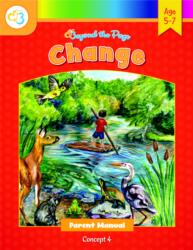
Unit 3: A First Look at History - Change Over Time
Lesson 2
Understanding Time
Students are asked to listen to and read pages 6–13 (and other pages) of Telling Time and then respond to multiple oral questions about time (e.g., Were you born in the past, present, or future? Did dinosaurs live in the past?). Students record dates on a calendar and complete the "Yesterday I / Today I / Tomorrow I will" boxes, describing events tied to time references. Students are prompted at the end to explain the difference between past, present, and future, which requires answering questions about temporal details discussed in the text and activities.
Lesson 3
Communities Change
Students are prompted to answer explicit comprehension questions about The House on Maple Street (e.g., Where did the story happen? Who are the characters? How did the environment change?). Multiple activities require students to identify and record key details from the text: placing events in chronological order (A Maple Street Timeline), circling animals found in the story (Changes in Nature), and identifying artifacts from the illustrations (Activity 6). The Getting Started section and Activity 5 include open-ended questions that ask students to explain differences between past and present and to describe preferences and reasons, which target key-text detail discussion.
Lesson 4
Past and Present
Students are asked specific comprehension questions after viewing and reading (e.g., "How did people in the past dress differently than we do today?," "How were their homes different?," "How was their transportation different?") and are prompted to point out differences in illustrations and tell a story about a past time period using people, places, and things from the text. Activity 3 asks students to compare lives across time periods with targeted questions (e.g., "How is a school day for this boy different from yours?"), and Activity 8 has students write a sentence describing how life in the past was different. The skills list also directs students to "connect information and events in text to own experience" and to "use various text features to locate key facts or information in a text."
Lesson 5
Exploring the Past
The lesson includes explicit teacher prompts under "Questions to Explore" (e.g., "Why do communities change?" and "How have people changed from past to present?") that students are asked about. Students are asked to recall the three time periods from the book and to look through specific pages to find information about homes, clothes, food, and transport, then draw, write, or dictate descriptions of information found in the book. Students are also prompted to select a culture, write one sentence about each element of culture, and give a presentation to the family, which requires identifying and reporting key details from the text.
Lesson 6
Predicting Future Change
Students read short written scenarios (e.g., "Your dad has gotten a new job in a different town," "You used to be good at brushing your teeth…") and are asked specific questions about those texts such as "How will this change your family?" and "How might your teeth change in the future?". Activity instructions direct students to record answers and predictions for each scenario and to reread situations to decide whether outcomes are positive or negative. Several student pages provide space for written responses so students practice answering questions about key details in those short texts.
Lesson 7
People of the Past
Students read a simple biography and answer specific comprehension questions such as whether the person lived in the past or present, how they would describe the person, and what the person did to make a positive change. Students read the "People in History" descriptions, point to the individual described, cut and match descriptions to pictures, and place the people in chronological order. Students write a sentence about a historical person and answer wrap-up questions asking what a biography is and to describe people from the past who made positive changes.
6: Reading

Unit 1: Semester 1
Lesson 1
Letter Sounds Review I
Students are asked to locate and point to letters and sight words in the Weekly Message (e.g., find t, p, c; find how many times 'and' appears). An adult prompts students to describe the book cover by asking, "What else do you see on the cover?" Students are also asked comprehension-related prompts while reading (e.g., to do the action shown, to point to words as they are read).
Lesson 2
Letter Sounds Review II
Students are asked to read The Pig Can, read the title, describe the cover, and answer "What do you think this book is about?" They are asked a comprehension question after reading — "Do you think the pig and the cat can fit in the box?" — and asked to explain their thinking. Students are also asked to locate sight words and letters in the Weekly Message and point to or read them as the teacher prompts.
Lesson 3
Letter Sounds Review III
Students are asked to read the reader The Bug aloud and then answer specific comprehension questions: "What is the bug able to do?" "What does the bug want to be able to do?" and "Why can't he do that?" Activity 1.1 asks students to point to and read known words in the Weekly Message and answer a question about the hint vowel. Activity 5.3 has students write missing words for sentences and then read those sentences aloud, responding to questions about sentence-ending punctuation.
Lesson 4
Letter Sounds Review IV
After reading Reader #4, students are asked two explicit comprehension questions: "Why are the dog and the fox napping at the end of the book?" and "Why aren't the cat and the pig napping?" (Activity 5.2). Activity 1.1 directs students to point to and read known words in the weekly message and to answer the question "How many sentences does this message have?" by identifying end punctuation. Activity 3.1 has students read sentences aloud while pointing to each word, supporting their ability to locate and refer to details in text.
Lesson 5
Adding s, More Word Families, Ending with ck
Students are asked to read the Weekly Message aloud and then answer questions about it, including identifying punctuation and answering "How many sentences does this message have?" (Activity 1.1). Students read the reader Ducks Are Fun and are asked aloud comprehension prompts such as "Which duck do you think is having the most fun? Why?" (Activity 4.3). Students are prompted to infer the meaning of a word from text and picture when asked to determine what "don" means from the book (Activity 4.3).
Lesson 6
Open Syllables and Digraph th
In Activity 5.2 students read the reader This Is... on their own and are then asked three explicit comprehension questions: why Meg, Dan, and Sam start with uppercase letters; what kind of pet Dan has; and which animal the student would prefer as a pet. The activity instructs students to point to each word as they read and then to answer the teacher-posed questions about characters and details from the text.
Lesson 7
Consonant Digraphs ch, sh, wh, ph
During Activity 3.3 students read the short reader They Get Wet and are asked to predict the story ('What do you think will happen in this book?') and to answer specific comprehension questions: 'Where is the ship at the beginning of the book?', 'Why are the rat and the cat wet at the end?', and 'Why do you think the rat and the cat are on the ship?'. The lesson also prompts students to read the book aloud while pointing to each word, encouraging attention to text details when answering.
Lesson 8
Blends with s
Students read Reader #8 (Meg and Dan and the Sled) aloud and then answer explicit comprehension questions about it (e.g., why Meg and Dan are no longer on the sled; why they stop for a snack; what snack they would want). During other activities students are asked to point to and identify words and punctuation in the Weekly Message and to locate words with s blends, which requires identifying details in a short text. The word-chain and dictation activities also require students to attend to and respond to specific prompts about words and meanings.
Lesson 9
Blends with l
Students read Reader #9 — The Club on their own and then answer explicit comprehension questions provided in the lesson (e.g., "What color are the flags that are flying above the club?" and "What do the kids do at the club?"). The lesson instructs students to point to each word as they read and then respond to the teacher's questions about specific details in the text. A follow-up question asks students to give a personal response about what they would do at the club, connecting text details to their own ideas.
Lesson 10
Blends with r
Students read the reader One Can independently and then answer specific comprehension questions: "Where are the ducks swimming to?" and "What are the kids running on?" as well as a question connecting text to personal experience (Which of these things are you best at -- hopping, swimming or running?). Students are also prompted in other activities to point to and read words in the Weekly Message and respond to teacher prompts about word meanings and clues for target words.
Lesson 11
Ending Blends
Students are asked to read Reader #11 "At Camp" on their own and then answer specific comprehension questions: "What do the kids do at camp?", "What are the kids hunting for?", and "What do you think your favorite camp activity would be?" Activity 4.2 explicitly instructs the adult to ask these questions after the student reads and to encourage the student to point to each word as he reads. Several activities ask students to name pictures and say words (e.g., in the Ending Blends sorting), supporting close attention to text and details when reading simple captions or labels.
Lesson 12
Double ll, ss, ff, zz (FLOSS)
The lesson directs the child to read Reader #12 — Huff and Puff and then answer three specific comprehension questions: "What insects are shown in the book?", "Why do you think the insects are following the kids?", and "Why is everyone huffing and puffing at the end of the book?" (Activity 4.3). Additionally, several activities ask the child to read text aloud and point to words or punctuation (Weekly Message #12 and the sight-word activities), requiring the child to respond to teacher prompts about details in those texts.
Lesson 13
Glued Sounds ng and nk
After reading Reader #13 (King Hank), students are asked three explicit comprehension questions: "Where do the king and his friends sleep?," "What color drinks do the king and his friends drink?," and "What would you want to do if you were a king?" Students are prompted to read the book on their own and aloud, point to each word as they read, and then respond to those questions. The activities require students to locate and state specific details from the text (e.g., bunk beds, pink drinks).
Lesson 14
Three-Letter Beginning Blends
Students are asked to read the reader Spring Has Sprung! on their own and then answer specific comprehension questions: "What do the kids do at the track?" and "What do the kids do at the pond?". The lesson prompts students to point to each word as they read and to respond to a personal connection question: "What are some things that you like to do in the spring?". These tasks require students to recall and state details from the text.
Lesson 15
More Ending Blends
Students read The Raft Trip independently and aloud, pointing to each word as they read (Activity 5.2). After reading, students are asked specific comprehension questions to answer: "What animals are on the bank of the river?" and "Which animals nap on the raft?" They are also prompted with a follow-up question that elicits a response connecting to the text: "What would you like to see if you went down a river on a raft?"
Lesson 16
R-Controlled Vowels (ar)
Students are asked to read the reader Which? When? What? and to answer the question on each page as they read. After reading the book aloud, students are asked specific comprehension prompts (e.g., "What else might you find in a barn on a farm?", "What else might you do when it's dark?") that require them to respond about text content. Students are also asked to generate questions using the sight words "which," "what," and "when," producing their own questions aloud.
Lesson 17
Semester Review
In Activity 4.1 students read several short readers and are asked to point to or name characters and to talk about the different things the characters do (e.g., they swim, camp, sing, go on a raft trip). The teacher prompts students to answer comprehension questions such as "Which of these readers is your favorite? Why?" and asks them to read aloud and discuss details. Activity 1.3 has students identify the correct sight word in sentences (pointing to 'there' vs. 'their'), which requires answering questions about which word fits a sentence context.

Unit 2: Semester 2
Lesson 1
Long Vowels a and i with Silent e
Activity 5.1 asks the child to read In the Fall and then answer three explicit comprehension questions about the text (e.g., what Lin and Dev like to do in the fall; what Lin does while Dev makes cakes; which activity the child likes most). The activity instructs the child to point to each word as she reads and then respond to teacher prompts about details from the reader.
Lesson 2
Long Vowels o, u, and e with Silent e
On Day 5, students read the reader They Chose To Doze on their own and then read it aloud to the teacher. After reading, students answer explicit comprehension questions such as "What did the family do on their trip?" and "Who fell off of the mule?" The activity also asks students to point to quotation marks and identify dialogue in the text.
Lesson 3
Hard and Soft c and g
Students read the reader These Mice on their own and then read it aloud to an adult (Activity 5.2). After reading, students are asked specific comprehension questions about key details in the text: what the mice use to make beds, what the mice sit on to eat cake, and why the mice like their home. The lesson also asks students to read and then answer teacher-posed questions during the reading activities.
Lesson 4
More R-Controlled Vowels (er, ir, or, ur)
The lesson has students read Reader #4, The Bird Is Third, and then answer direct comprehension questions such as "Who won the race?" and "Which animal came in last?" It also prompts a follow-up discussion question: "Are you surprised that the cat won the race? Who did you think would win? Why?" Earlier activities (Weekly Message #4) also ask the child to point out and read words and to say what he notices about words in the message.
Lesson 5
Long a Spellings ai, ay
In Day 5 Activity 5.1 students read The Gray Day on their own and then are asked specific questions about the text (e.g., "What do the boys play with indoors?" and "What animal do they see on the drain outside?"). The activity also includes follow-up prompts that require students to give opinions or infer (e.g., "What do you think the boys would do if they went outside?" and "Do you like rainy days? Why or why not?").
Lesson 6
Long e Spellings ee, ey, ea
On Day 5 (Activity 5.1) students read the reader What Do You Eat? and are asked specific comprehension questions such as "What does the worm eat?" and "How many beans are the birds eating?" The activity directs students to read the story aloud and then answer those text-based questions. The Wrapping Up activity also asks students to reread the Weekly Message and point to words with the long e sound, prompting them to identify details in a short text.
Lesson 7
Long i Spellings y, igh, ie
Students read Reader #7 (The Dark Night) independently and then answer specific comprehension questions provided by the teacher (e.g., "What do Tom and Val see in the sky?" and "What do Tom and Val dream about?"). The plan directs students to show and read found words from the Sight Words Search and to point to long i words in the Weekly Message, which requires locating and identifying details in text. The Fill in the Blanks activity also has students read sentences and choose words that make sense, which involves using textual details to complete meaning.
Lesson 8
Long o Spellings ow, oa, oe
Students read The Slow Boat on their own and then read it aloud to an adult (Activity 5.1). After reading, an adult asks specific comprehension questions such as "How many boats are in the race?" and "What color is the boat that wins the race?" Students are prompted to answer these questions aloud and discuss a follow-up personal-response question about whether they would want a boat to go fast or slow.
Lesson 9
Long u Spellings ue, ew, ou
Students read the reader Would You Eat It? on their own and then aloud to an adult (Activity 5.1). After reading, students are asked specific comprehension questions: "What does Tom add to the stew?" and "What color does Val add to the stew?" and an open-ended prompt, "If you were going to make a funny stew, what would you put in it?" These tasks require students to identify and answer questions about key details from the text.
Lesson 10
Other Long Vowel Patterns
Students read The Wild Colt silently and then aloud to an adult and answer explicit comprehension questions about the story. Students respond to factual questions such as why the colt is hard to find in the herd and how the man stops the colt from bolting. Students also answer a personal-response question about whether they would want to take care of or train a wild colt.
Lesson 12
Other Vowel Sounds oi, oy
In Day 5 Activity 5.1 students read The New Toy and are asked to answer specific comprehension questions such as "What sound does the toy make?" and "What do you think Dan's new toy is?", and to discuss a personal response ("What is your favorite toy? Why?"). In Activity 1.1 students are prompted to point to and read words in the Weekly Message and to identify (point to) words with long vowel sounds. In Wrapping Up students are asked to reread the Weekly Message and point to words that contain the oi/oy sound.
Lesson 13
Other Vowel Sounds ou, ow
On Day 5 (Activity 5.1) students read The Hound and the Owl on their own and then read it aloud to the teacher/parent. After reading, students are asked specific comprehension questions such as "What does the hound do during the day?", "What does the hound do at night?", and "Why do you think the hound howls at the owl?". The activity instructs the adult to ask these questions and to have the child answer them aloud.
Lesson 14
Other Vowel Sounds aw, au
On Day 5 (Activity 5.1) students read Reader #14 — The Pups and are asked specific comprehension questions such as "Where do the pups sleep?" and "What are some of the things the puppies in the story do?", which requires them to locate and answer key details from the text. Several activities prompt students to answer teacher questions about text features or word groups (e.g., "What do you notice about all of these words? Do they have something in common?"), and students are asked to reread and explain their answers to the teacher.
Lesson 16
Silent Starts: kn, wr, gn
After reading Reader #16 (The Gnats) students are instructed to read the story on their own and then answer three explicit comprehension questions about what the gnats do at the playground, at the picnic, and what gnats do that is annoying (Day 5, Activity 5.2). In Activity 1.1 students are asked to read the Weekly Message aloud and then list some things they have learned about reading words. The lesson repeatedly has students read texts aloud and then respond to specific, text-based prompts.