


Kindergarten - ELA
1: Letters

Unit 1: A - A Is for Musk Ox
Lesson 2
Day 2
Students read a story about a musk ox and also read/watch suggested online resources (Britannica Kids article and a YouTube video) and then discuss how the information from those sources compares with the musk ox in the story. Students discuss factual topics such as where musk oxen live, what they eat, how people use them, and threats they face, and they learn and use the vocabulary word "herd." The lesson prompts parent-child discussion that involves comparing information across multiple sources.
Lesson 4
Day 4
Students locate continents and specific regions (Canada, Greenland, Alaska) on a world map and identify where musk oxen live. Students view suggested online pictures of musk oxen and tundra landscapes and discuss how thick fur helps musk oxen survive cold climates. Students verbally describe the tundra environment and are prompted to share findings with an adult during the activity.
Lesson 5
Day 5
Students are asked to read A is for Musk Ox, trace words left to right, explore illustrations, and then answer whether they liked the book and why, including whether they would recommend it to a friend. Students also participate in shared writing: they dictate a story to an adult who records it in the journal and students draw pictures to accompany their dictated text. The writing workshop has students independently 'write' or pretend to write and practice putting thoughts on the page while an adult records their words.

Unit 2: H - Hondo and Fabian
Lesson 2
Day 2
Students talk with an adult about cats and dogs and record characteristics in the Comparing Cats and Dogs Venn diagram, writing responses in the Cats, Both, and Dogs sections. Students produce written entries on the Student Activity Page as they explain and categorize traits. Students also practice handwriting and add an H letter card to a file box, showing participation in guided, shared writing-related activities.
Lesson 3
Day 3
Students read Hondo and Fabian together with an adult and are asked to retell the story in their own words using the pictures as prompts. Students answer comprehension questions about characters' feelings and are prompted to recount beginning, middle, and end. Students generate descriptive words or phrases about Fabian and Hondo and have those ideas recorded on large die-cut shapes (the adult or child can write the child's responses), which involves joint composition/recording.
Lesson 4
Day 4
Students look through the book about Hondo and Fabian and discuss how the characters moved, engaging with the text and images. Students paint a picture of an activity with a friend and then dictate a sentence about their painting, which is written down and attached to the artwork, demonstrating a shared writing activity. Students complete pages that identify beginning sounds and match images to letters, which involves responding to printed material and producing written responses.
Lesson 5
Day 5
Students spend 5 minutes looking at Hondo and Fabian, moving their finger left to right under print and identifying capital letters at the beginning of names. Students are asked to say what they think about the names "Hondo" and "Fabian" and to suggest names they would give a dog or cat, which prompts them to express opinions about the characters. Students dictate two statements about themselves while an adult models writing those sentences, engaging them in a shared writing activity.

Unit 3: I - The Little Island
Lesson 1
Day 1
The lesson asks students to look at a world map and discuss the definition of an island together with an adult, and it provides a web link asking the child to note similarities and differences among many islands and decide which they would like to visit and why. Optional Extension Two asks students to add creatures from the book by finding and printing pictures from the Internet, which has students locate information from an external source. The lesson also suggests reading an additional picture book (An Island Grows) as an optional extension, which could expose students to multiple related texts.
Lesson 5
Day 5
Students examine The Little Island by looking at the cover, title page, and back cover and spend time independently looking through the book. Students state and explain their opinion of the book (did she like it, why, favorite part, what she would change). Students draw a visit to the island, attempt writing or dictate ideas that are recorded, read their ideas aloud, and may share their picture and ideas with others.

Unit 4: T - What Do You Do With a Tail Like This?
Lesson 1
Day 1
Students preview and read a book with an adult, predict content, and answer questions about animal parts and how animals use ears, eyes, and noses. The Skills section instructs students to recall information from experiences or gather information from provided sources with guidance. In Activity 2, students draw animal cards with a partner/adult and state one similarity and one difference between the structures of two animals, practicing shared discussion of information from pictures and cards.
Lesson 2
Day 2
Students look specifically at pages in the book What Do You Do With a Tail Like This? and talk about the purpose and jobs of different animals' tails, which is a shared exploration of text. Students cut out and match tail pieces to animal pictures, and in Activity 3 they design a new tail and explain its purpose aloud. The lesson also includes practice forming the uppercase T, linking letter-sound work to the shared topic of tails.
Lesson 3
Day 3
Students read a nonfiction book and are asked to identify whether it was make-believe or true, directly comparing it to a previously read book (Hondo and Fabian). Students are asked what kind of information they learned from the book, and they are shown multiple instances of the sight word "this" in the book for practice. The lesson introduces the terms "fiction" and "nonfiction," prompting students to classify and compare books.
Lesson 4
Day 4
Activity 1 asks the child to choose an animal from a book and work together with an adult to locate information online or through library books about that animal. Students are directed to discuss the animal's body parts, how they are used, where the animal lives, and what it eats. An optional extension has students draw a picture or create a craft pertaining to the animal.
Lesson 5
Day 5
Activity 3 has students draw an animal body part from their earlier "Animal Research" and write 1–3 facts about it, then dictate those facts while an adult writes them in complete sentences, which practices shared writing based on research. Activity 2 asks students to work with a book, identify its sequence, and answer evaluative questions such as whether they liked the book and whether others would enjoy it, which has students explore a book and express opinions about it.

Unit 5: L - We're Going on a Leaf Hunt
Lesson 5
Day 5
The Reading Workshop asks students to spend time with a book, practice left-to-right tracking, and answer questions about whether they enjoyed the book and whether they would recommend it, which prompts them to express opinions about a text. The Writing Workshop Option 1 has students dictate a story while an adult records it in a journal, and Option 2 has students dictate describing words or attempt to write words next to drawings, both of which involve shared or supported writing activity.

Unit 6: F - Fireflies
Lesson 5
Day 5
Students review illustrations and retell the story in their own words using the pictures as a guide. Students discuss their opinions about the book by answering questions such as whether they liked the story, what was funny or surprising, and how they would feel about catching and letting go of fireflies. Students draw a picture of a favorite summer activity and produce writing by writing letters/words, scribbling, dictating to an adult, or copying a sentence, thus practicing composing and recording ideas.

Unit 7: E - But No Elephants
Lesson 5
Day 5
The Reading Workshop has an adult read the first pages aloud while the child tracks left-to-right, then the child spends time "reading" alone and retells the story or looks at pictures; adults are prompted to ask whether the child enjoyed the book, what her favorite part was, and whether she could think of a different ending. The Writing Workshop asks the child to draw a house full of animals and write words or sentences about what might happen, and to dictate something for the adult to write for her (shared writing). These activities provide opportunities for the child to express opinions about a book and to participate in adult-supported writing.

Unit 8: C - Millions of Cats
Lesson 1
Day 1
The Skills list explicitly names "Participate in shared research and writing projects," indicating a learning expectation for collaborative literacy tasks. Activity 2 has students reread Hondo and Fabian and Millions of Cats, page through one book to recall details, and construct a large Venn diagram on butcher paper to record similarities and differences. Students are directed to list shared and unique characteristics on the diagram, which requires joint discussion and recording on a shared written artifact.
Lesson 4
Day 4
Students choose a pet to research and are directed to find information about caring for that pet in a library book or on specified websites. After gathering information, students are asked to communicate what they have learned by designing a poster (with pictures and words, if desired) or by giving a "pet talk" using a stuffed animal for their family. The activity explicitly asks students to present their findings to others, which connects research with a shared presentation/writing product.

Unit 9: G - The Real Mother Goose
Lesson 1
Day 1
Students listen to and read multiple poems from The Real Mother Goose (several specific poems are listed) and compare them. Students talk about which poems they like and explain why, including discussion prompts that ask the child which ones are familiar and which she likes and why. Students look at the book cover and discuss who Mother Goose might be and participate in shared read-alouds and acting-out activities with an adult.
Lesson 2
Day 2
Students read the poem "The Year" together and then create a Months of the Year project by coloring, cutting out month boxes, gluing them onto card stock, and discussing what happens in each month. Students are directed to find and cut out magazine pictures that represent each month and may include a note about family birthdays, which requires gathering information and adding simple written labels or notes. The activity is done with adult assistance, indicating participation in a shared, guided project.
Lesson 3
Day 3
Students read and listen to several poems (multiple titled poems are listed) and are asked to identify rhyming pairs and say which poem is their favorite and why. Students and an adult work together on a computer to change words in "The Cat and the Fiddle," generate rhyming pairs, and print the child's new poem. Students practice composing text collaboratively by having the parent model changes, then assisting the child to create and print her own rhyming poem.
Lesson 4
Day 4
Students reread the poem "The Year" and review pages of a "Months of the Year" book they have already created. Students continue to add names for each month and add symbols and pictures about weather, activities, and special events for each month. Students create a title page and assemble/bind the book, practicing shared composition and publication tasks.
Lesson 5
Day 5
Activity 3 asks the child to dictate a poem while an adult writes it down and to create an illustration, which shows participation in a shared writing project. Activity 2 and Activity 1 have the child listen to and follow along with multiple poems and talk about the poems and the spherical objects they describe, which shows shared exploration of several texts on a topic.

Unit 10: O - Owl Babies
Lesson 1
Day 1
Students look at the cover, describe what they see, and predict whether the book will teach facts or tell an imaginary story. Students listen to the book and answer questions identifying that it "told a story" and give reasons (characters named and talking like people). Students list true facts from the book and are asked to distinguish fiction from nonfiction based on purpose and content.
Lesson 2
Day 2
Students look through and discuss the book Baby Owl, predict whether it is fiction or non-fiction, and then confirm after reading. Students watch an owl video and then dictate or write facts they learned onto designated spaces of the owl activity page. The lesson includes an optional extension where students do internet research about different kinds of owls, create a small poster with pictures and facts, and present the poster to family or friends.
Lesson 4
Day 4
Students and an adult view the Owls of North America website together and are asked to observe what is different and similar about the owls and to click on owls to learn what makes them alike and unique. Students are prompted to compare the website information to the book Owl Babies and to say what the owls in the book can do that real owls cannot (e.g., talk, have human-like feelings). The activities include guided discussion questions that elicit students' observations and opinions about the animals.
Lesson 5
Day 5
Students are asked to spend independent time with two books about owls and to identify which is fiction and which is non-fiction, citing clues (illustrations, talking owls, photographs, factual text). Students then tell an adult what they found, engaging in a shared discussion about information gathered from texts. Students create journal work that includes factual (non-fiction) information on one page and a brief fictional story on the other, with options to dictate to an adult or copy after the adult records, which supports shared writing.

Unit 11: S - Seasons of Arnold's Apple Tree
Lesson 2
Day 2
Students are asked to collect daily weather observations on a provided "Weather Report" chart for several days, recording date, sky conditions, wind, precipitation, and temperature. Students use measurement sources (an outdoor thermometer or weather.com), observe conditions, and record findings by drawing, writing words, or dictating to an adult. The activity requires repeated data collection at approximately the same time each day, which engages students in a multi-day observational inquiry.
Lesson 5
Day 5
In Activity 2 students are asked to look through some books with outdoor settings and identify the setting and the season of each story, then share the setting and the clues that helped them identify it. In Activity 3 students draw a picture of their favorite season and write or dictate things they know about that season, providing a writing component tied to the topic explored in the books.

Unit 12: D - Dinosaurs Big and Small
Lesson 1
Day 1
Students listen to and discuss a shared book about dinosaurs, answering questions about whether it is fiction or non-fiction and naming the author and illustrator. Students are asked how the author and illustrator got their information (e.g., read other books, researched online, talked with scientists, visited museums). Students are directed to an online museum resource and prompted to describe dinosaur characteristics and compare information from the book with measurements and observations they make.
Lesson 3
Day 3
Students read and discuss the book Dinosaurs Big and Small together, answering questions about new information and what surprised them. Students are prompted to ask what else they would like to know about dinosaurs and to guess meanings of words using picture and sentence context. Students carry out an investigation building a simple balance, make predictions about which object is heavier, and compare results with an adult. Students also identify descriptive words (adjectives) from a poem and from pictures in the book, verbally describing different dinosaurs.
Lesson 4
Day 4
In Activity 1 students choose a dinosaur to research using provided web links (National Geographic Kids, The Dino Directory) and gather information. Students make a drawing of the dinosaur and dictate five facts about it while an adult records those facts beneath the drawing. Students are prompted to share the information they collected with friends and family.
Lesson 5
Day 5
Activity 2 asks students to look through supplemental books and, if able, read to find adjectives or, if not, to look through books and think of describing words, then share the adjectives they found. Activity 3 has students cut out pictures of dinosaurs, paste them in a journal, and dictate or write factual sentences about dinosaurs, modeling nonfiction writing. These tasks require students to explore multiple books and produce written statements about a topic (dinosaurs).

Unit 13: P - Harold and the Purple Crayon
Lesson 1
Day 1
Students are read the book and are asked explicit opinion questions (e.g., "What do you think about Harold's adventure? Did it seem fun?", "Were there dangerous or difficult parts of the adventure?", "How do you think Harold feels at the end of the story?"). Students are prompted to discuss solutions Harold used and to propose solutions for new predicaments, which involves shared oral problem-solving. An optional extension asks students to draw how Harold solved a predicament, providing an opportunity to produce a simple written/drawn response.
Lesson 4
Day 4
Students plan and construct a neighborhood map together on butcher paper, choosing a place for home, placing buildings, drawing roadways, and sharing the finished map with friends and family. Students discuss Harold and the Purple Crayon, answer questions about what imagination means, and explain whether their neighborhood is like Harold's and why, which elicits opinion expression. Students also practice writing letters on the Letter Sounds pages (writing or watching letter formation) and complete cut-and-paste labeling activities.

Unit 14: B - Blueberries for Sal
Lesson 4
Day 4
Students are directed to read and learn about bears using a National Geographic Kids webpage or non-fiction library books and to compare that information with the fiction book Blueberries for Sal. Students are asked to create a two-column written chart labeled "Fiction" and "Non-Fiction" and to list fictional story elements and factual bear information under each column. The activity is framed as a shared task with the adult ("Create a list with your child"), indicating collaborative research and writing behavior.
Lesson 5
Day 5
Activity 2 asks students to examine several books that are set in the past, search the texts for clues about setting, and then share their findings with an adult. Activity 3 asks students to write (or dictate) and then share their work to receive comments, suggestions, and questions; the adult models giving compliments and one specific suggestion for improvement. The reading task has students independently investigate multiple books and report results, and the writing task has students participate in a review/edit cycle with another person.

Unit 15: R - Rain
Lesson 1
Day 1
Students listen to and read the book Rain together, with the teacher prompting them to point to words and colors and to answer guided comprehension questions (Questions #1–#4) that ask how the author made them feel and to talk about different kinds of rain. Students participate in a shared retelling/recreation of the story using die-cut pieces on a sky mat (Activity 1), placing pieces to show the progression of the story. The guided discussion explicitly asks students to describe feelings and experiences (e.g., whether the ending was a surprise, whether they have been caught in a downpour), which requires them to express opinions about the book.
Lesson 2
Day 2
Students create a Rainbow Book in Activity 3 by writing sentences that begin with "I see..." and drawing pictures, with the teacher writing words for students to copy and offering cut-out sentences for students who dictate endings. The instructions support collaborative composition because students copy teacher-written words or dictate sentences that the teacher records, which results in a shared written product. The handwriting and tracing activities also have students practicing letter-formation and producing text for their book.

Unit 16: N - Night in the Country
Lesson 1
Day 1
Students look at the cover of Night in the Country, explore its content, and discuss features such as the meaning of "country." Students are asked post-reading questions and prompted to say what they thought about the book and why, expressing opinions about nighttime and living in the country. Students also engage in a guided discussion using a world map to identify countries, which involves exploring informational content together.
Lesson 4
Day 4
Students brainstorm examples of natural resources and are asked how people ought to treat them, which has them verbalize opinions. Students search old magazines for pictures of natural resources and hunt for small objects outdoors, gathering information and materials. Students assemble a collage of the collected pictures and objects, working on a shared, hands-on product with an adult.
Lesson 5
Day 5
Activity 2 has students look at a book, generate questions about what they wonder, share those questions, and "do some research to find the answers" with an adult. Activity 3 has students create a two-page journal entry, write (or make marks/letters), dictate ideas to be written, read their work aloud, receive feedback, and add more content based on that feedback.

Unit 17: M - Marshmallow
Lesson 1
Day 1
Students are prompted to look at and read the book Marshmallow together with an adult and answer comprehension and opinion questions (e.g., "Were you surprised when Oliver accepted Marshmallow as a friend?" and "What was your favorite part of the book?"). The parent-directed prompts ask the child to identify fiction vs. non-fiction and to explain character actions (e.g., why Oliver hesitated), which elicits the child's opinions and explanations about the text.
Lesson 2
Day 2
Students look at a part of the book where Oliver stops himself and talk about how he followed rules, engaging in shared discussion about book events. Students and an adult together create household rules on butcher paper using words and/or pictures, which involves joint planning and writing. Students play "Simon Says" and discuss how following rules is necessary, reinforcing the shared discussion about rules and actions.
Lesson 4
Day 4
Students are asked to watch/read about Owen and Mzee (video links) and to talk about how that friendship was similar to and different from Owen and Marshmallow, with example similarities and differences provided. An optional extension asks students to create a Venn diagram comparing Owen and Mzee and Oliver and Marshmallow, which has students organize information from two stories. The lesson includes multiple related media (a story and two videos) that students are prompted to explore and discuss.
Lesson 5
Day 5
In Activity 2, students examine a selection of story books and poetry/nursery rhyme books, look through them for clues that distinguish stories from poems, and then share their findings. In Activity 3, students participate in a shared writing task: a teacher/parent writes a short poem and story frame and students fill in blanks by dictation, producing a joint written product and drawing of their chosen pet.

Unit 18: U - Umbrella
Lesson 2
Day 2
Activity 1 instructs students to "conduct some research on Japan," asks them to locate Japan on a world map, and to examine Japanese characters in the book. The lesson provides specific websites (Kids Web Japan, National Geographic for Kids) and directs students to view pictures of people, homes, animals, and habitats in Japan. An optional extension asks students to find and cook a Japanese recipe or visit a Japanese restaurant, reinforcing investigation of the topic.
Lesson 5
Day 5
Activity 2 asks the child to look independently at the book Umbrella and then answer opinion questions such as what he liked about the book and whether he would recommend it to a friend and why. Activity 3 has the child write or dictate thoughts about a special birthday gift and then read or have them read those thoughts aloud, pointing out capital letters used. Both activities require the child to produce and express opinions in spoken or written form.

Unit 19: J - Jump Frog Jump
Lesson 4
Day 4
Students are directed to read a nonfiction book about frogs or read a website about the life cycle of a frog and to talk about what a life cycle is. Students construct a four-part diagram on a paper plate representing eggs, tadpole, froglet, and frog and label each quadrant with the appropriate stage. The activity requires students to gather information and produce labeled written work (the diagram labels).
Lesson 5
Day 5
Students examine the repeating sentence "How will frog get away?" and identify the question mark and its purpose. Students ask and answer oral questions (e.g., "What time is it? What are we having for lunch?") and are told that written questions end with question marks. Students reorder story sequence cards and practice reading the book to themselves and aloud to an adult. Students think of a question about frogs, record that question using a question mark, and draw a picture of the animal.

Unit 20: K - Kindness
Lesson 1
Day 1
Students are asked to discuss and state their favorite example from the book and explain why (Question #3), which asks them to express an opinion about the text. The Skills list explicitly instructs students to "use a combination of drawing, dictating, and writing to compose opinion pieces that tell a reader the topic or the name of the book and that state an opinion or preference about the topic or book (e.g., My favorite book is...)." Activities prompt students to describe kindness in their own words after watching a video and to brainstorm acts of kindness, which involves expressing ideas and preferences.
Lesson 3
Day 3
Students are asked to discuss and express an opinion about the book by answering which act of kindness they found especially kind and whether they agree that a little bit of kindness can go a long way. Students contribute ideas to and have responses recorded on the three-column "Animals in Fiction" chart, naming animal actions and human-like actions for multiple characters. Students also complete written tasks (tracing and independent writing of the lowercase k and filling spaces on the activity page) and practice reading words in context during shared reading.
Lesson 4
Day 4
Students dictate items for an "I Am a Good Citizen!" list while the adult writes them on butcher paper, producing a shared written product. Students are asked to come up with 4–6 ideas and add illustrations, and they may cut pictures from magazines or print pictures from the Internet to include. Students sing and perform a kindness song and complete letter-sound pages, which support language development alongside the shared writing activity.
Lesson 5
Day 5
Activity 3 asks the child to look through books read so far, choose a favorite, and write or dictate a brief description of the book while stating reasons he likes it; the child is encouraged to draw a favorite scene and to add one more detail after reading back his work. Activity 2 has the child practice retelling the story using illustrations, which supports summarizing content before writing. The parent/teacher is instructed to offer one clear piece of feedback, indicating a supported writing process.

Unit 21: V - Zin! Zin! Zin! A Violin
Lesson 2
Day 2
Students take a walk around the home to look for natural resources and examine instrument pictures to identify which instruments use natural materials. Students sort instrument pictures into groups by attributes (strings/no strings, color, size) and watch linked videos, then discuss what it would be like to play in an orchestra and which instrument they would enjoy.
Lesson 4
Day 4
The Senses Web activity asks the child to observe an instrument and then draw, write, or dictate observations about the instrument using the five senses. The instructions prompt an adult to talk with the child about how we learn and to ask which senses the child could use, supporting guided discussion. The activity includes a written/dictated product (the filled-in Senses Web graphic organizer) that records the child's observations.

Unit 22: Y - Little Blue and Little Yellow
Lesson 2
Day 2
Activity 1 has the child recall and discuss multiple previously read stories (Marshmallow, Harry the Happy Mouse, Little Blue and Little Yellow) and answer questions about friendship and citizenship drawn from those texts. The child is asked to describe what made a friend special and to draw a picture to give that friend, which asks the child to reflect on and express personal opinions related to the stories and relationships.
Lesson 4
Day 4
Students revisit Little Blue and Little Yellow with an author-focused prompt about how Leo Lionni created the story on a subway ride and how he represents characters and settings. Students answer questions about how the illustrator shows parents, emotions, and settings. Students create torn-paper characters, tell a story using those pieces, select one scene to glue, and write or dictate a sentence describing that scene.

Unit 23: W - George Washington's Birthday
Lesson 1
Day 1
Students listen to and read George Washington's Birthday together with an adult, including sidebars that give factual information and a discussion of myth versus fact. Students are asked to give their opinion about whether the book is fiction or nonfiction and to identify parts of George Washington's life they found interesting or surprising. Students make a quill pen and practice writing (letters and arithmetic answers) using the quill and complete a student activity page, providing some opportunities to write with support.
Lesson 2
Day 2
Students use linked websites to look up information about U.S. symbols (e.g., a site to look up their state flag and pages about the bald eagle and the Statue of Liberty). Students cut out pictures, read four word boxes, choose a title box, glue the title and each picture to construction paper, and glue the correct name beneath each picture. Students also read and discuss information on the American flag and count stars and stripes.
Lesson 5
Day 5
The Reading Workshop has the child independently explore the text, look for different places text appears on pages, and share observations with an adult. The child is asked whether she enjoyed the book and whether she would recommend it to friends, which prompts expression of opinions. The Writing Workshop has the child draw and write or dictate words/phrases/sentences about her own birthday and then read back and revise a word, providing practice in writing and sharing work aloud.

Unit 24: Q - The Quilt Story
Lesson 2
Day 2
Students use a world map and a book to learn where early Americans and pioneers settled, and they use a website and a video about Daniel Boone to learn facts about an historical figure. Students are asked to talk with an adult about character qualities, to identify ways the family used natural resources in the story, and to identify landforms mentioned or shown. These activities involve the child exploring multiple sources (book, web article, video) and discussing findings with an adult.
Lesson 3
Day 3
Students are read The Quilt Story and are prompted to retell the story in their own words using the book as a prompt. The teacher/parent stops to have the child read a sight word in context, engaging the child in shared reading. Students are asked to compare and contrast the beginning and end of the story and record their ideas on a Then and Now Venn Diagram page.

Unit 25: X - An Extraordinary Egg
Lesson 1
Day 1
Students are asked to page back through the book, find examples where frogs act like real frogs or like fictional characters, and dictate those ideas to be recorded on separate index cards. Students make two title cards ("Facts about Frogs" and "Fictional Frogs") and sort the recorded cards under those headings. Students are also prompted to compare the friendship in this book with the friendship in another book (Marshmallow), which has them explore similarities and differences across two texts and express reasons.
Lesson 4
Day 4
The lesson includes a web link and instructions to "read with your child to learn some facts about alligators" and suggests that the child "could find some library books about alligators or use the Internet to do some research," which prompts shared research behavior. The child is asked to recall and compare the frog life cycle to the alligator life cycle, demonstrating gathering and discussing information. The child also writes labels on the craft plate (e.g., write "egg") and places stickers/die-cuts to represent life stages, providing a simple written/recorded product of the topic.
Lesson 5
Day 5
Students examine the book An Extraordinary Egg during Reading Workshop, identify quotation marks, and are asked what they liked about the book, prompting them to express an opinion. In Writing Workshop, students draw their extraordinary egg, write or dictate a creative story about it, have the story read back to them, and are asked to offer one thing they like and one idea to change, participating in a writing-and-revision activity.

Unit 26: Z - Greedy Zebra
Lesson 2
Day 2
Students are guided to "do some online research with your child to learn scientific facts about zebras," using a provided National Geographic link. Students complete a "Zebra Research" graphic organizer with labeled sections (Appearance, Predators, Diet, Habitat) to record findings. Students are invited to "dictate a 'report' about zebras," draw a picture, and "share with family or friends," indicating a shared research-and-report activity.
Lesson 3
Day 3
Students take part in shared reading of Greedy Zebra where they read the sight word "new," retell the story using illustrations, and answer questions such as why being greedy is negative and predict alternate outcomes. Students engage in a shared research activity by reading facts about caves and looking at images together using the provided Junior Cave Scientist booklet or a device. These activities show students orally sharing information and ideas with an adult during reading and simple research tasks.
Lesson 5
Day 5
Activity 2 has students examine a stack of books, identify similarities and differences among titles, pick books with animal characters, identify settings, and name three nonfiction titles and their subjects. Activity 3 has students choose a favorite book, draw a scene, and write words, phrases, or sentences (or dictate) about that book, then read their writing aloud and receive a suggestion for improvement. The activities involve an adult and the child working together to explore multiple texts and produce written responses.
2: Holidays

Unit 27: Halloween
Lesson 1
Day 1
Students are asked to read Goodnight Moon and then Goodnight Goon and to explain why the book was written and how it would make a young child feel. Students are prompted to observe and describe similarities and differences between the two book covers and to answer comparison questions. Students are directed to read informational web pages about mummies with an adult, which involves doing research together. Students are also asked to make and have an adult write down a prediction about how many toilet-paper wraps it will take, providing a brief recorded response.
Lesson 3
Day 3
Students are read Goodnight Goon aloud and are encouraged to join in at line endings, which provides a shared reading context. After reading, students choose a page they think is funniest or most clever and explain why they like it, which asks them to express opinions about the text. In Activity 2 students trace words and write/draw a message inside a greeting card, giving them a chance to produce simple written work.
Lesson 4
Day 4
The lesson directs students to watch the "Hanging Out with Bats" video and explore a website to learn about different kinds of bats, their diets, and their importance to the ecosystem. The lesson prompts the child to answer questions about bats (what kind of bat they are, what they eat, and additional facts), encouraging them to express knowledge orally. The bat mask craft asks students to assemble a product and pretend to be a bat, integrating learned information into a tangible activity.
Lesson 5
Day 5
Students are asked to look through Goodnight Goon independently to find pairs of rhyming words and to share any pairs they find, and they may also look for rhyming pairs in Goodnight Moon if available. In Writing Workshop, students generate a rhyming sentence, draw the objects, and either have the teacher write the sentence for them or fill in blanks by copying words from scrap paper, which involves a teacher-supported writing activity. These activities require students to examine multiple pages of a book and to produce a written sentence with teacher assistance.

Unit 28: Thanksgiving
Lesson 1
Day 1
The Turkey Research activity directs students to read the linked web resource "The American Turkey," find new facts, and record five facts on the "Turkey Talk" student page. Students dictate each fact to an adult who writes each fact on a separate feather, color and cut the feathers, assemble the turkey, and then read the turkey facts aloud. The lesson also includes a multi-line "My Important Book" organizer and a read-aloud plus map-based exploration that involve gathering and summarizing information with adult support.
Lesson 3
Day 3
Students reread the informational book Thanksgiving Is... and look specifically at pages about kinds of feasts, engaging with text about Thanksgiving traditions. Students are directed to read an online article about Pocahontas and then discuss how her help differed from the help given at Plymouth, indicating shared exploration of multiple informational sources. Students create a cornucopia and write or draw things for which they are thankful, producing written items with adult support.
Lesson 4
Day 4
Students hear informational text about Abraham Lincoln in Activity 1 (the "Thanksgiving Is..." passage and the short Abe Lincoln story) and are asked to name words that describe him and why we celebrate him. Students make a Lincoln mask in Activity 2, practicing comprehension of identifying visual features associated with a historical figure. Students produce written content in Activity 3 by creating a Thanksgiving card and writing or dictating a note describing why they are thankful, including attempting to write their own name.

Unit 29: Christmas
Lesson 1
Day 1
Students are asked to explore The Christmas Wish by Lori Evert by predicting the story, noticing illustrations, and discussing the author and photographer. Students read an informational web page about conifers with an adult and are asked to report three things they learned and draw a picture. The lesson skills explicitly include using drawing, dictating, and writing to compose opinion pieces, which supports composing responses about books or topics.
Lesson 2
Day 2
Students are asked to look again at The Christmas Wish and tell their favorite part of the story, which asks them to express an opinion. An adult and child are directed to use several websites and videos to learn more about Norway and to talk together about what life is like there, which has students engage in shared research activities.
Lesson 3
Day 3
The lesson asks an adult and child to "page through the book" together and to "note all the animals the little girl encounters," and it directs them to "read together the article below" and click the linked "Masters of a Cold World" page about reindeer. Activity 1 and the provided web videos prompt children to view multiple informational sources (book pages and online videos) about the northern lights and reindeer. The instructions are written as shared adult-child activities, indicating guided exploration of multiple texts and media.

Unit 30: February Celebrations
Lesson 4
Day 4
Students watch an online storybook about Booker T. Washington and a short video about Martin Luther King, Jr., and are asked to talk about the people and their accomplishments. Students are prompted to name similarities between the two leaders and to reflect on whether their dreams made the country better. Students create a personal "Has a Dream!" book by dictating or writing 3–5 dreams and assembling the pages into a stapled book.
Lesson 5
Day 5
Activity 1 asks the child what she would say to the President and directs her to use the provided website ('A Letter to the President') to help organize her letter, which requires the child to gather information. The child is instructed to dictate her thoughts while an adult records them and to receive help addressing, stamping, and mailing the letter, which creates a shared writing activity with an authentic audience. The activity thus combines using an informational resource and collaborative composition.
1: Environment

Unit 1: Habitats and Homes
Lesson 1
My Environment
Students walk through their home with an adult to collect information about rooms and items (Activity 2), number rooms in the order explored, circle items that contribute to a healthy environment, and label or copy room names on the activity page. Students dictate ideas about the most important room while an adult records them or fill in sentence prompts about that room and then read the resulting paragraph aloud (Activity 3). The Skills list explicitly includes placing data and ideas on a chart and attempting to read dictated text, which aligns with shared research and shared writing actions.
Lesson 2
What Is a Map?
Students are read Me On the Map and are asked repeatedly to answer questions about country, state, town, and address, showing participation in a shared informational activity. Students examine multiple map sources (books, atlases, travel brochures, online maps via provided web links) to locate continents, the United States, and their state. Students create and label maps of a house and their own room, cut and paste or draw items, and practice handwriting words (map, home, house), producing written labels and maps as a product.
Lesson 3
Guide to Animal Habitats
Students listen to an adult read Crinkleroot's Guide to Animal Habitats and answer questions about the text, including pointing out the title and author's name. Students use the book as a source to identify animals and plants in each habitat and to chart Crinkleroot's route through habitats (Option 2). Students are prompted to tell a story about visiting a chosen habitat or to draw and label plants, animals, and insects (advanced sorting option), which requires using information from the book.
Lesson 4
Animals Live and Grow
Students are directed to research plants found in specific habitats using Crinkleroot's Guide and online sources and to chart or list those findings (Activity 1). Students fill graphic organizers by writing names or drawing pictures of plants and animals for wetlands, woodlands, grasslands, and drylands (Activity 1 Option 1 and 2). Students analyze their recorded items to identify consumer/energy source relationships and cut and paste or write matches onto "Food for Survival and Energy" pages (Activity 2). Students participate in guided read-alouds (Up in the Garden and Down in the Dirt) and answer comprehension and content questions together (Day 2 reading and questions).
Lesson 5
Discovering Animal Habitats
Students are asked to explore multiple sources (Crinkleroot's book, picture books, websites, and specific links) to find pictures and information about habitats. Students label and write habitat names (fill in first/last letters, match scrambled names, or copy names from a word box) and draw and label animals and their food and water sources. Students complete a pictorial/bar graph by placing animal crackers in habitat columns and answer questions about counts, demonstrating collection and recording of information.
Lesson 6
Exploring Animal Habitats
Students are asked to locate more information about a chosen animal in a book or online and share that information with an adult. Students dictate a story about the animal while an adult records it (shared writing), then read the story back together. Students also make observations in the field, draw or photograph the habitat, create a collage, and compare those observations to their prior predictions (research and documentation).
Lesson 7
Tools in My Environment
Students work with an adult during Activity 1 to conduct a scavenger hunt around the home and collect between eight and ten tools, which involves shared exploration and data gathering. In Activity 3 students choose three tools, measure them, and record the tool names and their lengths on the "Measuring Tools" page, with opportunities to write or copy the names and numbers. Activity 4 provides handwriting practice for letters and words (e.g., "inch"), supporting the students' ability to record findings.
Lesson 9
Animal Designs
Students are asked to research animals online with a parent if they aren't sure why an animal would not live in a habitat and to record their reasons on a separate sheet (Activity 2). Students dictate or write a creative story about an animal in the wrong habitat while an adult records it, then read it aloud and add or change parts before drawing illustrations (Activity 4). The lesson's skills list and Option 2 require students to begin to write words, print habitat names, and optionally paste or draw pictures from the Internet, showing integration of research and writing tasks.
Lesson 10
Amazing Animals
Students are asked to select one of the animals and "locate websites and/or find books about the animal," which directs them to gather information. The Skills list includes "Listen critically to text read aloud," and the activities instruct a parent to read to the child or have the child read along, indicating shared reading/research with an adult. The wrapping up asks the child to tell about some animals he learned about, prompting students to share findings orally.
Lesson 11
Amazing Me
Activity 3 asks the child to think of a time she changed, to share the example while an adult records her ideas on paper, and then to read the ideas aloud or listen as they are read back. The lesson lists skills including "Read or attempt to read own story," "Illustrate a story," and "Express ideas," and several activities ask the child to draw and label examples (folding paper into boxes and drawing items that evoke emotions). These elements show students engage in shared composition (dictation) and produce a written/illustrated product together with an adult.
Final Project
Animal Research / My Environment
Option 2 (Animal Research) asks the child to choose an animal and to find information from websites, books, magazines, or people who know about the topic, and it explicitly defines that process as research. The child is instructed to complete structured activity pages (name, range on a map, what it eats and drinks, habitat, interesting facts), draw or paste illustrations, and label pictures to create a stapled book. The plan ends with the child explaining and sharing each page of the book with family, and optional extensions include dramatization or a song about the animal.
Unit 2: Weather
Lesson 1
Reading the Skies
Students read a shared book (Whatever the Weather) with an adult and respond to comprehension questions, indicating participation in a guided reading activity. Students dictate sentences for vocabulary words and may have those sentences recorded by the adult, which involves shared writing. Students keep a Weather Calendar for 3–4 weeks, observing and recording daily weather and temperature, which involves collecting information over time (a simple research-like activity).
Lesson 2
Types of Precipitation
Students are read two picture books about weather and are asked guided questions about habitats, characters, and what they learned, prompting discussion about the books. Students discuss and compare types of precipitation after rereading specific pages and label or name precipitation in activity sheets (Option 1 and Option 2). Students search for pictures of hurricanes and tornadoes online, make predictions, and perform simple experiments (rain in a jar, tornado in a bottle) to investigate weather phenomena. Students practice writing the letter R and the words rain and round and are invited to write their own sentences or copy sentences about rain.
Lesson 3
Measuring and Charting Weather
Students take temperature measurements, record the readings on the "Measuring Temperature" sheet, and mark the thermometer with a red crayon. Students practice measuring rainfall by putting water in a jar and using a ruler to record the depth. Students look at Crinkleroot's Guide to Knowing Animal Habitats with an adult and write a "RAIN" acrostic, producing words or phrases for each letter.
Lesson 5
Fall
Students engage in guided, shared activities with an adult by answering questions about fall and reading directions aloud. Students collect real leaves, color/cut/paste them onto a bar graph and answer questions about the data, demonstrating shared data-gathering and interpretation. Students write the names of circled items, circle beginning letters, use each word in a sentence, and copy or dictate those sentences, practicing shared writing tasks.
Lesson 6
Winter
Students locate pages that show winter in the book Whatever the Weather and describe what they see, comparing the book images to the winter where they live. Students dictate a winter story (or attempt to write it themselves), illustrate it, and read it aloud, participating in a shared writing activity where an adult records their ideas as needed. Students view a picture of the Earth and Sun and discuss why winter is cooler, engaging with a non-fiction source to gather information about the season.
Final Project
Weather Games
Students are directed to look through and read aloud books about weather (Whatever the Weather; Oh Say Can You Say What's the Weather Today?) and to compare book pages to actual conditions outside. Over three mornings students collect information by observing outside, checking TV/Internet forecasts, and recording answers on the provided Weather Forecast graphic organizer. Students prepare and present a short weather forecast to the family and may record their reports for review and revision.
Unit 3: Community
Lesson 1
On the Town
Students participate in a shared read-aloud of the book On the Town and answer guided questions about what places Charlie visited and which places they prefer, practicing exploration of a text and expressing opinions. Students draw a new page for the book that reflects a unique place in their own community and write or dictate a sentence about Charlie visiting that place, contributing original writing connected to the shared book. Students are encouraged to take notes or draw pictures during real visits to community places over time, collecting information that can be used in writing, and they complete vocabulary and sentence-writing activities that require filling in community words in context.
Lesson 2
My Community Environment
Students explore multiple books about communities (Activity 3), select three books, copy the titles, draw illustrations, and discuss similarities and differences among the communities. Students prepare for and conduct an interview with a community worker (Activity 4), write down questions, record or take notes during the visit, and discuss their findings. Students create a My Community poster (Activity 2) in which they label places and write or dictate a brief description of how each place serves the community, producing a tangible writing product tied to researched information.
Lesson 3
Jobs in the Community
Students read books about community workers together with an adult (Activity 6) and are instructed to observe a chosen community worker for an extended time (Activity 3), providing multiple sources of information. Students collect data and perform shared research by taking a list into the community and recording sightings with tally marks over several days (Activity 2). Students participate in shared writing by dictating or attempting to write sentences about each worker (Activity 5), and by composing a short paragraph about being a community worker with adult recording or support (Activity 4).
Lesson 5
Resources
Activity 3 asks students to gather three natural and three manmade resources, explain how each is used and where it is found, and optionally write a sentence about the resources. Activity 2 requires students to count objects, write the number in each box, and mark each as "N" or "M," then cut and paste items from least to greatest. The lesson directions are framed as adult-child interactions (e.g., "ask your child"), indicating the activities are to be done together.
Lesson 6
A Good Community Citizen
Students are asked to explain decisions about whether actions demonstrate good citizenship (Activity 1), which requires expressing opinions about given examples. Students sort, cut, paste, draw, and label pictures in the "Good Citizenship at Home" activity (Options 1 and 2), practicing writing and organizing information. In Activity 3 students identify family members, draw or paste pictures, and dictate examples of observed good citizenship while an adult records them, which involves shared, adult-supported writing.
Lesson 7
A Citizen with Character
Students read and discuss multiple stories (Activity 6) and record characters' actions and resulting consequences across texts. Students retell a known story by illustrating beginning, middle, and end and then write or dictate sentences to accompany their drawings (Activity 5). The Kindness Award extension asks students to evaluate events in a favorite picture book, assign kindness scores, total them, and explain their choices, which requires comparing events across a text and expressing opinions about characters.
Lesson 8
Rules and Laws
Students generate a list of six household rules with an adult, have their ideas recorded on sentence strips, read each strip aloud, number the rules by importance, and paste them in order on a poster board (Activity 1). Students cut out and sort statements into "Rules" and "Laws" webs by reading items aloud and placing them on the appropriate web (Activity 2). Students listen to a story about a house with no rules, answer comprehension questions, and create a list of 3–5 new household rules to discuss with family members (Activity 3).
Lesson 9
Caring for Our Communities
Students are asked to "look through a variety of picture books" and discuss whether book settings portray safe or unhappy communities, which has them explore multiple books and state opinions. Students co-create a song with an adult (Activity 6), a joint composition task. Students make a product in Activity 3 (take pictures, draw, or make a video of three things that make their community healthy) and then share it with family, which involves creating and presenting information.
Final Project
I Can Make A Difference
Students complete a titled planning sheet, "A Plan for Making My Community Better," using sentence starters ("I am planning to...", "The first thing I will do is...", etc.) and can dictate ideas while an adult records them. Students draw a picture of their plan, carry out the plan on Day 2 (checking off steps as they complete them), and respond to reflection prompts by writing about who they helped, what they enjoyed, and how they made the community better. The materials instruct an adult to help and record student responses, showing an element of shared composition and collaborative planning.
2: Similarities and Differences
Unit 1: Amazing Attributes
Lesson 2
Animal Attributes
Students engage in shared adult-child activities (parent prompts to compare stuffed animals and to look at Crinkleroot's Guide to Knowing Animal Habitats) and are asked to explore pictures of animals and describe body parts. Students perform written tasks such as circling living things, writing names of living and nonliving objects (Option 2), writing body parts that help animals move (Animal Parts Option 2), and adding additional examples in category charts (Body Coverings Option 2). Students also practice handwriting and composing words or simple sentences on the "Aa" page.
Lesson 5
How Old?
Students are asked to look for information on the Internet about average life spans of different animals, draw and label each animal on an index card, and write its average life span (Activity 3). Students are directed to write questions for pictured people, record names, and practice writing question marks and capital letters (Activity 2 and Handwriting). Many activities prompt an adult to ask questions, read aloud, or assist, creating a shared adult–child research and writing interaction throughout the lesson.
Lesson 6
The Measure of Things
Students make estimates and then record "Estimate" and "Actual" measurements on activity pages for length, weight, and capacity, showing they collect data and write results. Students complete fill-in-the-blank comparative sentences (e.g., "The ____ is longer than the ____") and answer questions ordering objects by weight and capacity, producing short written responses. Students perform measurements with a parent or caregiver (ask your child..., have your child...), indicating guided, shared investigative work where students gather and record information together.
Lesson 9
Solids and Liquids
Students are asked to write the definitions for "Solid" and "Liquid" on the 'Solid or Liquid' page and label sheets 'Solids' and 'Liquids', which requires them to produce written labels and brief definitions. Students are prompted to brainstorm examples and to use magazines, catalogs, advertisements, or online images to find, cut out, and paste pictures into the graphic organizer, which requires gathering information from external sources. Students sort images on activity pages and assemble categorized collections (pasting pictures onto separate 'Solids' and 'Liquids' sheets).
Lesson 10
Earth Materials: Rocks, Soil, and Water
Students read two books by the same author (Up in the Garden and Down in the Dirt and Over and Under the Pond) and answer comparison and opinion questions about which world is more fascinating and why, and how the writing and characters are similar or different. Students are asked to compare covers and illustrations to determine if the same illustrator worked on both books and to identify similarities and differences between the texts. Students create an "Earth Materials Book" by cutting, pasting, labeling, and writing properties of dirt, rocks, and water, assembling a multi-page book that records their observations and findings.
Lesson 11
Using Earth Materials
Students keep a Water Log of all times they and family members use water, either by recording themselves or dictating while an adult records, and may take pictures and make a collage. Students go on a scavenger hunt to find rocks and items that require rocks and are asked to keep a list or take photos of their discoveries. Students engage in shared observation and discussion of soil and plant properties while working with an adult in gardening activities.
Final Project
Presenting Attributes
Students choose at least five attributes, plan how to explain each attribute, and gather real materials or images to represent those attributes (Steps 1–3 in both project options). Students create a product (a demonstration or a poster) that includes words and sentences or dictation to record their ideas and explain similarities and differences. Students practice and present their work to family or a small group of children, receiving feedback and reflecting on their presentation.
Unit 2: Senses
Lesson 1
My Five Senses
Students are asked to read (or attempt to read) the book My Five Senses and use a Senses Word List, copying each word three times to practice vocabulary and recognition. Students cut out pictures or words and place them on a Senses Web to organize which sense is used for each object, demonstrating information sorting. Students dictate four sentences describing a sensing experience and practice handwriting by writing or copying a sentence about a sense and sense organ.
Lesson 3
Smelling and Tasting
Students conduct a survey by selecting one food from each taste category and surveying four people, recording Y/N responses in a chart and totaling yes/no answers. Students answer follow-up questions about which flavor was liked most/least and what they would give a friend, which elicits opinion and reflection on collected data. Students write a sentence reporting the survey results ("________ people liked ________") and are instructed to create charts/graphs and a taste chart classifying foods.
Lesson 4
Hearing and Seeing
Students participate in shared reading of The Magic School Bus Explores the Senses and answer guided comprehension questions. Students produce and/or dictate descriptions of noisy places while an adult records their ideas and then read those descriptions aloud to others. Students are directed to "read about seeing-eye dogs on the Internet," which asks them to gather information from an external source.
Lesson 6
Experimenting With Our Senses
Students perform shared investigations by conducting the taste test together: they taste each cup, have an adult record their descriptions on index cards, and then compare blindfolded and sighted responses. Students participate in collaborative labeling and checking in Activity 2 by attempting to read and copy spice names on cards and later checking their scent identifications against the written labels. Students engage in shared writing in Activity 3 and Activity 4 when an adult records the student's spoken story about a favorite flavor and the student then reads it aloud or dictates/copies a sentence about a smell or taste.
Lesson 7
Using All of Our Senses
Students participate in shared reading (read aloud of My Five Senses) and are prompted to discuss which senses the character used. Activity 3 asks students to look through books in their library and identify ways characters use their senses, with two books by the same author (Bill Martin Jr.) suggested. Students record observations from a Nature Walk by drawing, writing, or dictating and complete a handwriting task where they write or copy a sentence about something they observed.
Lesson 8
Writing About Our Senses
Students plan and write a short report about popcorn in Activity 2, where they examine unpopped kernels, record sensory observations in fill-in-the-blank sentences, draw before-and-after pictures, and attempt to write and read the report with adult help. The instructions explicitly direct an adult to read through the paragraph, let the child examine materials, and assist by finishing words or providing help with reading, which creates a guided writing experience. The Life Application asks students to look through different books and identify sensing words, which has students explore multiple texts for information.
Final Project
A Sensible Party
Students plan a multi-day project by using the provided "Party Planner" sheets to record ideas for activities that engage each of the five senses. Students write down supplies, make a guest list, count guests and quantities, and prepare invitations with place, date, and time. Students compare their plan with a sample (Game 1) and use senses to make decisions (Game 2), then lead the party and reflect on how senses were used.
Unit 3: We're the Same, We're Different
Lesson 1
You're Special
Students complete a "You Are Special" fill-in-the-blank page by answering personal questions, attempting to read aloud, sounding out words, and writing their answers phonetically. They then complete a short paragraph using their answers and read and share that story with others. In the "Your Numbers" activity a caregiver or sibling can fill out the same sheet in a different color so students compare their numbers with another person and discuss similarities and differences.
Lesson 2
Physical Characteristics
Students dictate their own story while an adult records it (Activity 3), which provides a shared writing experience. Students practice writing a sentence about a personal physical characteristic on handwriting paper (Activity 4). Students also listen to a story and retell or sequence events (Activity 2), engaging in collaborative comprehension and oral response.
Lesson 3
Different Personalities
Students work with an adult to read and discuss vocabulary words and circle words that describe themselves (Activity 1), and they are asked to write or paste personality words into webs and present those webs to family members (Activity 2). Students record and illustrate main characters from a favorite movie or cartoon and write two words describing each character's personality, and they may help find and paste an online picture to annotate (Activity 3). These activities require students to gather information, write descriptive words, and share their work with others.
Lesson 4
Interests and Hobbies
Students are asked in Activity 2 to go to the library, find books about an interest, and use that research to complete the "My Interest" prompts, with an adult recording answers if needed. Activity 1 has students dictate and then copy or write sentences describing a hobby and share that description with someone else. Activity 3 asks students to interview three people using a Hobby Survey, read questions aloud, and have answers recorded. The lesson also invites students to teach others and extend their work into a poster, presentation, or booklet.
Lesson 5
Shapesville
Students listen to and discuss the shared reading of the book Shapesville and answer comprehension and opinion questions about it. Students dictate or write a short description of themselves on the "What Is Your Shape?" sheet and are encouraged to record their ideas and attempt to read their description aloud. Students share their shape designs and descriptions with family members and are prompted to read the book aloud to the family, and they create shapes to represent family members and explain their choices.
Lesson 6
Different Families
Students read specified pages of A Life Like Mine and look through the book to identify pictures of families and locate each child's country on the map. Students complete the "Families Around the World" activity pages by drawing their family, drawing a family from another country, and filling in sentence stems that compare similarities and differences. Students practice expressing ideas by dictating responses, attempting to write words and sentences (including using a Venn diagram option), and practicing handwriting of the word "different."
Lesson 7
Different Homes
Students read pages 26–35 of A Life Like Mine and identify and describe different types of homes shown in the book. Students look through the book or on the Internet with an adult to find similar homes, identify countries where those homes might be found, and record the country names above the puzzle homes. Students write about homes by labeling puzzle pieces, adding details around homes, and composing a sentence about their own home (Activity 4).
Lesson 8
Different Holidays and Traditions
Students are asked to look at pictures in scrapbooks and read about holidays in encyclopedias or on websites (Activity 1 and Activity 2), which has them explore multiple informational sources. Students answer guided questions about what people are celebrating and what activities/clothing/foods are involved (Activity 2), supporting shared research talk. Students draw and write (or dictate) three sentences about a favorite holiday (Activity 3) and create a multi-page "Book of Holidays" with a sentence and date for each holiday, putting pages in chronological order (Activity 5), which has them participate in a shared writing project.
Lesson 9
Different Modes of Transportation
Students are asked to "look through books/websites on different countries and identify the modes of transportation," which has them gather information from multiple sources. An optional extension asks the child to "select a form of transportation to learn more about" and to be helped to "locate information in books and online," indicating guided research. Activity 3 instructs an adult to "record his story and let him attempt to read it aloud," and Activity 4 has the child write or copy a sentence, showing opportunities for supported writing.
Lesson 10
Wants and Needs
Students conduct a small research activity in Activity 4 by surveying four people, asking each for two wants and two needs, and then drawing or writing those responses into a chart and placing them on two webs to organize wants versus needs. In Activity 2 students collect and sort donated items and then dictate a written reflection while an adult records their ideas, providing a shared writing opportunity. In Activities 3 and 6 students generate lists of wants and needs and practice writing the word "need," which gives them practice composing and recording information.
Lesson 11
Being Part of a Group
Students are asked to read pages 98–113 of A Life Like Mine and discuss identity, nationality, and religion, which engages them in shared reading and discussion. In Activity 2 students draw members of a group and complete a prompted paragraph, with the option to dictate responses for an adult to record, providing a shared writing opportunity. In Activity 3 students brainstorm community groups while an adult records ideas and may observe a group, which involves shared information-gathering and discussion.
Final Project
Differences Make the World Go 'Round
Students are instructed to locate a chosen country on a map and read about it in a book or on the Internet, including a suggested trip to the library and a discussion of fiction vs. nonfiction. Students gather information about food, clothing, hobbies, homes, transportation, holidays, and similarities, and complete structured activity pages prompting comparisons. Students write and illustrate sentences themselves, assemble the pages into a book, and share the finished book with family or with a person from the chosen country to ask questions.
3: Patterns
Unit 1: Identifying and Creating Visual Patterns
Final Project
Patterns Poster or Patterns Presentation
Students choose between creating a poster or giving a presentation that demonstrates seven types of patterns, showing participation in a project that will be shared with others. Students write a "Script for Presentation" by recording the words they will use to describe and demonstrate each pattern, practicing what they will say. Students present to friends or family or hang their poster so an audience can read about the patterns, which involves sharing their work publicly.
Unit 2: Patterns in Sounds, Words, and Actions
Lesson 1
Word Patterns
Students read a variety of nursery rhymes and are asked to "record the rhyming words she hears" and to "pick her favorite nursery rhyme" and then act out or illustrate it. Students copy or dictate animal names from the text and identify habitats, cutting out and sorting the names into groups. Students also write or copy a sentence using two rhyming words and are asked to collect and record rhyming words from texts (e.g., Bear Hugs) onto paper or index cards.
Lesson 2
Making Word Patterns
Students are asked to explore a variety of picture books that rhyme, identify and record words from the texts that share sound and spelling patterns (Activity 3). Students create a written product by cutting, pasting, and stapling a book of rhyming sentences and by writing two original sentences with rhymes (Activity 1 and Activity 4). Students also gather and organize words into word-family index cards or a classroom/home poster, recording findings across multiple sources and practicing reading the grouped words.
Lesson 3
Poetry Patterns
Students listen to poems and songs read aloud and are asked to identify and circle rhyming words in the provided poems. Students brainstorm rhyming words, fill in blanks in a song verse, and write another verse of the song and illustrate it on the activity page. Students also practice writing lines from the song on handwriting paper with adult assistance.
Lesson 5
Story Patterns
Students read short storybooks with an adult, are asked to predict events, and are prompted to identify what happened at the beginning, middle, and end. The activities instruct students to repeat the reading with one or two additional books and to encourage the child to read a book and identify events in beginning/middle/end. Students dictate their own short story to an adult, illustrate story boxes for beginning/middle/end, and copy or write a sentence from their created story (shared writing).
Final Project
Patterns Video
Students are directed to locate or create examples of action, sound, rhyming, and story patterns using books, music, and activity pages. Students write or dictate scripts on the provided 'Video Script' pages that record the type of pattern, where it was found or made, the pattern elements, and the sequence of parts. Students practice presenting their descriptions, record a video of their findings, and share that video with friends and family.
Unit 3: Patterns in Your World
Lesson 1
Patterns in Nature
Students participate in a shared read-aloud of Pattern by Henry Pluckrose and answer guided questions about patterns in the pictures. Students are directed to look in books or online for animal pictures (Activity 2 Option 2 and Activity 3) to find pattern examples, and they draw and label 3–5 favorite patterns. Students also practice writing by copying or writing a sentence from the reading on handwriting paper (Activity 4).
Lesson 2
Patterns of Growth
Students work with an adult to plant bean seeds and record observations, as shown by directions that say "you and your child will plant bean seeds" and the activity sheets that ask students to draw the plant every few days and write a sentence for each drawing. Students take part in investigative research by going to the park/backyard to look at different plants and by using provided web links about metamorphosis and life cycles. Students produce written products by labeling plant parts, writing sentences describing growth, copying vocabulary words, and cutting/gluing pictures to sequence life-cycle stages.
Lesson 3
Night and Day
Students examine pictures of the Sun, Moon, and Earth and discuss their locations (Activity 1). Students watch a video of the Earth rotating and perform hands-on experiments with a globe/flashlight to explore night and day (Activity 2). Students draw and then record or dictate a few sentences about activities they do "During the Day" and "At Night," providing opportunities to practice writing or oral composition (Activity 3).
Lesson 9
Counting Patterns
Students listen to a story read aloud and answer questions or act it out, and they keep track of the number of clowns as the story progresses (Activity 3). Students are asked to tell their own version of the clown story and the adult records the numbers as the child narrates, and students are asked to write or dictate and then copy a sentence about the clowns, identifying subject and verb (Activity 4).
Final Project
Patterns All Around Lapbook
Students make a multi-part lapbook and create six mini-books that each represent different pattern topics, requiring them to draw, label, and write titles (e.g., "Pattern in Nature", days of the week). The skills list explicitly includes "Record or dictate knowledge on a topic," and several activities ask students to draw or paste patterns from the computer or magazines into the matchbook and 3-flap book. The wrap-up asks students to share the lapbook with family and friends.
4: Change
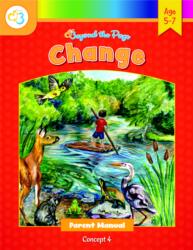
Unit 1: Changes on Planet Earth
Lesson 1
What Causes Change?
Students are prompted to discuss causes and effects with an adult and to observe and record changes (Activities 1 and 2). Students draw before-and-after pictures and complete sentences about a change, then attempt to read their paragraph aloud (Activity 3 and the skill 'Read or attempt to read own dictated story'). The skills list explicitly includes 'Express ideas through writing and conversation,' and parent prompts encourage shared talk and assistance during the writing task.
Lesson 2
What Changed?
Students take part in shared reading of "Part 1: Things Change" where they answer guided comprehension questions about physical and chemical changes. Students complete the "How Did It Change?" activity by examining image pairs, selecting which attributes changed, and are invited to record a sentence describing each example. Students also interact in Activity 3 by following and giving commands to demonstrate changes, providing opportunities for spoken response and brief written labeling.
Lesson 3
Changing Position
Students engage in shared reading of the book Zoom! Zip! Whoosh! with an adult and answer guided questions about pushes, pulls, and gravity. In Activity 1 students use the book's index to locate the words "gravity" and "inertia," look up the referenced pages, and copy the sentences into the activity sheet. In Activities 4 and 5 students explore their toys and the environment, then draw or write lists of items that push, pull, or move, recording observations with adult support.
Lesson 4
Changes in the Environment
Students participate in shared reading of "Part 2: Seasons Change" in the book Changes Happen All Around You and answer guided questions about physical and chemical changes. Students discuss seasonal changes and create a seasons wheel with adult help, labeling and coloring each season. Students write or illustrate short personal responses: two sentences about a time weather caused them to change an activity and a handwriting sentence about their favorite season.
Lesson 6
Changes in the Sky
The lesson asks the child to list adjectives and phrases describing the Sun and Moon and allows the child to dictate while an adult writes, which involves shared writing. The lesson provides activity pages for the student to complete and prompts students to watch specific informational videos and to go outside to observe the Moon, which offers informational sources for inquiry.
Lesson 7
Living Things Change
Students are asked to look at pictures and read about snowshoe hares online or in other resources, and to cut pictures from magazines or the Internet to illustrate changes (Activity 1 note; Activity 3). Students produce written output by writing or copying a sentence that describes how something changes in size (Activity 4).
Lesson 8
Plants and Change
Students are guided to use a table of contents to locate the section "What Do Plants Need?" and read specific pages in National Geographic Readers: Seed to Plant, showing instruction in finding information. Students read multiple pages from two different books (Seed to Plant and Changes Happen All Around You) and watch supporting videos to gather information about plants. Students record predictions for the plant experiment and are asked to list parts of a plant on handwriting paper and describe what plants need, which requires them to write about their findings.
Lesson 9
Heat Causes Change
Students review specific pages in the book Changes Happen All Around You, indicating a guided reading source to inform their investigations. Students collect and organize information by recording measurements and observations on the "Ice, Water, Steam" and "A Burning Candle" activity sheets. Students practice writing by composing or copying a sentence about an observation on handwriting paper.
Lesson 11
People Change the Environment
Students brainstorm positive and negative environmental changes and dictate their ideas while an adult records them (Activity 1), which demonstrates shared composing and recording. Students watch a video about recycling and then discuss what can and cannot be recycled (Activity 2), which engages them in a guided information-gathering activity. Students describe illustrations of human actions and judge whether each change is positive, negative, or neutral (Activity 3), practicing explanation and opinion about observed information.
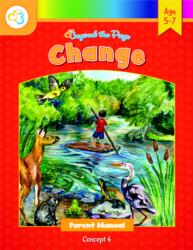
Unit 2: Characters Change
Lesson 2
Why Worry?
The lesson explicitly notes the story is by the same author who wrote Chrysanthemum and asks the child to compare Wemberly and Chrysanthemum (Activity 2). Students complete a "Characters Change" page describing how Wemberly changed from beginning to end and are prompted to revisit Chrysanthemum's page and circle conjunctions. The Wrapping Up section asks the child which story they enjoyed more and why, prompting expression of opinion about two books by the same author.
Lesson 4
Comparing Characters
Students dictate three- or four-sentence summaries of stories while an adult records them, which establishes a shared writing activity. Students complete Venn diagrams comparing characters from multiple books (Chrysanthemum, Wemberly, and What Do You Do With a Problem?) and answer questions about which story they liked and why, which asks them to express opinions. Students match causes and effects taken from the stories and produce a personal "I Change" reflection, engaging in written responses and illustrations about their experiences.
Lesson 5
The Raft
Students read The Raft alongside three other unit books (What Do You Do With a Problem?, Wemberly Worried, Chrysanthemum) and complete a comparison chart and matching activities that require identifying title, character, problem, and solution across multiple books. Students are asked to find two other picture books where a character tells his or her own story (Activity 1) and to copy sentences containing "I," supporting examination of perspective and text features. Students complete individual writing tasks such as filling out Story Elements and Characters Change pages that require them to write or glue labels describing characters, settings, problems, solutions, and how a character changed.
Lesson 6
Positive and Negative Change
The lesson asks the child to dictate a new ending for the rat story and instructs an adult to record that dictated ending, then read it aloud with the child, which is an explicit shared writing task. The lesson also directs the child to write or dictate a sentence or two describing a personal change and to illustrate that situation, giving students practice composing and producing text with adult support. The activities include group discussion about story outcomes and character responses, during which students express judgments about whether changes are positive or negative.
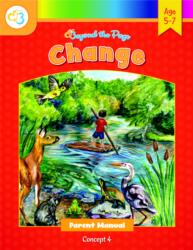
Unit 3: A First Look at History - Change Over Time
Lesson 1
People and Families Change
Students look through family scrapbooks and dictate ideas while an adult records them (Activity 5), which shows participation in a shared research task. Students collect and organize information by ordering pictures of themselves and family photos (Activities 1 and 4) and by making a growth chart from measured data (Activity 2). Students participate in shared writing by dictating ideas to be recorded, filling out the "Writing About Change" page, and reading their ideas aloud (Activity 5 and Student Activity Page).
Lesson 3
Communities Change
The lesson asks students to collect and organize information (listed in Skills) and has students search the book to identify artifacts (Activity 6). Students sequence events from the story using a timeline (Activity 2) and compare communities by pointing out differences in transportation, clothing, homes, and activities (Activity 3). Students express opinions and preferences through discussion questions (Which child would you like to be? What was your favorite part?) and write a sentence about The House on Maple Street (Activity 7).
Lesson 4
Past and Present
Students read sections of The Usborne Time Traveler and are asked to look at pictures in other books or on the Internet, so they explore multiple sources about a topic. Students dictate stories about living in a chosen time period while an adult records their dictation, and they also write a sentence describing how life in the past is different, demonstrating shared writing and individual writing practice. Students create timelines, cut/paste images, and generate five clues to read to family members, engaging in joint inquiry and sharing findings with others.
Lesson 5
Exploring the Past
Students are directed to explore The Usborne Time Traveler pages (Homes and Houses, Clothes and Fashion, Food and Eating, Travel and Transport) and to skim specified pages to gather information. Students will draw and write or dictate descriptions from those pages, cut out pictures, place culture images on a timeline, and complete culture charts over two days. Students will write one sentence about each element of a selected culture, assemble the pages into a book, and give a presentation to the family.
Lesson 6
Predicting Future Change
Students dictate responses while an adult records their ideas and students also write or copy sentences about changes (Activity 1, Activity 3, and Activity 4). Students complete structured activity pages with prompts and lines for written responses, and they categorize outcomes as positive or negative in writing (Activity 2 and the student pages).
Lesson 7
People of the Past
Students select and read a simple biography with an adult and answer comprehension and opinion questions (Activity 1). Students read and sort five short biographical descriptions on the "People in History" activity page, pointing to individuals and ordering them by date (Activity 2). An extension asks students to choose an individual to "learn more about" and read about that person's accomplishments and challenges on the Internet. Students write a sentence about a historical person on handwriting paper (Activity 4).
Final Project
My Past, Present and Future
Students plan and produce a multi-page writing product by making a book of their past, present, and future or by creating comparison pages that contrast a historical time period with today. Students write or dictate sentences on structured activity pages and illustrate corresponding boxes, and they are directed to collect and organize information (M) for their project. Students are encouraged to use a reference (The Usborne Time Traveler) and to present their finished book or comparison pages to their family.
6: Reading

Unit 1: Semester 1
Lesson 2
Letter Sounds Review II
Students create and add word-family pages and other pages to a Word Collection binder or folder, cutting, gluing, and writing words as part of that ongoing project. Students write words on "Writing Words" pages and the lesson describes taking turns spelling and copying words, indicating collaborative composition with an adult. Students read the reader The Pig Can, answer comprehension questions, and are asked to explain their thinking about whether the pig and cat can fit in the box, which elicits an opinion about a text.
Lesson 5
Adding s, More Word Families, Ending with ck
Students read classroom readers (e.g., Ducks Are Fun) independently and aloud to others and are asked a comprehension/opinion question: "Which duck do you think is having the most fun? Why?" The materials encourage students to re-read previous readers and to read the first five readers to family and friends, promoting shared reading. Students also write sentences from dictation and practice writing sight words and uppercase letters, giving them guided writing practice.
Lesson 17
Semester Review
Students are asked to reread and compare multiple readers (The Club, At Camp, King Hank, Spring Has Sprung!, The Raft Trip) and answer "Which of these readers is your favorite? Why?", which requires them to explore several books and express an opinion. Students plan and write their own small book using the "Planning My Reader" page, add words and pictures, and are invited to share their finished reader with others. The curriculum also prompts students to look for books at home or the library that they'd like to read, encouraging them to explore additional texts.

Unit 2: Semester 2
Lesson 11
Long Vowel Sounds Review
Students reread multiple second-semester readers (e.g., Activity 2.1, 3.2, 4.1, 5.1) and search for long-vowel words, writing the found words on a laminated writing sheet. Students cut, sort, and glue word spellings into a Long Vowel Sound chart (Activity 1.2) and place word-sorting pages into a Word Collection folder or binder (Activity 2.2, 4.2). Several activities involve an adult partner who reads with the child and checks the child's recorded words, indicating a shared, guided activity across multiple texts.