


Ninth Grade - ELA
1: Semester 1

Unit 1: Lord of the Flies
Lesson 1
The Call
The lesson explicitly tells students that William Golding wrote Lord of the Flies after World War II as he sought to "find the root causes of the violence he saw," which presents an authorial purpose for study. Students are asked to contemplate which aspects of human nature prevail and to compare the novel's dystopian vision with contemporary dystopian works, prompting consideration of the author's perspective on society. Activities ask students to predict how the island shifts from utopia to dystopia and to identify common elements in dystopian stories, which can surface authorial intent and thematic viewpoint.
Lesson 3
Paths in the Jungle
Students are asked to read a linked article, print and annotate it, and locate the author's thesis and supporting points. The Student Activity Page and top-hat graphic organizer include spaces labeled "Author's main argument/thesis" and "Key points that support the thesis," and students are directed to record their reactions. The Parent Plan and activities instruct students to cite textual evidence and to review the completed organizer to form and evaluate their own opinion about the author's view.
Lesson 4
Images from Paradise
The lesson states that Golding's use of imagery 'conveys his attitude toward nature' and defines tone as word choice that communicates a writer's attitude, linking diction to authorial attitude. Students are directed to fill a Five Senses chart with quotations, note whether descriptions are positive or negative, label examples as 'paradise' or 'dystopia', and explain how each description serves as imagery. Students are also asked to indicate whether a description suggests paradox or emphasizes contrast, which requires interpreting the writer's stance in specific passages.
Lesson 6
Symbolism, Part 1
Students are asked to choose interpretations for symbols (e.g., Piggy's glasses, the conch) and to explain and back up their choices with support from the text in Activity 1. The Wrapping Up and discussion questions prompt students to consider what Golding felt about humans and the natural world and to evaluate the author's broad aim. The lesson text explicitly states that readers can determine a good author's broad aim through critical thinking about symbolism.
Lesson 7
Bowed and Bowed Again
The lesson explicitly teaches dramatic irony and asks students to analyze how Golding withholds or provides information (e.g., "In this lesson, students will learn how to create dramatic irony by providing or withholding information" and the quoted passage about the paratrooper). The Parent Plan lists the skill to "Analyze how an author's choices concerning how to structure a text, order events within it... and manipulate time... create such effects as mystery, tension, or surprise," which directs students to examine authorial choices that produce effects. The activities ask students to predict character responses from both the characters' and the reader's perspectives, requiring comparison of narrative perspective and the impact of information distribution.
Lesson 8
Defects of Human Nature
Students read and cite William Golding's explicit statement of the novel's major theme and are asked to identify major and minor themes in Lord of the Flies. Students choose themes from lists, circle supporting themes, and are required to support their choices by referring to details and scenes from the novel. Students write 3–4 sentence explanations connecting chosen minor themes to the major theme and discuss the author's quoted remarks (including his WWII comment) to guide interpretation.
Lesson 10
Which Is Better?
Students are asked to "consider the failures of civilization Golding saw during his lifetime, and draw parallels between the boys and what they represented to Golding," which prompts them to identify Golding's perspective and purpose. The text highlights Piggy's final words and states that "Piggy's death is an obvious step further into chaos... it is also symbolic, because it silences Piggy's point of view," asking students to interpret that symbolism as an authorial choice. The journal activity requires students to write from a character's point of view and "analyze aspects of Jack's leadership" and how it contrasts with Ralph's and pre-island society, which asks students to connect character actions and narrative choices to thematic purpose.
Lesson 11
The Film
Students are asked to watch the 1963 film and complete a 'Movie vs. Book' chart that asks them to compare similarities and differences in theme, plot, characters, and setting. Students are prompted to reflect in writing on whether any omitted scenes were too critical to the novel's major theme and the answer key explicitly notes Golding's perspective about innate savagery and adult violence. The unit review and homework direct students to review literary devices (such as symbolism, tone, and theme) that relate to identifying the author's perspective.
Final Project
Now You Have the Conch
Students are prompted to identify and support themes and author ideas (e.g., prompts asking what scenes tell you about the power of leaders and mob mentality) and to locate passages that show Ralph and Jack contending. The unit test and answer key ask students to state William Golding's theme about human nature and society and to identify literary devices (direct characterization, dramatic irony) with examples from the text. Students are directed to collect passages, cite textual evidence, and write essays that explain and justify their interpretations using quotes and explanations.

Unit 4: Poetry
Lesson 1
Introduction to Poetry
Students read and mark poems (e.g., Billy Collins' "Introduction to Poetry" and Edwin Arlington Robinson's "Richard Cory") and answer questions that ask them to identify who the speaker addresses and what readers want from the poem. Students identify and record words with strong denotations and connotations, underline language in Dickinson's poem, and explain why particular words (e.g., "frigate") are effective. Students compare their own definitions of poetry with poets' quotations and revise their definitions based on authors' expressed purposes.
Lesson 3
Figurative Language
Students identify and explain figurative language (simile, metaphor, personification, symbolism, irony, paradox, overstatement, understatement) in named poems and record line/stanza numbers (Activity 1 student page and answer keys). Students are asked to explain how specific devices work in a poem (Activity 2 Option 2: "identify the figurative language device, provide the phrase or line, and explain how the poem uses that device"). The Parent Plan asks students to "analyze the cumulative impact of specific word choices on meaning and tone," which requires students to connect word choices to textual effect.
Lesson 4
Voice and Tone
Students identify the speaker (voice) for multiple poems and record three characteristics drawn from textual details (Activity 1 and the Student Activity Page for voice). Students identify tones of poems and cite specific words or phrases that convey those tones using a Tone chart (Activity 2 and its Student Activity Page). Students analyze rhetorical choices that shape feeling and perspective—sensory images, repetition, interrupted dialogue, and dashes—in Robert Frost's "The Fear" and are asked to explain how those choices contribute to tone and meaning.
Lesson 5
What Does It Mean?
Students are asked to identify the speaker, summarize the poem, and use author background to interpret meaning (the Whitman/Lincoln example shows students connect why the poem was written to its meaning). Students answer directed questions about images, tone, symbols, and theme and complete activities that ask how allusions and extended metaphors contribute to understanding (Allusion activity asks how references help understanding; homework asks what lesson the poet is trying to teach). The student activity pages require students to identify devices (imagery, symbolism, extended metaphor, allusion) and to explain their figurative meanings.
Lesson 6
Fooling with Words
Students are asked to listen for metaphors, allusions, and literal versus figurative language as they watch poets ("Listen for some things you have learned thus far like metaphors and allusions or literal versus figurative language"). Students are prompted to think about how poets create and whether they are similar or different in craft ("think about how poets create. Are they similar or different in how they write?"). Students complete a Poet Profile that asks them to reflect on why they chose a poet and what was interesting or appealing about the poet's work or delivery.
Lesson 7
Analyzing Poetry
Students are prompted to identify the speaker and note tone changes (Activity 2, Poetry Map includes a 'Speaker' and 'Tone' box). Students analyze word choice, imagery, symbols/allusions, sound devices, and other figurative language (Poetry Map and Activity descriptions) and practice annotating words and phrases and writing interpretations (Activity 1 and annotation examples). The Parent Plan and activities ask students to summarize themes and analyze the cumulative impact of specific word choices on meaning and tone.
Lesson 8
Types of Poems
Students are asked to identify speakers and tone (e.g., questions about who is the speaker and the poem's tone for Paul Laurence Dunbar's "The Spellin'-Bee") and to state the point of a poem (e.g., "What point does Collins keep making?" for Billy Collins). Activities ask students to analyze rhetorical choices such as comparisons/allusions (how comparing the 17-year-old to famous achievers makes the poem humorous), dialect (how dialect helps or hinders understanding), apostrophe, and how sonnet structure (octave/sestet or quatrains/couplet) frames a problem and resolution. The ekphrasis chart directs students to say what each poem says about the artwork and how the poet changes or adds to the meaning of the artwork, prompting analysis of purpose and poetic strategies.
Lesson 9
The Crossover
Students are asked to analyze how the word "crossover" changes meaning in different poems and to justify whether using the word in different ways is effective (Option 1 homework). Students compare the author's vocabulary definitions with dictionary definitions and explain how the author's method of defining words aids understanding (Vocabulary Activity, Option 1 and Option 2). Students are prompted to evaluate the effectiveness of using text messages as poems and to consider whether the basketball rules presented function as life lessons (Discussion prompts and Option 2 homework). The Parent Plan skills list asks students to analyze how specific word choices affect meaning and tone and how stanzas contribute to theme and plot.
Lesson 10
Poems and Poets
Students complete a "Poetry Map" that asks them to identify word choice, imagery, symbols/allusions, tone, sound devices, other figurative language, and the speaker, and to summarize and state the poem's theme. Guided questions ask students to identify literary devices (e.g., alliteration, similes) and to compare meter and tone across poems, which requires linking devices to effect. Day 3 Activity 4 requires students to research the poet's cultural background and write a journal response explaining how cultural references enrich the poem and reveal the poet's perspective. The lesson's skills list also tells students to "analyze a particular point of view or cultural experience" and to "analyze the cumulative impact of specific word choices on meaning and tone."
Lesson 11
Reciting Poetry
The homework asks students to "Determine who the speaker is and what the poem's tone is" and to "Consider the poem's meaning," prompting students to identify voice and tone. The text instructs students to examine why the poet chose certain words, gives a concrete Housman example about the verb "chaired," and includes a Parent Plan skill to "determine the meaning of words and phrases... analyze the cumulative impact of specific word choices on meaning and tone." The lesson also directs students to mark enjambment and pauses to see how lineation and pacing affect meaning and to practice conveying tone through delivery.
Final Project
Poetry
Students are asked to produce a poetry explication in which they identify the speaker of the poem and the poem's tone and to highlight word choice, sound devices, figurative language, imagery, symbols/allusions, literal meaning, and theme. The explication instructions ask students to demonstrate these aspects visually (e.g., highlighting words that communicate tone or marking examples of alliteration and assonance) so they analyze how language contributes to meaning. The Dylan response task requires students to read opinion articles and argue a position using reasons and sources.
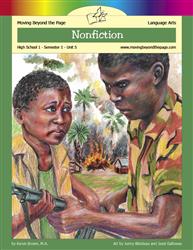
Unit 5: Nonfiction
Lesson 1
Types of Nonfiction
The Parent Plan lists the skill "Assess how point of view or purpose shapes the content and style of a text," and the lesson text defines essays as "subjective, meaning they communicate the author's specific point of view." Students are asked to examine authorship (the Patricia McCormick interview) and decide whether McCormick's involvement changes the classification of I Am Malala, and the activity prompts students to compare themes and viewpoints across books.
Lesson 3
The Taliban
Students read Chapters 7, 8, and 10 of the first-person memoir I Am Malala, which presents Malala's perspective on events. Students answer inference questions (for example, why the Taliban oppose Western culture and why they limit education) that require interpreting motivations and viewpoints. The lesson also includes a wrapping-up prompt about girls expressing their views and a practice in paraphrasing, and the parent plan lists determining central ideas or themes as an instructional skill.
Lesson 6
A Day Like Any Other
The lesson requires students to "Prove" answers by providing quotations or specific examples from the text using the APE strategy, and the Parent Plan lists "Draw evidence from literary or informational texts to support analysis." The Wrapping Up section asks students to identify foreshadowing the authors use, which engages students in noticing an authorial technique. The Decisions, Decisions activity asks students to analyze why characters made choices and to "extend" by explaining how evidence supports their answers.
Lesson 7
Life in England
Students are prompted to compare Malala's memoir and a filmmaker's video, taking notes on how the filmmaker's focus differs from Malala's and how her father's influence is portrayed in each account. Students are asked to consider why a viewer of only the video might have a different impression of Malala's mother and to evaluate in what ways the film and book are effective in telling her story (e.g., visuals, hearing Malala speak, versus insight into her thoughts). The materials provide specific discussion questions and a quoted passage from the book to support students in comparing perspectives and media choices.
Lesson 8
Civil Rights
Students read both halves of Martin Luther King Jr.'s "Letter from Birmingham Jail" and answered targeted questions asking them to identify the most persuasive argument King makes and explain why it was effective. Students completed a "People of the Past" activity that required identifying the historical figures King references and explaining how those comparisons function in his writing. Students used a double-entry diary to underline excerpts, state whether they agreed with King's reasoning, and articulate their own views about just and unjust laws.
Lesson 9
Civil Disobedience
Students analyze excerpts from Thoreau and King in Activity 1 by highlighting phrases on both sides and filling an "Overlapping Ideas" column to identify each author's assertions and purposes. In Activity 2, students read opposing quotes on America, the role of government, and voting, then decide which author's viewpoint they agree with and explain their reasoning. Homework asks students to read excerpts from "Civil Disobedience" and answer questions about Thoreau's beliefs and reasons, prompting students to identify his point of view and purpose in specific passages.
Lesson 10
Learning from the Past
Students read and annotate Elie Wiesel's speech and are instructed to "notice the style and tone" as they complete matching and short-answer activities (Activity 1). They locate and rewrite key quotes, identify metaphors, and answer questions about why Wiesel mentions specific examples (Parent Plan and Activity 1/4). Students compare speeches and essays and reflect on how delivery devices (voice inflection, pauses, repetition, facial expressions) affect persuasion and tone using Dr. King's speech as a model (Activity 2). Students also search for a statement in Wiesel's speech that qualifies as a universal truth and write a paragraph aligning that statement with other advocates using textual quotes (Activity 3).
Lesson 11
A Boy's Story
Students are asked to watch an author interview and answer a question about what the author says the book tries to explain (Q#4 asks directly about the author's intent to explain how violence affected his culture and how a gentle boy could do terrible things). The lesson prompt asks students to "consider what others can learn from the author's experiences," which directs students to the author's purpose. The Parent Plan skills list explicitly includes interpreting words/phrases and "analyze a particular point of view or cultural experience," indicating students will examine the author's perspective. The vocabulary activity has students analyze word choice and connotative meanings, which supports attention to diction and tone.
Lesson 12
Running from War
Students are asked to use the APE strategy for a written response that requires them to Answer a question about the author's experience (dreams vs. memories) and Prove their answer by selecting and integrating a quotation from the text. Discussion prompts ask students to judge the believability and accuracy of the author's memories and to explain why certain events (e.g., rebels' treatment of the elderly) disturb the narrator, which requires identifying the author's perspective. Guided questions and short-answer items ask students to explain what the author means in specific passages, prompting students to interpret the author's attitude and viewpoint.
Lesson 13
Child Soldier
Students answer questions that ask them to infer the purpose of commanders' speeches (e.g., why the lieutenant shows bodies and why commanders repeat, 'The rebels are responsible for everything that has happened to you'), which requires analyzing how rhetoric motivates the boys. Activity 2 directs students to compare the book and a video of Ishmael Beah, recording what the book says and what the author says in the video, prompting students to identify differences in perspective and presentation. The Truth about Memoirs activity asks students to write a journal response weighing supporters' and detractors' claims about Beah's accuracy and the book's effect, which asks students to consider the author's purpose (raising awareness versus factual accuracy). The lesson's skills list explicitly includes delineating and evaluating arguments and citing textual evidence to support analysis.
Lesson 14
Rehabilitation
The Parent Plan Skills list explicitly includes the target standard. In Activity 1 (Option 2) students are asked to re-read the lieutenant's speech and the RUF child's conversation, weigh competing claims about who committed war crimes, and support a conclusion with examples/quotations. Activity 2 ("Wiesel's Words") requires students to choose a quotation about memory/war and explain how it applies to Beah's memoir using specific examples from the book and video. The Wrapping Up discussion directs students to analyze the repeated phrase "None of these things are your fault" and compare its rhetorical use to the lieutenant's propaganda.
Lesson 15
A New Life
The Parent Plan skills list explicitly includes "Determine an author's point of view or purpose in a text and analyze how an author uses rhetoric to advance that point of view or purpose." The Getting Started and Things to Know sections define rhetoric and direct students to consider authors' use of rhetoric and writing style. The Comparing Memoirs activity and Homework ask students to identify author purpose, state what the author wants to persuade readers to believe, describe the authors' styles with adjectives, and evaluate whether the rhetoric was effective, including comparing specific scenes from each memoir.
Semester Exam
Semester Exam
Students are asked to identify narrative point of view (Part III, question 7) and answer a multiple-choice item about third-person point of view (Part I, question 5). The materials define rhetoric (Part II answer key: "The art or technique of using language effectively to persuade the reader is called rhetoric") and include quoting/paraphrasing tasks (Part V) that require students to integrate and rephrase authors' language. Several discussion prompts (Part IV, items A, B, E) ask students to explain Thoreau's and King's definitions of civil disobedience and to reflect on how nonfiction authors' transparency and specificity about war lead readers to learn, which requires students to connect authors' choices to purpose.
2: Semester 2

Unit 1: Ender's Game
Lesson 1
Born to Genius
Students read the author's introduction (pp. xi-xiii) and complete an "About the Author" activity that asks them to identify historical events from 1957–1963 and to locate where Card got ideas about war and the military. The lesson explicitly asks students to consider Card's faith and whether writers should include elements of their religion, and the "Things to Know" and review sections highlight Card's Cold War context and literary influences (e.g., Isaac Asimov). Students rate and discuss issues the novel raises (violence, authority), which connects authorial themes to readers' views.
Lesson 3
Science Fiction
The 'Questions to Discuss' section asks students to react to Graff's pronouncements and notes that Graff presents broad assertions "in order to inspire, influence, or manipulate Ender." Students are prompted to consider specific quoted statements from Graff and to evaluate their truthfulness or manipulative intent. The parent-plan commentary explicitly frames Graff's language as designed to influence Ender, which directs students to think about persuasive speech within the text.
Lesson 4
Divergence
The Parent Plan lists a skill to "Analyze how complex characters... develop over the course of a text," which directs students to examine author choices about character and plot. Discussion questions ask students to consider "Why did Orson Scott Card use the n-word in Chapter 6?" and whether its use is appropriate, prompting students to evaluate an authorial choice and purpose. Homework question #3 asks students to interpret the sentence "Ender's anger is cold, and he could use it. Bonzo's was hot, and it used him," asking what the author means, which requires students to analyze the author's language and its effect.
Lesson 6
Performance Is Personal
Students analyze the opening chapter conversations using the "Text Structure" activity: they identify foreshadowing, explain how conversations create tension by showing conflicting opinions, and describe stylistic differences between the conversations and main text. Students are prompted to discuss the author's use of a charged slur and whether its use has value, which asks them to consider the author's word choice and intent. The Competing Commanders activity has students organize and defend a point of view about characters by choosing criteria and scoring commanders.
Lesson 7
Leaders Motivate
Students read background on John Locke and Demosthenes and write a journal entry explaining why Peter chose the pen names "Locke" and "Demosthenes," which asks them to infer rhetorical purpose and persona. In Activity 2 students match famous leadership quotes and then choose three characters to explain how a quote applies, requiring them to connect rhetoric to character behavior and purpose. A discussion question asks why Orson Scott Card reveals Valentine's thoughts but not Peter's, prompting students to consider the author's narrative perspective.
Lesson 9
Conflict Within and Without
Students are asked in Activity 2 to analyze the author's choice of the chapter title "Veni, vidi, vici," writing one to two paragraphs speculating on why Orson Scott Card chose that historic allusion and how it foreshadows plot developments. In the Conflict in Literature activity, students identify conflicts and are asked to consider how each conflict fits into the story's theme and plot, and to write a paragraph about the conflict's impact on relationships, plot development, and character change. The student activity page and image prompt students to categorize specific textual examples and explain their significance to theme and character development.
Lesson 10
View from Valentine
The lesson explicitly teaches that Ender's Game is narrated from a third person omniscient point of view and defines that term, telling students a narrator "is able to relay the thoughts of more than one of the characters." Students are asked to notice how the narrator provides insights into characters' thoughts and to imagine how the story would differ if written from Ender's first-person perspective. The Parent Plan also lists the skill: "Assess how point of view or purpose shapes the content and style of a text."
Lesson 11
Thud, Whump, Huut
Students are asked to compare passages from Ender's Game with their movie or comic adaptations, re-reading the book scene and re-watching or re-reading the scene in the adaptation and taking notes on omissions or changes. The lesson's introduction explicitly discusses an omniscient narrator vs. film/actor choices, noting that Card's narration conveys characters' thoughts which a film must show through acting. The comic activity and answer key direct students to identify specific narration or dialogue that was omitted or changed and to decide whether pictures conveyed the omitted meaning.
Final Project
Think-Tac-Toe
The Parent Plan skills list asks students to read closely, cite textual evidence, analyze an author's structural choices (including manipulation of time/flashbacks), and analyze cumulative impact of word choice and tone. Box 3 asks students to rewrite a passage from Ender's first-person perspective, directly engaging with narrative point of view. Box 8 asks students to research NATO/Warsaw Pact and then explain two similarities/differences and why the author might have used the historical reference, which prompts consideration of authorial purpose.

Unit 3: Informational Texts
Lesson 1
What Are Informational Texts?
Students watch Malcolm Gladwell's TED talk and are asked focused questions about his reinterpretation of the David and Goliath story (e.g., why David is usually seen as an underdog, in what ways David had the advantage, and what Gladwell's claim about Goliath means). The lesson notes that Gladwell "uses other researchers' studies to draw conclusions" and asks students to predict the author's occupational and educational background and to describe what the video tells them about Gladwell. The homework reading and questions require students to explain researchers' reasoning about the Rosetans' health and to cite evidence for conclusions.
Lesson 2
Outliers
Students are asked to re-read the Introduction and answer questions about its purpose, including how Gladwell uses analogy (the Roseto study) and definitions to define "outlier." Students identify the Bible verse at the chapter start and explain how the "Matthew Effect" relates to the author's point about cumulative advantage. Vocabulary and word-choice activities ask students to analyze synonyms and connotations, supporting attention to authorial diction that advances meaning.
Lesson 3
The Matthew Effect
Students answer homework questions that ask about the author's argument (e.g., Question #2 asks which part of "talent plus preparation" the author would argue plays a bigger role). Students revisit the chapter summary in Wrapping Up that states the author's point that older/selected kids get more practice and thus an advantage. In Activity 1, students evaluate and recreate the chapter's charts to consider how graphics communicate and influence readers' understanding of the author's claims. The Parent Plan also specifies that students should cite textual evidence and determine a central idea of a text.
Lesson 4
The 10,000 Hour Rule
Students are asked to analyze how Gladwell arranges Sections 1–3 and to summarize the focus of each section, which requires identifying the author's approach to developing ideas. The Looking Closely questions ask students to identify specific words and transitions (for example, Gladwell's use of 'however') and to explain why Bill Joy is omitted from Section 2, prompting analysis of authorial choices and intent. Wrapping Up and discussion prompts ask students to evaluate whether Gladwell privileges talent, opportunities, or luck, and the Parent Plan explicitly lists determining an author's point of view/purpose and analyzing rhetoric as a targeted skill.
Lesson 5
Harlan, Kentucky
Students read Chapter 6 of Outliers and answer specific comprehension questions that ask them to identify the pattern of violence, define the "culture of honor," and explain the University of Michigan experiment, which elicit understanding of Gladwell's claims about cultural legacies. The Parent Plan and discussion prompts ask students to consider why Gladwell focuses on a small town and to reflect on cultural legacies in their own area, which asks them to infer author purpose. The lesson's skills list includes citing strong and thorough textual evidence to support analysis, which requires students to use the text to support interpretations.
Lesson 6
The Ethnic Theory of Plane Crashes
Students read multiple sections of Gladwell's chapter and answer explicit questions about the author's organization and purpose (Activity 2 and the Homework prompt asking why Gladwell structures the chapter that way). Students identify and analyze a rhetorical device Gladwell uses—mitigated speech/euphemism—and practice judging when such language is appropriate (Activity 3). Students read a critical blog and Gladwell's response, then summarize the blog author's objections and evaluate how effectively Gladwell responds (Activity 4 and Activity 5, Options 1 and 2).
Lesson 7
Rice Paddies and Math Tests
Students are asked in the Wrapping Up section to decide whether the author's main goal was to inform, persuade, or both and to discuss that decision with evidence. The Skills list requires students to "draw evidence...to support analysis," "cite strong and thorough textual evidence," "determine a central idea of a text and analyze its development," and "analyze how the author unfolds an analysis or series of ideas." Guided questions and comprehension items ask students to restate Gladwell's claims (e.g., talent vs. hard work, the 10,000-hour rule) and to explain how examples in the text support those claims.
Lesson 8
With Malice Toward None
The lesson explicitly lists the targeted skill: determining an author's point of view or purpose and analyzing how rhetoric advances that purpose. Students read Lincoln's "Second Inaugural Address," answer questions about his tone, justification for brevity, and the causes he restates, and identify the speech's purpose to unite and heal the nation. Students complete an activity chart identifying quotes, naming devices (parallelism, antithesis, allusion), and explaining the intended effect of each device, and homework asks students to select sentences that show the speech's organizational moves (background, main message, forward-looking statement).
Lesson 9
Writing about History
Students compare primary and secondary accounts of the Sand Creek Massacre (Firsthand Accounts activity) and match secondary-source claims to supporting primary-source evidence. Students read pro-Chivington editorials and either analyze those perspectives or produce a counter-editorial using facts from sources (Two Points of View / Option 2). The Parent Plan and skills list explicitly require students to "compare the point of view of two or more authors" and to "evaluate a speaker's point of view, reasoning, and use of evidence and rhetoric, identifying any fallacious reasoning or exaggerated or distorted evidence."
Lesson 10
Science Writing
The Parent Plan skills explicitly ask students to "analyze the author's purpose" and to "assess the extent to which the reasoning and evidence an author presents supports his or her scientific analysis," which requires identifying purpose and evaluating rhetorical support. The Investigating Claims activity directs students to explain how the author supports specific claims (e.g., noncontact forces are invisible; centripetal force is fictitious) and to identify the methods used (example, explanation, illustration, highlighting) to make ideas understandable. The Audience Appropriateness prompt asks students to judge whether the author provides enough detail and clarity for a middle-school audience, asking for specific suggestions, which requires analyzing how rhetorical choices advance the author's purpose.
Lesson 11
Technical Writing
Students are asked in Activity 1 to "discover the purpose(s) of the information in the paragraph" and to annotate the passage, marking main topics, terms to highlight, and places for lists or images. The lesson explicitly teaches audience awareness and tone (e.g., "assume your reader knows little or nothing," "establish and maintain a formal style and objective tone") and guides students to use formatting, headings, infographics, and glossaries to make information clear. Students must evaluate whether an infographic or diagram would help and must revise their guides to ensure information is appropriate to the audience and navigation aids support understanding.
Lesson 12
Logical Fallacies
Students read and answer questions about Lou Gehrig's farewell speech, explicitly identifying the main point/thesis and labeling examples of ethos, pathos, and logos. Students analyze Andrew Jackson's speech (and other political examples) by highlighting passages, identifying at least three instances of fallacious or persuasive reasoning, and matching examples from a Fallacy Bank to types like ad hominem, bandwagon, and slippery slope. Homework and activities require students to identify rhetorical appeals in short speeches or to produce their own speech and mark where they used ethos, pathos, and logos.
Final Project
Argumentative Research Essay
The lesson explicitly introduces rhetoric and asks students to acknowledge and refute counterarguments, guiding them to identify opposing claims and respond to them. In Part 5 (Credibility and Content) students are asked to evaluate an author's qualifications, publisher, purpose, and bias when using online sources. The "Present the Evidence" activity requires students to record source quotes/ideas and reflect on how those ideas influence their thinking, and the homework on statistics/graphs has students analyze how data can be used persuasively or misleadingly.

Unit 4: Drama
Lesson 2
How to Read Drama
Students are asked to identify whether the play has a moral or point (Thought/Unifying Theme) and to explain whether it portrays a slice of life or teaches a lesson. Students analyze diction/language by identifying figurative language, dialect, and how language evokes feelings in the audience. Students apply Aristotle's elements to Trifles and discuss how the playwright "manipulates" the audience to feel sympathy, tying specific language and stage choices to the play's effect and purpose.
Lesson 3
Life and Times
Students read Robert Nemiroff's introduction to A Raisin in the Sun and a biographical article on Lorraine Hansberry, and they watch a short video on the Civil Rights Act of 1964, providing historical and authorial context. Discussion prompts ask students to consider why Hansberry's play was "so revolutionary," and questions ask students to identify setting, time period, and influences on the playwright. The parent plan explicitly lists the skill of determining a central idea and analyzing its development, which orients students toward identifying authorial purpose.
Lesson 4
A Raisin in the Sun
Students are asked to "think about why the author chose to tell her story on stage rather than in a book" and to "consider how the action and dialogue on the stage would affect an audience," which prompts consideration of authorial purpose and the effects of dramatic choices. The lesson directs students to note how Hansberry uses dialect and vernacular to create vivid characters and to record themes ("dreams for the future") for each character, which connects authorial choices to thematic purpose. Students also are asked to consider characters' motives and goals and to explain how speech reveals education, region, and background, which touches on how the author shapes perception through language.
Lesson 5
Act II
Students read Hansberry excerpts and answer questions connecting those authorial remarks to characters and themes (Activity 2). Students listen to songs about the American Dream and write what each song says about that dream and why they think it was written (Homework). Students respond to text-dependent prompts using the APE method, which requires them to provide evidence and quotations to support their answers (Activity 3).
Lesson 6
Act III
Students read Langston Hughes's poem "Harlem" and are directed to examine its language and relationship to A Raisin in the Sun (Activity 1). Students are asked to define "defer," identify five similes in the poem, and analyze the final image "Or does it explode?" comparing it with other images. Students are prompted to relate specific poem comparisons to a character's deferred dream in the play, and the parent plan notes analyzing how an author draws on and transforms source material.
Lesson 7
Fences
The lesson includes an explicit August Wilson quote in which Wilson states his purpose—"offer (white Americans) a different way to look at black Americans"—giving students direct wording of an authorial purpose. Students are asked to consider perspective ("What difference does perspective make on the outcome of difficult situations?") and to compare themes, characters, plot, and setting between Fences and A Raisin in the Sun using structured comparison charts. Students also watch an interview with the director/actors and write insights about characters and differences between the play and movie, which can prompt consideration of authorial choices and representation.
Lesson 10
Figurative Language
Students are asked to read Romeo's speech and "discuss why Shakespeare uses many oxymorons and paradoxes," which requires them to connect rhetorical devices to character perspective. Activity pages ask students to identify and explain oxymorons, paradoxes, puns, idioms, and euphemisms in context, and to explain how two oxymorons and one paradox work. In the sonnet activity, students must reorder lines, mark rhyme scheme, and "explain what major conflict in the play Shakespeare summarizes in the sonnet," linking poetic form and purpose.
Lesson 12
Time and Tension
Students read Act IV and complete a 'Time and Tension' activity that has them identify and count time-related words, examine Friar Lawrence's monologue to list ways time is mentioned, analyze Capulet's repetition of "tomorrow/3 times," and analyze the Nurse's monologue for foreshadowing and time references. The activity directs students to explain how Shakespeare manipulates time, pacing, and foreshadowing to create tension and suspense in specific scenes.
Lesson 14
Modern Retelling
Students watch a modern film adaptation and complete a "Two Versions" comparison chart that asks them to note differences in character portrayals, major changes from the original play, use of setting, and use of color. Students are instructed to choose three specific areas of difference, write a thesis comparing the two productions, and write three supporting paragraphs that provide specific examples from both productions and explain the significance or effect of those differences. A discussion prompt explicitly asks students to consider "Why did the director of Romeo + Juliet choose to make it as he did?"
Semester Exam
Semester Exam
Students are asked to learn and explain how writers persuade using logos, pathos, and ethos and to identify logical fallacies (Day 2 Informational Texts). Multiple activity questions require students to define rhetoric, identify appeals (e.g., questions about appeals to ethos and pathos), explain fallacies (straw man, bandwagon), and explain mitigated speech. A discussion prompt asks students to evaluate whether Gladwell's Outliers is primarily informational or persuasive and to analyze the ethos, logos, and pathos he uses to advance his conclusions.