


First Grade - ELA
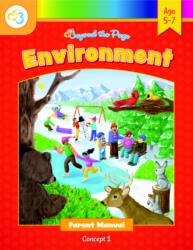
1: Environment

Unit 1: Habitats and Homes
Lesson 5
Discovering Animal Habitats
Students are asked to read and label habitat words (e.g., rainforest, ocean) from a word box and to attempt to read/sound out scrambled habitat words, which exposes them to vowel-team spellings like ai (rainforest) and ea (ocean). The handwriting page has the word "Jeep," giving students practice writing a word with the vowel team "ee." Students are prompted to add first and last letters and to read/sound out the habitat names, providing opportunities to encounter these vowel patterns in context.
Unit 2: Weather
Lesson 1
Reading the Skies
Students read and work with a set of weather vocabulary words (snow, rainbow, clouds, snowflake, rain, lightning, sun) in Activities 1 and 2, including writing words beneath pictures and dictating sentences. Option 2 asks students to choose words from a word box and write them under images, and the Student Activity Pages require students to write sentences using those vocabulary words. The skills list includes "Identify beginning letters and sounds," indicating phonics practice is present, and several vocabulary words contain vowel teams (ai, ow, ou, igh) or a final -e (snowflake).
Lesson 2
Types of Precipitation
Students are asked to read and label words for types of precipitation (e.g., the activity pages require students to read the word for each type of precipitation and label pictures of rain, snow, or hail). The handwriting activity has students practice writing the words "rain" and "round," and the lesson text names precipitation types including "sleet," "hail," "snow," and "rain," providing exposure to vowel spellings in context.
Lesson 6
Winter
The lesson vocabulary list includes the words COLD, SNOW, and FREEZE; FREEZE contains the vowel team "ee" and SNOW contains the vowel team "ow," both of which represent long vowel sounds. Students are asked to attempt to read their dictated stories aloud and may be helped to sound out words as needed, providing incidental practice with decoding. The Snowflake Math activity asks students to circle the beginning letter to help sound out number words, showing some attention to phonics strategies during reading tasks.
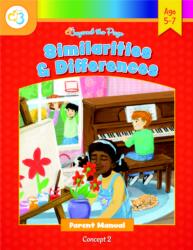
2: Similarities and Differences
Unit 2: Senses
Lesson 2
Senses and Body Parts
Students practice handwriting of the words "sense" and "see" by tracing and writing them on the provided page. The word "see" contains the vowel team "ee," so students get direct exposure and practice with at least one common vowel-team representing a long vowel sound.
Lesson 5
Touch
Students practice handwriting the words "taste" and "touch" and write each word in a sentence (Activity 5). The word "taste" contains a final -e spelling that represents a long vowel sound, so students produce and write at least one final -e word.
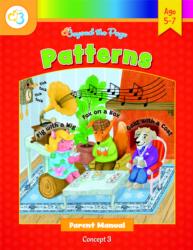
3: Patterns
Unit 2: Patterns in Sounds, Words, and Actions
Lesson 1
Word Patterns
Students are prompted to identify and record rhyming words in nursery rhymes and to note that some rhyming words are spelled differently, with examples given such as wait/date, paid/fade, and mean/seen. Advanced activities ask students to sort rhyming pairs into those that follow the same spelling pattern and those that do not, and to identify pairs that rhyme but have different spelling patterns. Several student pages require circling the repeating word parts (e.g., -at, -en, -og) and adding new words that follow the pattern.
Unit 3: Patterns in Your World
Lesson 6
Seasonal Weather Patterns
Students read, say, and write month names as part of calendar and handwriting activities (e.g., the lesson asks the child to write today's date, read a calendar, and copy the months on handwriting paper). The Student Activity Pages list all months by name and include specific month words such as "May" and "June," which contain common vowel-team (ay) and final -e forms respectively. Students also fill in missing season/month names and match months to seasons, exposing them to the orthography of these words in multiple tasks.
6: Reading

Unit 1: Semester 1
Lesson 7
Consonant Digraphs ch, sh, wh, ph
Students practice open vs. closed syllables and long-vowel behavior in Activity 3.1 by comparing go/got and she/ship and by reading lists that include words with final e and vowel-ending syllables (I, hi, my, by, shy, why). The lesson includes specific words that illustrate final -e and vowel-team spellings (white, phone, beach/bea(ch)) in Activities 2.1 and 5.1 and has students complete fill-in-the-blank and word-building tasks with those words. The skills list also states that students will "associate the long and short sounds with the common spellings for the five major vowels," indicating some intended connection to long-vowel spellings.
Lesson 8
Blends with s
Students are asked to read and write open-syllable words such as 'me', 'by', 'my', and 'go', with an explicit prompt that these are open syllables where the vowel 'says its name'. The skills list includes 'Associate the long and short sounds with the common spellings for the five major vowels.' Students also encounter words that illustrate vowel-team and final-e patterns (for example 'spear', 'sleep', 'sweep', 'skate') during picture naming, word-building, and copying activities.
Lesson 9
Blends with l
Students read and build words that contain final -e and vowel-team spellings in multiple activities (for example, the picture and word lists include globe and glue, and Activity 4.1 Page 3 asks students to fill in (pl)ane). Word-building and writing lists used for dictation and spelling also include words such as plane and globe, and the l-blends picture sort contains glue. These occurrences place several long-vowel spellings (a_e, o_e, -ue) into students' reading and spelling practice.
Lesson 17
Semester Review
Students are asked to "Associate the long and short sounds with the common spellings for the five major vowels" in the Skills list, which targets long-vowel spellings. Students practice and read the pair there/their in Activity 1.3 and in the Sight Word Search, exposing them to a word with a final -e spelling ('there') and a related vowel spelling ('their'). Students also engage with word-building and rime cards (e.g., ang, ing, ong) and identify 'fly' as an open-syllable/long-vowel example in Activity 2.3, giving some practice with alternative long-vowel spellings.

Unit 2: Semester 2
Lesson 1
Long Vowels a and i with Silent e
The skills list explicitly includes "Know final -e and common vowel team conventions for representing long vowel sounds." Students practice the silent e pattern in multiple activities (Activity 2.2 and 3.2) by turning tap→tape, slid→slide, and building and spelling lists of long-a and long-i words with final -e (e.g., lake, game, bake, hike, bike, ripe). Students also encounter other long-vowel spellings when they listen and point to vowel cards for words like eel, heat, train, eight, pie, and mile during Activity 1.2 and in picture/word lists on Days 2–3 and Day 4 (Alphabet Soup).
Lesson 2
Long Vowels o, u, and e with Silent e
Students practice the final -e convention by spelling CVC words and then adding e to make new words (e.g., rob → robe; hop → hope; cub → cube; cut → cute; tub → tube). Students sort and write words into columns identifying short vs. long vowel sounds for e, o, and u and complete word-building activities and spelling lists in which they are told that all listed long-vowel words use the silent e (for example: nose, rope, hope, cube, cute, mute, mule). Students identify the sight word "these" and are shown the silent e that makes the long e sound.
Lesson 3
Hard and Soft c and g
Students sort pictures and words into columns headed with macrons during the Long Vowel Sounds Review, naming each picture and placing each item under the correct long-vowel column (/ā, /ē, /ī, /ō, /ū/). Students compare paired words (rake/face, fake/face, rake/race) and are prompted to notice that final -e or different vowel letter combinations change the vowel sound, and they spell and read words that use silent -e (cake, bike, cone) and vowel teams (boat, feet, moon, pie, soup). Students complete activities that require them to read, spell, and categorize words containing final -e and common vowel-team spellings and to use the macron cue to indicate long vowels.
Lesson 4
More R-Controlled Vowels (er, ir, or, ur)
Students are asked to write and underline the silent e in words such as "large" and "farce," and to explain the silent e's job (Activity 1.2 and Activity 4.1). Students are prompted to read words aloud after underlining silent e and to discuss how silent e affects pronunciation (e.g., that in these examples it affects g or c rather than making the preceding vowel long). The lesson's skills list explicitly names "Know final -e and common vowel team conventions for representing long vowel sounds."
Lesson 5
Long a Spellings ai, ay
Students explicitly review final -e in Activity 1.2 by reading and sorting words (lake, made, cape, plane, page) and answering questions about how the silent e makes the vowel say its name and affects c/g sounds. Students learn the ai and ay vowel-team conventions in Day 2 and Day 3 through direct instruction, videos, word-building (spell way, may, mail, rain, paint, etc.), and word-sorting activities that show ai typically occurs in the middle of words and ay at the end. Students practice reading, writing, and spelling these patterns in fill-in-the-blank sentences, word chains, and a spelling test that includes both ai/ay and silent-e words.
Lesson 6
Long e Spellings ee, ey, ea
Students sort and read word cards into Short e and Long e pages, grouping words such as "these" (silent e) and words with ee, ea, and ey. Students highlight ee, ea, and ey in Long e words using different colors and discuss where ey typically appears. Students build and spell words using ee and ea letter cards (e.g., tree, green, team, bead) and write ea words from pictures. Students read and compare homophones like "see" and "sea" and identify the silent final -e in "these."
Lesson 7
Long i Spellings y, igh, ie
Students read, sort, and glue words into columns labeled i_e, y, igh, and ie (multiple "Long i Word Sorting" and "Long i with Silent e Word Sorting" pages). Students build and spell words aloud using lowercase letter cards for igh and ie (e.g., spell fight, sight, pie, tie) and practice i_e words (hide, ride, time) during word-building activities. Students take a spelling test and read words aloud that require choosing the correct long-i spellings (i_e, y, igh, ie) and identify long-i words in texts and the weekly message.
Lesson 8
Long o Spellings ow, oa, oe
Students identify and mark the three long-o vowel teams (ow, oa, oe) by underlining/highlighting examples and noting their positions (oa usually in the middle; ow and oe usually at the end). Students build and spell words using letter cards that include ow, oa, and oe and read words that use the o_e (final -e) pattern (e.g., rope, note, vote). Students sort long-o words into spelling groups (ope, ote, oat, oad, etc.) and take a spelling test that asks them to name and use the four long-o spellings (o_e, ow, oa, oe).
Lesson 9
Long u Spellings ue, ew, ou
Students change short-u words to long-u words by adding final -e (tub → tube, cut → cute, cub → cube) and are asked to explain that the silent e makes the vowel say its name. Students read, spell, and sort multiple long-u vowel-team words using u_e, ue, ew, and ou (word lists, word-building with letter cards, cut-and-paste sorting, and a spelling test). Students are taught positional conventions for these teams (ue and ew usually at the end of words; ou usually in the middle) and practice reading words that show the two long-u pronunciations (/oo/ and /yu/).
Lesson 10
Other Long Vowel Patterns
Students identify and read words that contain long vowel sounds (e.g., pointing to long vowel words in the Weekly Message and rereading them). Students build, spell, and read words with the specific long-vowel spellings ild, ind, ost, old, olt using word-building cards and writing sheets (for example, spelling mild, wild, child, gold, bolt, colt). The skills list explicitly states that students will "Know final -e and common vowel team conventions for representing long vowel sounds," and students practice distinguishing long from short vowel sounds in spoken single-syllable words.
Lesson 11
Long Vowel Sounds Review
Students cut out and match vowel spellings to example words on a Long Vowel Sound Chart (e.g., matching a_e to "bake"). Students sort words into columns for each vowel team (a_e, ai, ay; e_e, ee, ey, ea; i_e, y, igh, ie; o_e, ow, oa, oe; u_e, ue, ew, ou) and glue them into word-collection pages. Students read decodable readers and write or point out long-vowel words, and they are asked to identify which letters in words make the long e sound; word-scramble and positional hints (e.g., "oa almost always appears in the middle") reinforce team conventions.
Lesson 12
Other Vowel Sounds oi, oy
Students practice the o_e pattern and other long-o vowel teams in Activity 1.2 where they review the ways to make the long o sound (o_e, ow, oa, oe) and spell example words (rope, snow, boat, toe). In Day 2 and Day 3 activities students explicitly sort and list words with oi/oy, learn that oi appears in the middle and oy at the end of words, and place words into ō, oi, and oy columns (e.g., rope, oil, boy). In Day 4 and Day 5 students apply these conventions in sentence-making, spelling tests, and reading (spelling test includes boy, soil, boil, toy, point; readers and dictation include rope, toy, voice, hope).
Lesson 13
Other Vowel Sounds ou, ow
Students identify and write words that use long-o spellings (o_e, oa, ow) in Activity 1.2 (e.g., toe, goat, hose, rope, boat, snow). Students sort words into columns including an "OW = ō" column and an "OU" column in Activity 2.2, placing words like show, snow, and tow into the long-o column. Students also highlight ou vs. ow, build words with letter cards (including o_e and ou spellings), and complete fill-in-the-blank pages that require writing ou or ow to finish words.
Lesson 14
Other Vowel Sounds aw, au
Students read and practice the sight word "made" and are explicitly told to read it using the silent -e pattern that makes the vowel say its name, with example sentences contrasting "make" and "made." The Skills and Weekly Focus lists explicitly include "Know final -e and common vowel team conventions for representing long vowel sounds," identifying that target for student work. Students also sort and practice several vowel teams (oy, oi, ou, ow) and watch videos and complete sorting activities for vowel blends, giving practice with some vowel-team patterns.
Lesson 16
Silent Starts: kn, wr, gn
The lesson explicitly directs students to attend to final -e (Day 3 asks the child to point to the ending e and the vowel i and reminds them about the role of silent e). Students read and build words that illustrate vowel-team and final-e spellings (know, gnome, write, knife, knee, wreath, etc.), and Day 2 and Day 3 include videos and word lists that draw attention to the ow vowel team and silent-e pattern. Activity 4 has students sort words by vowel sounds and then by silent-beginning letters, with the teacher prompt Make sure that he can name the vowel sounds and grouping examples that show long-vowel spellings (knee/wreath = long e, knife/write = long i, gnome/know = long o).
Lesson 17
Year-End Review
Students sort and read many words organized by long vowel sound (Day 2 Long Vowel Sounds Sorting) into columns labeled long ā, ē, ī, ō, and ū, using words that show final -e patterns (skate, hide, doze, cube, mule) and vowel-team patterns (ai, ay, ee, ea, igh, oa, ow, ue, ew, ou). Students read and identify long-o words and the ow pattern in the "Which Words?" activity and read sight words "only" and "over," noting they begin with the long o sound. Multiple activities (Alphabet Soup, Day 3 and Day 5) have students build and read words containing vowel teams and discuss that some vowel pairs (ow, oo, ea) can make different sounds.