


Ninth Grade - ELA
1: Semester 1

Unit 1: Lord of the Flies
Lesson 1
The Call
Students are asked to read Chapter 1 of Lord of the Flies for homework and to answer text-based comprehension questions that require referring to specific events (e.g., what Ralph and Piggy find and how they use it). In Option 1 students list dystopian novels and films they have read/watched and analyze common settings, plots, and central struggles, drawing on their prior readings. The vocabulary activity has students match words to quotations and passages from Lord of the Flies, requiring attention to and use of textual evidence. The Wrapping Up section asks students to consider specific discussion questions and to be prepared to discuss survival and leadership.
Lesson 2
Life on the Island
Students are assigned homework to read the next two chapters and to expand STEAL character pages, explicitly instructing them to record examples and include page numbers. Multiple Student Activity Pages require notes with page numbers (e.g., "Notes (include page number)") for each character and the Independent and Dependent Clauses activity asks students to write sentences based on what they have read. The lesson includes "Questions to Discuss" and review prompts that ask students to describe characters and answer substantive questions about the text, which are set up as opportunities for verbal exchange.
Lesson 3
Paths in the Jungle
Students are asked to read and annotate a linked article and to identify the author's thesis and supporting points, recording these on a two-column organizer labeled 'Key points that support the thesis' and 'Your reaction to the thesis.' The plan directs students to review the completed organizer as a guide to form their own opinion and offers an optional second article to gather additional viewpoints. The wrapping-up and discussion prompts (e.g., 'Take the time to develop the skill to articulate why you agree or disagree with other's opinions' and listed 'Questions to Discuss') encourage students to prepare responses and engage in discussion about their interpretations.
Lesson 4
Images from Paradise
Students are asked to fill the "Five Senses" chart with sentences from the book, including the original quotation, a positive/negative label, and an explanation, which requires locating and recording textual evidence. Homework directs students to read Chapter 5 and add to their STEAL character pages, prompting students to collect textual details about characters' actions and thoughts. The lesson includes explicit "Questions to Discuss" and discussion prompts that students could use their collected quotations and notes to answer.
Lesson 5
Not Hunting, But Hunted
Students read chapters of Lord of the Flies and complete directed reading and comprehension questions, and they add to STEAL character pages, showing preparatory reading. Activity prompts ask students to analyze underlined passages from the text and compare examples, and to 'be prepared to discuss' drafted laws or a system for adopting laws, which asks students to 'use this understanding' of world history and the novel. The lesson also provides a short video and examples that students must review before completing the Life in Slow Motion writing activity.
Lesson 6
Symbolism, Part 1
Students are assigned reading (Chapter 7) and targeted questions to prepare their understanding of the text. Students complete a Student Activity Page that directs them to choose interpretations for symbols and to "write an explanation supported by the text," which requires citing textual evidence. Students write a one-page journal entry that must record actions and quotes from other characters, explicitly using text-based details. The Parent Plan also provides discussion prompts (e.g., about the conch) that invite oral consideration of textual developments.
Lesson 7
Bowed and Bowed Again
Students are asked to read Chapter 7 (and assigned Chapter 8 for homework) and to continue recording characters' actions and thoughts on STEAL character pages, indicating they prepare by reading the text. In Activity 1, students must predict how Jack, Piggy, and Ralph will respond both from the boys' perspective and from the reader's perspective, requiring them to draw on knowledge from the text to complete a comparative chart. The Questions to Discuss (e.g., "Is Robert in real danger? Why or why not?") and the prompt to give examples of dramatic irony from other books ask students to use their reading to support their responses in discussion.
Lesson 8
Defects of Human Nature
Students are assigned reading (homework: read Chapters 9 and 10 and answer questions) and are directed to add to STEAL character pages, which ensures they come to class prepared with text knowledge. In Activity 1 (both options) students must choose themes that support Golding's major theme and explicitly "support those choices by referring to details from the novel," and they write 3–4 sentence explanations citing textual evidence. The Wrapping Up section and Questions to Discuss prompt students to discuss themes and to use the author's own words to evaluate and guide their understanding, encouraging use of textual evidence in exchange.
Lesson 9
Symbolism, Part 2
Students are assigned to read Chapter 11 for homework and to add to their STEAL character pages, which requires collecting character details from the text. The Student Activity Pages (Recognizing Archetypes and Allegory Analysis) prompt students to generate interpretations of characters and settings, with blank response spaces for students to record their ideas. The lesson states that interpretations should be "thoughtful and based on the author's original text," signaling that students should ground responses in textual evidence.
Lesson 10
Which Is Better?
Students are assigned reading (Chapter 12) and asked to add evidence to STEAL character pages, which requires preparation from the text. The Developing Civilizations activity asks students to compare the boys to early peoples using prior coursework and an external Crash Course video, providing a research resource. The lesson includes quoted passages (Ralph and Piggy) and discussion prompts (e.g., 'What does it mean to be civilized?' and which scenes must be included in an adaptation) that can be used to stimulate exchange of ideas.
Lesson 11
The Film
Students are asked to watch the 1963 film and complete a "Movie vs. Book" chart that requires listing similarities and differences in characters, setting, theme, and plot, which prompts them to collect textual and film evidence. Students are asked to answer journal questions that require explaining why omitted scenes were critical and to describe specific visuals that differed from their mental images, which requires referring to details from the novel and the film. The plan includes "Questions to Discuss" that prompt classroom discussion about scenes, character motivations, and consequences, implying students will use their comparisons during discussion.
Final Project
Now You Have the Conch
Students are prompted to locate and record specific passages from the book (Brainstorming pages and the sample prompt that instructs students to note passages in Chapter 7 with page numbers). The Essay Organizer and traditional outline explicitly require students to include specific examples and quotes from the text in each body paragraph. The lesson also encourages students to share drafts with a family member for feedback and to imagine themselves as peer editors offering comments tied to the prompt and rubric.
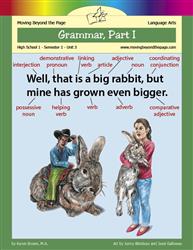
Unit 3: Grammar, Part I
Lesson 1
Parts of Speech
Students are assigned specific readings from The Only Grammar Book You'll Ever Need and directed to complete exercises (e.g., pages cited for nouns, pronouns, verbs, adjectives/adverbs) so they come to class having read the material. The lesson includes a "Questions to Discuss" section and prompts to "read their paragraph to you," which set up opportunities for students to talk about what they learned. Several activities (e.g., Jabberwocky labeling, Parts of Speech Labeling) require students to refer to text passages while working.
Lesson 3
Pronoun Problems
Students are instructed to read specific pages in The Only Grammar Book You'll Ever Need and review lesson material (Activity 2 directs reading pp. 90–94 and optional online sources). Students must prepare a poster or slideshow that explains a topic in their own words, provides two example sentences with errors, and suggests strategies for fixing them. The lesson asks students to share their poster or presentation with family and to respond to questions, and the Parent Plan includes specific "Questions to Discuss" that prompt students to explain and correct pronoun errors aloud.
Lesson 5
Review
Students are instructed to review notes, complete assigned reading on the next groups of commonly confused words, and prepare index cards with rules and examples, which supports coming to class prepared. The lesson includes a 'Questions to Discuss' section that asks students to reflect on quiz challenges and use of dashes, providing prompts for classroom discussion. The parent plan and activities ask students to complete a quiz and homework reading, which require students to read and study material under study prior to class.
Lesson 6
Colons and Semicolons
Students are directed to read specific pages (e.g., pp. 18–19; pp. 124–126), take notes, and complete preparatory exercises and web quizzes before activities. They are asked to prepare formal opening statements for the Great Punctuation Trial and to "review the evidence" and the rules before presenting. During the courtroom hearing students present their statements aloud, answer judge questions, and are explicitly told to provide examples or write a sentence as proof when asked.
Lesson 7
Spelling
Students are asked to read specific pages in The Only Grammar Book and Appendix A and to record notes and examples on the Commonly Confused Words activity pages, which supports preparation for discussion. The Parent Plan includes "Questions to Discuss" that prompt students to talk about strategies (e.g., ways to figure out spelling, usefulness of mnemonic devices). Activity 3 requires students to say words, spell them aloud, write them, and use them in a sentence while a parent acts as the "Chief Detective," creating an oral exchange based on prior preparation.
Final Project
Wrapping Up
Students are told to review the unit review sheet and their "Commonly Confused Words" pages and to go back over lessons, readings, and assignments for any concepts they are unsure about. The mini-project options require students to use information in the book, unit lessons, or other resources to create a visual aid (Option 1) or to refer to their "Commonly Confused Words" pages when creating and assessing a quiz and then explain missed words to the quiz-taker (Option 2). The lesson includes explicit "Questions to Discuss" prompts about what students learned and how their projects/quizzes were helpful, indicating planned discussion opportunities.

Unit 4: Poetry
Lesson 1
Introduction to Poetry
Students are asked in Activity 1 to read the "What Is Poetry" page and be prepared to discuss how their own definitions compare to poets' definitions and to revise their definitions based on that reading. In Activity 2 students read "Richard Cory" and an Emily Dickinson poem, mark words/phrases, and complete a worksheet that requires recording denotations and connotations and explaining why original word choices are more effective. The homework directs students to print and mark Billy Collins's "Introduction to Poetry" and then answer questions that ask them to choose marked words and explain why they are effective, prompting explicit reference to text evidence in discussion and written responses.
Lesson 2
Sound and Rhythm
Students are asked to read and listen to poems (e.g., follow along with an audio recording of "Lord Randall" and read "Nothing Gold Can Stay," "Counting-Out Rhyme," "The Tyger") and to mark textual examples of sound devices (alliteration, assonance, consonance) and rhyme scheme. Activities require students to identify and record specific instances of these devices in the text and to write short responses in their journals explaining the effect of those devices. The lesson includes teacher prompts and discussion questions (e.g., asking why the audio version differed, what musical qualities the poem has, and specific ‘‘Questions to Discuss'' about "The Tyger") that invite oral response.
Lesson 3
Figurative Language
Students are asked to read specific poems (e.g., "I Wandered Lonely as a Cloud," "To His Coy Mistress," "Fire and Ice") and to complete activity pages and journal entries identifying figures of speech with stanza and line numbers. Activity instructions require students to record the phrase or line that illustrates a device and to explain how the device works in the poem, which trains students to locate and note textual evidence. The lesson includes explicit "Questions to Discuss" that prompt students to look back at the poem and consider formal features (rhyme, meter) and rhetorical choices, implying discussion of prepared readings.
Lesson 4
Voice and Tone
Students are asked to read multiple poems and record textual details (identify the speaker and list three things known about the speaker for "Mother to Son," "Sick," and "Richard Cory"). Students complete charts noting tone and the specific words or phrases that convey that tone for "Afternoon on a Hill," "Those Winter Sundays," and "Yesterday." In Option 1, students must "refer to parts of the poem and explain why you are saying what you are saying," which requires using text evidence in a written response. The parent plan includes explicit "Questions to Discuss" prompts (e.g., explain how voice is used in "Richard Cory") that imply oral discussion about text-based ideas.
Lesson 5
What Does It Mean?
Students read assigned poems and background material (for example, Whitman's biography and the poem "O Captain! My Captain!") and follow step-by-step prompts to summarize and analyze literal and figurative meanings. Students are instructed to look up unfamiliar words, use provided web links (Poetry Foundation, lists of allusions), and to research cultural/historical context (e.g., Old Christmas traditions) to interpret allusions. Homework tasks direct students to research extended metaphors in additional poems and record findings in their journals.
Lesson 6
Fooling with Words
Students are instructed to watch a one-hour video and to 'jot down a name you would like to know more about' for homework. The homework directs students to research a chosen poet online and record biographical and literary information on a provided 'Poet Profile' worksheet, with suggested research sites (Poetry Foundation, Poets.org). The lesson includes explicit discussion prompts (e.g., 'Which poets did you enjoy? Why?') that could be used for group discussion about the poets.
Lesson 7
Analyzing Poetry
Students are instructed to read and annotate poems (e.g., annotate "Ozymandias" example and annotate Robert Frost's "October") and to record notes and questions in a journal. Students complete a poetry map graphic organizer that asks them to paraphrase the poem, identify word choice, imagery, symbols/allusions (including looking up Bluebeard), tone, and other textual features. The lesson includes discussion prompts (e.g., "How does annotating a poem help you find a deeper meaning?" and "What are some images that stood out to you?") that imply using observations from their reading.
Lesson 8
Types of Poems
Students are asked to read multiple poems (e.g., Milton, Browning, Keats, Owen) and to mark rhyme schemes and attempt to follow iambic pentameter in the "Sonnet Types" activity. Students complete analytic tasks such as answering guided questions about tone, speaker, and structure for narrative poems, filling an Ekphrasis Analysis chart that compares poems to artworks, and writing journal responses after watching poets/readings. Homework requires students to begin reading The Crossover and answer text-based comprehension questions.
Lesson 9
The Crossover
Students are asked to finish reading The Crossover and may complete the reading as homework, which establishes preparation with the text. Homework Option 1 directs students to look at specific poems/pages (pp. 227-228 and pp. 234-237) and answer what "crossover" means in each, requiring consultation of the text. Vocabulary activities ask students to compare the book's definitions with dictionary definitions and to use one word as an example, prompting use of both the text and external reference resources. The lesson includes explicit "Questions to Discuss" prompts intended for group conversation about character relationships and author choices.
Lesson 10
Poems and Poets
Students are assigned to read multiple poems and to annotate or take notes (Activity 1 and Day readings). Students research poets using the Poet Biography Boxes and are asked to prepare a one-page biographical presentation that includes facts and cultural influences (Day 3 homework and Parent Plan). Students write a journal response analyzing a poem and how cultural references enrich it, and the lesson includes discussion prompts that ask students to reflect on poems and cultural surprises.
Lesson 11
Reciting Poetry
Students are asked to read at least 10 poems on the Poetry Out Loud site and choose one to print and memorize, showing preparation with texts. They are instructed to mark poems, look up unfamiliar words and pronunciations, determine speaker and tone, and note images and enjambment—activities that require close reading and textual familiarity. Students watch model recitation videos and are asked to note in a journal what makes each performance effective and to discuss questions such as how hearing poems makes them come alive.
Final Project
Poetry
Students are asked to review terms and concepts to prepare for a unit test and to reread poems and research materials linked in several choices (e.g., Review Sheet link, Dylan articles). In Choice 5 (Poetry Explication) students must copy poem passages onto slides and highlight textual features (tone, sound devices, figurative language) as part of a presentation, demonstrating use of text evidence. Choice 7 directs students to read multiple articles and Dylan's lyrics and to incorporate others' arguments or quotations (with credit) into a written argument.
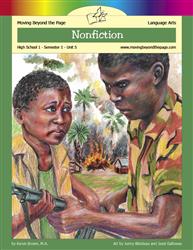
Unit 5: Nonfiction
Lesson 1
Types of Nonfiction
Students read assigned material (the Prologue and Chapter 1 of I Am Malala) for homework and answer text-based comprehension questions. In Activity 1 students examine a book's catalog record, front matter, and back matter and are asked to "support your comparison with specific examples" and cite evidence about whether a work is a biography, autobiography, or memoir. The teacher prompt in the Parent Plan asks students to read an interview with Patricia McCormick and explain her role, discussing whether that evidence changes the book's classification.
Lesson 2
Pakistan
Students are assigned to read Chapters 2–4 (and 5–6 for homework) of I Am Malala, which provides textual material for discussion. The Pakistan activity instructs students to use information from the book as well as provided web links (Wikipedia and a languages page) to answer specific content questions. The Student Activity Page directs students to research history, geography, and language questions and to use the book's timeline and web resources to find answers. The lesson includes explicit "Questions to Discuss" prompts that would be used in group conversation about themes and symbols from the text.
Lesson 3
The Taliban
Students are instructed to read Chapters 7, 8, and 10 of I Am Malala and to consult a linked PBS article when completing Activity 1. Students must research answers to specific questions about the Taliban and then synthesize that research into an informational paragraph or a slide presentation using their own words. The lesson includes explicit discussion prompts (e.g., questions about Fazlullah's methods and differences between terrorism and war) and asks students to be prepared to discuss which education barriers have applied in I Am Malala.
Lesson 4
Dear Diary
Students are assigned to read Chapters 11–13 of I Am Malala and to review Malala's BBC diary excerpts, providing text-based material for preparation. Students practice quoting, summarizing, and paraphrasing through guided explanations, a video on paraphrasing, and an activity page that asks them to analyze paraphrases and create their own paraphrases of specific quoted passages. The lesson includes discussion prompts (e.g., why Malala's parents allowed interviews, and what students might write in a diary for their local paper) that invite classroom conversation about the text.
Lesson 5
Displacement
Students are assigned to read Chapters 16–17 (and additional chapters if desired) and answer comprehension questions, showing preparation from the text. Option 1 directs students to select photos of schools, "do some brief research about school conditions and educational opportunities," and record information and notable statistics about that city or country. Option 2 requires students to read an article about how children get to school, choose four transportation types, and use information from the article to create a mini-book; the materials also prompt students to "discuss the article with you." Student activity pages ask students to use information from reports or views in the photos to detail a student's perspective.
Lesson 6
A Day Like Any Other
Students are assigned close readings of Chapters 20, 23, and 24 (and related homework chapters) to prepare for class. The APE activity requires students to "Prove" answers by providing evidence from the text, including quotations and page numbers. The Student Activity Page and parent plan instruct students to "be prepared to discuss your opinion" and to discuss their answers with the teacher, signaling an expectation that students will draw on their preparation during discussion.
Lesson 7
Life in England
Students read Chapters 33–34 and finish the book as homework and watch an 11-minute documentary-reflection video by Adam Ellick. Students take notes on guided comparison questions and are directed to refer to exact book pages (top of p.75 and bottom of p.106) and a video timestamp (around 3:10). Students are asked to be prepared to discuss their notes and compare how the book's account and the filmmaker's account differ.
Lesson 8
Civil Rights
Students read primary and secondary texts (half and full readings of Martin Luther King Jr.'s "Letter from Birmingham Jail," excerpts from Frederick Douglass, poems by Langston Hughes and Maya Angelou) and watch assigned video clips. Students answer journal questions that ask them to identify the most persuasive argument King makes and to list the four steps of a nonviolent campaign, and they complete written activities (double-entry diary, timeline sorting, 'People of the Past' matching) that require quoting, underlining, and explaining textual passages. Option 2 of the 'People of the Past' activity explicitly asks students to supply information either from prior knowledge or through brief research. The Parent Plan skills list also directs students to "draw evidence from literary or informational texts" to support analysis and reflection.
Lesson 9
Civil Disobedience
Students read and annotate primary-source excerpts from Thoreau and King (Activity 1 and homework) and are instructed to use a highlighter to mark similar phrases and ideas. Students complete comparison tables requiring them to explain overlapping ideas and to analyze quotations side-by-side (Activities 1 and 2). Students must decide which author's views they agree with and explain how their views align, and the Parent Plan skills explicitly list 'Draw evidence from literary or informational texts to support analysis.'
Lesson 10
Learning from the Past
Students are asked to complete a matching exercise before reading and to read both the first and second halves of Elie Wiesel's speech, annotate the text, and find quotes that support answers on the activity pages. Students draft a paragraph in which they skim Wiesel's speech and use a quote from Wiesel and quotes from other human-rights figures (Malala, MLK, Thoreau) to support their argument. Students are prompted to watch and listen to Dr. King and to "be prepared to discuss" differences between reading and hearing a speech, and discussion questions appear in the Wrapping Up section.
Lesson 11
A Boy's Story
Students are assigned specific preparatory work: they read the chronology entries (pp. 222-224), read assigned chapters (pp. 3, 5-17), and watch an author interview, then answer targeted questions that require referring to events in the text and statements from the video. Students complete a vocabulary activity that requires looking up words in the dictionary and using them in sentences drawn from the book. Homework directs students to locate Sierra Leone on a map to track the author's movements, reinforcing preparation tied directly to the text.
Lesson 12
Running from War
Students are assigned specific chapters to read (Chapters 2, 5, etc.) and summaries are provided, showing they must come to class prepared. The APE homework requires students to "Prove" their answer by using a quotation from the text and to use one of the quotation-integration methods taught in Activity 1. Activity 1 and the Student Activity Page explicitly teach and have students practice introducing and integrating quotations from the book (including exercises and a Part II prompt to introduce a quotation with context).
Lesson 13
Child Soldier
Students are instructed to complete the "book" sections of the "Different Accounts" worksheet before watching the video and to "give examples or quotes from the book to back up your answer," then complete the "video" section and "be prepared to discuss your answers." Multiple reading assignments (Chapter 12, Chapters 13–14) require students to answer guided questions based on the text prior to discussion. Homework asks students to use "what you have read in the book, what Beah said in the video in Activity 2, and your own thoughts" to record advantages and disadvantages, explicitly directing students to draw on textual and video evidence for class work.
Lesson 14
Rehabilitation
Students are asked to read Chapters 15–17 and related materials before activities and homework, establishing preparation for discussion. In Activity 1 (both options) and the "RUF vs. Government Soldiers" page, students must identify whether specific war crimes occurred and provide supporting examples or quotations from the text (including page numbers). In Option 2 and the "Wiesel's Words" activity, students must choose a conclusion or quotation and explicitly support their response with examples or quotations from the book and the linked author video.
Lesson 15
A New Life
Students read assigned chapters (Chapters 19–21) and summarize Chapter 20 in their journals, demonstrating preparation with text-based notes. Students complete a Comparing Memoirs activity that asks specific, text-focused questions (e.g., ‘‘How is education addressed in each of these memoirs?'' and prompts to look at specific scenes) and are told to be prepared to discuss their answers. Students research nonprofit organizations using provided web links and create a flyer or webpage, showing that they gather information from external sources to support their work.
Final Project
Expository Essay
Students develop a research question, gather multiple credible sources, and identify three key supporting facts for an expository thesis (K-N-S chart, homework that requires three facts and their sources). Students practice quoting, paraphrasing, and summarizing those facts and are required to cite them in-text and on a Works Cited page. The materials prompt students to get feedback from a knowledgeable friend, relative, or trusted adult and include a "Questions to Discuss" section suggesting classroom discussion topics about audience and differences between expository and persuasive writing.
Semester Exam
Semester Exam
Students are asked to review unit materials and "Unit Review Sheet" pages for preparation, including specific guidance to skim lessons and review concepts from Lord of the Flies, Poetry, Nonfiction, and Grammar units. Part IV is labeled "Discussion" and asks students to choose prompts and provide thorough paragraph answers that draw on readings (e.g., "Use your readings, books, or authors from the Nonfiction unit" and prompts about Thoreau/King, memoir accuracy, and war writing). Part V requires students to introduce and correctly quote a passage and to paraphrase sections, demonstrating practice in integrating textual evidence into their responses.
2: Semester 2

Unit 1: Ender's Game
Lesson 1
Born to Genius
Students are assigned to read the novel's introduction (pp. xi–xiii) and to use Internet research to complete the "About the Author" activity, requiring them to gather background information. Students complete a pre-reading survey ("Your Views on the Issues") and are told to be prepared to discuss their responses and explain their reasoning. The parent plan includes explicit discussion prompts and a note that students should be prepared to discuss how their views changed after reading.
Lesson 2
We're People, Not Thirds
Students are assigned reading homework (Chapters 3–4) that requires them to come to class having read the text. Activity 2 offers an option to "research eugenics and record ten facts you learned," and the Planned Procreation activity explicitly tells students they may use Internet research to brainstorm reasons in four categories. The lesson includes Discussion Questions that ask students to explain and justify positions about events and characters in the text.
Lesson 3
Science Fiction
Students are asked to read an article on the genre and use that article plus the lesson introduction to fill out a graphic organizer about science fiction. Students complete a "Quiz Prep" activity sheet that reviews key terms and scenarios, and they have homework to read Chapters 5–6 of Ender's Game and answer comprehension questions. The plan includes several "Questions to Discuss" prompts about Graff's pronouncements that are intended as points for classroom discussion.
Lesson 4
Divergence
Students are assigned to read Chapter 7 and answer specific comprehension questions as homework, which requires preparation on the text. The lesson includes a "Questions to Discuss" section with prompts that reference events and character details from the novel (e.g., describing Bernard, discussing Ender's choices, and authorial word choice), creating opportunities for text-based discussion. Activities (quiz and genre labeling) require students to identify examples from named texts, which engages them with textual evidence and examples.
Lesson 5
Movement and Time
The Student Activity Page (Flashbacks) asks students to find a specific flashback in Chapter 5 and record it, and to answer follow-up questions about insights gained and how the flashback increases tension, requiring close reading and use of textual evidence. The homework requires students to read Chapter 8 and answer detailed comprehension questions about characters and armies, which asks students to prepare by reading the text. The lesson includes "Questions to Discuss" prompts and an optional partner step in Activity 1 where students narrate movements to a friend, providing opportunities for verbal exchange based on their reading.
Lesson 6
Performance Is Personal
Students are assigned specific chapter reading (Chapter 9) for homework and must answer text-based comprehension questions, demonstrating preparation for class discussion. The Text Structure activity directs students to review the opening paragraphs of chapters they have read and to identify foreshadowing and provide examples from the text, explicitly requiring reference to textual evidence. The lesson includes discussion prompts (e.g., Questions to Discuss, Ideas to Think About) that students can use as the basis for classroom conversations about themes and character motivations.
Lesson 7
Leaders Motivate
Students are asked to read about John Locke and Demosthenes using provided web links and a short presentation, then write a journal entry reflecting on why Peter chose the pen names, which requires drawing on that research. Activity 2 asks students to match famous quotes about leadership and then choose three novel characters and explain why a quote applies to each, prompting them to apply textual understanding to character analysis. The homework requires students to read Chapter 10 and answer specific comprehension questions, showing preparation with the text prior to class discussion.
Lesson 8
Flies and Self-Loathing
Students are assigned to read Chapter 11 of Ender's Game for homework and answer text-specific questions, which requires preparation with the text. The Lord of the Flies vs. Ender's Game activity asks students to complete a compare-and-contrast organizer about setting, leadership, themes, fears, responsibilities, and consequences, prompting use of textual knowledge. Activity 1 invites students to research animal symbolism from cultures around the world when designing an army logo, which involves outside research that could inform class work. The discussion prompts ask students to evaluate Ender's perception of his actions and compare characters (e.g., Bean and Ender), tasks that draw on students' reading and analysis.
Lesson 9
Conflict Within and Without
Students are assigned to read Chapters 11–12 of Ender's Game and to answer homework questions that require recall of specific textual details (e.g., Bean's tool, Bonzo's motives, Anderson stacking the odds). Students complete a cut-and-paste chart identifying internal and external conflicts from the novel and write a paragraph addressing how a conflict impacts relationships, plot development, and character change. Questions to Discuss prompt students to talk about management style, pushing Ender to breakdown, and physiological versus physical exhaustion, inviting oral exchange about the text. The Parent Plan skills explicitly state that students should "cite specific textual evidence when writing or speaking to support conclusions drawn from the text."
Lesson 10
View from Valentine
Students are asked to read Chapter 13 (and Chapter 14 for homework) and to answer specific comprehension questions, which requires preparation before class. The lesson includes vocabulary review and prompts such as "Ideas to Think About" and "Questions to Discuss," which set topics for group conversation. The parent plan notes discussion prompts (e.g., fairness in games, changing opinions about people) that imply students will engage orally with the text's themes.
Lesson 11
Thud, Whump, Huut
Students are asked to finish reading Chapter 14 and to read Chapter 15 for homework, and to re-read a chosen book scene before re-watching the movie scene. The movie option instructs students to "take notes on the differences" and to consider what information or dialogue was omitted or changed and why one version is more effective. The comic-book activity page requires students to list specific narration or dialogue that was omitted or changed and to judge whether the comic's pictures communicate the omitted material.
Lesson 12
Campbell's Comparisons
Students watch a video, record the 12 steps of Campbell's hero's journey, and choose six steps to describe parallels to Ender's Game on the Hero's Journey activity page, which requires drawing on the novel. Students retake an issues survey and are instructed to "be prepared to discuss answers," with a note that if reading Ender's Game changed their views they should be able to discuss reasons and may be asked to provide examples from the novel. Homework directs students to read a Forbes article to use in a subsequent activity, indicating additional research to bring to future discussion.
Lesson 13
The Enemy's Gate Is Down
Students are asked to review an article read for homework and are told to "Refer to the article to complete the 'Leadership Lessons: Forbes Four' activity sheet," requiring them to use that researched material. Students complete the "Discovering Subplots" activity page that asks them to reflect on moments of mystery or tension and to list unanswered questions from Ender's Game, and they are instructed to be prepared to answer specific discussion questions about the subplots. The parent plan includes sample questions and suggested answers that model connecting ideas and themes to parts of the text.
Final Project
Think-Tac-Toe
The Parent Plan Skills section explicitly tells students to "cite specific textual evidence when writing or speaking to support conclusions drawn from the text," which supports drawing on preparation and research. Box 8 (Historical References) requires students to look up NATO and the Warsaw Pact, list similarities and differences, and explain why the author used the reference, which asks students to research and refer to external historical evidence. Multiple Think-Tac-Toe tasks (e.g., Box 2 flashbacks, Box 3 text choices, Box 5 leadership comparison) require students to use specific passages or unit concepts and to refer to the Unit Review Sheet when selecting project items.
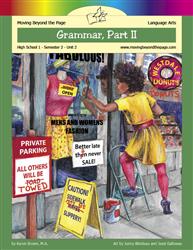
Unit 2: Grammar, Part II
Lesson 1
Review of Grammar, Part I
Students are asked to 'read over the unit review sheet, the comma guide you created, Sets I–VII on the "Commonly Confused Words" activity pages, and any readings or explanations that you found useful,' and Option 2 directs students to 'refer to the Grammar, Part I review sheet or specific lessons' when completing the Mad-Libs activity. Homework Option 2 requires students to create paragraphs with errors and an answer key that includes rules copied from the review sheet, and students are instructed to give those paragraphs to a friend or relative and to read their paragraph aloud. The Wrapping Up section includes explicit discussion prompts (e.g., "Were there any terms or concepts...?") for students to consider and discuss.
Lesson 3
Sentence Fragments and Run-on Sentences
Students are instructed to read specific pages (pp. 21–23 and pp. 155–158), complete online quizzes, and record notes and examples for the commonly confused words and for fragments/run-ons, which requires preparation. The Parent Plan includes explicit "Questions to Discuss" and directs students to share drafts and work with a parent, creating opportunities for oral discussion of grammar topics (e.g., fused sentences vs. comma splices, split infinitives, gerund vs. participle).
Lesson 5
Hyphens and Apostrophes
Students are assigned specific reading and research tasks (e.g., reading pp. 23-24, pp. 126-131, and pp. 112-117) and are instructed to take notes in their journals and consult dictionaries or other resources. The plan includes explicit "Questions to Discuss" and "Ideas to Think About" prompts that can be used in group or teacher-led conversations. Activities require students to complete and check activity pages and an online quiz, encouraging preparation and review of textual material.
Lesson 6
Word Choice
Students are asked to read specific pages (e.g., pp. 24–25, pp. 165–166, Appendix B) and to take linked quizzes and web readings, and they are told to record notes and examples in activity pages and journals. The Parent Plan includes explicit "Questions to Discuss" and prompts for discussion (e.g., difference between idiom and cliché, which tips were useful) that require students to think about the material. Several activities require students to prepare by revising, underlining, and translating phrases (e.g., College Essay Editor, Word Choice paragraph), which students complete before sharing or discussing.
Lesson 7
Verb Voice and Mood
Students are directed to read explanatory webpages (OWL Purdue on active vs. passive voice; Carson-Newman and Grammarly on the subjunctive) and to complete an online passive-to-active voice exercise, showing they are expected to prepare by reading and practicing grammar content. The lesson includes a subjunctive-mood project that asks students to use the linked resources and to create an explanatory product for a younger audience, implying research and content gathering. The Parent Plan and Wrapping Up sections provide discussion prompts (e.g., explain the difference between active and passive voice; why active voice is preferred) that can be used for classroom discussion.

Unit 3: Informational Texts
Lesson 1
What Are Informational Texts?
Students are assigned to begin reading Outliers for homework and to answer specific text-based comprehension questions about "The Roseto Mystery," requiring them to use details from the reading. The Student Activity Page directs students to locate and identify informational text features in a copy of Outliers (table of contents, index, footnotes, charts, etc.) and to answer questions comparing the book to other nonfiction. Students are asked to jot down prior knowledge, watch Gladwell's TED talk, and be prepared to discuss targeted questions that refer to Gladwell's claims and evidence from the talk.
Lesson 2
Outliers
Students are assigned the Introduction and "The Matthew Effect" (pp. 15–34) as homework and must answer specific text-based questions about those pages. Activities ask students to look on particular pages (p. 3, p. 7, pp. 10–11) and re-read passages (the last two paragraphs) to explain how the Roseto study relates to Gladwell's argument. The lesson includes discussion prompts and Question-to-Discuss items that require students to refer to the text and justify answers (e.g., explaining why the birthday cutoff affects players, defining "outlier" from the text).
Lesson 3
The Matthew Effect
Students are assigned to read Chapter 1 and Sections 1–3 of Outliers for homework, and they answer text-based comprehension questions about the 10,000-hour rule and examples from the book. In Activity 1 students must extract birth-month data from the book's chart (pp. 20–21) and re-present that data in a new graphic, and in Activity 2 Option 2 students must read a paragraph (p. 28) and sketch a graphic that represents the study findings. Activity 2 also asks students to brainstorm and optionally look online at biographies of players, which asks them to gather outside research about advantages athletes had.
Lesson 4
The 10,000 Hour Rule
Students are assigned to read Chapter 2 for homework and to finish the chapter in class, showing they come prepared. In Activity 1 students complete the "Looking Closely" worksheet that asks them to summarize each section and identify specific words, phrases, and structural choices Gladwell uses, requiring reference to the text. In Activity 2 students are instructed to mark key opportunities in the book or record them in a journal as they read and then use those marked text-based notes to create a visual for homework.
Lesson 5
Harlan, Kentucky
Students are required to read Chapter 6 (including footnotes) and to underline unfamiliar words as they read, showing preparation with the text. The homework asks students to do brief research on who settled their area and to take notes and share findings with their family, which involves preparing by researching material under study. The Parent Plan skills list explicitly includes 'Cite strong and thorough textual evidence' and 'Draw evidence from literary or informational texts to support analysis, reflection, and research.'
Lesson 6
The Ethnic Theory of Plane Crashes
Students are assigned to read specific sections of Outliers, footnotes, and a blog critique (Activity 4) and to answer guided text-dependent questions that cite page ranges and details. In Activity 5 Option 1, students must prepare and orally present a short explanation summarizing the blog author's main objections and then answer targeted discussion questions. In Option 2, students must fill out a chart identifying each criticism, how Gladwell responds, and evaluate the effectiveness of those responses, which requires referring back to both the blog and Gladwell's response.
Lesson 7
Rice Paddies and Math Tests
Students are assigned specific sections of the chapter to read before answering comprehension questions that require details from the text (e.g., why Chinese number words are shorter, hours worked by farmers). Students are asked to present findings to a parent (Option 1) and to share or discuss their answers to wrap-up questions with a parent, which requires using examples from the reading. The homework mini-project asks students to create an infographic using information found in the book (or other sources) and to cite outside sources if used, encouraging students to draw on their preparation.
Lesson 8
With Malice Toward None
Students are assigned to read Lincoln's "Second Inaugural Address" (via a provided web link) and answer questions about its content and tone. Students complete an activity chart that asks them to identify specific quotes from the speech, name the literary device used, and explain the intended effect, which requires citing text evidence. Homework asks students to choose three sentences from the text that fit a rhetorical structure, preparing specific textual lines for discussion.
Lesson 9
Writing about History
Students are directed to read multiple secondary summaries and primary-source testimonies (John S. Smith, Robert Brent, Chivington) and to answer guided questions, showing preparation with researched material. Students complete a graphic organizer that requires them to connect specific secondary-source claims to supporting primary-source excerpts, and an editorial task asks students to 'use facts from the accounts you read to back up your points.' The lesson includes explicit 'Questions to Discuss' prompts and a 'Wrapping Up' discussion topic that invite students to consider sources' perspectives and biases.
Lesson 10
Science Writing
Students are assigned specific pages to read from the science booklet and a video to watch, and they complete the "Investigating Claims in Science Writing" activity that asks them to explain how the author supports specific claims. The Parent Plan and Skills list explicitly require students to "cite specific textual evidence" and to support arguments with specific examples from the text in discussion prompts. The homework asks students to discuss with a parent which explanation (text or video) was more effective and to be specific, encouraging one-on-one oral use of evidence.
Lesson 11
Technical Writing
Students are asked to back up the introduction to their how-to guide with information from an outside source and to record where they got the information, including putting quoted information in quotation marks. The Guide Checklist requires that the stated benefit be supported by an outside source and properly credited, and Day 3 directs students to add a "Works Cited" section and ensure supporting information remains in the introduction. Students also conduct a follow-up interview and participate in prompts/questions for discussion about their guides and the writing process.
Lesson 12
Logical Fallacies
Students are asked to watch four videos and complete the "Common Fallacies" activity page, requiring them to read and record information from those sources. In Activity 2 Option 1 students must look up definitions for "hasty generalization" and "false dilemma" online and record meanings, and in Option 2 students print/read Andrew Jackson's speech, highlight weak arguments, find at least three, and be prepared to discuss them. The Parent Plan directs students to verbally defend their selections and includes "Questions to Discuss," which ask students to consider intent and effects of misleading arguments.
Final Project
Argumentative Research Essay
Students are asked to locate at least five high-quality sources (library databases first), take notes, and record citations so they come to the final tasks with documented research. Students use the "Present the Evidence" activity to record source quotes/ideas, reflect on them, and draft a working thesis and an explicit counterargument drawn from their research. Students adapt that researched essay into an oral presentation that must include the thesis, major points, counterargument, and supporting evidence/visual aids and are evaluated by rubrics that emphasize use of relevant supporting material.

Unit 4: Drama
Lesson 1
What Is Drama?
Students are asked to watch assigned video clips and record their genre guesses in a journal, which requires them to review materials before class. Students review and practice drama vocabulary and stage diagrams (e.g., labeling parts of the stage, identifying proscenium/thrust/arena stages) and are asked to look at clips again to name the type of stage used. The lesson includes Questions to Discuss and a homework paragraph prompt that ask students to reflect on genres, stages, and viewing experiences, implying follow-up discussion.
Lesson 2
How to Read Drama
Students are asked to read an article on reading drama, watch the Trifles performance, and follow the play script (web links to the video and Gutenberg script are provided). Students complete journal questions and an "Applying Aristotle's Six Elements of Tragedy" activity that asks them to identify clues, describe plot/character/theme, and analyze diction and symbolism—tasks that require referring to specific details from the text and performance. The lesson includes explicit discussion prompts under "Questions to Discuss," which students are expected to respond to after completing the reading and activities.
Lesson 3
Life and Times
Students are instructed to read the Introduction, cast of characters, and setting pages and to answer specific comprehension questions. Students are asked to watch a History Channel video on the Civil Rights Act of 1964, to jot down major points in a journal, and to be ready to answer questions about the video. Homework requires students to read a biography of Lorraine Hansberry prior to class. The Parent Plan provides specific 'Questions to Discuss' for classroom conversation about Chicago's changes and the play's significance.
Lesson 4
A Raisin in the Sun
Students are assigned to read specified sections of Act I and answer comprehension questions, which requires coming to class having read the material. Students complete a vocabulary activity that instructs them to determine word meanings using context from the play or consult a dictionary, explicitly drawing on text evidence. Students listen to dialect samples, take journal notes, and are told to "be prepared to discuss your findings," and homework asks students to answer questions about videos in their journals and discuss them.
Lesson 5
Act II
Students are asked to read Act II and answer text-based comprehension questions and complete a Reader Response Paragraph that requires at least five sentences and use of evidence from the play using the APE (Answer, Prove, Extend) method. Homework asks students to listen to and research four songs about the American Dream, record title and year, and explain what each song says about the American Dream and why it was written. The Hansberry Quotes activity asks students to read excerpts from To Be Young, Gifted and Black and respond by connecting those excerpts to characters in A Raisin in the Sun.
Lesson 6
Act III
Students read all of Act III and the poem "Harlem" by Langston Hughes and complete an activity page that asks them to identify similes, define "defer," and analyze imagery in the poem. Students answer questions that ask them to relate the poem's comparisons to specific characters in the play and to explain which comparison best describes a character's "dream deferred." The lesson includes a "Questions to Discuss" section with interpretive prompts about characters' motivations and reactions, which students could use to support discussion.
Lesson 7
Fences
Students are asked to come prepared by watching the movie Fences (and finishing it for homework) and by comparing it directly with A Raisin in the Sun. Students complete a Comparison activity page that asks them to analyze theme, characters (goals, attitude, obstacles), plot, and setting, and to write at least two sentences about similarities and differences. Students also watch an interview with Denzel Washington and Viola Davis and write a paragraph listing at least three insights about the characters, drawing on that viewed material.
Lesson 8
Shakespeare
Students are assigned to read the Folger Romeo and Juliet introductory pages and to use an activity sheet to analyze a passage from Act 1 Scene 2, which requires identifying speakers, meanings, actions, desires, visualizing, and summarizing. Students are asked to research Shakespeare's life using a video, book, and web resources and to create a timeline that assembles evidence from those sources. The lesson includes explicit discussion prompts (e.g., "How does Shakespeare remain relevant?") intended for group conversation.
Lesson 9
Romeo and Juliet
Students are assigned to read all of Act 1 and to answer scene-specific comprehension questions and write journal summaries of the most important events. Students are asked to watch a Globe Theatre video and take a virtual tour, and to be prepared to discuss specific prompts (e.g., list at least three actor challenges, describe what was most interesting) with a parent. Students are given homework to watch a staged Act 1 performance and to note concrete production details (costume colors, lack of props, movement) for later discussion.
Lesson 10
Figurative Language
Students are asked to read Act II (multiple scenes) and answer comprehension questions and journal summaries before activities, which requires preparation. Activity pages ask students to circle and explain oxymorons and underline/paraphrase paradoxes from Romeo's speech and to cut, reorder, and analyze lines of a sonnet—tasks that require referring to specific text passages. The spouse survey requires students to complete a student form and then compare results with a parent, prompting a comparison discussion and reflection questions are provided for follow-up conversation.
Lesson 11
Nuanced Meaning
Students are instructed to read Acts 3 (Scenes 1–5 across days) and answer specific comprehension questions and write journal summaries of important events, showing they prepare by reading the text. The Text Messaging activity requires students to choose a 6-line exchange from Act 3, rewrite it as modern text messages, and (per the parent plan) show the original scene and compare it to their modern version. The lesson includes discussion prompts (e.g., "Why does Romeo go to Friar Lawrence?" and "Do you think Lord Capulet's harshness with Juliet is realistic?") that imply classroom discussion about the text.
Lesson 12
Time and Tension
Students are directed to read Act IV of Romeo and Juliet and to use an online text (MIT link) to search for and count specific time-related words, producing concrete textual data. The Student Activity Page asks students to analyze Friar Lawrence's monologue, Capulet's repetition of "tomorrow," scene-by-scene questions about how tension is created, and to answer specific comprehension questions about Act IV. The plan includes "Questions to Discuss" and prompts for wrapping up that presuppose discussion of interpretations and predictions about the play's events.
Lesson 13
Tragic Hero
Students read Act 5 of Romeo and Juliet and answer specific comprehension questions and a written summary, showing they prepare by reading the text. Students complete a timeline activity in which they fill in actions/events by act and scene and use that chart to determine whether characters are static or dynamic, requiring them to cite specific scenes as evidence. Students compare excerpts of Pyramus and Thisbe with Romeo and Juliet and answer journal questions about hero types, explaining how Romeo meets or does not meet tragic-hero criteria using examples from the play and the video.
Lesson 14
Modern Retelling
Students are directed to watch the Luhrmann 1996 film version (first 45 minutes and then finish it) and to use the "Two Versions" activity page to take notes comparing the Luhrmann production and the Globe Theatre performance. Activity 3 instructs students to choose three specific areas of difference and to write a three-paragraph analysis that must contain specific examples from both productions and explanations of significance. The Parent Plan includes explicit "Questions to Discuss" prompts that could be used for classroom discussion about director choices and reactions.
Final Project
Drama
Students are asked to research and cite outside sources for projects (e.g., Costume and Set Design require research and credit; projects must include a Works Cited). Students must reread scenes and draw on the text for design decisions (Set Design: "read your scene several times"; Playlist: include sample lyrics and a description of why each song fits the character). Students must present three mini-projects to an audience and explain their choices, and the rubric includes evaluation of "Sources," "Content," and "Presentation," which directs students to use evidence and explain reasoning during presentations.
Semester Exam
Semester Exam
Students are instructed to finish all readings and projects before moving on to the semester test and to review unit review sheets and lesson materials (Ender's Game, Informational Texts, Drama, Grammar). The exam and activity pages require students to provide specific examples and explanations from texts (e.g., cite examples from Ender's Game, A Raisin in the Sun, Romeo and Juliet; refer to Outliers chapters; use textual details in discussion questions). The Part IV: Discussion activity asks students to choose questions and provide 1–3 paragraph answers and explicitly notes that students may refer back to the book and should be specific.