


Kindergarten - ELA
1: Letters

Unit 1: A - A Is for Musk Ox
Lesson 5
Day 5
Students draw a picture of a musk ox and write about it on the journal lines. Students tell a story aloud that an adult records (dictation) and then reread the recorded story. Students are asked to draw a picture to accompany the dictated story, and there is an optional activity where students draw a face showing how they felt after hearing a book.

Unit 2: H - Hondo and Fabian
Lesson 3
Day 3
Students are asked to retell the story in their own words and are prompted with questions such as "What happened at the beginning of the story?" "What happened next?" and "How did the story end?", which directs them to tell events in order. Questions about how the characters and the student feel at the end of the day ask for a reaction to events. Students also produce written words or phrases when describing characters (Activity 4) and practice writing letters and a sight word, showing opportunities for writing and recording ideas.
Lesson 4
Day 4
In Activity 2, students are asked to paint a picture of an activity they like to do with a friend and then dictate a sentence about their painting, which is written down and attached to the artwork. The activity explicitly engages students in drawing and dictating to convey an experience. Activity 3 has students practice forming letters, showing some engagement with writing mechanics though not narrative writing.
Lesson 5
Day 5
Activity 3 directs children to draw a picture of themselves and to "write about himself on the lines," and to "dictate two statements to you about himself," with a parent modeling writing those sentences. The Student Activity Page provides space for children to practice independent writing (tracing then freehand) which supports beginning writing skills that could be used for narration.

Unit 3: I - The Little Island
Lesson 1
Day 1
Students draw a large circle island, color the surrounding water, and glue a rock, trees, fireflies, and bushes in Activity 1, showing they produce a picture representation of the story setting. Students may add other creatures from the book by drawing or printing them in the optional extension, which gives practice combining drawing with adding content from the story. After reading, students are asked to describe the changes that happened on the island across seasons (Question #3) and to state whether they would like to visit the island and why (Question #5), prompting them to recount events and give a reaction.
Lesson 2
Day 2
In Activity 1, students page through The Little Island and talk about how pictures progress through the seasons, and they role-play a picnic that moves through all four seasons, describing what season it is and what changes occur. The teacher asks students what accessories they need as the season changes and how the seasons affect them, prompting spoken narration and a personal reaction. Activity 3 has students create a painting of an island, giving them an opportunity to produce a drawing related to the topic.
Lesson 3
Day 3
The lesson asks the child to "tell you the story of the island in her own words" and encourages use of the illustrations to guide retelling. The book is reread to the child to support that verbal retelling. The prompt includes guiding questions to scaffold the child's oral narration.
Lesson 5
Day 5
Students are asked to imagine a visit to the little island and use the left page to draw a picture of what they would see and do. Students are prompted to "write" some thoughts about their trip in whatever form is comfortable, and if unwilling to write, they are encouraged to dictate ideas that an adult records. After finishing, students "read" their ideas aloud and have those ideas written down in complete sentences on the right page.

Unit 4: T - What Do You Do With a Tail Like This?
Lesson 5
Day 5
In Activity 3, students draw an animal body part, attempt to write 1–3 facts about it, and dictate those facts as an adult writes them in complete sentences beneath the student's writing. In Activity 2, students identify the order of body parts in the book (going through the book to identify sequence) and are asked whether they liked the book and what they learned. These activities explicitly engage students in drawing, dictating, writing, identifying sequence in a text, and giving an evaluative reaction.

Unit 5: L - We're Going on a Leaf Hunt
Lesson 1
Day 1
The Skills list explicitly states the learning goal: students should "use a combination of drawing, dictating, and writing to narrate a single event...tell about the events in the order in which they occurred, and provide a reaction to what happened." The reading questions (especially Question #4) ask students to recall a personal search, describe any challenges, and say how they felt when it was over, prompting narration and a reaction. Activity 1 asks students to go on a leaf hunt, providing a concrete event students could recount.
Lesson 3
Day 3
In Activity 3 students are asked to construct a simple map of the children's journey by drawing the tall mountain, the maple tree, the dark forest, and the subsequent locations. Students use arrows on the map to show which way the children traveled, and the provided image with numbered points emphasizes a sequence of events. The optional extension asks students to include a legend that matches symbols with place names, which could involve labeling map features.
Lesson 5
Day 5
Activity 3, Option 1 directs students to imagine a journey (a 'hunt'), draw a picture of their adventure, write whatever they are able, and dictate their story to an adult while it is recorded, which uses drawing, writing, and dictation to create a narration. Activity 3, Option 2 has students draw objects and supply describing words, giving practice with drawing and writing words. Activity 2 asks students whether they enjoyed the book and why, prompting students to state a reaction aloud.

Unit 6: F - Fireflies
Lesson 5
Day 5
Activity 3 asks students to draw a picture of a favorite summer activity and to write words, ideas, or sentences or to dictate those ideas, showing use of drawing, writing, and dictation. Activity 2 asks students to review illustrations and tell the story in their own words using the illustrations as a guide and to discuss their reactions (e.g., how they would feel when letting the fireflies go). Activity 1 invites students to tell stories about catching fireflies as they add more, which provides opportunities to narrate sequences of actions.

Unit 7: E - But No Elephants
Lesson 1
Day 1
Students arrange the animal pictures in the order they visited Grandma Tildy and verbally tell the sequence using ordinal numbers (Activity 2). Students answer comprehension questions that ask them to describe Grandma Tildy's life at the beginning and end, explain changes, and state whether she was happy, which requires recounting events and giving a reaction (Questions #1 and #2). Students identify predicaments Grandma Tildy faced and explain how she solved each, which asks them to narrate events and outcomes (Question #3).
Lesson 4
Day 4
Students glue animal stick puppets and listen to an adult enact Grandma Tildy's story, holding up each animal as it is introduced. Students are asked to tell the rest of the story or invent a new ending using the stick puppets, requiring oral narration and sequencing of events. During review, students are asked to name a predicament they encountered this week, prompting them to verbally recount a personal event.
Lesson 5
Day 5
In Writing Workshop, students draw a picture of a house full of animals and then write some of the things that might happen, using words, a list, or sentences. The same activity asks students to dictate a sentence for the teacher to write and, if able, to copy a written sentence, showing use of drawing, dictating, and writing. In Reading Workshop, students are asked to retell the story in their own words and to say whether they enjoyed it and whether they could think of a different ending, prompting a reaction to events.

Unit 8: C - Millions of Cats
Lesson 4
Day 4
The lesson asks the child to choose a pet, research how to care for it (bathing, brushing, feeding are modeled in the story and resources are provided), and then "communicate to others what she has learned." It gives two explicit options: design a poster explaining how to care for the pet by drawing pictures (and including words, if desired) or give a "pet talk" using a stuffed animal to explain what she has learned. The poster option involves drawing and optional writing, and the pet talk option involves oral narration/dictation.
Lesson 5
Day 5
Activity 3 asks students to draw and write something about a cat and explicitly allows them to dictate a story, write facts, or write a story; this gives students practice using drawing, dictating, and writing. Activity 2 has students point to words and follow lines left to right, giving practice with directionality and spacing that supports writing. The activities encourage independent composition (one- or two-page spread) so students produce original marks or text about a topic.

Unit 10: O - Owl Babies
Lesson 3
Day 3
The lesson asks the child to "tell you the story in his own words" after reading Owl Babies, which prompts oral narration of the event(s). The lesson also asks the child to identify when the music seems scary or cheerful and to say whether that matches the story, which elicits a reaction to what happened. The child is prompted to read Bill's line "I want my mommy!" aloud, practicing expressing a character's desire.
Lesson 5
Day 5
Students draw a baby owl in their journal using step-by-step directions, providing the drawing component. Students write a brief fiction story about a baby owl and may dictate the story for an adult to record or attempt to write it themselves, providing dictation and writing opportunities. Students create and act out stories with the owl manipulatives and orally tell what they found in the books, giving some practice narrating events aloud.

Unit 11: S - Seasons of Arnold's Apple Tree
Lesson 1
Day 1
The lesson asks students to name activities across the four seasons (Question #2) and to look at what Arnold does with his tree during each season, which invites students to describe events across time. The Adding Apples activity tells students to "create the stories" about apples falling and to practice reading/writing simple equations, giving an opportunity for oral story creation. The skills list includes with prompting and support, identifying characters, settings, and major events in a story and describing relationships between illustrations and story moments.
Lesson 2
Day 2
Students record daily weather conditions on a Weather Report chart for several days, using drawing, writing, or dictation to note sky conditions, wind, precipitation, and temperature. The chart is organized by date and days of the week (M–F), so students record observations in a temporal sequence. Students also create a four-panel 'A Tree for All Seasons' display by designing trees for spring, summer, fall, and winter using drawn and crafted materials.
Lesson 3
Day 3
The lesson asks the student Question #1: "What gift did the tree give Arnold in each season?", which prompts the child to recount what happened across the four seasons. The Getting Started review asks the child to name the four seasons, supporting ordering of seasonal events. Activity 3 asks the child to generate adjectives for each season and to identify seasons from adjectives, which has the child describe characteristics tied to each season.
Lesson 5
Day 5
Activity 3 asks the child to draw a picture of her favorite season and then write or dictate some things she knows about that season, so students use drawing plus writing/dictation. Activity 2 has students identify setting and explain clues, which involves spoken description and recounting details from texts.

Unit 12: D - Dinosaurs Big and Small
Lesson 4
Day 4
In Activity 1 students choose a dinosaur, make a drawing of it, and dictate five facts while an adult records those facts beneath the drawing. The review prompts students to name a favorite dinosaur, give a characteristic, and think of an adjective to describe it. Activity 1 also asks students to share the information with friends and family, indicating students communicate their recorded ideas aloud.

Unit 13: P - Harold and the Purple Crayon
Lesson 1
Day 1
The optional extension asks the child to draw the way Harold solved a predicament using a purple crayon, which asks students to represent a single event visually. Activity 1 prompts the child to recall specific predicaments Harold faced and to offer solutions, which requires students to describe events and imagine outcomes orally. The Reading and Questions section asks students how Harold feels at the end of the story and whether the adventure seemed fun or dangerous, eliciting a personal reaction to events.
Lesson 5
Day 5
Students are asked to choose a color and draw a picture using only that color and then to write or dictate a description or story about the picture (Writing Workshop). Students are instructed to have dictated writing with periods circled, and in Reading Workshop students trace sentences from left to right and tap periods at sentence ends. Students practice the mechanics of sentence endings by identifying and circling periods in their dictated writing.

Unit 14: B - Blueberries for Sal
Lesson 5
Day 5
Activity 3 asks the child to do "free" writing about any topic and explicitly allows dictation: "If your child is not yet writing on his own, this activity works just as well if he is dictating to you. Write down exactly what he says." The activity also directs giving one age-appropriate suggestion to add more detail (e.g., choosing a more colorful, descriptive word or adding a clarifying idea).

Unit 15: R - Rain
Lesson 1
Day 1
Students retell the story by placing die-cut pieces on a blue sky mat to show the progression of events in Activity 1, which requires them to order events physically. The guided questions (Questions #1–#3 and #4) prompt students to describe how the author made them feel and to talk about different kinds of rain and personal experiences, eliciting reactions. The Skills section notes that students will describe familiar events with prompting and produce and expand complete sentences in shared language activities, supporting oral narration.
Lesson 2
Day 2
Students write sentences beginning with "I see…" on separate pages of a Rainbow Book and draw pictures to match those sentences, which shows use of writing and drawing together. For students who are not yet writing, students dictate sentence endings to an adult, showing explicit use of dictation. In the ice and water activity, students observe and describe changes (liquid to solid and melting) over time, engaging with events that occur sequentially.

Unit 16: N - Night in the Country
Lesson 3
Day 3
The lesson asks the child to "tell you the story in his own words, using the pictures as a guide to the retelling," which requires oral narration of events from the book. The teacher/parent has the child reread the book and look for a sight word, reinforcing reading and oral retelling during multiple readings. The lesson also includes handwriting practice for the lowercase letter n, so students practice writing skills though not tied to narrative production.
Lesson 5
Day 5
Activity 3 directs students to create a two-page journal layout with a drawing of the sun on one page and the moon on the other and to write about what they do in the day and at night. Students are encouraged to use marks, letters, or words and to add dictated ideas, then read their work and their dictation aloud. The activity explicitly combines drawing, dictating, and writing as modes for students to narrate their daily/night activities.

Unit 17: M - Marshmallow
Lesson 3
Day 3
Students are asked to tell the story in their own words after reading and are encouraged to use the pictures to prompt their retelling. Students practice writing when completing the lowercase m handwriting sheet. Students also write down measurement numbers when comparing toy animals using marshmallows.
Lesson 5
Day 5
Students are asked to draw a picture of an animal pet, providing a visual representation (drawing). Students fill in blanks on a prewritten poem after the teacher dictates lines and the teacher records responses, showing use of dictation and written responses. Students complete a scaffolded animal story with ordered prompts (e.g., "He got lost when... He wandered... Then he saw his owner...") and fill in the final line indicating the animal's feeling, providing a reaction to the events.

Unit 18: U - Umbrella
Lesson 1
Day 1
Activity 1 asks students to create their own umbrella math story problems, tell the story, show it with umbrellas, and then write the matching equation, which requires students to narrate a short event and write about it. The reading questions ask students to recall events from the book and answer questions about how Momo felt and why, prompting students to state a reaction to what happened. The skills list includes asking and answering questions about key details in a text with prompting and support, which supports oral retelling of events.
Lesson 3
Day 3
The lesson asks the child to listen to the story Umbrella and then "tell you the story in his own words," encouraging use of the pictures to prompt his retelling. The guide also has a brief reading task pointing out words (for example, pointing out the word "not") which supports oral language attention. These directions require students to verbally narrate events from the story.
Lesson 5
Day 5
Students are prompted to draw a picture of a special birthday gift or of themselves receiving/enjoying the gift. Students are asked to write their name, practice writing it, and to write or dictate their thoughts about the special birthday gift. Students read (or hear read) their written/dictated thoughts and point out capital letters they used. Students are asked to name their favorite thing about their writing selection, providing a simple reaction to the event.

Unit 19: J - Jump Frog Jump
Lesson 1
Day 1
Students cut out and physically order story sequence pictures and consult the book to place events from beginning to end (Activity 1). Student activity pages present panels with captions that require students to identify and sequence specific events (e.g., "The frog jumped away from the fish"). The lesson asks students to answer a judgment question about the boy's action ("Do you think that was a kind action? Would you have done the same thing? Why or why not?"), prompting a reaction to events.
Lesson 3
Day 3
Students are asked to line up the story sequence cards from Day 1 in order and tell the story using the cards to prompt them, which has them narrate events in sequence. In Activity 3, students are asked to use die-cut figures and props to show relationships and to create original situations between two animals, verbally producing sentences that describe events and actions.
Lesson 4
Day 4
Students read or hear a nonfiction description of the frog life cycle and are asked to 'talk about what a life cycle is.' Students construct a four-part diagram on a paper plate, glue materials to represent eggs, tadpole, froglet, and frog, and label each quadrant with the stage name. The activity requires students to order the stages visually and label them, representing events in a sequence.
Lesson 5
Day 5
Students reorder story sequence cards and practice reading the book to themselves and to an adult, which engages them in putting events in order. Students draw a picture of an animal and record a written question, demonstrating use of drawing and writing. Students practice writing question marks and identifying punctuation in text during the reading activity.

Unit 20: K - Kindness
Lesson 4
Day 4
Activity 1 asks the child to dictate a list titled "I Am a Good Citizen!" while an adult writes the child's words and the child adds illustrations; the child is encouraged to generate 4–6 ideas. Activity 3 has the child practice forming and writing the letter K, reinforcing writing skills alongside the dictation and drawing in Activity 1.
Lesson 5
Day 5
Activity 2 asks the child to look at the pictures and practice retelling the story, asking him to retell the story and give a general description of each act of kindness using the illustrations as a guide. Activity 3 instructs the child to write or dictate a brief description of a chosen book, state reasons he likes it (an opinion/reaction), and draw a picture of a favorite scene. Activity 1 has the child count sequenced acts (stopping every 10 steps) which reinforces ordered events and the idea of a chain of actions.

Unit 21: V - Zin! Zin! Zin! A Violin
Lesson 5
Day 5
The Writing Workshop asks the child to take a journal and "write about whatever topic the music inspires" or to "dictate her thoughts to you," and then to read the writing back aloud. The guidance also suggests the adult may note a "well-explained sequence of events" as a feature when responding to the child's writing, and the child practices composing and oral retrieval by reading the piece aloud.

Unit 22: Y - Little Blue and Little Yellow
Lesson 3
Day 3
The lesson asks the child to retell and act out the story Little Blue and Little Yellow using the book pictures and balls of dough, which requires the child to narrate the events in his own words (dictating/oral narration). The Color Book activity has the child paint (drawing/representing) and encourages the child to write or trace the name of each color, providing practice combining drawing and writing skills. The lowercase letter writing and handwriting alternatives practice written letter formation, giving additional writing practice.
Lesson 4
Day 4
Activity 2 (Paper Story) has students tear construction paper to represent two characters and use torn paper to represent objects and settings, ask students what happened to those characters and encourage them to tell a story, and then have students choose one scene to glue on paper and write or dictate what is happening in that scene. These directions require students to create visual representations (drawing/assembling), narrate events orally (dictating), and produce a written or dictated explanation of a scene.
Lesson 5
Day 5
Students are asked to draw a picture and write about something they saw or found on a nature walk (Activity 3), which prompts them to use drawing and writing to describe an experience. The activity explicitly allows students to dictate to an adult or to write words, phrases, or complete sentences, supporting the use of dictating and writing. The prompt centers on a single observed event (something seen or found), which lends itself to narrating one event.

Unit 23: W - George Washington's Birthday
Lesson 5
Day 5
Activity 3 directs students to draw a picture of how they celebrate their birthday and to write or dictate words, phrases, or sentences about how they celebrate. The activity also asks students to read back their work, identify a favorite part, and consider replacing a word with a more descriptive one. Activity 2 asks students whether they enjoyed the book and why, prompting students to state a reaction to a text.

Unit 24: Q - The Quilt Story
Lesson 3
Day 3
The lesson asks the child to "tell you the story back in his own words," which requires students to orally narrate events from The Quilt Story. The Then and Now Venn Diagram directs students to compare and contrast the setting and characters at the beginning and end and to "record his ideas" on the page, which has students write elements from different parts of the story. The provided Venn diagram answers include events and a reaction (e.g., "the quilt comforted the girl"), showing students identify feelings related to events.
Lesson 5
Day 5
Activity 3 asks students to draw a picture and then compose and write or dictate a few sentences about a personal item or a holiday celebration, directly requiring drawing and dictating/writing. The prompts for the personal-item topic explicitly ask "Where did you get your item?", "What does it look like?", and "How do you feel when you have your item with you?", which asks for a personal reaction. The holiday topic asks students to describe how their family celebrates the holiday and what they enjoy, prompting descriptive writing about an event or celebration.

Unit 25: X - An Extraordinary Egg
Lesson 1
Day 1
Students dictate lists of factual and fictional frog attributes onto index cards in Activity 2, providing explicit practice with dictating and having ideas recorded in writing. Question #2 asks students to describe a time they have found something extraordinary, prompting them to narrate a personal event verbally. The Skills section also expects students to demonstrate writing conventions and to compare and contrast characters' experiences with prompting and support, which involves recounting aspects of events or experiences.
Lesson 3
Day 3
Students are asked to retell An Extraordinary Egg in their own words using the pictures to help remember the events, which has them narrate events from a text. The instruction to have the child read and repeat sight words (e.g., "look") and to find and circle letters/words involves some written-symbol work alongside oral language.
Lesson 4
Day 4
Students are asked to recall the stages of a frog life cycle and compare them to an alligator life cycle, showing they can tell events in order. Students create a three-section paper-plate craft labeled "egg," "baby alligator," and "adult alligator," placing a balloon, sticker, and die-cut to represent sequential stages. Students act out the frog and alligator life cycles in ordered steps (egg → tadpole/young → frog/adult), practicing sequencing through movement.
Lesson 5
Day 5
Activity 3 directs the child to draw the extraordinary egg in her journal and to write or dictate a creative story about the egg and what is inside, which requires use of drawing and dictating/writing. The activity also has the child read her story back and name one thing she likes and one idea for change, prompting reflection on her own composition. The lesson references an egg created earlier in the week, giving a concrete prompt for the child's narrative work.

Unit 26: Z - Greedy Zebra
Lesson 1
Day 1
After reading, students are asked to explain how the zebra was greedy and what happened because of that greed, prompting them to recount events and outcomes. They are asked whether the zebra deserved the result and why, which elicits a personal reaction to the events. Students are prompted to predict how the zebra will be greedy before reading, supporting sequencing and cause-effect thinking. An activity asks students to create and solve several different story problems using animal cards, which asks them to compose short event-based scenarios (math-focused).
Lesson 3
Day 3
Students are asked to use the illustrations to retell the story Greedy Zebra, which prompts them to narrate the events of the story. Students are asked to predict what would have happened if Zebra had not been greedy, which elicits a reaction to the events. Students are prompted to talk about how a cave would make them feel and whether they would be brave enough to enter to retrieve something valuable, which further elicits personal response to an event-like scenario.
Lesson 5
Day 5
In Activity 3, students are asked to draw a picture of a scene from their favorite book and either write words/phrases/sentences or dictate ideas for an adult to record, which uses drawing combined with writing/dictation. In Activity 2, students are asked to choose favorite books and explain why those books were favorites, which asks for a personal reaction to the texts.
2: Holidays

Unit 27: Halloween
Lesson 3
Day 3
Students are prompted to use ghost manipulatives to act out and solve simple story problems (e.g., "2 ghosts came out to play. 2 more joined them."). Students are asked to create their own story problems and solve them with the ghosts, providing opportunities for oral narration of events. Students also draw a picture or write a message on the inside of a ghost greeting card and trace words like "Boo!" and "Happy Halloween!". Additionally, students choose a page from the book and explain why they like it, producing a verbal reaction.

Unit 28: Thanksgiving
Lesson 1
Day 1
Students dictate five turkey facts to an adult who records each fact on a separate feather (Activity 1), and they color and cut those feathers and assemble a turkey (drawing/artist production). Students trace the voyage of the pilgrims on a world map and identify the ocean they crossed, which asks them to put a historical movement in order. Students are asked to summarize why Thanksgivings are celebrated and to say what they are grateful for, providing an expressed reaction to the topic.
Lesson 2
Day 2
Activity 1 asks students to recall specific story details (why the Pilgrims left, name of the ship, what the journey was like, where they landed, first winter, how the Indians helped, reason and length of the first Thanksgiving), which asks students to recount events from the Pilgrims' experience. Activity 3 has students act out actions on each page, using bodily movement and expression to show what happened, which has students orally/nonaudibly represent events. Activity 2 asks students to predict whether the boat will sink or float and asks "How would the Pilgrims have felt?", prompting students to give a reaction to events.
Lesson 4
Day 4
Students create a handprint turkey (drawing) and are instructed to write or dictate a note on the inside of the card describing why they are thankful, which uses drawing, dictation, and writing and elicits a reaction. The review questions ask students what it means to be grateful and what the Pilgrims were grateful for, prompting students to recall and talk about a past event. The Lincoln craft asks "How does it feel to be President Abraham Lincoln?," prompting students to express a feeling or reaction.
Lesson 5
Day 5
Activity 3 instructs the child to make a drawing of things for which she is grateful and then to write words or sentences, or dictate them, about her pictures, which directly engages drawing plus writing/dictating. The Reading Workshop asks the child to study illustrations and point out observations, which practices connecting pictures to words and meaning.

Unit 29: Christmas
Lesson 5
Day 5
In Writing Workshop Option 1, students draw a picture in their journal of their favorite part of celebrating Christmas and then are encouraged to write or dictate a description of how they like to celebrate. In Option 2, students compose a letter to Santa Claus in their journal and draw a picture that complements their writing, combining drawing with writing. Both options explicitly require students to use drawing together with writing or dictation to produce a commemorative piece about a holiday experience.

Unit 30: February Celebrations
Lesson 1
Day 1
The lesson asks students specific sequence questions about The Biggest Valentine Ever (e.g., how the argument started, what they did when they argued, and what they decided to do the next day), which requires students to recall and tell events in order. The lesson asks students to describe how Clayton and Desmond felt and to reflect on a personal time when they created something by working together, prompting a reaction to events. The skills list and prompts also ask students to recall information with guidance and to speak audibly, supporting oral narration of events.
Lesson 4
Day 4
Activity 3 directs students to write (or trace) a title page and to dictate or write 3–5 of their dreams on cloud-shaped pages, providing explicit opportunities for writing and dictating. Activity 4 and the Student Activity Page ask students to color and cut a paper chain of people, giving additional opportunities for drawing/coloring and hands-on creation. Activities 1 and 2 prompt students to watch story videos and discuss Booker T. Washington and Martin Luther King, Jr., which supports oral recounting and discussion.
1: Environment

Unit 1: Habitats and Homes
Lesson 1
My Environment
Activity 3 instructs the child to have ideas recorded as she dictates and to draw a picture of her favorite room, which gives students opportunities to dictate, write (or have writing recorded), and draw. Activity 2 asks students to number each room in the order they explore them during a walk through the house, so students practice sequencing events. Option pages and handwriting activities ask students to label or copy room names, showing direct practice with writing and labeling.
Lesson 3
Guide to Animal Habitats
Students are asked in Activity 5 to either draw a picture of a chosen habitat or tell a story about what it would be like to visit that habitat, with prompts about what they see, feel, and whether they would want to live there. Activity 2 (both options) has students arrange or trace Crinkleroot's route through habitats in the order visited, requiring students to sequence events. Activity 4 Option 2 asks advanced students to draw and label items (plants, animals, insects), which includes drawing plus writing labels.
Lesson 6
Exploring Animal Habitats
Students draw and label an observed habitat (Activity 1) and are asked to compare their illustration to predictions made before observation, recording ideas. Students choose an animal, draw or paste its picture, and orally compose a story that an adult records for them (Activity 2), using a provided page with prompts such as "I am a ___. I live in the ___. One day I ___." The lesson also asks students to discuss what they would enjoy or find hard about being the animal, prompting a personal reaction.
Lesson 9
Animal Designs
Activity 4 asks the child to tell a creative story about an animal in the wrong habitat and to describe how the animal gets there, what happens, and how it finally gets back home, which prompts sequencing of events. The activity directs that the story be recorded on a separate sheet of paper and that the child draw pictures of the animal in its correct and wrong habitats, supporting use of drawing and dictation combined with a written record.
Lesson 10
Amazing Animals
Students are prompted to role-play and explain what they (as the animal) would do in provided scenarios (e.g., the starfish pulling off an arm and the lizard camouflaging), which elicits oral narration and a reaction to events. The prompt questions ask students how they would feel and what will happen to the animal's body part, prompting a spoken explanation of outcomes. The Amazing Animal Math activity asks students to draw missing body parts, giving practice with drawing as a mode of representation.
Lesson 11
Amazing Me
Activity 3 asks students to think of a time they changed because of the environment, have their ideas recorded on paper, read the ideas aloud, and illustrate those ideas; Skills list includes "Illustrate a story" and "Read or attempt to read own story." Activity 2 has students fold paper into boxes, label emotions, and draw pictures of things that make them happy/sad/scared, which has students use drawing and simple labels to express responses to events or stimuli.
Final Project
Animal Research / My Environment
Students create a stapled book by drawing and writing on a sequence of activity pages (e.g., "Me," "What I Eat and Drink," "Things I Do in My Environment," "A Change in Me"). Students complete prompts and label pictures (animal name, where found, what it eats/drinks, habitat) and are asked to explain and share each page aloud with family. An extension invites students to put words to a song or act out the pages, which encourages oral recounting of page content.
Unit 2: Weather
Lesson 1
Reading the Skies
Activity 3 asks students to illustrate or tell a story about a favorite weather-related activity and allows them to dictate the story while it is recorded. Activity 4 has students draw a picture and record the temperature each day for several weeks, producing a sequence of daily entries. Activity 2 asks students to dictate and/or write sentences using vocabulary words, giving practice with dictating and writing short texts.
Lesson 2
Types of Precipitation
Students are asked to label pictures of precipitation and draw raindrops, snow, or hail (Activity 2, Option 1) and to write the names of precipitation and draw outside scenes showing what a child might be doing in each type of precipitation (Activity 2, Option 2). Students practice writing words and sentences containing 'rain' and 'round' and may write their own sentences (Activity 6). Students are also asked to record a prediction about the rain experiment (Activity 4), which can involve dictating or writing their ideas.
Lesson 5
Fall
Students are asked to circle three favorite things in the fall picture, write the names, and use each word in a sentence; the instructions allow the teacher to record dictated sentences or have students copy them. Activity 2 asks students to place leaves on a graph and reminds them that the first leaf that fell would be closest to the ground, which asks students to consider order. The wrap-up includes asking students whether they like fall and to explain why, which elicits a personal reaction.
Lesson 6
Winter
Students are asked to dictate a story about something they like to do in the winter and the adult will write the story at the bottom of the "Let It Snow" page or the child can attempt to record words himself. Students are prompted to illustrate their story in the provided box and then attempt to read the story aloud. The activity page includes a sentence prompt ("In the winter I _______") plus space for writing and a drawing area, supporting combined drawing, dictating, and writing.
Lesson 7
Spring
Students are asked to illustrate poems (Option 2) — adding drawings next to each poem to help tell the story — and to identify what each poem was about. The "Hatch!" poem itself presents a short sequence of actions (finding an egg, it cracking, the chick appearing) that students read and connect to pictures. The Language Arts extension invites students to write their own spring poem or dictate one while an adult records it, allowing practice with dictation and writing combined with drawing.
Lesson 8
Summer
The Option 2 "A Summer Story" activity has students fill blanks in a short, ordered passage about Jessie's beach trip, read the completed passage aloud, and draw an illustration in the blank rectangle. Activity 1 asks students to describe what is happening in a pictured scene and how the kids feel, prompting students to narrate events and state reactions. Activity 3 has students write season names or beginning letters beneath temperatures and place seasons in sentence blanks, practicing putting events (seasons) in order.
Final Project
Weather Games
Students write season names above pictures and label clothing in Activity 1, and they record current temperature on a weather calendar in Activity 4. Students answer the Weather Forecast checklist (what the sky looks like, precipitation, temperature, how to dress, activities) and practice giving an oral forecast to the family over three mornings. In Activity 3 students look out a window and answer questions including 'Is this a good day to be outside? Why or why not?,' which elicits a reasoned reaction to observed weather.
Unit 3: Community
Lesson 1
On the Town
Activity 3 asks students to draw a new page showing a unique place Charlie could visit and then write or dictate a sentence or two about Charlie visiting this place, which requires drawing and using dictation/writing to tell about an event. The Life Application directs students to keep a notebook and take notes or draw pictures as they visit different places in the community over the next couple of weeks, which encourages multiple drawings/written records of visits (loosely linked events).
Lesson 2
My Community Environment
Students trace paths on the Community Map in the order buildings are discussed, practicing sequencing and spatial order. Students label places and "write or dictate a brief description" on the My Community Poster, using drawing, dictation, and writing to describe community places. During the Field Trip activity students prepare interview questions, take notes or record conversations, and discuss what they observed, which creates an opportunity to recount a visited place. In the wrap-up students state which place is most important and explain why, providing a personal reaction about community places.
Lesson 3
Jobs in the Community
Students observe a community worker and are asked to describe what they saw and have their ideas recorded (Activity 3). Students dictate or attempt to write a paragraph about being a community worker and are given a space to draw themselves in the role on the "When I Grow Up" page (Activity 4). Students practice writing or dictating one simple sentence about how each worker helps and copy or attempt to write sentences (Activity 5), and they record tallies of sightings over several days (Activity 2), showing use of drawing, dictating, and writing to record events and observations.
Lesson 6
A Good Community Citizen
Students draw pictures of family members and either write names and descriptions beneath each picture or dictate observations for an adult to record (Activity 3). In Option 2 students draw three things family members might do in a good environment and draw three things in a not-good environment and label each picture as they explain what is happening. Activity 1 asks students to decide whether scenarios show good citizenship and to explain how they made their decision.
Lesson 7
A Citizen with Character
Students divide a page into beginning, middle, and end and illustrate each part of "The Boy Who Cried Wolf," then write, dictate, or copy a sentence to accompany each drawing (Activity 5 Option 1). Students can also create their own version of the story by dictating and drawing a narrated sequence of events (Activity 5 Option 2). Students answer prediction and reflection questions about "A Lesson in Honesty" and discuss the moral of stories, providing spoken reactions to events they read.
Lesson 8
Rules and Laws
The lesson asks children to listen to and discuss the story "The House with No Rules," including questions such as "What kinds of things happen in the house with no rules?" and "Would you stay in the house with no rules? Why or why not?", which elicits recounting events and a reaction. Activity 1 requires students to write six home rules, number them by importance, and put them in order from 1st to 6th, which practices ordering and using ordinals. The wrapping up prompts ask children to explain why rules and laws are important and which rules are hardest to follow, eliciting personal responses and reactions in spoken or written form.
Lesson 9
Caring for Our Communities
Students are asked to identify the beginning, middle, and end of the story about Katy, which requires them to sequence events. Students are invited to draw pictures, take pictures, or make a video of three things that make their community happy and then share and explain their choices (oral explanation/dictation). Students practice writing by copying sentences with C words and are asked to draw a picture to say "thank you" after role-play, giving opportunities for drawing and simple written/oral responses.
Final Project
I Can Make A Difference
Students use a large blank box to draw or illustrate their plan and are invited to dictate ideas while an adult records them. Students write sequential steps using sentence starters: "The first thing I will do is __," "Next I will __," and "Finally I will __." Students carry out the plan, check off each step, paste a photo, and write about their experience using reflection sentence starters that ask how they felt and how they made the community better.
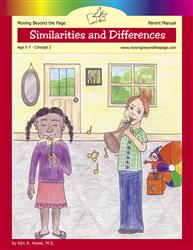
2: Similarities and Differences
Unit 1: Amazing Attributes
Lesson 3
Size, Shape, and Color
Students are asked to draw real-world objects that match given shapes on the "The Shape of Things" activity page, providing explicit practice with drawing and labeling. Students are prompted to describe what they learned about mixing colors and to name and describe shapes, which elicits oral description or dictation. Students are asked to organize 5–8 toys by size (largest to smallest, smallest to largest, or into size groups), which requires putting items in an order.
Lesson 4
How Does It Feel?
Students are asked to write or copy a sentence about an object's texture in Activity 3 ("______ feels _________"), providing some practice with written expression. The Skills section lists "Use new vocabulary in conversation and writing" and "Use words that describe in speech and writing," which directs students to produce descriptive language in writing. The Wrapping Up section shows modeled sentences contrasting a simple event with a more descriptive sentence ("We jumped in the lake." vs "We jumped in the icy, cold lake and got wet."), demonstrating an example of an action with a reaction.
Lesson 11
Using Earth Materials
Activity 1 asks the child to keep a water log and to record occurrences either by writing or by dictating while an adult records, and suggests taking photos and making a collage. Activity 2 asks the child to keep a list of rock uses or take photos of discoveries, which involves documenting observations in writing or images. Activity 3 has the child work in the soil (planting, watering) and discuss properties, which creates opportunities for describing events and observations.
Final Project
Presenting Attributes
The poster option asks students to draw or use pictures and to use words and sentences on the poster, and it explicitly allows students to dictate their ideas to an adult for recording. The demonstration option has students decide what they will say about each attribute and practice giving a demonstration, which involves planning spoken narration. The wrapping-up questions ask students how they felt about the project and what they enjoyed, prompting a personal reaction to the activity.
Unit 2: Senses
Lesson 1
My Five Senses
Students are asked in Activity 3 (Option 2) to dictate four sentences describing a sensing experience and to have those sentences recorded, then to illustrate the experience, give the picture a title, and record the sense and sense organ. Activity 3 (Option 1) asks students to choose a favorite sense, write the sense, draw the associated body part, and draw themselves using that sense. Activity 4 asks students to write or copy a sentence about a sense (e.g., "I smell with my nose").
Lesson 2
Senses and Body Parts
The lesson asks students (Option 2) to make up and tell a story about Jackie, to think about a beginning, middle, and end, and to pause and glue a sense organ when Jackie uses a sense, which requires oral narration and sequencing. Activity 1 (Option 1) has students listen to a story and respond by placing sense organs in the order they hear them used, which practices telling events as they occur. Activity 4 has students write sentences using the words sense and see, giving some practice with written language related to the topic.
Lesson 3
Smelling and Tasting
Students record taste-survey results on a chart and write a sentence reporting those results (Activity 2 and Activity 4). Students illustrate or record foods in taste categories by drawing on folded paper (Activity 3). Students also make and record guesses about items they smell and taste during the blindfolded smelling/tasting activity (Activity 1).
Lesson 4
Hearing and Seeing
Students are asked to describe and have their thoughts recorded after a blindfolded walk and a non-blindfolded walk (Activity 4), and then read and talk about the differences. Students are asked to close their eyes and listen to read descriptions, to choose a noisy place and tell a description emphasizing sounds which is recorded and read back (Activity 5), and to describe what they hear and see on a guided listening/walking activity with comparisons of their lists (Activity 7). Students practice writing by attempting to read their descriptions aloud and by writing sentences that include the words eyes and ears (Activity 5 and Activity 8).
Lesson 6
Experimenting With Our Senses
Students are asked to tell a story about a time they ate or drank their favorite flavor and the adult records their story (Activity 3), which provides an opportunity for dictation. Students are also asked to write or dictate and copy a sentence about something they smelled or tasted today (Activity 4), which provides practice with writing related to an event. In Activity 1 students taste and verbally describe each drink while their descriptions are recorded on index cards, giving additional practice with oral description and recorded responses.
Lesson 7
Using All of Our Senses
Students are asked to record nature-walk observations by writing, drawing, or dictating their findings, which explicitly supports using multiple modes to narrate. Activity 4 directs students to write or copy a sentence about something they observed on the walk. Post-walk questions (e.g., "If someone asked you what you found on your walk, what would you say?" and prompts about what they heard, saw, smelled, and felt) ask students to recount what happened and reflect on it.
Lesson 8
Writing About Our Senses
Students draw the popcorn before and after popping and fill in sensory sentences about how it felt, sounded, smelled, and tasted (Activity 2). Students illustrate a memorable event and record sensing words, phrases, or sentences for each of the five senses (Activity 3). Students are given opportunities to dictate or write a sentence about the popcorn and to attempt to read their report, and they may copy a sentence on handwriting paper (Activity 4).
Final Project
A Sensible Party
Students are given Party Planner sheets with labeled spaces to record ideas and supplies for each sense and to plan three games, which requires them to write and organize their plans. Students are asked to make invitations (including place, date, and time), create a guest list, and check off gathered supplies, which involves writing and sequencing preparatory steps. Students carry out a clear sequence of activities (plan, gather supplies, host the party) and are prompted after the event to answer reflection questions such as whether the party went well and how the senses were used.
Unit 3: We're the Same, We're Different
Lesson 1
You're Special
Students answer personal questions and write responses on the "You Are Special" page, attempting to read each question aloud and writing the letters they hear. Students complete a fill-in-the-blank paragraph using their answers and then read and share that personal story with others. Students are asked to write sentences with numbers in Option 2 (e.g., "I am six years old") and practice handwriting the word "unique," demonstrating use of writing to express ideas.
Lesson 2
Physical Characteristics
Activity 3 asks students to dictate a story about two friends, illustrate the beginning, middle, and end, and record or dictate one sentence for each part, which requires drawing, dictating, and writing to narrate events. Activity 2 has students retell a read-aloud story, answer questions about the beginning, middle, and end, and cut apart event boxes to put the events in order, which requires sequencing events. Activity 4 has students write a sentence, showing that students practice writing as part of expressing information about themselves.
Lesson 4
Interests and Hobbies
Activity 1 asks students to select a hobby and to dictate and then copy or write a few sentences that describe their hobby and to share that description with someone else. Activity 2 has students research an interest, answer five prompts by dictating responses that an adult may write, and teach others about that interest. Activity 3 has students read survey questions aloud and collect answers, which practices oral language and recording responses.
Lesson 6
Different Families
Students are asked to draw illustrations representing basic needs and to draw their family and a family from another country engaged in activities, providing evidence of drawing to convey ideas. The skills list includes "Dictate ideas and responses" and "Attempt to write words and sentences using inventive spelling," and Activity 3 has students practice writing the word "different" and letters D/d. Option 1 and the Venn diagram ask students to complete sentence prompts comparing families, showing opportunities to write simple sentences about similarities and differences.
Lesson 7
Different Homes
Students are asked to sketch and construct a "dream" home (Activity 3), which requires drawing and could be paired with explanations about the drawing. Students are asked to write a sentence about their home (Activity 4 Handwriting). In Wrapping Up and during discussions after reading, students are asked whether they would enjoy living in a different type of home and why, prompting a personal reaction.
Lesson 8
Different Holidays and Traditions
Students draw a picture of themselves celebrating a holiday and write (or dictate) three sentences about it on the "My Favorite Holiday" page, explicitly combining drawing and dictation/writing. Students create a "Book of Holidays" with a page for each holiday that includes a sentence and are instructed to put the pages in chronological order, and Activity 4 has students place holiday graphics on calendar dates. The lesson provides example sentence prompts such as "On ____ we celebrate by ____" and "____ is important because ____," which guide students to describe events and state reactions.
Lesson 9
Different Modes of Transportation
Students are asked to draw a picture of themselves taking a mode of transportation to a destination (Activity 3) and then tell a story about that trip while an adult records the story; they are also encouraged to attempt to read the recorded story aloud. Activity 1 asks students to draw a box around modes of transportation they have taken and talk about where they went, which prompts spoken narration about personal travel events. Activity 4 has students write or copy a sentence about a mode of transportation they have taken, providing a writing component linked to personal experience.
Lesson 10
Wants and Needs
In Activity 2, students find clothes and toys to give away, sort them, take them to a donation center, and then are asked to "write about how it felt to give away her toys and clothes to someone else," with the option to dictate while an adult records their ideas. In Activity 4, students draw or write items named in a survey and place them on webs for "wants" and "needs," which requires drawing and/or writing to record events from interviews. Several activities ask students to draw items (Meeting Needs, Wants & Needs pages) and to write simple lists (My Wants and Needs, handwriting practice).
Lesson 11
Being Part of a Group
Activity 2 asks students to draw a picture of members of a group and then complete a prompted paragraph, allowing them to write or dictate their ideas. The activity explicitly allows students to dictate while an adult records and then encourages students to read the paragraph they produced. One prompt, "One thing I like about the group," asks students to provide a personal reaction.
3: Patterns
Unit 1: Identifying and Creating Visual Patterns
Lesson 1
What Is a Pattern?
Students are asked to draw their own bug patterns and use the "Drawing Bugs" page, providing evidence that students use drawing to represent sequences. Day 2 Option 1 and several activities prompt students to describe sequences using the language "First, there is ____. Next, there is ____. Then, there is ____," and to point to items as they describe them. The Handwriting activity directs students to write or copy three sentences that describe a pattern in order ("First..., Next..., Then...").
Lesson 4
Extending a Pattern
Students recreate and extend physical patterns using objects (Activity 1, Activity 3) and answer questions about those patterns (Activity 2). Students are asked to write a sentence about a pattern they made on handwriting paper (Activity 4) and, in the advanced option, to write the names of objects used for patterns on a separate sheet. Students are also prompted to explain verbally how they extend a pattern during the wrap-up.
Lesson 8
Creating and Writing About Patterns
Students are prompted to illustrate patterns (Activities 1, various Student Activity Pages, and Activity 6) and to write the first letters or full words for pattern elements. Multiple pages ask students to complete sentence stems in sequence: "First comes..., Then comes..., Next comes..." and to write or copy two or three sentences describing a pattern (Activity 7). Activity 3 has students brainstorm and write the sequence words "first, then, next," and Activity 5 asks students to fill in ordinal positions (First to Eighth) and to state what comes before and after.
Final Project
Patterns Poster or Patterns Presentation
Students plan and write a "Script for Presentation" that lists and describes seven patterns, providing written lines for the order of the third through seventh patterns. Students label poster sections and create each pattern in a deliberate order (e.g., dividing poster boards into sections and labeling each with a pattern type). The wrap-up prompts ask students to reflect on how their project went and what they would do differently, eliciting a reaction to the activity.
Unit 2: Patterns in Sounds, Words, and Actions
Lesson 3
Poetry Patterns
Students are prompted to write another verse to the song "A-Hunting We Will Go" and record it on the "A Rhyming Song" page, then illustrate the new verse in the provided box. Students complete a fill-in-the-blank version of the song and write another line from the song on handwriting paper ("We'll find a ____ put it _______ and then we'll let it go"). The song verses themselves present a simple sequence of actions (find an animal, put it in a box/pail/log, then let it go), which students reproduce when they write and illustrate new verses.
Lesson 5
Story Patterns
Students are asked to select and illustrate or write 3–4 important activities in a morning routine, which has them narrate a sequence of events. In Activity 2 (both options) students place pictures or draw and then write or dictate a sentence for the beginning, middle, and end of a short story. In Activity 3 students dictate a story, plan beginning/middle/end boxes, illustrate or act out the story, and then copy or write a sentence from their story.
Lesson 6
Sound Patterns
Students are asked to write about a sound pattern on handwriting paper using a starter phrase ("I heard a pattern that went...") so they practice composing text about an experience. In the "Listen Carefully" activity students record the sound pattern, identify each segment, and note the number of times each sound repeats, so they practice telling the order of events in a pattern. Students also create and imitate their own patterns, which requires them to sequence sounds and reproduce those steps.
Final Project
Patterns Video
Students are asked to write or dictate a script for each pattern, recording the type of pattern, where they found or made it, and the parts that create the pattern. The script pages include explicit sequencing prompts using "First comes," "Then," and additional "Then" boxes so students practice telling steps in order. Students practice speaking their scripts and are recorded on video, which has them narrate each pattern aloud for an audience.
Unit 3: Patterns in Your World
Lesson 2
Patterns of Growth
Students draw a plant every few days on the "A Plant's Pattern of Growth" activity page and write a sentence to record its growth, directly practicing combining drawing and writing. Students cut apart and glue pictures of a plant, person, and dog in order on the "Growth Patterns" sheet and illustrate stages of animals with unusual life cycles, practicing sequencing events. Students organize personal photos from birth to present and guess their age in each picture, practicing putting events in chronological order.
Lesson 3
Night and Day
The lesson asks students to ‘‘draw a picture of something she does only during the day'' and then ‘‘record or dictate a few sentences that explain the activity'' on the "During the Day" and "At Night" pages. The student activity pages include large blank areas for drawing and lines for written or dictated text, and the "Sun, The Moon, The Earth" sheet asks students to label pictures (writing practice). These tasks require students to use drawing combined with dictation or writing to describe activities.
Lesson 4
Daily Routines
Students cut pictures apart and glue them in the correct order on the "My Morning Routine" page, placing events in sequence. In "A Routine for ___," students break a routine into four steps and may dictate a sentence for each step or write on the lines, then illustrate each step. In the accordion "Daily Routine" activity students record activities in words or simple symbols with times in chronological order, and in Handwriting students write or dictate and copy a sentence describing a routine.
Lesson 5
Calendar Patterns
Students are asked to dictate or record scheduled daily activities for each day of the week in Activity 1, providing practice with dictating and writing events. Students put recorded dates on index cards and attempt to put ten different dates in order in Activity 3, practicing sequencing of events. Students record family activities on calendar months and examine those months to identify recurring weekly, biweekly, or monthly event patterns in Activity 4, reinforcing ordering and temporal relationships.
Lesson 9
Counting Patterns
Students place cut-out clown faces in a car and narrate the sequence as clowns enter two at a time (Activity 3), counting and recording the running totals as events occur. Students are prompted to tell their own story starting with one clown and adding pairs, and to act out the story (skills: Act out a story). Students are asked to dictate and then write a sentence about the clowns in the car and to identify the subject and verb (Activity 4).
Lesson 10
Tracing Patterns
Students are prompted to "tell a story about one or more of the objects he creates," which asks them to produce verbal narrative about their creations. Students are asked to "write or copy a sentence on handwriting paper about his favorite holiday," which requires written expression related to a topic. During wrapping up, students are asked to "explain" how to use traced patterns and stencils, prompting spoken or written explanation.
Final Project
Patterns All Around Lapbook
Several mini-book activities require students to draw and write to show sequences: the 3-Flap Book asks students to label and depict stages labeled BEGINNING, MIDDLE, and END (seed/plant/flower or baby/child/adult). The Wheel Book directs students to illustrate and label the four seasons in the correct order, and the Fan Book has students write and arrange the days of the week in order. The Skills list and instructions also ask students to write titles (e.g., "Symmetrical Pattern", "Pattern in Nature"), draw or paste pictures, and include "record or dictate knowledge on a topic."
4: Change
Unit 1: Changes on Planet Earth
Lesson 1
What Causes Change?
Students are asked to draw a picture of an item before and after it changed and to complete sentence prompts ("Once I saw ___ change," "___ changed because ___," "The change happened over a ___ amount of time") in Activity 3, so they produce drawings plus written sentences about a single change. The Skills list explicitly includes "Read or attempt to read own dictated story" and "Use naming words and action words," indicating students are expected to express ideas through writing and conversation and to attempt to read their work aloud. Activities 1 and 2 also require students to sequence before/after pictures and label changes as fast or slow, reinforcing telling what happened in order through drawings and short responses.
Lesson 3
Changing Position
Students are asked to draw or write the names of toys on three sheets labeled Push, Pull, and Push and Pull (Activity 4), which requires them to use drawing and writing to record observations. Students copy sentences from the book by locating words in the index and writing the sentence that contains the word (Activity 1), which practices writing text from the book. Students create lists or take pictures of examples of movement they find outdoors (Activity 5), which involves recording events or observations in writing or images.
Lesson 4
Changes in the Environment
Activity 1 asks the child to "illustrate or write two sentences about a time when weather caused him to change his activity," giving students a chance to draw and write about a specific event. Activity 2 has students label each season, color trees, and create a spinning wheel to show how a tree changes as seasons progress, which presents changes across multiple linked events. The Wrapping Up section asks the child to describe changes that take place and explain how those changes can cause people to change their activities, prompting oral description or explanation.
Lesson 5
Changes in Location
Students are asked to write prepositional phrases and whole sentences describing locations (Activity 1 Option 2 and Activity 2 Option 2) and are encouraged to attempt writing words from a word box. Students move cut-out figures (cat wheel, mouse) to different positions as sentences are read aloud, showing changes in location across a sequence of pictures. Students are asked to record three or four sentences describing object relationships outdoors or from a window (Activity 3).
Lesson 6
Changes in the Sky
The lesson instructs the child to list adjectives and phrases inside the images of the Sun and Moon and allows the child to write ideas or dictate them while an adult writes, giving explicit practice with writing and dictation. The Student Activity Pages (Sun and Moon, Moon diagram) provide space for the child to add content and likely draw or label the celestial bodies. The wrapping-up and life application sections ask the child to describe how objects in the sky change positions and to talk about Earth rotating and revolving, giving opportunities for verbal sequencing of motions.
Lesson 7
Living Things Change
Students make before-and-after illustrations in Activity 3 by folding paper into boxes and drawing a living thing "before" and "after" a change, which requires them to represent a sequence. The Student Activity Pages (lizard and rabbit) have paired panels that students color to show an organism in two states, prompting representation of ordered change. Activity 4 has students write or copy a sentence describing how something changes in size, providing an explicit writing task about change.
Lesson 8
Plants and Change
Students cut out and glue the series of plant-growth pictures in order (Activity 4) to show how a plant changes over its life cycle. Students create a five-fold diagram attaching a seed, roots, sprout, stem/leaf, and flower (Activity 3), demonstrating sequential stages. Students draw and label a plant (Option 2) and list parts and describe what plants need on handwriting paper, providing opportunities for drawing and writing. Students make predictions for a plant experiment and have their ideas recorded and later compared to observations (Activity 6), which involves recording events and outcomes.
Lesson 9
Heat Causes Change
Students draw three pictures and label them "ice," "water," and "steam" in Activity 1, showing the sequence of state changes. The Student Activity Page includes an arrow labeled "cold" to "hot," prompting students to organize states in temperature order, and the candle activity asks students to record measurements at timed intervals to show change over time. Activity 4 asks students to write or copy a sentence about something they observed, and the teacher prompts students to describe, predict, and explain changes verbally throughout the activities.
Lesson 11
People Change the Environment
Activity 1 asks the child to brainstorm positive and negative environmental changes and to dictate her ideas while an adult records them, giving direct practice with dictation. Activity 3 asks the child to describe what is happening in each illustration and to decide whether each change is positive, negative, or neutral and explain why, which elicits narration of single events and a reaction. Wrapping Up and Life Application prompt the child to share ways to reduce/reuse/recycle and to set up a plan, producing spoken sequences of actions.
Final Project
Mobile of Change
Students draw or paste "before" and "after" pictures in paired boxes for categories like Animal Change, Plant Change, Physical Change, and Chemical Change, showing an understanding of temporal change. Students create a mobile by cutting shapes, gluing paired boxes to shapes, and arranging them so the paired "before/after" cards are displayed, which requires them to produce drawings and some writing (the word "CHANGES" and potentially labels). Students are prompted to explain the mobile to family members and to "express ideas through writing and conversation," which elicits oral narration of their examples.
Unit 2: Characters Change
Lesson 1
What's in a Name
Students complete the "Characters Change" page by listing three words/phrases describing Chrysanthemum early in the story and three at the end, and by writing a few short sentences such as "Before, Chrysanthemum was __ but now she is __" and "Chrysanthemum changed because __." Students also complete the "Feeling Phrases" page by interpreting phrases from the story and illustrating the face Chrysanthemum might have at that moment, providing drawing paired with interpretation. Several activities require students to write short responses (e.g., "My name is", capitalization corrections), showing practice with writing to convey ideas about events and feelings.
Lesson 2
Why Worry?
Students complete a 'Characters Change' activity page that asks them to write how Wemberly was at the beginning and at the end and to answer 'Wemberly changed because...,' which prompts sequencing of beginning-to-end and a reason/reaction. Students answer oral comprehension questions after the read-aloud (e.g., whether Wemberly needed to be worried and why), which asks for a reaction to events. Students practice combining short sentences orally and in writing using conjunctions (Activity 1 and the 'Using "And"' page), which engages them in constructing simple narrative sentences about story events.
Lesson 3
Is It a Problem?
Students are asked to illustrate the problem at three points in the story on the "THE PROBLEM" activity page, showing the problem's progression visually (drawing). Students identify the beginning, middle, and end of What Do You Do With a Problem? and other stories, then cut and paste events into the correct order (telling events in order). Students write responses on the "Tackling a Problem" and "Characters Change" pages describing their problem, why it worries them, what is in/out of their control, possible opportunities, and steps to take (writing). The instructions also direct an adult to "record her thoughts" and to provide assistance with writing as needed, which supports students dictating their responses to an adult (dictating).
Lesson 4
Comparing Characters
Students are asked to dictate two story summaries of three or four sentences each, with one sentence that describes the beginning, one that describes the middle, and one that describes the end, which requires sequencing events. Student pages provide illustration boxes for Wemberly and the boy and a ‘Draw a picture of your favorite part' prompt, which requires drawing to represent events. The 'I Change' page asks students to draw themselves before and after a problem and to write three sentences describing those states, which involves writing and representing events or changes.
Lesson 5
The Raft
Students draw and decorate a raft with three personal symbols (Activity 4) and sketch scenes from nature (Activity 5), so they use drawing to represent ideas. Students copy two sentences containing the word "I" and underline "I" (Activity 1), which has them produce written text in first person. Students complete a "Characters Change" page where they write how the boy was at the beginning and end and explain why he changed (Activity 8), and they identify characters, settings, problems, and solutions in the "Story Elements" activity (Activity 7), which addresses recounting parts of the story.
Lesson 6
Positive and Negative Change
Activity 3 asks students to illustrate a situation (drawing) and then write or dictate a sentence or two describing the change, whether it was positive or negative, and what choices they made. Activity 2 has students dictate an ending for a story about a changing character and the teacher records the dictated ending, then the ending is read aloud and discussed. Activity 1 has students glue cause, an arrow, and then effect, and label each statement with a "P" or "N," which requires ordering events (cause → effect) and identifying reaction as positive or negative.
Final Project
My Own Story
Students are asked to illustrate characters and the setting (Parts 2 and 3), providing explicit drawing work. Students dictate their story while an adult records it (Part 5) and then type and publish the text using an online tool (Part 6), showing use of dictating and writing. Students plan a beginning, middle, and end, complete a Problem and Solution page with prompts such as "How did the character get to the solution?" and "How does the character change from the beginning to the end of the story?", which addresses sequencing and reflection on the outcome.
Unit 3: A First Look at History - Change Over Time
Lesson 1
People and Families Change
Students dictate ideas about how their family has changed while an adult records them and then fill in the "Writing About Change" sheet and illustrate the changes, showing use of dictation, writing, and drawing. Students put pictures in order from youngest to oldest and create a growth chart marking height by age, then answer questions about which years they grew most/least, demonstrating ordering events across time. Students discuss which changes they like or did not want, evaluate positive or negative changes, and predict future family changes, providing a reaction to events.
Lesson 2
Understanding Time
Students complete the three-box activity labeled 'Yesterday I', 'Today I', and 'Tomorrow I will' by writing or drawing, which engages them in narrating events across past, present, and future. Students answer oral comprehension questions in Activity 2 about things that happened in their past, are happening now, and will happen in the future, allowing for dictation or spoken narration. Students place years and events in chronological order in the Ordering Numbers activities, practicing sequencing events from earliest to latest.
Lesson 3
Communities Change
Students put events from The House on Maple Street in chronological order by numbering and pasting event cards on a vertical timeline (Activity 2, Options 1 and 2). Students draw themselves in a historical time period and draw two things they would have used (Activity 5). Students can dictate and/or write a sentence about the book (Activity 7) and answer reflective questions about their favorite part and when they would visit Maple Street, providing a personal reaction (Activity 1 and Activity 5).
Lesson 4
Past and Present
Students are asked to draw themselves living in a chosen past time period and then "tell a story about an adventure she had living in the past," with the teacher recording the dictated story and a reminder that a story has a beginning, middle, and end (Activity 2). Multiple activities ask students to place time periods and images in chronological order (Activity 1 timeline, Activity 5 sequencing images), reinforcing ordering of events. Students also produce written work: they dictate ideas for comparison pages (Activity 4), write a sentence describing differences in life (Activity 8), and answer evaluative questions such as "Would you enjoy living in the past? Why or why not?" and list advantages/disadvantages (Activity 6).
Lesson 5
Exploring the Past
Students are asked to draw and write or dictate descriptions for culture charts (Activity 1) and to write one sentence about each element of culture and draw an accompanying illustration for a cultural presentation (Activity 4). Students cut out pictures of cultures and place them in chronological order on a vertical timeline, with guidance that earliest cultures go first and most recent cultures go last (Activity 2). Students assemble pages into a book and present their work to family, which practices combining drawing, dictating/writing, and oral sharing.
Lesson 6
Predicting Future Change
Activity 3 asks students to draw a before-and-after picture and dictate a description of a personal change, then attempt to read what they dictated, which provides drawing, dictating, and spoken narration of a single change. Activity 4 requires students to write or copy a sentence about a change in their life, and Activity 2 asks students to record sentences describing positive and negative changes and their results, which elicits a reaction to what happened. Several student pages include prompts like "One way I have changed is…," "I changed because…," and "I feel …," which guide students to state the change, its cause, and their feelings.
Final Project
My Past, Present and Future
Students are prompted to draw, write, or dictate on pages labeled for past, present, and future (e.g., "I was different because," "Now I am," "In the future I will be") and to illustrate corresponding boxes, showing explicit use of drawing and writing/dictation. Option 2 asks students to write or dictate the sentences "In the past __________" and "Today __________" and to illustrate each side, providing direct practice combining drawing, dictating, and writing. The skills list explicitly includes placing events in chronological order and using time/chronology vocabulary, and wrapping-up questions ask students to reflect on how they will change in the future.
6: Reading

Unit 1: Semester 1
Lesson 17
Semester Review
Students are asked to create their own reader (Activity 4.2) where they plan characters and a title on the "Planning My Reader" page and then write on lined pages, with the option to add pictures. Multiple Student Activity Pages provide a large drawing box plus dashed writing lines, so students can combine drawing and writing on each page. The guidance allows an adult to write a child's ideas on the planning page as needed, providing an opportunity for students to dictate content that will later be written or copied.

Unit 2: Semester 2
Lesson 17
Year-End Review
Students are asked to complete the "Sentence Writing" pages by looking at pictures and writing one or two sentences about each picture, and then read those sentences aloud. Students are prompted to think about how sentences begin and end, supporting basic sentence construction. Students are also prompted during the wrap-up to talk about some of their favorite activities from the year and to share their work with others, giving opportunities for oral recounting of experiences.