


Second Grade - ELA
1: Community

Unit 1: Communities Around the World
Final Project
Community Brochure
Students are asked to "Use words that describe, name characters and settings, and tell action and events in simple texts (LA)," which prompts use of descriptive language. Students are instructed to "describe how the goods and services meet the citizen's wants and needs" and to include vocabulary from the organizer in their brochure sentences. The organizer provides spaces for students to write descriptive sentences for cover, goods and services, holidays, jobs, money, and changes over time, requiring students to compose descriptive content.

Unit 2: Citizenship
Lesson 5
Citizens Share and Help
Students are instructed in Activity 3 to write each spelling word five times and to use each word in a sentence about themselves, then read the sentences aloud. The provided spelling list includes adjectives such as "honest," "caring," and "diverse," which students must use as modifiers in their sentences. This requires students to produce and speak sentences that contain adjectives describing people or actions.

Unit 3: Plants and Animals
Lesson 1
Living and Nonliving
Activity 3 (Describing Attributes) asks students to select items, draw them, and "list three words or phrases to describe the object," and directions define an attribute as words that describe how something looks, feels, sounds, smells, or tastes. The Student Activity Page provides labeled lines for students to write three descriptive words or phrases for each item. Other activities (scavenger hunt and collage) require students to collect objects they later describe using those descriptive words or phrases.
Lesson 2
Animal Structure
Students are asked to describe different types of body coverings and to "think of a word that describes the texture or feel" of each covering, which prompts use of descriptive words. Students are asked to describe animals and how their design helps them live, which requires using descriptive language. Students label graphs and cut-and-paste animal names, activities that may involve naming and describing features (e.g., 'feathers,' 'scales,' 'fur').
Lesson 10
Life Cycles
The Diamante Poem activity explicitly asks students to think of and write "describing words" (line 2 and line 6), which corresponds to adjectives. The activity also requires students to produce action words ending in -ing for lines 3 and 5, and the instructions prompt students to "think of words that describe and words that show action." The Skills list includes "Select and use new vocabulary in speech and writing" and references using words that tell action, supporting practice with descriptive and action word choice.
Final Project
Nature Guide or Habitat in a Box
Students are prompted to fill descriptive fields such as "Size," "Color," "Type," and "Body Covering" on multiple activity pages for plants and animals, which requires them to produce adjective responses (e.g., "medium," "brown," "tall"). Students write short descriptions for Life Cycle and Endangered Species sections and complete Food Chain entries, which encourage use of descriptive words about organisms. The Habitat Community cards and box project ask students to label and describe organisms, prompting adjectival descriptions of characteristics.
2: Matter and Movement

Unit 1: States of Matter
Lesson 2
Solids
Students are asked in Activity 3 (Investigating Solids) to list each solid and write words or phrases that describe each solid using the five senses and then write sentences that include at least two of those descriptive words. Activity 4 asks students to choose three solids and "describe each solid using any words that she can think of," and to describe solids in terms of shape, which elicits use of descriptive language. The student activity pages prompt students to label and describe objects (e.g., labeling pictures, writing measurements, and writing sentences about solids) which requires use of descriptive words modifying nouns.
Lesson 3
Liquids
Students are asked to "write a descriptive word or phrase using each of [their] five senses" on the Investigating Liquids page, which leads them to produce descriptive words (Activity 2). Students are prompted to describe how liquids are similar and different, sort by thick or thin, and put liquids in order from lightest to darkest (Activity 1), producing and using descriptive language. In Activity 5 and Activity 8 students write sentences about how they use liquids and identify nouns and underline verbs, giving practice composing sentences that include descriptive words.
Lesson 5
Comparing Matter
The lesson defines adjectives as words that describe people, places, or things and includes Activity 3 "Adjectives Describe," which gives students an adjective list and asks them to find two words to describe each noun. Students are asked to draw nouns, write two adjectives for each picture, and write a sentence about each picture using the adjectives. The Skills section also lists "Use words that describe in language and text (LA)."
Final Project
States of Matter
Students are prompted in the Solids Collage to "write three adjectives that describe the solid beneath each picture," and the page provides examples with multiple adjectives (e.g., hard, smooth, cold; big, hard, heavy; rough, dirty, heavy). Students also label materials and mark natural or human-made, which encourages descriptive word choice tied to objects. The Liquids Collage asks students to "write a sentence beneath each liquid about what it is used for," which may prompt descriptive language use in context.

Unit 2: Earth
Lesson 2
Matter on the Planet
Students are explicitly introduced to adjectives with the definition "An adjective is a word that describes a person, place, thing, or event." Students practice using adjectives in Activity 3 by drawing and labeling objects and writing an adjective for each category (color, size, shape, hardness) and by writing sentences that include adjectives. Students also select five adjectives to describe a chosen object in the Wrapping Up activity and use descriptive language in sorting and comparing activities.
Lesson 5
Rocks
Students sort rocks using descriptive labels such as small, medium, large, light, dark, smooth, and rough and place rocks into combined labeled circles (e.g., "Small and light"). Students write sentences in Activity 4 (five sentences about commonly used items), Activity 9 (a short story about their rock), and Activity 10 (dictate sentences for spelling words), providing opportunities to use descriptive words. Activity 7 asks students to write their own sentences that summarize rules, which could involve using descriptive modifiers.
Lesson 6
Water, Water Everywhere
Students are asked to write sentences in multiple activities (e.g., Activity 3: write a sentence or two comparing freshwater and ocean; Activity 7: write a sentence about each use of water; Activity 8: write a short paragraph describing a newly discovered ocean creature), which requires descriptive language. The song text provided includes descriptive words (e.g., "salty" and "cold") that model adjectives modifying nouns. Several prompts ask students to describe features and unique characteristics, which would encourage use of descriptive modifiers.
Final Project
Earth Exhibit
Students are prompted to "think of three words to describe the rock," and to "describe how milk tastes," which requires generating descriptive words. Multiple activity pages include "Description:" fields where students must write sentences about solids, liquids, and gases (where found and what they are used for). Students must also write "Directions:" for exhibit activities, producing sentences that instruct visitors what to do.
Unit 3: Balance and Motion
Lesson 1
What Is Balance?
Students are asked in Activity 9 to write step-by-step directions in complete sentences and encouraged to use words like "first," "next," and "then," which are adverbial sequence words. Activity 1 asks students to write two or three sentences describing the main idea of a book, providing an opportunity to produce descriptive language. Several activities require students to read their sentences aloud and revise them, giving practice with spoken and written sentence construction.
3: Culture
Unit 1: Geography
Lesson 5
Habitats and Geography
Students write a guided poem that uses an adjective phrase (Line 2: "As _______ as _______") and examples like "I am a lion" and "As yellow as the golden plains," which require choosing descriptive words. Students are asked to write sentences about habitats and why they would enjoy living there and to write sentences beneath habitat boxes about how animals/plants are used, activities that prompt use of descriptive language (adjectives).
Lesson 6
Geography, Weather and Natural Disasters
Students are prompted to describe weather aloud and in writing (Activities 1 and 5), using descriptive phrases such as "dry," "hot," "cool and crisp," and "warm, moist day." In Activity 3 students write three or four sentences that describe each disaster and are asked to identify the subject and verb of those sentences. The listening and role-play activities require students to produce descriptive language about habitats and weather conditions.

Unit 3: Stories Around the World
Lesson 9
Poetry
Activity 3 (Month Poem) asks the student to select a month and write a poem using a provided template; the activity page description explicitly says the template has designated spaces to fill in with adjectives and themes. The provided example poem uses adjectives such as "Old," "New," and "gold," demonstrating that students will produce and place adjectives in lines of verse. Students are prompted to write their own poem lines, which gives them practice inserting descriptive words into phrases.
Final Project
A New Cinderella
Students are prompted in the Skills section to "use words that describe characters, settings, actions, and events" and to "select and use new vocabulary and language structures orally and in writing," which encourages use of modifiers. Students complete organizers and fill-in-the-blank prompts that ask them to name and describe the main character, setting, problems, and actions (e.g., "was very upset," "was helped by"), requiring descriptive language. Students write sentences for draft and final copies and produce illustrated pages, providing repeated opportunities to use descriptive words in context.
4: Relationships
Unit 1: Living Things and Their Environment
Lesson 1
Relationships Among Organisms
Students pick and apply descriptive trait words when they design a dog (Activity 8) by choosing from options such as small/medium/large, long fur/short fur, short tail/long tail, and colors like black or white. Students identify and list observable traits (e.g., curly hair, green eyes, long toes) in Activities 3 and 4 and use those descriptors when matching parents and offspring and recording shared traits. Students sort characteristics as inherited or learned (Activity 5), which requires them to label traits using descriptive words.
Lesson 2
Heredity Lab
Students color and label the Generation 1, 2, and 3 creatures by top body color, bottom body color, and antenna color, which requires them to use color words to describe noun traits. Students discuss the traits of each generation aloud and color the activity page to match chosen traits, practicing descriptive word use. The activity asks students to name the species and talk about how traits changed across generations, prompting descriptive language about physical characteristics.
Lesson 3
Sun, Moon, and Stars
Students label and describe star temperatures using the words "hot," "hotter," and "hottest" and they color and label stars as "red dwarf," "blue giant," and "yellow dwarf," which requires use of descriptive words. Students shade a world map using a color key that maps colors to temperature adjectives (Red: hot, Orange: warm, Green: cool, Blue: cold). Students sort and draw organisms into "Hot Habitat" and "Cold Habitat," using the adjectives hot/cold to describe where organisms live.
Unit 2: The Miraculous Journey of Edward Tulane
Lesson 1
Relationships
The Skills section explicitly lists "using adjectives and adverbs to describe," signaling that students are expected to use these word types. Activity 2 asks students to write three sentences describing a stuffed animal's personality and offers an extra challenge to use a vocabulary word in a sentence. The vocabulary and wrapping-up activities require students to write definitions and "use each correctly in his own sentence," which will lead students to use adjectives such as "genuine," "restless," and "ferocious."
Lesson 2
Point of View
Students are asked to describe characters' feelings and viewpoints (e.g., "How would she describe how she feels about Edward?"), which prompts use of descriptive words. The activity includes example descriptive words and phrases (e.g., "She loves him dearly," "cold," "wealthy," "somewhat boring and annoying") that show both adjectives and adverbs in context. The Venn diagram activity asks students to list similarities and differences, encouraging them to produce adjective-based descriptions of Edward and the Princess.
Lesson 3
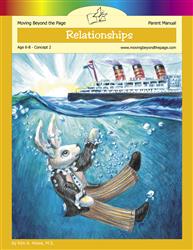
The Queen Mary
Students are asked to complete a "Shades of Meaning" activity that directs them to substitute more descriptive words for underlined words in sentences (e.g., replace "large," "beautiful," "cozy"). The skills list explicitly includes distinguishing shades of meaning among closely related adjectives and verbs, and the activity sentences provide multiple adjectives (large, beautiful, empty, cozy) and verbs (packed, threw, fell) for students to revise. The wrapping-up exercise asks students to repeat sentences while substituting an emphasized word with a more descriptive word or phrase.
Unit 3: Connecting with the Past
Lesson 3
Slavery and the Civil War
Students are prompted to list five character traits for Henry on a cube pattern, writing one trait in each box and explaining each trait with evidence from the book. Students write descriptions for Harriet Tubman and Abraham Lincoln on timeline entries and complete fill-in-the-blank pages about those figures. Students complete a sentence about the consequences of the Civil War, producing written responses about historical outcomes.
6: Reading

Unit 1: Semester 1
Lesson 16
Words Ending with er and est
Students are introduced to adjectives as describing words and are asked to say and write adjectives for given objects (apple, spoon, sponge). Students practice forming and using comparative (-er) and superlative (-est) adjectives through read-alouds, matching and sorting activities, filling in comparative sentences, and producing er/est forms (e.g., faster, fastest; drier, driest). Students also work with irregular comparative/superlative sets (good, better, best; bad, worse, worst) and apply comparative language in speaking tasks and reader comprehension questions.
Unit 2: Semester 2
Lesson 9
Vowel Teams
Students are asked to read the Weather theme word list and to record words that describe daily weather on the Weather Conditions chart (e.g., dry, sunny, warm), which requires them to identify and write descriptive words. Students also complete sentence-writing tasks (sight word sentences and the "Just Around the Corner" writing prompt) that ask them to use target words in sentences, providing opportunities to produce descriptive language in context.
Lesson 12
Suffixes
Students are taught the meanings of common suffixes including -ly ("answers how or how often"), -y, -ful, -less, and -able and practice adding them to base words (e.g., bump + y = bumpy; truth + ful + ly = truthfully). Students match suffixes to meanings and choose the correct meaning for words like quickly, meaningful, and thirsty. Students identify a word ending in -ly in running text, form adverb/adjective pairs (bright → brightly, brighter, brightest), and read aloud the words they create.
Lesson 15
Semester Review
Students cut out and sort prefixes and suffixes and are taught the meaning of suffixes including "ly = answers how or how often." Students build words using prefixes and suffixes (for example, like -> likable, likely; safe -> safely) and are asked to pronounce each word and say what the word means. The activity prompts students to record and read words formed with suffixes that produce -ly forms.