


Second Grade - ELA
1: Community

Unit 1: Communities Around the World
Lesson 6
Uses of Money
Students are asked to recall personal experiences (e.g., "Ask him if he has ever saved anything") and to explain wants, needs, goods, and services during wrap-up. Students read scenarios and answer what they would do, use the Flowchart of Money and cut-out bills to gather information and compute costs, and fill in the "Giving Money" worksheet to write reasons for a decision. Students also identify nouns/pronouns and verbs in their sentences, demonstrating use of information to construct answers in writing.
Lesson 10
Communities Change
Students read and listen to The Little House and are asked to analyze pictures and answer specific questions about what happened, how the land and transportation changed, and how goods and services changed. Students search the text for examples of natural and human resources and record or illustrate those resources on activity pages. Students sort pictures of transportation, goods, people, buildings, houses, and natural resources into communities, tracing how those items change over time.

Unit 2: Citizenship
Lesson 1
A Good Citizen
Students read The Boy Who Cried Wolf and answer comprehension questions about why the boy lied and what happened, prompting them to refer to story events. In the Communities Change activity students look back through the wordless book Home, identify changes in the neighborhood, and list three examples of people in the book who are good citizens and explain why. In Scene by Scene students identify and sequence the five most important events from the story and describe each event in words or illustrations.
Lesson 3
Diversity in the Community
Students are asked to read about a country on the Internet or in books to learn more about the culture and to use that information to prepare interview questions (Activity 4). The skills list explicitly includes "Use text to locate important information (LA)." Students watch informational videos and consult an atlas to gather facts about continents and people (Activity 3).
Lesson 6
Leaders in the Community
Students read a biography (Activity 1) and are asked text-based questions such as where the person lived, what happened in the person's life, and how he/she helped the community. In Activity 2, students write five leadership qualities and give examples of how the person in the biography showed each quality, linking traits to events from the text. Activities 3 and 4 require students to create a short biography and write a paragraph about a leader using details (birthplace, childhood events, greatest success, leadership characteristics, and ways the community improved).
Lesson 7
Inventors
Students read a short biography about an inventor and answer specific questions (e.g., What was the inventor's most famous invention? How are you similar to the inventor?), which requires them to refer to information in the text. Students write sentences about how listed inventions helped communities (Activity 1) and write a paragraph about a favorite invention from the Invention Scavenger Hunt (Activity 2), using observations and information to support their writing. The lesson also asks students to demonstrate familiarity with biographies and to elaborate on how information and events relate to life experience.

Unit 3: Plants and Animals
Lesson 10
Life Cycles
Students are asked to find pictures in books or on the Internet showing frogs, butterflies, and people at different stages and to discuss and sequence those stages (Activity 1). Option 2 asks students to read stage labels and draw the animal at each stage, requiring them to extract information from written prompts. The Life Cycle Logic activity asks students to read clues and use that information to determine relative life spans, which requires reading and using provided textual clues.
Final Project
Nature Guide or Habitat in a Box
Students choose a habitat and create a Nature Guide or a Habitat-in-a-Box, filling structured cards with factual fields such as Name, Size, Body Covering, Diet, Habitat, and Type. They are prompted to find pictures in magazines or on the Internet and to complete sections that require researched information: Plants (3 types), Animals (multiple types), Life Cycle (describe and illustrate), Food Chains (two, with at least 3 parts), and Endangered Species (including why it is threatened). Students compile and paste their drawings and descriptions into a book or diorama, documenting details about organisms and ecosystem relationships.
2: Matter and Movement
Unit 3: Balance and Motion
Lesson 2
What Can Be Balanced?
Students are asked to look for examples on the Internet about balance in nature and then write a paragraph about one example they read about (Activity 4). Students can use the linked MyPlate article and the MyPlate activity to gather information from a provided source and apply it by drawing a meal that follows guidelines (Activity 1). The lesson repeatedly frames tasks as parent-guided, so students are expected to perform these gathering and writing tasks with adult support.
Lesson 4
Force and Motion
Students read the informational book Move It! Motion, Forces and You and answer guided comprehension questions about pushes, pulls, and motion (Activity 1). Students reread specific pages (pp. 8-9 and pp. 16-19) to inform experiments and track-building (Activities 2 and 6). Students draw and write: they circle examples of pushing and pulling, draw their own examples, and write sentences and a short paragraph describing motion (Activity 3, Activity 4, Spelling/Writing tasks).
3: Culture
Unit 1: Geography
Lesson 1
Using Maps and Globes
Students read The Armadillo from Amarillo aloud and answer specific comprehension questions (Where was Armadillo at the beginning? What state did Armadillo live in? Where did the eagle take Armadillo? What did Armadillo learn on his journey?), requiring them to locate details in the text. Students use the book to find city names and chart Armadillo's journey on a Texas map, directly using text information to complete a mapping task. Students are asked to write a paragraph about a trip to a Texas location after reading, which encourages using information from the reading to produce a written response.
Lesson 5
Habitats and Geography
Students are instructed to read informational pages (The Usborne Children's Picture Atlas, pp.14-21) and to use an encyclopedia or the Internet to find information about animals and plants. In Activity 2 (Option 2) students locate information about a plant or animal used by people in a habitat and then write a sentence explaining why it is an important resource. Activity 3 asks students to read information about a local animal and then draw and write a poem about it, and the Wrapping Up prompts students to describe habitats and discuss how habitats meet needs for people and other living things.
Lesson 8
People Change Geography
Students are instructed to look on the Internet or in books to find pictures and descriptions of farms that cultivate the resources on their list and to write a sentence about each crop/farm they read about. The Student Activity Page also asks students to find items in the house, examine ingredient/materials lists, and record the natural resources used for each item, which requires extracting information from labels (informational texts).

Unit 2: People Around the World
Lesson 1
Exploring Culture
Students read informational pages about culture (Activity 1) and answer guided questions about what people do and how they share ideas. Students interview a person from a different cultural background (Activity 4), record answers on the Interview page, and fill in examples on the Looking at My Culture page. Students compare and contrast their own culture with the interviewee's culture during the Wrapping Up discussion.
Lesson 9
African Culture
Students are asked to identify on their map the nations discussed as the book is read and to use the book to record foods and other details (Activity 2 and Activity 3). Students complete a Venn diagram comparing themselves to a child from a country in the book, using words and pictures from the book to find similarities and differences (Activity 4). Students are instructed to use information from the book to fill in a guidebook and, if needed, seek additional information on the Internet or in an encyclopedia (Activity 5).
Lesson 10
South American Culture
Students read the informational book Explore South America and are asked to answer specific questions about geography, habitats, and culture using the book (Activities 1 and 2). Students research a South American animal, fill in an informational sheet, and share their findings aloud (Activity 6). Students are asked to complete a Guidebook to South America using information learned from books and additional research sources (Activity 7).

Unit 3: Stories Around the World
Lesson 1
Fiction or Nonfiction
Students read two fiction storybooks, write the title and author, and write one sentence describing each story (Activity 2). Students state whether they liked or disliked each story and are asked to explain why, linking their reasons to characters, events/plot, or setting. Students examine multiple book covers and titles to decide if books are fiction or nonfiction (Activities 1 and 3), and they draw and title their own fiction and nonfiction covers as part of classifying text types.
Lesson 3
Story Setting
Activity 3 asks students to read a picture book about a child in a foreign country and "encourage her to provide specific examples from the text," and to point to illustrations and geographic/cultural clues. Activity 4 asks students to listen for words that describe the setting, draw a setting based on those words, label parts, and explain why their drawing fits the story. Activity 1 has students examine books and sort/graph settings, using information gathered from each book to answer comparative questions.
Lesson 4
Plot
Students read age-appropriate literary texts (Jack and the Beanstalk, The Ugly Duckling) and are asked to identify the story's problem, three or more events, and the solution. Students sequence events by cutting out and ordering story panels and fill a graphic organizer that records story title, problem, three main events, and solution. Students also create their own plot chart by outlining a problem, at least three events, and a solution for an original story.
Lesson 5
Folktales and Fairy Tales
Students are asked to reread Yeh-Shen and fill out two "Folktales and Culture" sheets, recording people, clothing, homes, food, animals, landforms, and bodies of water from the text and illustrations. Activity 1 and the Yeh-Shen worksheet require students to answer specific questions about characters, plot events, magical elements, and how an animal helps a person, which asks them to use story details. Activity 2 has students reorder eight sentence strips from the story, requiring them to locate and sequence textual events.
4: Relationships
Unit 1: Living Things and Their Environment
Lesson 3
Sun, Moon, and Stars
Students read the informational book Does the Sun Sleep? and answer specific comprehension questions (e.g., Why is it night on the other side of the Earth?; Why does the shape of the Moon change?), requiring them to locate facts in the text. Students use online informational sites to find images and examples of animals and plants for hot and cold habitats, which asks them to gather information from texts/websites. Students watch an instructional video about stars and then label and describe star types and temperatures on an activity page using details from the video.
Lesson 5
Rivers
Students read the informational book Life Cycles: River and answer comprehension questions about ponds vs. rivers. Students use the book's Contents page to locate where animals live and use the book as a reference to list producers and consumers on a chart. Students refer to the book to select plants and animals when constructing a river food chain and to classify river animals into categories (birds, mammals, fish, etc.).
Unit 2: The Miraculous Journey of Edward Tulane
Lesson 1
Relationships
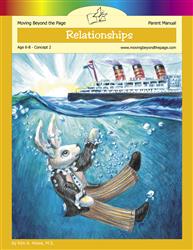
Students are asked to answer text-dependent questions such as "How did Abilene feel about Edward? How do you know?" which requires them to cite character actions (changing clothes, saying she loved him) as evidence. Students identify specific incidents from the chapters (e.g., Rosie putting Edward in her mouth; the maid vacuuming his pocket watch) when answering comprehension questions. The vocabulary activity has students use sentence-level context to choose and confirm word meanings by rereading sentences with candidate definitions inserted.
Lesson 4
Pronouns
Students read Chapters 7–9 and answer specific comprehension questions about what Edward thought, whom he felt had thrown him overboard, and who found him, requiring them to refer to the text. Students reread page 23 and the end of page 69 and discuss differences in Edward's attitude, explicitly comparing two passages. In Activity 2 students write words or draw symbols on a cut-out to describe Edward's relationships with Abilene and with Nellie and Lawrence, using book events and illustrations to inform their descriptions.
Lesson 5
Emotions
Students read Chapters 10–12 of The Miraculous Journey of Edward Tulane and answer comprehension questions that require inference about character feelings and changes. The Skills section explicitly asks students to "read closely... and cite specific textual evidence when writing or speaking to support conclusions". In Activity 2, students examine quoted passages about Edward with prompting to infer his emotions and then write a "Goodbye Note" from Edward's perspective that should show those emotions.
Lesson 6
Irregular Verbs
Students read Chapters 13 and 14 of The Miraculous Journey of Edward Tulane and answer specific comprehension questions. One question asks Did Edward like Bull and Lucy? How do you know?, prompting students to refer to scenes (e.g., snuggling with Lucy, crying when separated) as support. Students are asked to explain why stars might be an important symbol and to recall repeated references to stars in particular scenes as evidence.
Lesson 10
Illustrations
Students are asked to look through the book's illustrations and retell the story using the illustrations as a guide, which requires using text and images to support their retelling. On the "Explain an Illustration" page students record the quote that accompanies an illustration and identify who, what, when, and where before explaining why they selected that illustration. The "Illustrate a Scene" option also asks students to copy a quote beneath their original illustration, linking a specific line of text to their interpretation.
Unit 3: Connecting with the Past
Lesson 2
Colonization and the Revolution
Students are asked to recall and answer comprehension questions after the read-aloud (QUESTION #1-3) based on Your Life as a Settler in Colonial America. Students identify dates and labels from readings and videos and affix them to a personal timeline (e.g., Jamestown 1607, 1621 Thanksgiving, 1776 Declaration of Independence, Washington becoming president). Students gather information from a map, videos, and book pages to shade regions of the Thirteen Colonies, label colonies, and list two things we enjoy today because of the colonists and the Revolution.
Lesson 3
Slavery and the Civil War
Students read assigned pages and watch multiple videos (Life in the Colonies, Henry's Freedom Box, Harriet Tubman, Abraham Lincoln) and are asked to extract information from those sources. Students identify dates, pictures, and descriptions and add them to a timeline, complete fill-in-the-blank pages for Harriet Tubman and Abraham Lincoln, and complete a sentence starter about the Civil War's effects. Students list five character traits for Henry and explain each trait with evidence from the book as they write.
6: Reading
Unit 2: Semester 2
Lesson 3
Open and Closed Syllables
Students read Mouse Soup and answer comprehension questions that ask them to justify responses (e.g., "How do you know this story is fiction?" with suggested evidence like talking animals and anthropomorphic behavior). Activity 4.2 asks students to find specific words in the text on given page ranges and record occurrences and locations. Several questions ask students to explain motives and events (e.g., why the weasel caught the mouse; how the mouse got the bees off his head), prompting students to refer to story details in their answers.
Lesson 6
Possessives
Students are asked to locate specific words in the text and write the page number (Activity 4.2), which requires them to find and cite where information appears. The reading comprehension questions (e.g., "Do you think the marble belonged to Mrs. Goodwin? Why or why not?" and "Why do you think Penny could not stop thinking about the marble…?") require students to give reasons based on the story. Matching and possessive activities refer back to specific sentences and pages (e.g., find a noun that owns something on p. 7), prompting students to refer to parts of the text.