


Third Grade - MATH
5: Math
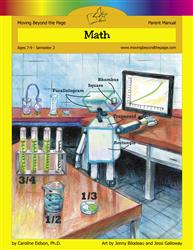
Unit 5: Area and Perimeter
Lesson 2
What Is Perimeter?
The lesson has students model and measure perimeters in real-world contexts (walking around rugs, driveways, gardens) and in hands-on tasks (building a rectangle from 2-inch and 4-inch straws and laying out tiles). Students construct specific rectangles (4x4, 6x4, 3x8, and one of their choosing) and compute perimeters by writing side lengths and using addition (e.g., 6+4+6+4=20). The skills list and activity sheet explicitly state using addition to find the perimeter and using multiplication as a shortcut for regular polygons.
Lesson 3
Calculating Perimeter
Students compute perimeters from given side lengths in multiple places: examples show a rectangle with 3+5+3+5=16 cm and a square using 4×6=24 in., and worksheet problems list triangles, rectangles, hexagons, octagons, and other shapes requiring addition or multiplication to find perimeter. In Activity 3 students use physical straws and pipe cleaners to build polygons that meet specified perimeters and are asked to make two different 4-sided polygons each with a perimeter of 16 in. (answer key gives 2×6 and 3×5 rectangles). In Wrapping Up students measure real objects to match given perimeters, practicing perimeter in real-world contexts.
Lesson 4
More Work With Perimeter
Students count tile edges and label side lengths to find perimeters of irregular shapes (Activity 1), and they record the perimeters for four given shapes (12, 12, 16, 10 inches). Students create four-sided polygons that all have a perimeter of 16 inches (1x7, 2x6, 3x5, 4x4) in the Introduction, showing same-perimeter examples. In Activity 3, students solve for unknown side lengths using given perimeters (triangles, rectangles, hexagon examples) by adding known sides and subtracting from the total. Pentomino activities have students measure and compute perimeters of composite shapes and compare largest and smallest perimeters using 2 or more pieces.
Lesson 5
Problem Solving With Perimeter
Students match cards that list polygons (regular pentagon, square, rectangle, octagon, hexagon) with given side lengths and corresponding perimeter values, requiring them to compute perimeter from side lengths. Students use colored tiles to build and label squares and rectangles to meet specified perimeters on the "Practicing Perimeter" page, and the answer key gives multiple side-length options for rectangles with the same perimeter (e.g., perimeter 14: 6+1, 5+2, 4+3). Students model seating and table arrangements with tiles to create rectangular groupings and record different arrangements that meet seating constraints, reinforcing perimeter reasoning in real-world contexts.
Lesson 6
What Is Area?
Students use an "Estimating Perimeter" sheet to guess and then measure perimeters of three rectangles by lining up one-inch tiles along the edges and recording totals (examples shown: 2+2+4+4=12 in; 4+4+6+6=20 in; 2+2+6+6=16 in). Students are told to count the length of the sides around shapes to find the perimeter during the wrapping-up activity when they create shapes with tiles or pentominoes. Students compute perimeters from given side lengths and physically measure perimeters with unit tiles.
Lesson 7
Calculating Area
Students are asked to explain how to find perimeter and area and to compute perimeter and area for a labeled rectangle (e.g., given sides 6 ft and 9 ft students find perimeter = 30 ft and area = 54 sq ft). The Student Activity page for Area and Perimeter provides the instruction to add all side lengths and gives the perimeter formula for rectangles and regular polygons. Activity 4 asks students to make two different four-sided polygons with the same area (example: rectangles 2×6 and 3×4), which produces same areas with different perimeters.
Lesson 8
More Work With Area
Students are asked to draw two composite shapes on laminated grid paper and then find each shape's perimeter and area by counting around the outline; they are instructed to place small dots next to sides and squares to keep track of counting and to avoid adding perimeters of parts. The wrapping-up image and directions explicitly tell students to count around the composite shape so they do not include internal shared sides, which guides finding a perimeter given side lengths on the grid.
Lesson 9
Creating With Perimeter and Area
Students sort real-world scenarios into 'Perimeter' and 'Area', linking perimeter language (e.g., building a fence, tying ribbon) to measurement around shapes. Students cut and trace block-letter names on centimeter grids and then count and record the perimeter (cm) and area (sq. cm) for their letters. Students design a creature on a grid, find area and perimeter for at least six body parts, and compute total area and perimeter on the 'Getting To Know My Creature' sheet.
Lesson 10
Problem Solving With Perimeter and Area
The skills list explicitly names solving perimeter problems, finding perimeters given side lengths, finding unknown side lengths, and exhibiting rectangles with same perimeter/different areas or same area/different perimeters. In Activity 1, students create all four-sided shapes on centimeter grid paper that have a perimeter of 36 cm, check side lengths by adding to 36, and compute areas for each rectangle (showing rectangles with the same perimeter but different areas). In Activity 3 (Food Court) students compute areas and perimeters from a provided map and answer comparison and combination questions about areas and perimeters. Activity 2 asks students to draw or assemble robot parts to meet specified area and perimeter values, requiring students to produce shapes that satisfy given area and perimeter measures.
Lesson 11
Unit Test
Students draw polygons with specified perimeters and areas (e.g., square with perimeter 20 cm; rectangle with one side 6 cm and perimeter 30 cm; square with area 64 sq. cm). Students solve for unknown side lengths given a perimeter in worked examples and practice items (e.g., rectangle with short side 6 ft and perimeter 32 ft, finding the long sides; problems asking for n in a triangle perimeter). Students answer real-world choice problems (garden fence vs. carpet) and complete grid tasks that ask them to draw four-sided shapes with a given perimeter (perimeter 16 item lists multiple rectangle options with different areas in the answer key).
Final Project
Shapesville
The Skills section explicitly tells students to solve problems involving perimeters, including finding perimeter from side lengths and finding an unknown side length. Multiple building specification tasks require students to compute unknown side lengths from given perimeters or areas (for example, Building #2 gives a perimeter of 40 cm so students find each side is 10 cm; Building #5 gives width 11 in and perimeter 28 in so students find the other side is 3 in; Building #6 gives perimeter 18 in and height 7 in so students find width 2 in). Step 7 asks students to identify which building has the greatest or smallest perimeter and to state those perimeters, and Day 2 asks students to explain how they found perimeters for their own designs.

Unit 8: Graphing Data
Lesson 3
Bar Graphs
The Basic Skills Review #23 includes a perimeter word problem: students determine whether 30 feet of fencing is enough for a square pen with sides of 6 feet, with the answer showing 6×4=24 feet. The problem requires students to calculate the perimeter of a square given its side length and compare that perimeter to a available total.
Lesson 4
Line Plots
Students compute a perimeter in Basic Skills Review #24 when they determine whether 30 feet of fencing is enough for a square pen with sides that are 8 feet long, using 8×4=32. Students perform the multiplication to find the total length of fencing needed and answer YES/NO about sufficiency. This item explicitly has students find a polygon perimeter given side length.
Lesson 5
More Work With Graphing
The Basic Skills Review #25 includes a problem asking whether 22 feet of fencing is enough to enclose a square pen with sides of 8 feet and shows the computation 8 × 4 = 32 feet, requiring students to compute the perimeter of a square. Students also perform related multiplication and comparison to decide YES or NO for the fencing question, which directly practices finding a perimeter from side length.
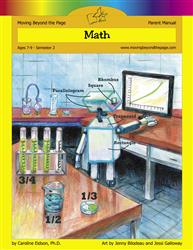
Unit 9: Skills Review
Lesson 3
Reviewing Perimeter and Area
Students compute perimeters of multiple polygons by adding side lengths and by using multiplication for regular polygons (Activity 1: rectangle with sides 8 ft and 3 ft yields 22 ft; square side 4 in yields 16 in). The provided "Review: Perimeter" worksheet and answer key show students finding perimeters for triangles, rectangles, pentagons, hexagons, octagons, and scalene shapes using given side lengths. Activity 2 additionally has students compute the perimeter of a 10 cm by 7 cm rectangle (34 cm), reinforcing perimeter calculation with both addition and multiplication.