


Second Grade - ELA
1: Community

Unit 1: Communities Around the World
Lesson 1
Exploring a Community
Students read the narrative "The City Mouse & the Country Mouse" aloud and answer guided questions about what happened, why the City Mouse invited the Country Mouse, and whether city life was better, prompting them to relate events and consequences. Students follow multi-step procedural directions in Activities 5 and 6 (cutting and taping poster board, folding nets, gluing shapes, and assembling a three-dimensional map) and physically perform the ordered steps to create models. Students are also asked to measure distances on a printed map using a ruler and map scale, which requires following sequential instructions to complete a task.
Lesson 2
Roles of People in Communities
Students are asked to look through books or on the Internet to find communities in other parts of the world and to point out jobs they see in pictures, prompting them to read informational sources. Students read about a chosen community worker in an encyclopedia or on the Internet and then write a paragraph describing the worker and how the worker helps the community. During wrap-up and Activity 3, students discuss how community features influence what jobs are available, making connections between community conditions and job roles.
Lesson 3
Goods and Services
Students read If You Give a Pig a Pancake and, for each situation, decide whether the pig is asking for a good or a service and record examples on a two-column chart. In Activity 4, students organize story ideas using three arrows (sequence organizer) and are instructed that each piece of goods or service should lead into the next one. Students write a sequential story using sentence prompts (If you give a ____, he might ask for ___; Then before you know it, he'll ask for ___, etc.), which requires them to create a chain of events.
Lesson 4
Wants and Needs
Students match pictures of places and items to labeled circles for Water, Food, Clothing, and Shelter by cutting and pasting squares into the appropriate category (Activity 3, Option 1), directly linking sources to needs. Students complete a bubble map by drawing and labeling examples that show where Jessie can have her needs met, explicitly organizing and showing connections and relationships among concepts (Activity 3, Option 2). Students list five wants and five needs and number them from most to least important, comparing and explaining whether top items are wants or needs, which requires relating the concepts of priority and importance.
Lesson 5
Money
Students are asked to explain how people get money and what they do with it, linking earning with spending, saving, and giving in the Getting Started and Introduction sections. In Activity 3 students carry out a sequence of steps to 'price' toys, give coins, and calculate totals, practicing a multi-step buying procedure. Activity 4 has students produce different coin combinations that make the same total, showing explicit connections among different representations of the same value.
Lesson 6
Uses of Money
The Student Activity Page "Flowchart of Money" displays an explicit sequence (Wants and Needs → Work → Money → Spend/Save/Give) that students follow and discuss. In Activity 1, students do chosen jobs to earn rewards and then discuss whether the completed steps (working) led to earning and using money, linking actions to outcomes. The Wrapping Up prompts ask students to explain how wants and needs, goods and services, and uses of money are connected, requiring students to describe relationships among steps.
Lesson 7
Work and Money
Students perform Activity 2, where they predict whether jobs will take longer or shorter with two people, time each job alone and together, record results on a datasheet, and circle words in a conclusion that describe the experiment's results. Students in Activity 1 and Activity 3 make choices about spending limited money and write or explain their reasoning, linking the concept of limited resources to decision outcomes. The Facts and Definitions section names concepts (limited money, making choices, working together) that students refer to while completing the tasks and explanations.
Lesson 8
Customs and Holidays
Students read and record origins of holidays such as Memorial Day (remembering those who died serving the country), Fourth of July (America becoming its own country), and Cinco de Mayo (the 1862 Battle of Puebla). Students are asked to write the name and date of holidays and "write sentences about why the holiday is celebrated and what your family does to celebrate the holiday" in the Holiday Book. In Activity 4 students locate countries on a map, write the holiday and date, and are directed to "Read more about these holidays on the Internet," which asks them to connect a holiday to its historical basis.
Lesson 10
Communities Change
Students are asked to retell the order of events and summarize events in The Little House, and prompted with questions about how the land, people's activities, transportation, and goods/services changed over years. Skills and activities require students to trace changes in communities over time (Activity 4) and sequence cyclical changes with the Changing Seasons Wheel (Activity 2). Students sort and place transportation, goods, buildings, and resources into different community stages, which requires them to connect items to historical community contexts.
Lesson 11
Government and the People
Students make a list of three options, have each family member vote, draw tally marks for each vote, and add the votes to determine a result, which has them follow and record steps of a voting procedure. Students solve "Adding Votes" problems by using given totals and clues to determine how many votes each option received and who won, requiring them to connect pieces of information to reach a conclusion. Students complete a Government Flowchart by writing leader titles and names and drawing arrows between country, state, and city boxes, which has them identify relationships among governmental roles and services.
Lesson 12
Rules and Laws
Students read short scenarios (Activity 3 "Consequences") and write a consequence for each situation, labeling each as a natural consequence or one given by authority. In Activity 2 students play a game with no rules and then describe what changed and whether the game was better with or without rules, connecting the removal of rules to outcomes. In Activity 1 and the sorting/writing activities students classify examples as rules or laws and explain effects (e.g., stopping at signs, wearing a seat belt) that imply cause-and-effect relationships.
Final Project
Community Brochure
Students are asked to "compare and contrast current and historical changes in a community" and to "recognize and describe the historical events associated with national holidays," which prompts examination of historical information. The brochure organizer explicitly requires a section for "Ways the community has changed over time," where students write sentences about past and present conditions. Vocabulary prompts (e.g., wants, needs, rural/urban, human/natural resource) support describing aspects of community change.

Unit 2: Citizenship
Lesson 1
A Good Citizen
Students put scenes from The Boy Who Cried Wolf in order and write sentences for each scene (Activity 3 Option 1/2), which requires sequencing a series of events. In Communities Change students draw and describe the beginning, middle, and end of the wordless book and are asked "What are some things that caused the changes?", prompting them to connect events and causes. Activity 2 asks students why the boy lied and what happened because he lied, which asks students to describe cause-and-effect relationships among events.
Lesson 4
Living in America
Students complete sentences stating that there are 13 stripes because of the 13 colonies and 50 stars because of the 50 states, and they count and glue the stars on the flag. Students read the brief account of how "The Star-Spangled Banner" began as a poem after a battle, was set to music, and is now sung at national events, and they read/sing the song. Students are also asked to listen to explanations of parts of the Pledge and answer why the pledge exists and why a republic should be free and fair.
Lesson 5
Citizens Share and Help
Students are asked in Activity 2 (A Helping Hand) to circle where they will help, write a plan, record who will help, state how many people will participate, and describe what each person will do. Activity 1 gives examples (planting seeds, raising $10 with five people contributing $2 each) that require students to divide tasks or amounts among helpers. The wrapping up and life application sections ask students to think about and practice dividing objects or sets equally, which involves identifying steps for fair sharing.
Lesson 6
Leaders in the Community
Students read and listen to a short biography and answer targeted questions about the person's life, including birthplace, things that happened when the person was young, hardships, and how the person helped the community. Students complete a multi-page biography book with ordered sections (Birth, Childhood, Greatest Success, Leadership Characteristics) that require recording events and facts in sequence. Students connect character traits to specific actions by having to give examples of how the biographee showed each quality on the "What Makes a Good Leader" web.
Lesson 7
Inventors
Students write sentences about how specific inventions helped people and changed communities (Activity 1), and they are asked to imagine life without each invention and explain its impact. In the Invention Scavenger Hunt (Activity 2) students identify an invention's parts, explain how the family uses each invention, and discuss whether the invention would work if parts were missing. In Activity 3 students read a short biography of an inventor and answer questions about the inventor's life, famous invention, and interesting events.
Final Project
Community Citizens Mobile
Students are prompted to record for a community leader what the person does and how the person helped or helps the community. Students must list for an inventor the name of the invention and explicitly state how the invention helped/changed the community. The skills section and activities ask students to describe changes in a community and recognize that members are affected by those changes.

Unit 3: Plants and Animals
Lesson 1
Living and Nonliving
Students answer structured questions about objects on the scavenger hunt page that ask, for each item, whether it changes, moves, grows, or needs food or water, and then decide if it is living or nonliving. Students sort pictures into living and nonliving collages and select items to draw and list descriptive attributes (three words/phrases) on the Describing Attributes pages. During the Sylvester and the Magic Pebble activity, students compare Sylvester as a donkey and as a stone and answer questions about what Sylvester learned, prompting comparison of states and related ideas about living vs. nonliving.
Lesson 2
Animal Structure
Students are asked to explain how body coverings help animals live in their communities (for example, discussing a polar bear's thick fur and fat to keep warm). Students match body parts to their functions (e.g., gills, wings, beaks) and draw or label missing parts, showing the relationship between structure and survival. Students act out or simulate using body parts (wings, claws, beak, gills, teeth) and answer questions about how an animal would be different without a certain body part, linking concepts of form and function.
Lesson 3
Classifying Animals
Students read factual descriptions (Facts and Definitions) and use books/internet in Activity 3 and Activity 6 to identify whether animals are reptiles or amphibians and to research life-stage differences. Students sort animals by categories (Activity 2, Activity 4) and use Venn diagrams (Activity 8) to compare characteristics such as body coverings, warm- vs cold-blooded, and mammal traits. Activity 5 asks students to label an animal's body covering and habitat and to record whether it is warm- or cold-blooded and which class it belongs to, linking physical traits to survival in habitat.
Lesson 4
Animal and Plant Communities
Students are asked to label habitats and place or draw animals in the appropriate habitat (Activity 1 and Student Activity Page), which connects organisms to their environments. Students are prompted to count types of animals in the rainforest picture and create a bar graph relating animal groups to quantities (Activity 2), which connects observations to a conceptual idea about biodiversity. Students are asked to think and talk about how different animals interact and depend on one another in a forest community (Activity 3), which requires describing relationships among scientific concepts.
Lesson 5
Animal Needs
Students are asked in Activity 1 to write a sentence that describes how the community helps meet each need (water, food, shelter), which requires linking community resources to needs. In Activity 2 students draw an animal in its habitat and write how its food, water, and shelter needs are met, connecting the scientific concepts of needs and habitat resources. Activities 3 and 4 ask students to specify habitat, diet, shelter, and to write a descriptive label for a zoo, reinforcing connections between animal characteristics and how the habitat supports those needs.
Lesson 6
Extinct and Endangered Species
Students read explanatory text that lists multiple scientific ideas about why animals become endangered (habitat loss from building, invasive species, hunting) and read different theories about why dinosaurs disappeared. Students are prompted in the wrap-up to state what endangered and extinct mean and to give reasons why animals can no longer live and grow in their habitats. The skills section and activities ask students to answer high-level questions about texts and to read and discuss scripted dialogue that connects animal needs to habitat conditions.
Lesson 7
Plants
Students read an expository page ("A Plant") that explains plant parts and their functions and are asked to label each part while discussing how roots absorb water, soil provides nutrients, and leaves make food, connecting those ideas. In the plant experiment students predict outcomes, place seeds in light and dark conditions, measure sprouts and roots, and compare results while discussing why sunlight affects plant growth, linking cause and effect across concepts. The sorting activity (Types of Plants) has students classify plants into categories, reinforcing connections among related scientific concepts (flowering vs. non-flowering).
Lesson 8
The Role of Plants
Students are explicitly told and asked to explain that plants release oxygen and that animals and people breathe that oxygen (Introduction; Activity 1 Nature Journal), so they identify the connection between plants producing oxygen and animal survival. Students are asked to "Give examples of ways organisms depend on one another" and to answer the wrap-up question asking why people and animals need trees, prompting explanation of interdependence. Students sequence events from The Giving Tree by drawing, cutting, and ordering five scenes (Activity 3), which practices describing the order and connections among events in a text.
Lesson 9
Comparing Living Things
Students complete Venn diagrams comparing themselves and an animal, identifying shared and different traits. Students use the Comparing Living Things charts to check boxes for what plants, animals, and humans need and then write sentence completions such as "Plants and animals need ___" and "Plants, animals, and humans all need ___." Students draw and label what each pictured living thing needs to live and grow in the "What They Need" activity and write three sentences about similarities and differences in Option 2.
Lesson 10
Life Cycles
Students put life-cycle pictures in order and number stages (Activity 1 Option 1), and read boxes to draw each stage (Option 2), directly practicing sequencing of scientific stages. Students role-play the transformations of frog and butterfly, verbally describing transitions as they 'hatch,' 'grow legs,' or 'emerge with wings' (Activity 2). Students complete a logic puzzle matching animals to life-span clues and are asked at the end to describe the life cycle of a butterfly, a frog, and a human, requiring them to explain connections among stages.
Lesson 11
Community Members Depend on One Another
Students label and sort animals and foods as herbivore, carnivore, or omnivore (Activity 1), showing understanding of dietary relationships. In Activity 2 students label habitats and connect or number organisms in the order they occur in a food chain, explicitly sequencing scientific concepts. In Activity 3 students build linked paper chains (plant → small animal → larger animal → top predator) and are asked to identify the pattern, reinforcing the connections among the series of organisms. Wrapping Up and Activity 4 ask students to describe a food chain with themselves at the top and explain how animals depend on plants and other animals.
Final Project
Nature Guide or Habitat in a Box
Students are prompted to "Describe and illustrate the life cycle for one animal in the habitat," using four squares arranged in sequence to show stages. Students are asked to create two food chains (with at least three parts) and use blank squares and lines to draw and explain the chains, which requires linking organisms in a sequence of relationships. Students must fill out an endangered species entry including its habitat, the food it eats, and why it is threatened, which asks them to describe causal connections between habitat, diet, and threats.
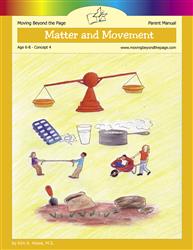
2: Matter and Movement

Unit 1: States of Matter
Lesson 1
What Is the World Made Of?
Students read and discuss the nonfiction book asking questions such as "How can matter change?" and "What are the three states of matter?", prompting them to explain connections among concepts. The Wrapping Up section explains that warming turns liquid to water vapor and cooling turns vapor to liquid, and students are directed to perform experiments (pages 23–27) that demonstrate these sequential changes. Activity 3 has students identify the state in each balloon, label it solid/liquid/gas, explain how they decided, and write a sentence describing each—requiring them to link observations to the process of changing states. Activity 2 and Option 2 require students to select and categorize examples from the text, connecting specific examples to the concepts of solids, liquids, and gases.
Lesson 2
Solids
Students are asked to reread pages 9–10 of What Is the World Made of? and to explain why a pencil will not go through a rock, linking the property that solids keep their shape to a real-world example. Activities ask students to identify and label objects and contents of containers as solids, liquids, or gases and to explain how they know, which requires connecting concepts (e.g., shape retention, occupying space) to classifications. Other tasks ask students to compare solids and liquids, measure solids (connecting the idea that matter takes up space to measurement), and write sentences using descriptive words from sensory observations.
Lesson 3
Liquids
Students read a written recipe (Activity 10), identify ingredients as solids or liquids, and follow the recipe steps to make a milkshake. Students make predictions, record them, perform dissolution tests, and sort cups into 'dissolved' and 'not dissolved' groups, comparing outcomes over time (Activity 3). Students estimate and then measure liquid volumes with tablespoons and teaspoons, record estimates and measurements, and answer questions comparing the units (Activity 6).
Lesson 4
Bartholomew and the Oobleck
Students read Bartholomew and the Oobleck and answer questions that link events in the story (e.g., how Bartholomew stopped the oobleck and why the bell could not ring). Students complete a Story Quilt that asks them to list three important events, the problem, and the solution, which requires sequencing events. Students make oobleck (mixing cornstarch and water), explore its behavior, decide whether it is a solid or liquid, and write sentences describing its properties. The Wrapping Up prompt asks students to consider how the story would change if a hard solid or a liquid had fallen instead, connecting material properties to story outcomes.
Lesson 5
Comparing Matter
Students are asked to explain that molecules in solids, liquids, and gases differ in spacing and movement (Facts and Definitions; Activity 1) and to label and draw molecule arrangements for each state on the Molecules activity page. In Activity 2, students build molecule models with marshmallows and various connectors and are asked which model represents a solid, liquid, or gas and to explain how they made their selections, tying bond strength and spacing to state. The wrapping-up prompt asks students to explain how molecules in solids, liquids, and gases are different, requiring them to describe connections among the concepts of bond strength, molecular movement, and state of matter.
Lesson 6
Changes in States of Matter
Activity 1 asks students to identify ice, water, and steam and to explain what causes water to change states (temperature), having them draw and write a sentence about each state. Activity 7 has students label changes between foods with "heat" or "cold" and write sentences describing those changes, directly linking temperature to state changes. Activity 8 requires students to record states, match items made of the same molecules, and explain what can cause one state to change to another (heating or cooling). Activity 6 has students measure ice and then water and compare height and weight, prompting them to describe differences related to melting.
Lesson 7
Exploring Solids and Liquids
Students read procedural text (cake-mix directions) and identify ingredients as solids or liquids, predict what will happen during baking, and discuss how heating and cooling change states of matter. Students follow the step-by-step "Dancing Raisins" procedure, write a hypothesis, carry out the steps, record results, and explain why raisins sink and then rise (connection between gas bubbles and motion). Students reread pages of the story and write three sentences describing three things that happened, identifying sequence of events from the text.
Lesson 8
Our Bodies and Our World
Students read and follow a written description of digestion and then draw a line tracing the steps from mouth to anus, showing sequencing of the procedure. Students conduct the coffee-filter experiment and observe and explain how the filter (intestine) lets liquid pass but holds solids, connecting the experimental steps to the written explanation. Students read a short story and answer questions about the problem and how it was solved and complete fill-in-the-blank and story-writing tasks that require sequencing events and using solids/liquids/gases appropriately.
Final Project
States of Matter
Students complete fill-in-the-blank and multiple-choice items that name the three states of matter and identify properties of solids and liquids. Students answer circle-the-correct-answer questions that link adding heat or cold to changing states (solid-to-liquid, liquid-to-solid) and identify outcomes of freezing and boiling (ice, steam). Students classify pictured examples as solid, liquid, or gas and write sentences or labels on collages describing uses and attributes of liquids and solids.

Unit 2: Earth
Lesson 1
Our Planet Earth
Activity 2 asks students to explain how explorers (Christopher Columbus and Magellan) demonstrated that the Earth is round and to demonstrate sailing around a sphere, linking a series of historical voyages to the scientific concept of a spherical Earth. Activity 2 also asks students to consider Earth's rotation in relation to night and day, connecting the scientific idea of rotation to observable phenomena. Activity 3 requires students to read You're Aboard Spaceship Earth, locate examples in the text, and answer questions such as why we do not run out of water and to describe how water is recycled, prompting students to describe a sequence or process from a text.
Lesson 2
Matter on the Planet
Students read pages 17-19 of You're Aboard Spaceship Earth and are asked whether the air we breathe is a solid, liquid, or gas and where oxygen comes from. Students describe that plants make oxygen and that humans exhale carbon dioxide, and they perform breathing and paper-bag demonstrations to show air is a gas that takes up space. Students cut out and sort images into solids, liquids, and gases and place objects on continua to compare material properties.
Lesson 3
Digging Into Dirt
Students read assigned pages (You're Aboard Spaceship Earth) and are asked to discuss how particles and broken-down rock form soil (Activity 2). Students draw and label five layers of the Earth and sequence materials in a cup from bottom to top, describing characteristics of each layer (Activity 3). In the seed experiment (Activity 7) students make predictions, record results, and explain how soil particle size and organic content affect seed growth, linking material properties to plant outcomes.
Lesson 4
From the Earth
Students read informational pages about gems, granite, oil, and natural gas and are asked to record where each resource is found and how they are used. In Activity 3 students label pictures as water/food/clothing/shelter, describe how each item helps meet needs, and identify the natural resource(s) used to make each item. In Activity 4 students observe boiling water, discuss how matter changes form but is not destroyed, and solve word problems that combine amounts of matter.
Lesson 5
Rocks
Students perform an erosion experiment (Activity 3) where they follow repeated shaking steps with sugar cubes, draw the sugar cubes before and after, and explain that water and movement break rocks into smaller pieces, linking steps of the procedure to the observed outcome. In Activity 5 (Rock Recipe) students follow a multi-step baking procedure, then discuss how the ingredient "minerals" combined to form a "rock" (cookie) and identify which ingredients were most or least common. In Activity 7 students cut out and put the ten "Rules for Finding a Rock" from the book in order, practicing sequencing of items presented in a text. Activity 2 has students use a magnifying glass to examine rocks and identify which minerals compose them, connecting the idea that minerals are the building blocks of rocks.
Lesson 6
Water, Water Everywhere
In Activity 1 students match and label animals to ocean depth zones and are told that "the deeper you go, the colder and darker the ocean becomes," linking depth, light/temperature, and habitat. In Activity 2 students build wave models and observe how different materials are carried by waves, connecting wave motion to movement of objects. In Activity 3 students must write one or two sentences describing how freshwater bodies are different from the ocean, which requires comparing and relating features of two water systems.
Lesson 7
Taking Care of the Earth
Students follow a step-by-step procedure in Activity 3 (Making Paper), reading directions aloud and carrying out each numbered step to produce recycled paper. In Activity 6 (Water Pollution) students set up an "ocean in a bottle," make predictions, add oil and detergent in sequence, observe outcomes, and compare results to their predictions. Activity 2 and the "Is It Recyclable?" pages ask students to calculate totals and write two or three sentences explaining why recycling is important, linking the concept that recycled paper decreases demand for trees and reduces pollution.
Final Project
Earth Exhibit
Students are asked to reread the book You're Aboard Spaceship Earth and to review materials and states of matter found on our planet. Students plan and write descriptions for three solids, two liquids, and one gas including where each is found and why it is important for living things. Students create exhibit cards that require a written Description and Directions for exploring each material, and they are prompted to explain how living things use these materials and how to take care of the Earth.
Unit 3: Balance and Motion
Lesson 1
What Is Balance?
Students read examples of step-by-step directions from games or craft projects and are asked to follow those directions. Students write their own numbered directions that use sequence words such as first, next, and then. Students read their written directions aloud and have another person attempt to follow them, making corrections when steps are unclear. Multiple activities require students to follow procedural steps (cutting out items, placing weights, recording totals) to achieve a balanced scale.
Lesson 2
What Can Be Balanced?
Activity 4 presents cause-and-effect examples in nature (e.g., if there were not enough spiders, the number of bugs would become too great) and asks the student to read other examples and write a paragraph about one. The MyPlate explanation links food categories to a balanced diet and asks the student to draw a meal that follows those guidelines. Activity 2 has students make two number sentences ‘balance' each other by finding missing numbers, which requires identifying relationships between paired mathematical expressions.
Lesson 3
Symmetry
The introduction text links the ideas that folding a figure produces two identical halves, that the fold line is called a line of symmetry, and that lines can be vertical, horizontal, or diagonal. Activities ask students to decide and mark whether shapes have vertical/horizontal/both/none symmetry, draw lines of symmetry on shapes, and write three sentences about a symmetrical picture they create. Wrapping Up asks students to explain what it means for a figure to be symmetrical and to name the different lines of symmetry an object can have.
Lesson 4
Force and Motion
Students read the nonfiction book Move It! and answer targeted comprehension questions about what motion and force are and how pushes and pulls affect movement. Students conduct experiments (pushing/pulling items, throwing balls) and record and order results by distance, and they reread pages that explain how objects change direction and stop. Students build tracks, measure track lengths, and write a short paragraph describing what is happening in their drawn scenes that show multiple examples of pushing and pulling.
Lesson 5
Gravity
Students read informational books (Forces Make Things Move; Move It!) and answer true/false statements that target force and motion concepts. Students follow the investigation on pages 22-23 and perform a gravity demonstration where they explain why an object does or does not fall. Students construct a center-of-gravity mobile by following multi-step assembly patterns and adjust string positions to make the hanger balance.
Lesson 6
Friction
Students read an explanation in the Introduction that links tiny bumps on the floor rubbing against wheels to the force called friction and to the car stopping, showing a cause-effect chain. In Activity 2 students decide the order skaters would place based on how different surfaces (grass, ice, tile, gravel, road, sidewalk) affect skating performance, connecting surface type to friction and performance. In Activity 4 students set up a ramp, release a toy car on different surfaces, measure travel distances, and compare results, then discuss which surface created the most friction and why.
Final Project
A Wordless Skit
Students are asked to reread books on balance and motion to gather ideas and to use a graphic organizer that separates the concepts Balance, Push, Pull, Gravity, and Friction with spaces to list actions and props for each. Students plan the order in which to present each concept, practice each concept independently, and rehearse putting the sequence together into a continuous skit. Reflection questions ask students to state what they learned about balance and motion and to identify ways they see these concepts in the world.
3: Culture
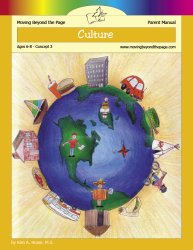
Unit 1: Geography
Lesson 1
Using Maps and Globes
Students answer explicit comprehension questions about The Armadillo from Amarillo that ask where the armadillo started, which state he lived in, where the eagle took him, and what he learned, requiring them to recount and connect events in the story. Students chart the armadillo's journey on a Map of Texas, tracing the sequence of cities visited and linking those events to locations on the map. Students complete the "Where in the World Am I?" activity that requires them to place their home within a series of nested geographic concepts (home → town → state → country → continent → planet), showing conceptual connections.
Lesson 3
Landforms and Bodies of Water
Students read informational text about rivers, lakes, mountains, valleys, and islands (Usborne pages referenced) and identify bodies of water and landforms. Students match pictures to definitions and connect positive and negative aspects to each body of water in the "Life Near the Water" activities. Students write a paragraph recommending which body of water to live near and create posters in which they write sentences describing how people who live on or near each landform or body of water are affected.
Lesson 4
Natural Resources
Students draw lines connecting each natural resource to the product that uses it (Activity 1), which has them identify and demonstrate relationships between resources and products. Students place materials on a U.S. map to show where resources are found and consider how resources affect jobs and activities in regions (Activity 2). Students use books or the Internet to read about a selected resource and fill out a Researching Resources sheet that asks "Where is it found in the U.S.?" and "How is it made?" and "How is the resource used by people?," requiring them to extract and record connections from texts (Activity 3).
Lesson 5
Habitats and Geography
Students read nonfiction pages about habitats (pages 14–21) and answer questions comparing habitats (e.g., differences between the North Pole and rainforest). Students label habitat boxes, place or draw animals/plants into matching habitats, and write a sentence beneath each box about how the animal or plant is used by people who live in that area. The wrapping-up prompts ask students to describe how natural habitats help meet the needs of animals and plants and how those, in turn, meet human needs.
Lesson 6
Geography, Weather and Natural Disasters
Students are told that geography (distance from the equator) determines climate, connecting location to weather. The text explains that tornadoes form when cool, dry air from the north mixes with warm, moist air from the south, giving a causal scientific idea. Students follow a multi-step 'tornado in a bottle' procedure that models vortex formation and read about natural disasters to find answers to their questions.
Lesson 7
The Seven Continents
In Activity 4 students label the equator, color five latitude bands by temperature, and are asked to point to parts of continents that are warm or cool. The lesson has students do a flashlight demonstration to observe how the angle of sunlight produces brighter (warmer) and dimmer (cooler) areas and explains that this causes temperature differences from equator to poles. Students are prompted to connect those temperature bands to habitats and weather (for example, explaining why Antarctica is cold and inhabited only by temporary scientists).
Lesson 8
People Change Geography
Students are asked to identify natural resources used to make household items and then "look on the Internet or in books to find pictures and descriptions of farms" and "write a sentence about each crop/farm he reads about" (Activity 2). Activity 1 has students observe and list ways people change the land (clearing trees, building dams) and relate those actions to needs like food, water, and shelter. Activity 3 and 4 prompt students to connect human behaviors (pollution, reusing items) to environmental effects and solutions.
Final Project
Geography of a Continent
Students are directed to use Discover the Seven Continents and other books/websites to gather information from texts about a continent. The student worksheet asks for "Natural disasters that occur" and "How they affect the people," which requires students to identify events and describe their impacts. Other prompts such as "How people use the water" and "Job related to that resource" ask students to connect geographic features or resources to human uses and occupations.

Unit 2: People Around the World
Lesson 2
Traditions
Students read short informational text that explains the historical origins of holidays (e.g., the 4th of July as when America became a nation; Thanksgiving tied to Pilgrims and Native Americans; Cinco de Mayo and the Battle of Puebla; Kwanzaa's origin in harvest traditions). Students follow step-by-step procedural directions to construct instruments and crafts (making a maraca with numbered steps and creating a woven Kwanzaa placemat with sequential directions). Students complete written tasks that ask them to write sentences about why a holiday is important, draw symbols, and compare celebrations using a Venn diagram, which require connecting holiday descriptions to cultural practices.
Lesson 4
Homes and Culture
Students are asked to explain that natural resources in an area are used to build homes and to name examples of natural resources, linking environment and building materials (Activity 2). Students match types of homes (teepee, log cabin, stone home) to corresponding environments and draw and list materials used for their own home, which asks them to connect environmental context with material choice. In Activity 4, students plan rooms, select materials, build a model house, and demonstrate how family members use rooms, involving a sequence of planning and construction steps.
Lesson 5
Transportation in Culture
Students read informational pages about transportation and examine pictures (Introduction and Activities) and then explain connections such as how landforms and bodies of water influence which transportation is used (Activity 2). Students identify which vehicles carry goods between continents versus within the same continent and draw/label resources carried by each vehicle, linking modes of transport to trade patterns (Activity 4). Students describe how transportation provides jobs and where different transportation types are found when they write about transportation jobs and respond to the wrapping-up prompts.
Lesson 6
American Culture
Students read short biographical cards in Activity 2 ("Leaders in America") and match each leader to his or her contribution, then discuss which contributions were most important. Activity 3 states that music "can tell a story about an event or time in history," and students learn and perform historical songs such as "When Johnny Comes Marching Home." Activity 1 locates historical symbols (Liberty Bell, Statue of Liberty) on a map, linking symbols to places associated with American history.
Lesson 7
History of America
Students locate explorers and settlements on maps and refer to a simple timeline (Activity 1), demonstrating sequence of exploration. Students build and trace routes from ‘sailed from' to ‘landed in' for individual explorers (Activity 2), practicing linking origins and outcomes. Students read Three Young Pilgrims and answer questions about why the Pilgrims left England and who helped them, addressing causes and relationships between events and people (Activity 3). Students create a Venn diagram and write about three ways culture changed since colonial times, connecting past events to present cultural changes (Activity 8).
Lesson 8
Asian Culture
Students follow a multi-step procedural text when they make an origami frog: they fold paper through numbered steps, identify shapes created by folds, and perform the final action to make the frog jump. Students examine the panda information and answer directed questions about habitat, classification, diet, and why pandas are endangered, connecting habitat (bamboo forest) and survival needs (water, food, shelter). The abacus activities require students to perform place-value procedures (shade beads, count by tens, trade ten ones for a ten) and apply those sequential rules to solve addition problems.
Lesson 9
African Culture
Students are prompted by text-based questions (e.g., "How are the people of a culture affected by the geography of the land?" and questions about land, homes, foods, and activities) that require using the book to link geographic features and cultural practices. Activity 5 asks students to use information from Africa Is Not a Country to complete a guidebook, which directs them to gather and record connections from the text. Activity 7 provides a written procedural text (Mancala instructions) and Activity 3 directs students to find and follow a recipe, both of which require students to read and act on a sequence of steps.
Lesson 10
South American Culture
In Activity 2 (Weather) students perform a hands-on model (ribbon around the waist, spinning in a dark room with a light) to observe that the equator receives the sun's rays most directly and that locations farther from the equator are cooler, linking Earth's rotation and latitude to weather. In Activity 3 (Amazon River) students are shown that dense rainforest vegetation leads to few roads and that river travel becomes the common mode of transportation, and they locate the Amazon on a map and draw a river symbol. The Amazon Journey activity has students cut out event cards and put the events in the order in which they occurred, practicing sequencing of events in a text.

Unit 3: Stories Around the World
Lesson 5
Folktales and Fairy Tales
Students read folktales and answer questions connecting plot elements to real-world phenomena (Activity 1 asks "What natural event does this story explain?"). In Activity 2 students read ten sentence strips and arrange them in the order the events occurred, practicing sequencing of a series of events. Activity 3 asks students to arrange animals in the order they appear in the story and to discuss how each animal is involved in the plot, reinforcing connections among events and characters.
Lesson 6
Cinderella Stories Around the World
Students are asked to retell folktales and explain the plot (events) of a Cinderella story, including drawing the beginning, middle, and end. They complete a Cinderella Elements Chart and Venn diagram comparing events and elements across Yeh-Shen, The Egyptian Cinderella, and The Irish Cinderlad. Students locate Egypt on a map and record cultural information from The Egyptian Cinderella, linking story details to a real place.
Lesson 8
Myths and Legends
Students are asked to retell folktales and legends and to answer specific sequence questions about the myth (e.g., "Who had fire at the beginning of the story?" and "Who stole the fire?"). Students act out the scripted story, practicing the sequence of events as they perform Rabbit stealing and bringing fire to the people. In the Paul Bunyan activity, students chart the journey across a U.S. map, tracing the sequence of places Paul and Babe travel through the story.
4: Relationships
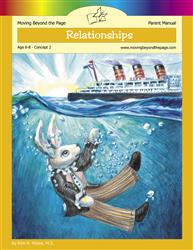
Unit 1: Living Things and Their Environment
Lesson 1
Relationships Among Organisms
Students read and match vocabulary (genetics, heredity, trait, offspring) to definitions, connecting the concept of genetics to heredity and traits. Students identify at least two traits shared by each parent-offspring pair and explain one difference for each pair, linking parent and offspring characteristics. Students sort characteristics as inherited or learned and collect trait data for family members, practicing comparison and classification of related scientific ideas.
Lesson 2
Heredity Lab
Students follow multi-step assembly instructions to create Generation 1 creatures (cut pipe cleaners, glue eyes, attach antennae). Students select and combine specific parental traits to construct Generation 2 and then choose traits from Generation 2 to make a Generation 3 creature, recording colors on the "Generations of Species" page. Students are prompted to discuss how the generations differ and why, and to discuss how traits changed from the first generation to the third generation.
Lesson 3
Sun, Moon, and Stars
Students read Does the Sun Sleep? and answer targeted questions that require connecting Earth's rotation to day and night and explaining why the Moon's shape changes. Students perform a ball-and-flashlight demonstration and shade a world map to show how the Sun's rays and the equator cause temperature differences. Students draw organisms for hot and cold habitats and build labeled moon-phase circles to show the month-long cycle, explicitly linking temperature, habitat, and planetary motion concepts.
Lesson 4
Seasons and Living Things
Students read Sunshine Makes the Seasons and answer text-based questions about Earth's rotation, tilt, and how tilt causes seasons (e.g., questions about axis tilt and season when North Pole tilts toward the light). Students perform a hands-on seasons simulation (tilting an orange and walking it around a light) to observe how Earth's tilt and orbit change sunlight on hemispheres. Students label seasons on a diagram, discuss how seasonal position leads to changes in daylight and weather, and connect those seasonal changes to living things through discussions and activities about leaf changes, hibernation, migration, and bird-feeder observations across seasons.
Lesson 5
Rivers
Students read the informational text Life Cycles: River and are asked to list producers and consumers from the book and explain how animals need food from their environment to progress through life cycles (Activity 3). In Activity 4 students pick a life cycle from the book, draw the four stages in connected circles with arrows, and write a simple sentence for each stage in their own words. In Activity 5 students construct a river food chain by drawing plants/animals on chain links and linking them together starting with the producer to show the order in which energy passes.
Final Project
Investigating the Environment
Students research a chosen plant or animal and are asked to "create a food chain" and a "life cycle diagram of the organism based on her research," which requires identifying linked steps and scientific concepts. Students organize photographs and observations and are asked to arrange living things "in order to make a food chain or organize them based on how she saw them interacting," which involves describing relationships among organisms. Students plan and carry out investigations, collect data, and are prompted to explain their observations when they share their project with family.
Unit 2: The Miraculous Journey of Edward Tulane
Lesson 2
Point of View
Students are asked to retell the story Pellegrina told (Question #3) and to retell the tale in their own words during the Wrapping Up activity, which requires recalling a series of events. The lesson's Skills list explicitly includes "Recount stories, including fables and folktales...and determine their central message," which directs students to work with event sequences and the story's lesson. Activity prompts ask students to infer why Pellegrina told the story and what Edward could learn, connecting events to meaning.
Lesson 3
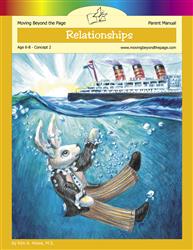
The Queen Mary
Students are directed to complete a Queen Mary Research sheet that asks when the ship first sailed, how it was transformed during the war, its wartime nickname, its final cruise year, and where it is today. The answer key and research questions require students to identify dates and a change in function (peacetime ocean liner to WWII troopship). The reading of Edward Tulane chapters and comprehension questions also have students recall a sequence of events (boys ripping Edward's clothes, tossing him, and him going overboard).
Lesson 9
Apostrophes
Students read Chapters 19–21 and answer questions that require identifying events (e.g., where Bryce takes Edward and his plan) and causes (e.g., what Neal did to Edward and why). The introduction asks students to discuss how Edward changed and what events or relationships led to that change, prompting them to connect events to character development. These items require students to explain at least one causal connection between actions in the text.
Lesson 10
Illustrations
Students are asked to "retell the story using the illustrations as a guide," which requires them to sequence events shown in the pictures. The wrapping-up prompt asks students to "briefly (in chronological order) describe each environment Edward has found himself in," explicitly asking for ordered description of a series of events/settings. Activities prompt students to identify who, what, when, and where for an illustration, which supports identifying elements of events in sequence.
Lesson 11
Building Sentences
Students read chapters and answer questions that ask how Edward's short relationship with the old doll changed him and why he had difficulty opening his heart, prompting analysis of development over time. In Activity 4 (Relationship Timeline) students write simple sentences describing each relationship, cut out the boxes, and paste them on a timeline in the order Edward experienced them. The skills list explicitly asks students to analyze how and why individuals, events, or ideas develop and interact over the course of a text, linking sequencing with change.
Unit 3: Connecting with the Past
Lesson 1
Studying History
Students practice chronology vocabulary (past, present, future, decade, century, chronological order) and complete fill-in-the-blank sentences using those terms. Students create and interpret timelines (Timeline of Your Life, Timeline of American History) and place or match historical events with dates in a matching activity. Students identify and classify primary and secondary sources, which supports understanding the sources behind historical accounts.
Lesson 2
Colonization and the Revolution
Students create and extend a timeline by identifying dates and labels for events such as Jamestown (1607), the Pilgrims/Thanksgiving (1621), the Declaration of Independence (1776), and George Washington becoming president. Students explain cause-and-effect by describing how the king's taxes and control led colonists to fight in the American Revolution and how the outcome changed governance (from king to an elected president). Students list and draw two things we enjoy today because of the colonists and the Revolution and discuss how historic outcomes have shaped the present.
Lesson 3
Slavery and the Civil War
Students add Harriet Tubman, Abraham Lincoln, and Civil War events to a timeline by finding the next date, writing a description, and adding a picture, which requires ordering a series of historical events. Students complete a page that begins "Because the Civil War was fought, today ______" and write outcomes (e.g., freedom), connecting the war to later results. Students read/watch texts about slavery, Tubman, and Lincoln and then fill in biographical pages and timeline entries that tie causes (slavery, southern secession) to effects (war, emancipation).
Lesson 4
Immigration
Students read and retell parts of Ellis Island (pages 1-25 and finish the book), answering questions about events such as Annie Moore being the first to walk onto the dock and changes to immigration law in the 1920s. Students create and add dated pictures and descriptions (including the Statue of Liberty and Ellis Island) to a timeline, sequencing events. Students listen to immigrant oral histories and retell stories, then complete a "Connecting with the Past" page describing how immigration shaped foods, jobs, and culture today.
Lesson 5
Civil Rights
Students place dates, descriptions, and images for Rosa Parks and Martin Luther King, Jr., on a timeline, which requires sequencing historical events. Students read accounts of Ruby Bridges, Rosa Parks, and Martin Luther King, Jr., and identify outcomes (for example, that Rosa Parks' action led to bus laws being rewritten and that Martin Luther King, Jr. helped get laws passed). Students draw and write about how the Civil Rights Movement changed present-day life with a prompt that connects past actions to current consequences.
Final Project
Preparing Projects
Students assemble and color a timeline and post it on the wall, which requires them to place events in chronological order. Students put pages for a "Famous Americans" book in chronological order (earliest to most recent) and staple the book, practicing sequencing of historical figures. Students glue four topical pages in chronological order on a "Connecting with the Past" poster and then practice presenting the poster, explaining how past events still impact life today.
6: Reading

Unit 1: Semester 1
Lesson 1
Word Families and Long Vowel Review
Students answer comprehension questions about the reader 'Fun and Then Cake' that ask about timing and sequence (e.g., "What did Jade do while Cash rode bikes with Dad?" and "What did Jade want to do after baking the cake?"). Students complete a Sentence Scramble activity in which they must put words in the correct order to form a sentence, demonstrating understanding of sequence. Students work through Word Chains by spelling a series of words that change one letter at a time, following a clear stepwise progression.
Lesson 5
More R-Controlled Vowels
During Activity 5.1, students read "All About Storms" and are asked to explain "Why does it rain?" with the lesson stating clouds are made of small drops of water that fall when they get too big or heavy. Students are also asked what hail is and what one might see or hear during a thunderstorm, prompting them to identify related scientific concepts (hail formation, lightning, thunder, rain).
Lesson 9
Complex Consonants: dge vs. ge
Students read the reader Moose on the Loose (Activities 4.2 and 5.1) and answer comprehension questions that target cause and sequence (e.g., "How did the moose escape the cage?" and "How does Sam help the moose?"). The lesson asks students to reread the first half before finishing, which supports recounting events in order. Several prompts ask students to explain outcomes and sequence (what happened, why it is a problem, what will happen next).
Lesson 10
Complex Consonants: tch vs. ch, ck vs. k
Students read explicit rule statements (e.g., that tch/ck follow short vowels and ch/ke/k follow non-short vowels) and are asked to refer to vowel sounds when sorting words into columns (Activity 1.2, Day 2 Word Building, Activity 3.2). Students practice applying and explaining those rules by writing correct endings for word lists, pointing to the correct ending cards, and answering questions such as "What do the words in the tch column have in common?" (Day 4 Activities). Students are asked to explain the rules orally after sorting (e.g., explain why ck comes after a short vowel and ke after a long vowel).
Lesson 15
Words Ending with ed and ing
Students sort and place sentences under labeled Past, Present, and Future pages (Activity 1.2) and answer questions about when each action is taking place. Students identify base action words across sentences that show the same action at different times (Day 2 Activity 2.1) and mark whether actions occurred in the past, are happening now, or will happen later. Students complete tasks that require choosing the correct ing or ed form based on when the action in a sentence happens (Day 5 Activity 5.2).
Unit 2: Semester 2
Lesson 2
The Six Syllable Types
Students are given explicit procedural tips for dividing two-syllable words (e.g., draw the line after the first vowel for an open syllable, after the consonant for a closed syllable, and split between two consonants) and are asked to try divisions, erase, and try again (Day 2 Open and Closed Syllables). Students practice those steps by lightly drawing lines to divide words, reading syllables separately, and then sorting words into open or closed columns based on their first-syllable division. Several activities require students to follow step-like directions to underline vowel teams, highlight final -le endings, and match r-controlled syllables to pictures, demonstrating application of procedural cues.
Lesson 3
Open and Closed Syllables
Students are taught an explicit multi-step procedure for dividing two-syllable words (underline the vowels, count consonants, then apply the Tiger/Camel/Rabbit rules) and are asked to review Steps 1–4 from the Syllable Division Rules Flowchart. Students answer direct questions about the sequence (e.g., "What is the first step? What is the second step?"), apply the conditional sequence (try the Tiger rule first, then use the Camel rule if the Tiger result doesn't sound right), and sort words by which rule produced an open or closed first syllable. Students also complete chart and sorting activities that link the chosen division step to the outcome (first syllable open vs. closed).
Lesson 5
Two-Syllable Words Ending in y
Students identify the soup ingredient added after each story in Activity 4.1 (they write the ingredient that follows Bees and the Mud, Two Large Stones, The Crickets, and The Thorn Bush). Reading comprehension questions ask students to state what the weasel discovered after gathering ingredients and why the policeman misinterpreted the woman's crying, which requires noting the sequence of events and a simple cause. Activity 4.1 also asks students to list the ingredient added after each story and then create their own four-story soup, which requires mapping story-to-ingredient relationships in the text.
Lesson 10
Consonant Teams
Students are asked to use a Syllable Division Rules Flowchart and animal posters to follow a sequence of steps (underline vowels, mark consonant teams, then split words) and to apply those steps when dividing words (Activity 1.2 and Student Activity Pages). The Panther Rule activity directs students to underline vowels, draw lines over blends/digraphs, and then split words into syllables (pumpkin → pump|kin), and students must pronounce and discuss the results. In Activity 5.2 students orally fill in the blanks of the step sequence (e.g., "To split a word into syllables, first underline all of the ___") which requires recalling and describing the ordered steps. In Rabbit or Panther sorting and follow-up questions, students decide which rule applies and explain why (e.g., noting that ph is a digraph), connecting specific steps to outcomes.
Lesson 11
Consonant + le Syllables
Students are taught the Turtle syllable-division procedure (count back three from the end and draw the dividing line) and practice it with examples like "turtle" and "apple." They receive a Syllable Division Rules Flowchart and Turtle Rule poster, watch a linked procedural video, cut out words, sort them by their consonant+le endings, and divide and read the words aloud using the rule. Activities (Activity 1.2 and the sorting pages) require students to apply the specific steps of the procedure to decode words.
Final Project
Write Your Own Story
Students are asked to write narratives that recount a well-elaborated event or short sequence of events and to plan a story with a beginning, middle, and end. The Student Activity Page prompts students to jot ideas for what will happen in the beginning, middle, and end, and Activities 2.2–3.1 have students write pages that represent sequential parts of the story. The skills list explicitly includes "Write narratives in which they recount a well-elaborated event or short sequence of events."