


Kindergarten - ELA
1: Letters

Unit 8: C - Millions of Cats
Lesson 4
Day 4
Students practice beginning sounds and letter–sound correspondence in Activity 3 by circling the correct beginning letter for pictures and by cutting and pasting picture boxes beneath the correct beginning letter. The Beginning Letter Sounds activity has students match images (cat, fan, elephant, lion, ant) to their initial letters, and the Letter Sounds: C pages ask students to identify and write or watch the formation of the letter C. The scrambled-letters page asks students to unscramble letters to form words, which engages attention to individual letters and simple word spellings.

Unit 9: G - The Real Mother Goose
Lesson 1
Day 1
The lesson asks the child to identify and produce rhyming pairs (for example, emphasizing 'horn' and 'corn' and pointing out 'sheep' and 'asleep') and asks the child to generate rhymes for the word "cat." The example responses provided (rat, bat, sat, pat, gnat, scat, spat, etc.) require changing the initial sound to make new one-syllable words. The instructions include modelling and assistance as the child produces these rhyming/substituted words.

Unit 21: V - Zin! Zin! Zin! A Violin
Lesson 5
Day 5
Activity 2 asks the child to produce words that rhyme with a one-syllable word (e.g., cat -> sat, bat, mat) and gives examples for practice. The activity explicitly tells the child that rhyming words have different beginning sounds but the same ending sounds and asks the child to supply rhyming words when a final word is omitted in read-aloud lines. The child is also asked to identify rhyming pairs in the text and generate additional rhymes independently.
1: Environment

Unit 1: Habitats and Homes
Lesson 1
My Environment
The lesson asks students to add missing first letters on the "Exploring My Home" sheet and to sound out labels, with instructions to "add the missing letters" or to use finger-following while the adult pronounces the word and they discuss which letters are missing. The Skills list explicitly includes showing an understanding that letters represent the sequence of sounds in a spoken word. The Handwriting activity has students practice the letter Bb and trace/write the words "bed" and "bath," reinforcing initial sound-letter correspondences.
Lesson 5
Discovering Animal Habitats
Students are asked to identify beginning letters and sounds (Skills: "Identify beginning letters and sounds in words") and in Option 1 they are asked to add the first and last letter for each habitat and attempt to read/sound out the word. Students also practice writing and reading words that start with J (handwriting page for "Jj", "jungle" and "Jeep"). These tasks require students to attend to initial sounds and to map letters to sounds in words.
3: Patterns
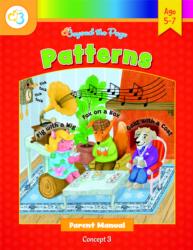
Unit 2: Patterns in Sounds, Words, and Actions
Lesson 1
Word Patterns
Students listen to and say sets of rhyming words (for example: take, bake, rake; hat, bat; hen, pen; frog, dog) and are asked to identify the repeating parts of those words. Students circle the repeating word parts/rimes on activity pages and are asked to add or name another word that follows the same pattern. Students say rhyming word pairs aloud, match illustrated and non-illustrated rhyming words, and record rhyming words from nursery rhymes and poems.
Lesson 2
Making Word Patterns
Option 2 asks students to try different beginning letters to complete word-family patterns (for example: hit, kit, wit, sit), and students cut apart and sort those words into families. Activity 1 requires students to complete one-syllable rhyming sentences (frog/log, cat/hat, hen/pen, fox/box), which has students select and produce rhyming words. Multiple activities have students generate and label word families by changing initial letters and then practice reading those new words.
Lesson 3
Poetry Patterns
Students are asked to identify and circle rhyming words in poems (Activity 1) and to listen for and supply the second rhyming word when it is omitted from verses (Activity 2). Students brainstorm other animal names and think of words that rhyme with each name, then write another verse of the song using those rhymes. Activities also ask students to record rhyming words from songs and circle the parts of the words that follow the same pattern (Activity 3).
6: Reading

Unit 1: Semester 1
Lesson 1
Letter Sounds Review I
Students build and read new one-syllable words by placing letter cards in front of rime cards (at, ap) to create words such as sat, mat, fat, pat and cap, map, tap, sap (Activities 4.2 and 5.1). In Activity 3.2 students select beginning, middle, and final letter cards to spell words (e.g., s + a + t → sat) and then blend the individual sounds aloud. The "mast" challenge and the Guess My Word activity require students to add or change sounds/letters to form new words.
Lesson 2
Letter Sounds Review II
Activity 5.2 (Word Chains) has students spell a word and then spell a new word by changing only one letter card (e.g., tap → tip → sip → sit → sat), requiring substitution of a single sound and saying each letter sound. Activity 4.2 (Word Families it, in, ig, ip) asks students to add one letter at a time to word-building cards and read each resulting word, practicing the addition of a single sound to make new one-syllable words. Multiple activities (3.2, 1.1, and 5.1) have students blend, spell, and say each sound in CVC words (e.g., big, rib, dig, pin), reinforcing manipulation of individual sounds.
Lesson 3
Letter Sounds Review III
The Skills list explicitly includes "Add or substitute individual sounds in simple, one-syllable words to make new words." Activity 3.2 (Building Words) asks students to use given letter cards to create as many three-letter words as they can, supplying letters as needed to form new words and pronouncing each sound slowly. Activities 3.3, 4.2 and the Word Families tasks ask students to add a letter to rime cards (ut, un, ub, ug and ot, op, og, ob) to make new CVC words and to read and sort the resulting words by family.
Lesson 4
Letter Sounds Review IV
Students are asked to make at least four different real words from given letter cards (Activity 1.1) and to build many three-letter words from small groups of letter cards while saying each sound slowly (Activity 3.2). In Activity 4.3 students play with word-building cards (et, en, eg, ed) by adding one letter at a time to the front of those word stems and then read each resulting word. The curriculum also has multiple word-family and writing tasks (Day 4 and Day 5) that require students to create and read new one-syllable words from changed or added letters.
Lesson 5
Adding s, More Word Families, Ending with ck
Students practice adding an /s/ sound to make plurals in Activity 3.1 and on the "Writing More Than One With S" pages where they write plural words matching pictures. In Activity 5.1 (Word Chains) students change one letter card at a time and say each letter sound as they transform words (e.g., hop → hot → cot → cat), which requires substituting individual sounds to make new one-syllable words. Activity 4.2 and related directions ask students to listen closely to the middle sound and to sound out ck words (duck, sack, deck), reinforcing manipulation of individual phonemes.
Lesson 6
Open Syllables and Digraph th
Students manipulate letters to make new words by removing final consonants (Activity 2.2: make wet → we, met → me, bed → be and similar examples) and by adding words to rhyming pairs to create new onset sounds (Activity 1.2: add led, shed, fed to bed/red; sat, brat to cat/pat, etc.). Students also build and read sets of related words with different onsets and endings using letter cards (Activity 4.2: spell this, thin, with, math, them, path) while being prompted to listen for beginning, middle, and ending sounds.
Lesson 7
Consonant Digraphs ch, sh, wh, ph
Students build and spell words using digraph and letter cards (Activity 3.2), creating words such as shop, ship, dish, chap, chat, chin, chip, whip, when, and why. Students fill in missing digraphs to complete words on the Fill in the Blanks pages (Activity 5.1), adding digraphs like wh, th, sh, ph to make words. Students compare minimal pairs by listening for different initial sounds (for example reading "chop" and "shop" and identifying the different beginning sounds) and sort pictures/words by the digraph sound they hear (Activities 1.2 and 2.2).
Lesson 8
Blends with s
Students practice changing one sound to make a new word in Activity 4.2 (Word Chains), where they are told to spell a new word by changing only one letter or word-building card and to say each letter sound as they change the word (examples: snap → snag → snack → smack). Students practice adding initial sounds in Activity 5.1 (Fill in the Blanks) by writing the missing blend to complete one-syllable words (e.g., _n_ake → snake, _sm_oke → smoke). Additional word-building activities (Activity 2.2, Activity 1.2, Guess My Word) require students to assemble blends and say sounds to form one-syllable words (e.g., chest, snack, slip), reinforcing both adding and substituting sounds.
Lesson 9
Blends with l
Students create and change one-syllable words in the Word Chains activity by spelling a word (e.g., flock) and then changing only one card to make a new word (e.g., flick), saying each letter sound as they change the word. In Fill in the Blanks students add initial blends (gl, pl, cl, bl, sl, fl) to complete words, which requires adding the beginning sound to a word. Word-building activities ask students to assemble letter and blend cards to spell sets of related one-syllable words (e.g., blob, block, black; glob, glam, glad) and to say each sound as they spell.
Lesson 10
Blends with r
Students create words with letter and blend cards in multiple Word Building activities (e.g., spelling crab, crib, crack, crush; drag, drips, drops, dry; trap, trick, trip) and in Alphabet Soup where they combine letters/blends to make many related words. Students are instructed to say words slowly to hear all the sounds and to sound out and spell words as they write them (Writing Words, dictation, and word-building tasks). The skills list explicitly includes adding or substituting individual sounds to make new words and the activities require students to change letters/blends to produce new one-syllable words.
Lesson 11
Ending Blends
Students are asked to add a sound/letter (e.g., spell 'pan' then add one letter to spell 'pant'; spell 'wet' then add one letter to spell 'went'; spell 'bet' then add one letter to spell 'bent'). The Word Chains activity has students change only one letter or word-building card at a time (e.g., stump → stamp → ramp → ram …), requiring substitution to make new words. Multiple activities prompt students to say individual letter sounds and blend/segment them (e.g., say /n/ and /d/ then /nd/; encourage saying each letter sound as they change words).
Lesson 12
Double ll, ss, ff, zz (FLOSS)
Students use lowercase letter cards and word-building cards to spell given words (Activities 1.2, 2.2, 3.1, 4.1) and to create new words from a set of letters and blends (Activity 4.2 Alphabet Soup). Students are asked to spell words as the teacher says them and to write words produced from the letter/ blend combinations, which requires them to add letters/sounds to form words. Word-family and word-building pages ask students to read, cut, sort, and generate multiple words that share endings (ll, ss, ff, zz).
Lesson 13
Glued Sounds ng and nk
Students explicitly substitute initial consonants to make new one-syllable words (Activity 2.1: replace k with r to make ring, wing, ding; Activity 3.1: replace t with s and s with y to make sank and yank). Students add missing final digraphs/ending sounds by writing ang, ing, ong, ung, ank, ink, onk, unk to complete words in Fill in the Blanks (Activity 4.1) and by sorting/gluing word-family cards into ang/ing/ong/ung and ank/ink/onk/unk columns (Activities 2.2, 3.2). Students also read and blend the resulting words aloud and practice orally producing and segmenting sounds when building and manipulating these one-syllable words.
Lesson 14
Three-Letter Beginning Blends
Students are asked to build words by adding three-letter beginning blends (scr, str, spr, spl, squ, shr, thr) to letters and read the resulting one-syllable words (e.g., spell scrap, scrub, strap, stress; quilt, quill, quest). The lesson explicitly models adding individual sounds to form blends (modeling /s/, then /k/, then /r/ to make /skr/) and directs students to replace sh with shr to change shed into shred. Fill-in-the-blank and word-building activities require students to add the correct beginning blend to word fragments and write or read the new complete words (e.g., (shr)imp, (str)ing, (spl)ash, (thr)ow).
Lesson 15
More Ending Blends
Students explicitly manipulate final sounds using letter and blend cards (for example, spelling "pat" then replacing t with the ct card to read "pact," and changing "let" to "left" or "wet" to "wept"). Students build and read new one-syllable words using lowercase letter cards and ending-blend cards in multiple activities (Activity 2.2, Day 3 dictation, Alphabet Soup). Students sort, read, and produce words grouped by their ending blends (Activity 3.2 and word-sort pages), reinforcing recognition of added or substituted final phonemes.
Lesson 16
R-Controlled Vowels (ar)
Students are asked to change words by swapping letters or word-building cards (Activity 5.1 Word Chains) with the explicit instruction to "change only one letter or word building card" and to say each letter sound as they do so. Activity 1.2 models substitution when students spell "cat" and then spell "car," and Activity 2.1 has students replace the vowel a in "pat" with ar to make "part." Multiple word-building and word-chain exercises require students to produce new one-syllable words by adding or substituting single sounds or cards.
Lesson 17
Semester Review
The skills list explicitly includes "Add or substitute individual sounds in simple, one-syllable words to make new words." In Activity 1.2 (Word Building) students use lowercase letter and word-building cards to spell and read words (e.g., bank, lick, king, rink), practicing creating words by assembling letters. In Activity 3.1 (Word Game) students choose a vowel, add beginning or ending letters/word-building cards, and take turns adding a vowel or consonant to complete or extend words, which requires adding sounds to form new words.

Unit 2: Semester 2
Lesson 1
Long Vowels a and i with Silent e
Students are asked to add letters to make new words (e.g., spell "tap," then add e to read "tape"; mat → mate; cap → cape; slid → slide; bit → bite). Students add an /s/ ending to make plurals and read the new forms (e.g., bat → bats; game → games; like → likes). Students also build words with letter cards and write/read words they create (Alphabet Soup, word-building groups, and spelling tests), demonstrating manipulation of sounds to form new one-syllable words.
Lesson 2
Long Vowels o, u, and e with Silent e
Students are asked to add a final silent e to change words (e.g., spell "rob" then add e to read "robe"; spell "hop" then add e to make "hope"; spell "cub" then add e to make "cube"). The skills list and multiple activities require students to spell words with and without the final e and to identify whether the vowel is short or long, and students practice segmenting and blending one-syllable words using letter cards.
Lesson 3
Hard and Soft c and g
The Skills list explicitly includes the target skill: "Add or substitute individual sounds in simple, one-syllable words to make new words." Activity 4.2 (Word Scramble) directs students to use given letter cards to make specific alternate words from the same letters (e.g., make "care" and "race" from a,c,e,r), and other groups require forming words that differ by target consonant or vowel letters. Activities 2.2 and 4.2 also have students spell and build word pairs (fake/face, rake/race) and use lowercase letter cards to construct multiple words, which requires students to manipulate letters to create new words.
Lesson 4
More R-Controlled Vowels (er, ir, or, ur)
Students are asked to manipulate sounds and letters directly (e.g., Activity 1.2 has students spell "chat," remove the a and replace it with ar to make "chart"). Activity 2.1 has students replace o with or (con -> corn) and other listed pairs (cod/cord, shot/short) to make new one-syllable words. Activity 4.1 and word-building groups require students to spell and read words after adding or substituting letter cards (e.g., dirt, bird, turn, burn, fern, perch). Activity 5.1 and the fill-in-the-blank pages require students to choose vowel pairs (ar, er, ir, or, ur) to complete picture-named words, demonstrating substitution of sounds/letters to form new words.
Lesson 5
Long a Spellings ai, ay
In Activity 4.1 (Word Chains) students spell a start word with letter cards and are instructed to replace only one letter at a time to get to the end word (model: herd → hard → harm → farm), and they complete similar chains (e.g., trail → train → brain; play → pray → tray). In Activities 2.2 and 3.2 (Word Building) students add letters to vowel-team bases (putting a and y together or a and i together) and read each new one-syllable word they form (e.g., pay, stay, sail, bait). The Skills list also explicitly lists adding or substituting individual sounds in simple one-syllable words as a targeted skill.
Lesson 6
Long e Spellings ee, ey, ea
The lesson's Skills list explicitly includes "Add or substitute individual sounds in simple, one-syllable words to make new words." In Activity 2.2 (Word Building) students use lowercase letter cards and word-building cards (including ee and ea) to spell called words, assembling letters to form one-syllable words. In Activity 3.1 (Alphabet Soup) students create multiple words from a bowl of letters and are reminded they can add s to some words to show more than one, which requires adding a sound to make a new word.
Lesson 7
Long i Spellings y, igh, ie
Students are asked to manipulate letters to make new words: Activity 3.1 has them spell "night," then replace n with f and read the new word "fight," explicitly substituting one sound for another. Activity 3.2 has students remove the final t from "sight" to read "sigh," demonstrating phoneme deletion/alteration. Activity 4.1 and other word-building tasks require students to add consonants to vowel spellings (eg. add letters to ie to spell pie, tie, die) and to spell words called aloud (eg. cry, fry, dry, fly), which has them add and blend individual sounds into one-syllable words.
Lesson 8
Long o Spellings ow, oa, oe
Students use lowercase letter cards and word-building cards to spell multiple one-syllable words (Activity 2.2), e.g., spelling row, bow, low, flow, blow, snow and making words like throw and slow by arranging cards. The lesson asks students to make as many words as they can from a given letter set (l, o, b, w), producing words such as blow, bowl, bow, low, and lob. The skills list explicitly includes "Add or substitute individual sounds in simple, one-syllable words to make new words," and several activities require students to change letters to form different long-o words (word scramble and challenge tasks).
Lesson 9
Long u Spellings ue, ew, ou
Students add the letter e to short-u words (tub, cut, cub) to form new words (tube, cute, cube) in Activity 1.2. In Activities 2.1 and 3.1 students use lowercase letter cards and ue/ew word-building cards to spell series of one-syllable words that differ by initial or medial sounds (due, sue, cue, hue; few, pew, dew, crew, flew, stew, grew), effectively creating new words by changing letters. In Activity 4.2 and the spelling test students rearrange or select letters (unscramble groups and spelled lists) to form different long-u words, practicing making new words by substituting letters.
Lesson 10
Other Long Vowel Patterns
The lesson's skill list explicitly names the target skill: "Add or substitute individual sounds in simple, one-syllable words to make new words." Multiple activities have students place lowercase letter cards in front of word-building cards to form new words (e.g., placing m before ild to read "mild," k before ind to read "kind"). The Alphabet Soup and word-building tasks require students to combine letters and blends to create and read new one-syllable words (e.g., mild/wild/child, find/mind/grind, colt/bolt/jolt).
Lesson 11
Long Vowel Sounds Review
The lesson's Skills list explicitly includes the item "Add or substitute individual sounds in simple, one-syllable words to make new words." Students also practice related phonemic skills: they segment spoken single-syllable words, orally blend sounds, and manipulate lowercase letter cards in word-scramble and spelling activities. The Life Application asks students to use lowercase letter cards and a long vowel sound to spell words, which asks them to produce words from sounds.
Lesson 12
Other Vowel Sounds oi, oy
The Skills list explicitly includes "Add or substitute individual sounds in simple, one-syllable words to make new words." Activity 1.2 and Activity 3.2 have students draw lowercase letter cards and word-building cards and then create and spell many one-syllable words (e.g., using oi/oy cards and initial consonants to spell soil, boil, toy, boy). Activity 3.2 asks students to spell related word sets (soil, boil, toil, spoil, moist), which requires adding different initial letters or clusters to the same rime.
Lesson 13
Other Vowel Sounds ou, ow
The lesson's Skills list explicitly includes "Add or substitute individual sounds in simple, one-syllable words to make new words." Students also use letter cards and word-building activities (Activities 3.1 and 4.1) to spell and build words from phoneme/grapheme parts, and Activity 4.2 (Fill in the Blanks) has students insert ou or ow to complete words. Additionally, students practice segmentation and blending of single-syllable words in other activities.
Lesson 14
Other Vowel Sounds aw, au
The Skills list explicitly includes "Add or substitute individual sounds in simple, one-syllable words to make new words." Students spell words aloud using lowercase letter cards (Activity 3.1) and create multiple words from a set of letters in Alphabet Soup (Activities 3.2 and 4.2), which requires manipulating letters/sounds. Students also generate rhyming word lists (Activity 1.2) and sort words by spelling/sound (Activity 2.2), practicing recognition of sound patterns.
Lesson 15
These Make More Than One Sound: oo and ea
The lesson's Skills list explicitly includes "Add or substitute individual sounds in simple, one-syllable words to make new words." Students do word-building activities (Day 2 Activity 2.2 and Day 4 Activity 4.1) where they spell words aloud from letter cards (oo/ea plus consonants). The Life Application invites students to make words that have different vowel sounds and to make up nonsense words (for example, spelling "seach" and pronouncing it three different ways).
Lesson 16
Silent Starts: kn, wr, gn
The Skills list explicitly includes "Add or substitute individual sounds in simple, one-syllable words to make new words." In Activity 2.2 and Activity 3.2 students use lowercase letter cards and kn/wr word-building cards to spell a series of words as the teacher calls them (e.g., know, knit, knot, knob, knack; wrap, wren, wreck, wreath, wrench). Day 5 Word Scramble and Day 4 Word Sorting require students to rearrange letters to form words and to group words by vowel sounds, and several activities ask students to sound out and blend one-syllable words aloud.
Lesson 17
Year-End Review
The Skills list explicitly includes "Add or substitute individual sounds in simple, one-syllable words to make new words" and related phonemic skills such as segmenting single-syllable words and orally blending sounds. The Alphabet Soup activities ask students to use letters/letter pairs in a bowl to create and spell many words and to read the words they create, which gives students opportunities to manipulate letters and sounds. Which Words? and rhyming tasks ask students to identify and produce rhyming words and to notice differing sounds in similarly spelled words, supporting phonemic awareness.