


Second Grade - ELA
1: Community

Unit 1: Communities Around the World
Lesson 1
Exploring a Community
In Activity 3, students are asked to write three sentences about which place they would rather live, prompting them to state a preference (an opinion) in writing. The lesson has students make a two-column list of advantages for rural and urban living, which requires students to generate reasons to support their choice. Activity 1 provides sentence frames 'The ___ is important because ___,' prompting students to connect a claim with a reason using the linking word 'because.'
Lesson 2
Roles of People in Communities
In Activity 4 ("I Can Be...") students are asked to choose a community worker they would most like to be and "write a paragraph about being the worker," including the prompt "I would like this job because ______," which asks students to state a preference and give reasons. The prompts also include "People who do this job ______, ______, and ______" which asks students to list attributes or reasons, and one prompt uses the linking word "because" explicitly. The activity asks students to identify sentence beginnings and ending punctuation, reinforcing basic paragraph sentence structure.
Lesson 4
Wants and Needs
Students are asked to list five wants and five needs and prioritize them, which requires organizing ideas and taking a stance about importance. In Activity 1 students answer direct questions such as "Do you think wants or needs are more important? Why?", prompting them to state an opinion and give reasons. Option 2 (Meeting Needs bubble map) gives students a graphic organizer for connecting examples to categories, which can support organizing reasons.
Lesson 6
Uses of Money
Students are prompted to write about giving using the 'Giving Money' page that asks them to fill in 'I have decided to give it to ___,' which introduces the topic and requires them to state a decision/opinion. They are asked to provide support with the structured prompts 'One reason is ___,' 'A second reason is ___,' and 'The third reason is ___,' which directs them to supply multiple reasons. The worksheet also includes the starter 'I enjoy giving because ___' and instructions to begin sentences with capitals and end with punctuation, prompting use of the linking word 'because' and a concluding thought.
Lesson 7
Work and Money
Activity 3 (Making a Choice) requires students to write a decision using the sentence frames "I will ____" and "because ____," prompting them to state an opinion and supply a supporting reason using the linking word "because." The Skills list includes "Compose sentences and paragraphs to communicate ideas," which supports writing practice. Activity 1 asks students to circle budget choices and explain their reasoning, providing additional opportunities to supply reasons for an opinion or choice.
Lesson 8
Customs and Holidays
Students are asked to write sentences about holidays on the "Patriotic Holidays" page and the "Holiday Book" pages, including prompts such as "We celebrate this holiday because..." which requires students to supply reasons. Students are asked to write the name and date of each holiday and to describe what their family does on that day, giving opportunities to state preferences when asked to "choose a favorite holiday for the United States." The activities require students to produce written sentences, cut and assemble a book, and complete lined writing sections for multiple holidays.
Lesson 10
Communities Change
Students are asked to read The Little House and predict what the story might be about, prompting them to introduce the book/topic. The prompt "Would you rather live in the country or the city? Why?" asks students to state a clear opinion and give reasons. Activity 2 asks students to write a sentence describing the community in each season, providing practice in writing simple sentences that support observations.
Lesson 11
Government and the People
The activity 'The Government Helps Citizens' asks students to "write a sentence about why each of the services is important to the community or a way that she has benefited from each service," which requires students to state a viewpoint and give reasons. The Voting activity asks the child to "explain why it is important to allow everyone to vote," prompting students to state and support an opinion orally or in writing.
Lesson 12
Rules and Laws
Students are asked to state a preference when they write the "most important rule" and "most important law" on the Activity 1 page and when Option 2 asks them to write examples of rules and laws. Activity 2 asks students to decide whether the game was better with rules or without rules and to explain why, prompting students to state an opinion and give reasons in discussion. Some written activities (Activity 1, the Consequences sheet) require students to write short responses that could include reasons.
Final Project
Community Brochure
Students are asked to create a brochure "to encourage people to come to her community," which requires presenting the community positively and giving reasons to visit. The organizer explicitly asks students to describe "how the goods and services meet the citizen's wants and needs," which asks for explanatory reasons tied to a claim about the community. Students are prompted to plan sentences on the organizer and to include vocabulary words in their writing, supporting practice in composing connected text.

Unit 2: Citizenship
Lesson 1
A Good Citizen
Students are asked in 'Communities Change' to list three examples of people from the book who are being good citizens and to explain why, which requires them to state a judgement and give supporting reasons. In Activity 4 ('To Tell the Truth') students are prompted to write about a time they lied and a time they told the truth and to answer why telling the truth is important, prompting reasons tied to a position. Option 2 of Activity 1 and Activity 8 ask students to write sentences about times they demonstrated citizenship traits or to write about a community action they performed, engaging students in forming statements about their experiences.
Lesson 2
Decisions and Consequences
Activity 2 asks the question "Did you like this story? Why or why not?" which prompts students to state an opinion and give reasons. The lesson asks students to read the title and the author's name, supporting identification/introduction of the book. The Skills list includes "Respond to stories through writing," indicating some written response to texts.
Lesson 6
Leaders in the Community
Several student writing templates prompt students to introduce a person and topic (e.g., "__'s Life" title and lines for author) and to write a paragraph about a leader (Activity 4). Multiple fill-in-the-blank prompts require students to state an opinion and give reasons using linking language such as "I know ______ because ______" and "The community is a better place because _______." Activity 3 and Activity 2 ask students to state why the person was a leader ("__________ was a leader because __________") and to list characteristics with examples, which requires students to connect opinions about the leader with supporting details.
Lesson 7
Inventors
Students are prompted to introduce a topic when the scavenger-hunt paragraph begins with "The _____ is my favorite invention." Students state an opinion by naming a favorite invention and respond to prompts that ask for reasons (e.g., "The thing I like most about _____ is _____", "The invention helps people _____", "If we didn't have this invention, _____"). Students practice supplying reasons and details in Activity 2 where they must write a paragraph about their favorite invention and in Activity 1 where they complete sentences about how inventions helped the community.
Final Project
Community Citizens Mobile
Students are asked to write about why each person or object is important to the community and to record the name and characteristics for each shape, which introduces the topic or subject of their writing. Students must describe how the person, inventor, or themselves helped or changed the community, providing reasons that support the importance. For the flag, students explain where it can be found and what it means, which asks them to state meaning and rationale for its relevance.

Unit 3: Plants and Animals
Lesson 1
Living and Nonliving
Students are asked to answer questions in Activity 4 such as "What would you wish for if you found a magic pebble? Why would you wish for those things?" and "What would you have done differently from Sylvester?", which asks them to state preferences and give reasons. The scavenger hunt and sorting activities require students to decide whether items are living or nonliving and record those decisions on a chart. The skills section indicates students will "write or participate in writing" and "compose a variety of products" (stories, response logs), showing opportunities for oral or written expression.
Lesson 3
Classifying Animals
Activity 9 asks students to write a paragraph about which type of animal they would want to be, with a structured prompt that begins "I am a ___, and I live ___" (introducing the topic) and a sentence frame: "I enjoy being a ___ because ___, ___, ___, and ___" (stating an opinion and supplying reasons, using the linking word "because"). The lesson reviews paragraph features that include an introductory sentence, supporting sentences about the same idea, and a final sentence that "ties the other sentences together" (providing a concluding statement). Option 2 asks students to develop their own paragraph, giving practice in composing opinion writing more independently.
Lesson 7
Plants
Activity 3 asks students explicit opinion questions about Jack and the Beanstalk (e.g., "Did Jack make a good decision to trade the cow for the seeds?" and "Would you have taken the seeds for the cow? Why or why not?"), prompting students to state a position and give reasons. Several activities (Activity 7 and the Jack story questions) ask students to explain or tell why, which requires supplying supporting ideas. The lesson includes tasks where students verbally explain and record ideas (e.g., telling a story and recording ideas), offering an opportunity to practice expressing justification in writing or speech.
Lesson 8
The Role of Plants
Students are asked to read The Giving Tree, identify the author and title, predict the story, and answer the question 'Do you think that the boy/man was nice to the tree? Why or why not?' which prompts formation of an opinion about the book. Students are instructed to write a thank-you note to the tree with a salutation 'Dear Giving Tree,' prompts such as 'Thank you for...', 'I also want to thank you for...', 'The best thing you ever gave me was...', and a closing line 'You have been very nice to me over the years.' Students are told to mention specific items from the story in their note, which asks them to supply reasons tied to the tree's actions.
2: Matter and Movement

Unit 1: States of Matter
Lesson 4
Bartholomew and the Oobleck
Students are asked directly to state a preference and explain it when prompted: "Which part of the story was your favorite? Why?" and "Are you more like Bartholomew or the king? Why?". The Story Quilt activity asks students to list their "Favorite Part" and to provide a reason for that choice. The activities also prompt students orally to compare characters and explain differences, which requires stating an opinion and giving supporting reasons.
Lesson 7
Exploring Solids and Liquids
Students are asked to write three sentences about events in the book and to answer opinion prompts such as "What do you think is most interesting about solids? About liquids?" and "Which part of the book was your favorite? Why?" Activity 1 also asks "Do you think that Mr. Whiskers is a good teacher? Why or why not?," which requires students to state an opinion and give reasons. Several activities prompt students to record hypotheses and results (e.g., Dancing Raisins), reinforcing written explanation of their thinking.

Unit 2: Earth
Lesson 1
Our Planet Earth
Students are asked to write a letter to an alien (Activity 4) introducing Earth and describing whether Earth has what a family needs to survive, and they are given a letter format with a greeting and closing. Students are asked to write three sentences telling someone what the book is about (Activity 3) and to create an acrostic poem about EARTH (Activity 5), both of which require introducing a topic and producing written responses. The letter template (Option 1 and Option 2) and lined space prompt students to organize information for an audience.
Lesson 3
Digging Into Dirt
Students complete an "Experimenting with Soil" page that prompts them to write a prediction using the sentence frame "I think the seeds will grow best in ___ because ___," explicitly requiring a claim and a reason connected by the linking word because. Students are asked in Activity 8 to "write about ways the Earth is important to him" in four complete sentences, which asks them to state ideas in writing about a topic. In Activity 5 students write two or three sentences explaining how they solved the soil mystery, which asks them to provide a brief explanation or reasoned justification for a choice.
Lesson 5
Rocks
Students are asked aloud, "Would you enjoy having a rock for a friend? Why or why not?", which prompts them to state an opinion and give reasons. Students are asked to write sentences on the back of the "Rocks All Around" sheet and to write a short story about their new rock, which gives them opportunities to record their thoughts in writing. The lesson also offers a prompt to write their own sentences summarizing rules from Everybody Needs a Rock, which requires composing opinion-like or evaluative sentences.
Lesson 6
Water, Water Everywhere
Students are asked in Activity 7 to write a sentence about the importance of each use of water and to number the uses from one (most important) to four (least important), which asks them to express a preference. Fresh Water Option 1 and 2 ask students to write a sentence or two describing how freshwater bodies differ from the ocean, giving practice with short written responses. Activity 8 asks students to write a short paragraph describing a newly imagined ocean creature, providing practice with paragraph writing.
Lesson 7
Taking Care of the Earth
Students are asked to "write two or three sentences that explain why recycling is important" (Activity 4), which requires stating an opinion and giving supporting reasons. In Activity 8 Option 1 students create a persuasive poster encouraging people to keep the Earth clean and may list ways to prevent pollution, and in Option 2 they write a free-verse poem that "explains why it is important to take care of Earth" and discusses negative effects and ways to reduce pollution. The skills list also includes "Compose a variety of products using the writing process (LA)," implying students will produce written work.
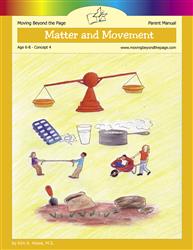
Unit 3: Balance and Motion
Lesson 4
Force and Motion
Students are asked explicitly, "Do you think it s easier to push or pull? Why?," prompting them to state an opinion and give a reason. Students are asked to write sentences about pictures (Activity 3) and to write a short paragraph or story describing their drawn picture (Activity 4), providing opportunities for written expression. Students record measurements and decide which track is longer (Activity 6), which involves drawing a conclusion based on evidence.
Final Project
A Wordless Skit
Students are prompted to reflect on their performance with written or spoken responses to questions such as "How do you feel about your performance?" and "What was your favorite part of the skit?". Students are asked to explain improvements with prompts like "Was there a part you feel you could have done better? How would you do it differently next time?", which invites them to give reasons for their judgments. Students use graphic organizers and are directed to "select and use new vocabulary in speech and writing," which can support organizing written responses.
3: Culture
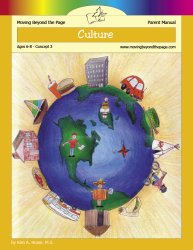
Unit 1: Geography
Lesson 3
Landforms and Bodies of Water
Students are asked to write a paragraph to someone deciding which body of water to move near, with explicit sentence starters such as "I would like to live near ______. If I lived near ______, I could ______ and ______..." that prompt an opinion and supporting reasons. Option 2 directs students to list one positive reason and two negative reasons for each body of water and then write a paragraph explaining which they would choose and why. The activities also prompt students to connect positives and negatives for each body of water and to state what they would do there, providing practice in giving reasons and restating their preference at the end.
Lesson 5
Habitats and Geography
Activity 1 asks students which habitat they would most and least enjoy living in and then to answer 'Why?', which requires students to state an opinion and give reasons. Activity 4 asks students to write a sentence about why they would enjoy living in each habitat, prompting students to provide reasons tied to a topic (a specific habitat). Several activities ask students to write sentences about uses of animals/plants, which engages writing that supports a claim about importance.

Unit 2: People Around the World
Lesson 1
Exploring Culture
Students write about the culture in their community on the "Looking at My Culture" page, illustrating and writing examples of jobs, holidays, food, clothing, and homes. Students conduct an interview and fill in answers about another person's culture, then compare and contrast the two cultures using guided questions such as "What would you enjoy most about ________'s culture?" and "What do you enjoy most about your culture?" These activities prompt students to introduce a topic (their culture) and to express preferences or judgments about cultural elements.
Lesson 2
Traditions
The "My Favorite Holiday" activity asks students to write "_____ is my favorite holiday," prompting them to introduce the topic and state an opinion. The same page prompts "One reason this holiday is important is because _____," which requires students to supply a reason and uses the linking word "because." The "Holidays" activity asks students to "write a sentence about the importance of each holiday," giving additional practice stating reasons for importance.
Lesson 3
Different Religions
Students are asked to write about family beliefs on the "Writing About My Beliefs" page, completing sentence starters such as "My family believes ________________" and "Because we believe these things, we ________________ and ________________." The page prompts students to explain reasons for beliefs (using the word "Because") and to illustrate something important about those beliefs. The skills list also identifies that students will "Compose a variety of written products (LA)," and the Life Application asks students to write questions they would ask a friend of a different religion.
Lesson 4
Homes and Culture
Students are asked to "write a paragraph to explain the tradition, when it occurs, and why it is important," and the provided template includes sentences such as "One tradition we have is ___" and "I enjoy this tradition because ___." Option 1 structures the paragraph for the student and Option 2 asks the student to write complete sentences and identify nouns and verbs. The Skills section lists "Compose a variety of written products (LA)," supporting practice in paragraph writing.
Lesson 6
American Culture
Activity 2 asks the child to choose which leaders' contributions she believes were most important and to explain why, which requires stating an opinion and supplying reasons. Activity 1 requires the child to draw a personal symbol and write a sentence about its meaning, which has students state a position about an object. Activity 5 asks the child to write a letter explaining important cultures and tips for living in the country and shows how to begin and end a letter, providing practice in composing a written piece about a topic.
Lesson 8
Asian Culture
Activity 8 asks students to "write a paragraph about what she would enjoy about living in Asia," which prompts students to introduce the topic of living in Asia and express personal likes. The guidebook activity (Activity 2) has students write about cultural topics as they learn, and the skills list includes "Respond and elaborate in answering what, when, and how questions (LA)" and "Select and use new vocabulary in speech and writing (LA)." Students are also asked to write "three things that would help a child from Asia learn to live in America," which requires giving supportive details.

Unit 3: Stories Around the World
Lesson 1
Fiction or Nonfiction
Students are asked to write the title and author of each fiction story, which introduces the book they are writing about. Students are asked to write one sentence describing each story, demonstrating they can state what the story is about. Students are asked to answer "Did you like or dislike the story? Why?" which requires them to state an opinion and give reasons tied to characters, events, plot, or setting.
Lesson 3
Story Setting
Students are asked to describe the places where stories happen and to explain feelings they have about different settings when looking through illustrations. Students are prompted to provide specific examples from text and illustrations to show how culture is reflected in a setting. Students are asked to explain why the setting is important and to say what types of settings they enjoy and why, which elicits stating an opinion and giving reasons.
Lesson 5
Folktales and Fairy Tales
Activity 1 asks students, 'What was your favorite part of the story? Why?', which requires students to state an opinion and give a reason. The Yeh-Shen activity page asks students to answer reflective questions such as 'Does this story remind you of any other story you have heard?', prompting students to make comparisons or judgments about the text. Several activities ask students to record ideas and describe characters and events, which elicits written responses grounded in the book.
Lesson 6
Cinderella Stories Around the World
Students are asked several times to state which Cinderella story they enjoyed most and explain why (e.g., "Did you enjoy this story or Yeh-Shen more? Why?" and "Which Cinderella story did you enjoy most? Why?"). Students complete Venn diagrams and compare stories and cultures, which prompt them to articulate similarities and differences and give reasons for preferences. The activities require students to retell plots and describe characters and settings, providing opportunities to support opinions with story-based reasons.
Lesson 9
Poetry
Students are asked in Activity 1 to identify which month poem was their favorite and to "explain why the poem is his favorite," prompting them to state a preference and give supporting reasons. The Wrapping Up section asks students to say whether writing and reading poems or stories is more interesting and to explain why, which again prompts stating an opinion with reasons. Activity 3 asks students to select a month and write a poem, providing a writing opportunity that could be adapted to include a preference but is presented as creative writing rather than an opinion piece.
4: Relationships
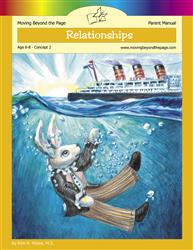
Unit 1: Living Things and Their Environment
Lesson 5
Rivers
Students are asked directly to state a preference in QUESTION #2: "Which life cycle did you find most interesting?" Activity 4 also asks students to pick their favorite life cycle in the book. In Activity 4 students then write simple sentences describing stages of a chosen life cycle, and students answer comprehension prompts after reading the book.
Unit 2: The Miraculous Journey of Edward Tulane
Lesson 1
Relationships
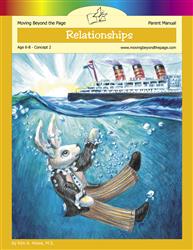
Students are asked, "Ask your child if he thinks he is going to enjoy reading the book and why or why not," which prompts them to state an opinion and give reasons. The "Favorite Stuffed Animal" activity asks students to describe why the stuffed animal is important and to write three sentences about its personality, giving opportunities to express a viewpoint in writing. The comprehension question "How did Abilene feel about Edward? How do you know?" asks students to state a judgment and support it with evidence.
Lesson 3
The Queen Mary
The introduction prompts students to describe a boat experience and to say whether they think a boat ride would be fun and why or why not, which asks them to state an opinion and give reasons. Several reading comprehension questions (e.g., "Why do you think Abilene didn't want to let the other girls on the boat hold Edward?", "How do you think Abilene felt…?", and "Did Edward drown? Why or why not?") require students to provide answers that state an opinion and justify it. The skills list includes "Participate in shared research and writing projects," which implies some structured writing activities related to texts.
Lesson 5
Emotions
Students are asked directly, "What do you think about Lolly?", which prompts them to state an opinion about a character. The Skills section instructs students to "cite specific textual evidence when writing or speaking to support conclusions," and the Activities ask students to discuss quotes and explain what they can assume about Edward, which supports giving reasons tied to the text. The Goodbye Note activity asks students to write from Edward's perspective and to show feelings instead of just listing them, which requires composing sentences about a topic (Edward's relationships/feelings).
Lesson 6
Irregular Verbs
Students read Chapters 13–14 of The Miraculous Journey of Edward Tulane and answer comprehension questions. Question #1 asks, "Did Edward like Bull and Lucy? How do you know?" and expects students to state a stance and cite reasons (e.g., snuggling, enjoying Bull's singing, crying when separated). The wrapping-up prompt asks students to explain why stars might be an important symbol, which requires offering a reasoned interpretation about the book.
Lesson 7
Figurative Language
The lesson includes Reading Question #2: "Do you think Bryce should have taken Edward down? Why or why not?" with the note "Answers will vary," which asks students to state an opinion and provide reasons. The activities ask students to write sentences in Part II of the Irregular Plural Nouns page and to create sentences (Option 2) for figurative language, offering some opportunities for written response.
Lesson 10
Illustrations
Students are asked directly to give their opinion and reasons in Question #4: "Would you have left Edward if you were Bryce? Why or why not?", which prompts an opinion plus supporting reasons. Wrapping Up asks students to name which family was their favorite and explain why, eliciting an opinion with justification. The "Explain an Illustration" page includes the prompt "This is my favorite illustration because," explicitly modeling the linking word "because" to connect opinion and reasons.
Final Project
Chalkboard Presentation
The Skills section explicitly lists writing opinion pieces that introduce the topic/book, state an opinion, supply reasons, use linking words, and provide a concluding statement. Slide 1 instructs the student to put the novel title on the slide (introducing the book) and to dictate a sentence that describes her opinion of the story, with encouragement to explain why she feels that way (stating an opinion and supplying reasons). Slides 2 and 3 ask the student to dictate sentences that explain why a particular part or relationship is her favorite, providing additional practice supplying reasons that support opinions.
Unit 3: Connecting with the Past
Lesson 2
Colonization and the Revolution
The wrap-up asks the child to say whether she would have wanted to be an American colonist and to explain why or why not, which prompts stating an opinion and giving reasons. The "Colonists and the American Revolution" activity asks the student to complete the sentence beginning "Because of the colonists and the revolution they fought, today..." and list two things, which asks for reasoned connections between historical events and present outcomes. The Thanksgiving "Leaves" activity has the child write things she is thankful for, requiring the child to express personal judgments in writing.
Lesson 4
Immigration
Students are asked to write on the "Connecting with the Past" page where a sentence-starter begins with "Because immigrants were brought to Ellis Island and greeted with a warm welcome by the Statue of Liberty, today ______________________________ ______________________________ and ___________________." Students are directed to draw a picture and write about how our country and our lives have been impacted by immigration, and to retell immigrant oral histories and describe photographs as part of their responses.
Lesson 5
Civil Rights
Students are asked to write on the "Civil Rights" page where they draw and "write about how our country and our lives have been impacted by it," including completing the prompt that begins "Because Americans fought peacefully for people of all colors to be treated equally, today ___________ and ___________." Students are asked in the Wrapping Up section to "explain the Civil Rights Movement in his own words" and to "speculate about what would be different in his community if there had not been a Civil Rights movement," which asks for a stated view and supporting reasoning.
Final Project
Preparing Projects
Students are asked to practice presenting their "Connecting with the Past" poster and to explain how past events impact present life, including the example phrasing that they can explain "because they greatly impact the life we live today," which models giving a reason. The wrapping-up prompts ask students what their favorite part was and what part of the project they most enjoyed creating, which asks students to state a preference (an opinion) and potentially give reasons for that preference. The activities require students to assemble a "Famous Americans" book and present it to family, giving an opportunity to introduce the book orally during presentation.
6: Reading

Unit 1: Semester 1
Lesson 11
Final e: ce, ve, ze, se
Students are prompted to state a preference and give a reason when asked, "What was your favorite fable? Why?" (Activity 5.1). During prereading and discussion, students predict and discuss the book ("What do you think will happen in this book? What words do you think you'll find? Why?"), which asks them to introduce the topic and justify predictions. Students are also asked to explain changes they would make to morals ("Are there any morals that you would say differently? Explain."), which elicits stated opinions with explanation.
Lesson 15
Words Ending with ed and ing
Students read The Red-Eyed Tree Frog and are explicitly asked, "Do you think a tree frog would make a good pet? Why or why not?," prompting them to state an opinion and give reasons. Students write short sentences about things they did yesterday and will do tomorrow (e.g., "I ate spaghetti for dinner"), practicing composing topical sentences. Students are invited to use new vocabulary words in a sentence and to answer comprehension questions that require explanation, offering additional practice in stating reasons.
Lesson 16
Words Ending with er and est
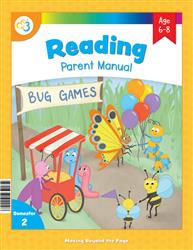
Students are prompted to give opinions orally after reading (e.g., "Which spider should win an award for being the messiest?", "What was your favorite bug game?", "If you could design a game for bugs, what would it be?"). The sight word activity includes the linking word "because" and asks students to read the word and use it in a sentence (Activity 1.3). Several prompts ask students to explain reasons (e.g., "Why aren't the worms hungry? (because they ate leaves during their race)").
Unit 2: Semester 2
Lesson 2
The Six Syllable Types
The lesson asks students to answer opinion questions about A Color of His Own (Day 3, QUESTION #1: If you were a chameleon what color would you want to be?; QUESTION #5: Do you think it would be fun to be able to change your color... Why?), which requires students to state an opinion and give reasons. Activity 5.1 has students say a sentence using an animal name, which prompts oral sentence construction that could include opinion language.
Lesson 6
Possessives
Students are asked direct opinion questions in the Reading and Questions section (e.g., "Do you think the marble belonged to Mrs. Goodwin? Why or why not?" and "Would you have taken the marble home if you found it in your neighbor's yard? Why or why not?"), which prompt students to state an opinion and give reasons. The skills list includes "Ask and answer questions about key details in a text," supporting students in formulating responses to those opinion prompts. The lesson asks students to read chapters and respond to those questions, implying students will produce answers that include their viewpoint and justification.
Lesson 7
Contractions
Students finish reading Penny and Her Marble and answer open-ended questions that ask for their thinking about events (e.g., why Penny's stomach was hurting and why she did not tell her parents). Activity 4.1 asks students to name and write the theme of the story and to record responses to scenario prompts, which requires them to state an interpretive opinion about the book. The lesson also asks students to write or dictate answers on the Theme page, indicating some practice in writing their ideas about the book.
Lesson 8
Two-Syllable Words with Silent e
Students are asked opinion questions about the reading, for example QUESTION #2: "Do you like winter? Why or why not?" and Activity 3.1 asks students whether they feel more like Frog or Toad and to explain their choice. Activity 5.2 asks students to write short sentences (including sight words and two-syllable words), giving some practice with written expression. Several activities prompt students to give reasons orally (e.g., "How did you know?" and "Why or why not?").
Lesson 10
Consonant Teams
Students complete a writing prompt on the Day 4 "Seasons" page that begins "(name) favorite season is ____ because," prompting them to name a topic (their favorite season) and supply a reason using the linking word "because." On Day 2 students are also asked to "write your own sentence with a blank that applies to a holiday your family celebrates," giving additional single-sentence writing practice.
Lesson 12
Suffixes
Students are prompted to write a sentence completing the prompt "If I found a magic lizard and a purple pebble, I would wish to be turned into ______________ because ______________," which requires them to state an opinion (their wish) and provide a reason using the linking word because. A comprehension question asks "If you were a mouse, would you rather be Alexander or Willy? Why?" which asks students to choose a preference and explain their reasoning. Several activities ask students to write or speak short responses (e.g., the Magic Purple Pebble illustration and sentence, and oral story prompts) that use opinion and supporting reasons.