


Second Grade - ELA
1: Community

Unit 1: Communities Around the World
Lesson 1
Exploring a Community
In Activity 4 students are asked, "why people use maps," analyze a "Map of a Community" sheet, locate and read labels, review the map key and scale, and measure distances between buildings with a ruler. The activities require students to examine an informational map and explain its use and features, and Activity 6 asks students to create and label a three-dimensional map that includes a map key and labeled roads.
Final Project
Community Brochure
Students are asked to look over examples of brochures and to "talk about the artwork/pictures and the information that is presented in the text," which requires them to consider what the brochure communicates. The introduction states, "A brochure tells you the location and things that you can do when you visit the place," and students are prompted to answer "How can you help people to learn more about your community? What is important about your community?" Students are also instructed to make their brochure "colorful and interesting to encourage people to come to her community," explicitly linking content choices to an author's persuasive purpose.

Unit 2: Citizenship
Lesson 1
A Good Citizen
Students are asked to say what the book Home might be about and to describe changes in the neighborhood, asking them to make up a sentence or two to describe what is happening on each page. In The Boy Who Cried Wolf students answer questions about why the boy lied, what happened as a result, and why it is important to tell the truth, reinforcing the story's moral. Scene by Scene and Scene-by-Scene options require students to identify and order the most important events and to write brief descriptions for each scene. The lesson's skills list also includes "Answer high-level questions about a text," "Recognize how illustrations contribute to text," and "Understand simple story structure."
Lesson 4
Living in America
Students read the text of the Pledge of Allegiance and are asked to "explain the meaning of each part," which requires interpreting what lines of the pledge describe or promise. Students are asked directly "Why do you think we have a pledge?" and "Why should America be free and fair for all people?", prompting them to state the purpose behind the pledge. Students read the words to "The Star-Spangled Banner," hear that it "was first written to be a poem" about a battle and the flag, and are invited to sing and discuss that background, which connects the text to the author's reason for writing.

Unit 3: Plants and Animals
Lesson 6
Extinct and Endangered Species
The lesson asks students to answer high-level questions about texts (listed in Skills) and includes a Wrap Up prompt asking children what it means for an animal to be endangered or extinct and why animals cannot live in their habitats. Students read and practice a puppet show script and read facts/definitions in the Introduction that explain endangered and extinct animals, giving opportunities to state main ideas. Several activities require students to demonstrate familiarity with a variety of texts (e.g., charades cards, subtraction word problems, scripted dialogue).
Lesson 7
Plants
Students read an informational page titled "A Plant" that explains the parts of a plant and how each part helps the plant live and grow, and they label parts based on those explanations. The skills list and activities ask students to "demonstrate comprehension of text by answering questions and summarizing information," and students practice summarizing and answering comprehension questions for the provided texts (e.g., the plant pages and the "Types of Plants" sorting activity).
2: Matter and Movement

Unit 1: States of Matter
Lesson 1
What Is the World Made Of?
Students are asked to predict what the book is about from the cover and to decide whether the book is fiction or nonfiction, prompting them to consider the book's topic and purpose. Students read and listen to What Is the World Made Of? and stop to discuss specific questions such as "What is the world made of?" and "What are the three states of matter?", which directs them to identify what the text explains. Students complete activities that require pulling examples and explanations from the text (sorting pictures into solids, liquids, and gases; labeling and describing balloons), reinforcing comprehension of what the author describes.
Lesson 4
Bartholomew and the Oobleck
Students answer guided questions about characters, motivations, and outcomes (e.g., "What did the king want at the beginning of the story? Why did he want it?" and "How did Bartholomew stop the oobleck?"). Students complete a Story Quilt organizer to list characters, setting, three important events, the problem, and the solution, requiring them to identify central events and the story's problem/solution. Students write a new ending and complete true/false items, which require summarizing key ideas and distinguishing which events actually happened.

Unit 2: Earth
Lesson 1
Our Planet Earth
Students read the informational book You're Aboard Spaceship Earth and are asked to write three sentences that tell someone else what the book is about (Activity 3). The lesson prompts students to answer author-focused questions such as Why does the author call Earth a "spaceship"?, What makes Earth different from the other planets?, and Why do we not run out of water on Earth?, which direct students to identify what the author is explaining or describing. Activity 4 asks students to use information from the book to write a letter to an alien, requiring them to select and communicate the book's main ideas for another audience. The Wrapping Up prompt asks students to explain what they learned about Earth, reinforcing summarizing the text's purpose.
Lesson 5
Rocks
Activity 6 asks students to look at the cover, identify the title/author/illustrator, predict what the story might be about, read the story, and answer direct questions such as "What was this story about?" and "What does the author tell you to say if someone asks you what is so special about your rock?" Activity 7 asks students to cut out the ten rules from the book, put them in order, and optionally write their own sentences that summarize each rule, which requires students to determine and restate the text's key points.
Unit 3: Balance and Motion
Lesson 1
What Is Balance?
Students are asked to read the informational book What Is a Balance Scale? and answer guided comprehension questions about how a balance works and what happens when amounts are equal. After rereading as needed, students are instructed to write two or three sentences that describe the main idea of the book. The Activities include multiple tasks where students explain concepts (e.g., what balance means, what balance scales are used for) verbally and in writing.
Lesson 4
Force and Motion
Students read the nonfiction book Move It! and are asked to predict the book's topic from the title and table of contents. Students answer focused comprehension questions such as the difference between a push and a pull and what motion means. The skills list explicitly includes "Read and comprehend both fiction and nonfiction text," and activities ask students to explain actions and label examples of pushing and pulling from illustrations.
Lesson 5
Gravity
Students are asked to read the cover of Forces Make Things Move and guess what the book will be about, and they read or listen to the informational book Move It! (pages are reread and investigated). The skills list explicitly includes "Listen responsively to stories and other text read aloud." Students complete a True/False sheet that requires judging factual statements related to the informational text about forces and gravity. These activities engage students with the content and claims presented in informational text.
3: Culture
Unit 1: Geography
Lesson 1
Using Maps and Globes
Students are asked to answer questions about a read-aloud (The Armadillo from Amarillo), including "What did Armadillo learn on his journey?," and the skills list explicitly includes "Answer questions about text read aloud." Students read informational pages in The Usborne Children's Picture Atlas and discuss that maps show places and why maps are used. Students complete activities that require explaining reasons a person might use a map and describe map features and purposes.
Lesson 7
The Seven Continents
Students read an informational book titled Discover the Seven Continents and are told they will learn facts about each continent. Students answer targeted questions by pointing to the map and using pictures and words to find information (e.g., which continent has the Sahara, which is the largest). The introduction frames explanatory content by having students consider how location influences people's lives and climates.

Unit 2: People Around the World
Lesson 1
Exploring Culture
Students are asked to read pages 10-13 of The Usborne Children's Picture Atlas and answer specific content questions such as "What are some things that people do in different cultures?" and "How do people share ideas?" which requires them to identify what the text describes. The skills list includes "Listen critically to, interpret, and evaluate (LA)" and "Compare language and stories that reflect customs, regions, and culture (LA)," indicating students practice interpreting informational text about culture. Students also complete the "Looking at My Culture" and interview activities that require them to summarize and record cultural information from spoken and written sources.
Lesson 7
History of America
Students read the book Three Young Pilgrims and are asked specific comprehension questions such as "Why did the Pilgrims leave England?", "How did the Pilgrims get to America?", and "What was life like for the Pilgrims?" The Skills section explicitly lists that students will "Discuss and explain how, why, and what if questions in sharing narrative and expository texts." Students also compare lives then and now using a Venn diagram, which requires extracting explanatory information from the text.
Lesson 8
Asian Culture
Students listen to and discuss the book Explore Asia and answer guided questions about what the text describes (types of habitats, resources, clothing, and what people are doing). Students complete a "Guidebook to Asia," writing about topics presented in the text and using pictures to illustrate what the book describes. Activity 8 asks students to write a paragraph about what they would enjoy about living in Asia and to note differences between Asia and America, and the skills list includes "Listen critically, interpret, and evaluate" and "Respond and elaborate in answering what, when, and how questions."
Lesson 9
African Culture
Students are asked to read the book title Africa Is Not a Country and predict what they might learn, which prompts them to consider the book's topic and likely focus. As they listen to or read the book, students identify on their map the nations discussed and answer guided questions about what they learned (e.g., types of clothing, homes, foods, and how lives are similar or different). Students complete a Guidebook to Africa by using information from the book to fill in blanks and summarize content, and they answer wrap-up prompts asking what they learned about life in Africa.
Lesson 10
South American Culture
Students read the informational book Explore South America and answer targeted questions about habitats, the Andes, the Amazon River, animals, jobs, food, and cultural similarities and differences (Activity 1, Activity 3, Activity 6, Activity 5). Students are asked to recount what they learned about the people and life in South America and to create a "Guidebook to South America" using gathered information (Activity 5, Activity 7). Students sequence events from the Amazon journey and complete worksheets that require summarizing animal facts and habitats, which requires pulling key explanatory details from the text (Activity 3, Activity 6).

Unit 3: Stories Around the World
Lesson 5
Folktales and Fairy Tales
Students are asked directly, in Activity 1, "What natural event does this story explain?" and to identify characters, setting, and the problem, which helps them determine why the story was told. The Facts and Definitions section defines a folktale as a story that "teaches a lesson or explains a natural event," giving students language to describe purpose. Activity 5 and the chart tasks have students record cultural elements the story shows, and the Wrapping Up asks the child to describe what we can learn from folktales (information about culture or explanations about natural events).
Lesson 6
Cinderella Stories Around the World
Students are asked to locate the story origin on a map and answer questions such as "What did you learn about the culture in Egypt by reading the story and looking at the pictures?" and to record cultural information on the "Folktales and Culture" sheet. Students complete a Cinderella Elements Chart and a Venn diagram to compare The Egyptian Cinderella and Yeh-Shen, identifying similarities, differences, and themes across texts. Several prompts ask students to connect ideas and themes across texts and to explain how cultural details differ among versions.
Lesson 8
Myths and Legends
The introduction explicitly tells students that a myth explains how natural things or customs began and that a legend is partly based on true events, giving a clear statement of purpose for those genres. Activity 1 has students read "How Rabbit Brought Fire to the People" and answer questions like "Why do you think the people wanted fire?" and "Who had fire at the beginning of the story?", which ask students to explain events and reasons in the text. The wrapping-up prompts ask the child to "describe what myths and legends are" and to explain why they liked a particular story, which asks students to articulate the story's intent or focus.
Lesson 9
Poetry
Students are asked, in Activity 2, to consider what a person from another country could learn about American culture after reading A Child's Calendar and to answer questions such as which homes, clothing, landscapes, or bodies of water are described. Students fill in graphic organizers labeled Weather, Clothing, Homes, Holidays, Activities, and Animals using examples from the text and pictures. The activity prompts students to identify the types of activities people in the poem are engaged in, which supports extracting what the poems describe.
4: Relationships
Unit 1: Living Things and Their Environment
Lesson 3
Sun, Moon, and Stars
Students read the book Does the Sun Sleep? and answer specific comprehension questions about the Sun, Moon, and stars (e.g., where the Sun is at noon, why it is night on the other side of the Earth, why the Moon changes shape). Students perform a Day and Night simulation with a ball and flashlight to demonstrate and explain why one side of Earth is in daylight and the other in night. The wrapping-up prompt asks students to explain why we have day and night and how and why the Moon appears to change shape in the sky.
Lesson 4
Seasons and Living Things
Students read an informational book (Sunshine Makes the Seasons) and discuss it using guided questions about day length, Earth's rotation, and axial tilt. Students label seasons on a diagram and complete a seasons simulation that requires them to explain how Earth's position and tilt produce different seasons. Students discuss how seasons affect living things (plants, animals, people) and sequence events in the hibernation story, showing engagement with the text's explanatory content.
Unit 2: The Miraculous Journey of Edward Tulane
Lesson 3
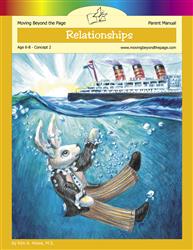
The Queen Mary
Students are directed to use online informational sources about the Queen Mary and to fill in a research sheet with factual questions (e.g., when it first sailed, how it was transformed during the war, where it is today). The lesson explicitly tells students to "point out text titles that are bold" and to "discuss how these help a reader efficiently find information and understand the main points of the text." Students also answer specific comprehension questions from the research sources that require summarizing key facts.
Lesson 4
Pronouns
The lesson's "Questions to Explore" (e.g., "Why do people need relationships? How do our relationships shape who we are?") prompts students to consider the overarching question the book addresses. Activity 2 asks students to compare Edward's relationships with Abilene and with Nellie and Lawrence and to describe how and why Edward has changed, leading students to infer the book's focus on relationships and transformation. The comprehension questions and prompts (e.g., discuss illustrations, describe characters' responses to events) require students to draw conclusions about the story's meaning and themes.
Lesson 11
Building Sentences
Students are asked to explain why the author might have placed the Stanley Kunitz quote at the beginning of the book and to describe how that quote applies to Edward's journey, which asks them to consider author intent. The Skills list includes analyzing how and why individuals, events, or ideas develop and interact over the course of a text, and the Relationship Timeline requires students to describe relationships and think about how each relationship changed Edward. Comprehension questions ask students to explain Edward's changes and motivations, prompting students to reason about the text's purpose in portraying change.
Unit 3: Connecting with the Past
Lesson 5
Civil Rights
Students read The Story of Ruby Bridges and answer targeted comprehension questions about Ruby's family, why white people protested, and Ruby's feelings, requiring them to extract key information from the text. Students are asked to explain the Civil Rights Movement in their own words, respond to prompts about who wanted change and why, and fill out a "Civil Rights" page drawing and writing how the country was impacted. Students place dates and descriptions on a timeline for Rosa Parks and Martin Luther King, Jr., which requires identifying central events and their significance.
6: Reading

Unit 1: Semester 1
Lesson 5
More R-Controlled Vowels
Students read the informational Reader #5 — All About Storms on their own and then answer targeted comprehension questions such as "Why does it rain?," "What is hail?," and "What might you see or hear during a thunderstorm?" The activity asks students to point to words as they read and to use details from the text when responding. The lesson also prompts a follow-up discussion question ("Do you like storms? Why or why not?") that engages students with the topic.
Unit 2: Semester 2
Lesson 7
Contractions
Day 4 Activity 4.1 asks the child to state the lesson the author wants children who read Penny and Her Marble to learn and to record that idea on the 'Theme' page. Students read scenarios and are asked to record and read aloud responses that connect story events to the theme. The lesson includes comprehension questions that prompt students to explain characters' feelings and actions, which supports making inferences about the author's intended lesson.
Lesson 8
Two-Syllable Words with Silent e
The lesson asks students to reread the story "Down the Hill" and give an oral summary, and it explicitly defines a summary as retelling the most important characters, key events, and the ending (Activity 4.1). The reading comprehension questions (e.g., asking what season it was and why, and why Toad hit a tree) require students to identify key story details and explain reasons based on the text (Reading And Questions). Students also practice locating key words and a two-syllable word ending in silent e within the story, which directs them to attend to important elements of the text (Activity 4.2).