


Kindergarten - ELA
1: Letters

Unit 1: A - A Is for Musk Ox
Lesson 1
Day 1
The Skills list explicitly includes the target skill: "Name the author and illustrator of a text and define the role of each in presenting the ideas or information in a text." The Reading and Questions section directs the child to point to the names of the author and illustrator on the book cover and asks the child what an author does (writes books) and what an illustrator does (draws the pictures for books). The child is then asked to read the book and answer follow-up questions, providing context for the identification and role discussion.
Lesson 5
Day 5
Students are asked to spend time exploring the illustrations in the A is for Musk Ox book and to trace the words from left to right, which draws attention to the relationship between text and pictures. In the writing workshop students are asked to draw a picture to accompany a dictated story and are told that their picture should relate to the story "in the same way that an illustrator's pictures enhance the author's words," explicitly naming illustrator and author and describing how illustrations support the text.

Unit 2: H - Hondo and Fabian
Lesson 1
Day 1
Students are asked to find the name of the author and illustrator on the book and told that in this book it is the same person. They are prompted to discuss what two jobs Peter McCarty had to do to be both the author and the illustrator. The front-cover activity asks students to use the illustration to relate the picture to the title, reinforcing attention to how images and words present ideas.

Unit 3: I - The Little Island
Lesson 1
Day 1
The lesson asks the child to find the names of the author and illustrator and to note whether the same person wrote and illustrated the book. It directs the child to observe the cover illustration and to describe what it depicts, and a skill statement asks students to describe the relationship between illustrations and the story. The lesson points out the Caldecott seal and explains that the illustrator won a special award for the paintings that go along with the story.
Lesson 5
Day 5
Activity 2 directs the child to look at the front cover and identify the title and the names of the author and illustrator, and to open the title page and "discuss the purpose and contents of the title page." The activity also asks the child to imagine what she would have done differently "if she was the author," prompting consideration of the author's role in creating the book. The child is asked to spend time looking at the book and to state opinions about it, which requires attending to elements like the author and illustrator credit.

Unit 4: T - What Do You Do With a Tail Like This?
Lesson 1
Day 1
The directions tell the adult to "Preview the book with your child, noting the title and authors/illustrators," and to ask the child to predict what the book will be about based on what he notices. The instructions also ask the child and adult to "refer back to the pictures together" after reading, which directs attention to the visual elements associated with the text. The Skills list includes recognizing common types of texts, which supports attending to text features like title and creator.

Unit 5: L - We're Going on a Leaf Hunt
Lesson 1
Day 1
The text instructs the child to "take a look at the cover of the book" and to "read the title and the names of the author and illustrator and then read the book with your child," which requires students to locate and say the author and illustrator names. The reading prompts direct students to notice cover details and to read the author and illustrator information aloud. Students also read and discuss the book content after identifying those names.

Unit 6: F - Fireflies
Lesson 1
Day 1
Students are prompted to look at the cover and describe what they see, which engages them in noticing pictures and their connection to the book. The Questions to Explore include "How do books use both pictures and words to tell a story?", asking students to consider the roles of images and text. The Skills section explicitly states that, with prompting and support, students should describe the relationship between illustrations and the story (e.g., what moment an illustration depicts).

Unit 12: D - Dinosaurs Big and Small
Lesson 1
Day 1
The Skills list explicitly includes the target: "Name the author and illustrator of a text and define the role of each in presenting the ideas or information in a text." The Reading and Questions section asks students to identify the author and illustrator from the front cover and to state each person's job (Question #2), with model answers explaining that the author researched and presented facts and the illustrator drew accurate pictures. The lesson also prompts students to look at the cover before reading, supporting the act of naming the author and illustrator.
Lesson 3
Day 3
The lesson text repeatedly names the book as Dinosaurs Big and Small by Kathleen Weidner Zoehfeld and directs an adult to read that book with the child. Students are instructed to look at specific pages (page 5, page 27) and to read words aloud while the adult reads the book, so the author name appears in the reading context.

Unit 14: B - Blueberries for Sal
Lesson 1
Day 1
Have your child find the name of the illustrator on the cover and note that there is only one name: Robert McCloskey. The text tells the child that this means the same person both wrote the words of the story and drew the pictures, and asks the child to flip through the book to observe the illustrations (asking what color was used). The cover's silver medal and the prompt about the award explicitly link the pictures to recognition of the illustrator's work.

Unit 15: R - Rain
Lesson 1
Day 1
The lesson asks the child to look at the cover and notice the small words on the cover and to point to the words as they read, which engages attention to the book's text. The lesson includes specific comprehension questions such as "How did the author make you feel about rain?" and "How did the author make you feel like it was raining?", prompting students to consider the author's role in creating mood. The lesson also has the adult point out colors that match the text and discuss images while reading, engaging students with the relationship between pictures and text.

Unit 16: N - Night in the Country
Lesson 1
Day 1
The lesson has students look at the cover of Night in the Country and is explicit about the book being by Cynthia Rylant, exposing students to the author's name. Students are asked question #2: "What does the author seem to think about nighttime? How can you tell?", which prompts them to identify the author's perspective and use text and pictures as evidence.
Lesson 4
Day 4
Students are directed to go through the book Night in the Country by Cynthia Rylant, which names the author and provides text examples to examine. Students are asked to look at onomatopoeia examples in the book and act out the actions and sounds, engaging directly with content from a credited text.

Unit 17: M - Marshmallow
Lesson 1
Day 1
The Reading And Questions section states the book is "written and illustrated by a woman who had a bunny named Marshmallow," which introduces the idea of an author and an illustrator. The cover prompt asks the child to look at the cover and discuss what she sees and why the book has that title, engaging the child with the book's pictures. The text asks the child to recall the difference between fiction and non-fiction, linking authorship to the type of text.
Lesson 4
Day 4
Activity 2 explicitly names the illustrator: 'Clare Turlay Newberry used charcoal to create the illustrations for this story.' Students are asked to look at the pictures, observe color choices and bold outlines, and note the illustrator's technique of smudging and blending to create the images. Students practice making drawings with charcoal/chalk, which reinforces how an illustrator's materials and choices affect the presentation of the story's visuals.

Unit 19: J - Jump Frog Jump
Lesson 1
Day 1
Students are asked to look at the cover of Jump, Frog, Jump! and the cover is shown as "by Robert Kalan," so students can observe and potentially name the author. Students are prompted to consult the book and the Student Activity Page which repeats the book title and the author's name, reinforcing author identification. Students handle and use the book cover information while sequencing events, exposing them to author attribution on materials they use.

Unit 20: K - Kindness
Lesson 1
Day 1
Students are asked to look at the cover and read the title of the book, which engages them in noticing book front-matter. The skills list explicitly states that, "With prompting and support, describe the relationship between illustrations and the story in which they appear," so students practice explaining what illustrations depict. Students also interact with the Student Activity Page that features animal illustrations, using images as focal points for counting and ordering activities.
Lesson 5
Day 5
Activity 2 tells the child that "the pictures in a story are created carefully in order to bring to life the author's words" and asks the child to look at illustrations and retell the story using them. Activity 3 has the child choose a favorite book, write or dictate a description, state reasons for liking it, and draw a picture of a favorite scene, which engages with both text content and images.

Unit 22: Y - Little Blue and Little Yellow
Lesson 1
Day 1
Students are prompted to look at the front cover of Little Blue and Little Yellow and the text explicitly names the book's author, Leo Lionni. The note about the book calls attention to the author's use of nonstandard capitalization, which directs student attention to authorial choices. The reading questions and activities require students to reference the book and its pages when answering comprehension questions.
Lesson 4
Day 4
Activity 2 names Leo Lionni as the author of Little Blue and Little Yellow and describes how he created the story by tearing paper on a subway ride. Students are asked to look back through the book and identify how Mr. Lionni 'shows' parents, feelings, the park, and the mountain using bigger shapes, torn brown boxes, color changes, and torn black paper. Students then make torn-paper characters, tell a story using those paper pieces, choose a scene to glue, and write or dictate what is happening in that scene.

Unit 23: W - George Washington's Birthday
Lesson 1
Day 1
Students are directed to look at the cover of the book and shown the byline 'George Washington's Birthday by Margaret McNamara,' which exposes them to the author's name. Students compare the cover picture of George Washington to the photograph on the dollar bill, engaging with the book's images. The text explicitly discusses that the author used imagination to create dialogue and labels the book 'historical fiction,' which distinguishes the author's role in shaping how facts and stories are presented.
Lesson 5
Day 5
Activity 2 directs students to notice that the author placed information in the regular text and in boxes and asks why an author might include information in those boxes. The activity points out labels like "FACT" and "MYTH" that explain information and tells students to look at illustrations (for example, George writing rules) to find information. Students are asked to spend time independently looking for different places text appears on the pages and to think about the purpose for different placements of words.

Unit 24: Q - The Quilt Story
Lesson 1
Day 1
Students are directed to "look at the cover of the book" and to read The Quilt Story, giving them the opportunity to view text illustrations. The Skills section explicitly instructs that, "With prompting and support, describe the relationship between illustrations and the story in which they appear (e.g., what moment in a story the illustration depicts)." The reading follow-up asks students to use pictorial clues (style of dress, sewing by candlelight, travel by horse) to infer time period, which has students connect illustrations to story information.
Lesson 5
Day 5
Activity 2 asks the child what role illustrations play and states that illustrations "help the author to communicate ideas and feelings along with the words." The child is directed to look at the cover picture of The Quilt Story and examine Abigail's facial expression to infer feelings and understand the book. The child is asked to point out expressions and explain what he learns about the story from the pictures.

Unit 26: Z - Greedy Zebra
Lesson 3
Day 3
Students are asked to listen to and read Greedy Zebra and to read the sight word "new" in context. After reading, students are asked to use the illustrations to retell the story and to make predictions about what would have happened if zebra had not been greedy. Students practice attending to pictures as a source of information about the story events.
2: Holidays

Unit 28: Thanksgiving
Lesson 1
Day 1
The lesson's Skills list includes: "With prompting and support, describe the relationship between illustrations and the text in which they appear (e.g., what person, place, thing, or idea in the text the illustration depicts)." The Reading and Questions section directs students to look at the cover of Thanksgiving Is..., ask what they see, and flip through the book identifying locations while looking at pictures. The Student Activity Page features a turkey drawing used for coloring/labeling, giving students practice working with illustrations.
Lesson 3
Day 3
Students reread the story Thanksgiving Is... by Gail Gibbons, so they are exposed to and hear the author's name. Students look at specific pages about kinds of feasts and talk about their family's favorite Thanksgiving foods, engaging with the text's content. The author credit is presented explicitly in the lesson title/reference.
Lesson 5
Day 5
Activity 2 instructs students to study the illustrations and to consider how they help the author teach about Thanksgiving. The directions tell students to point out observations about the illustrations and note that illustrations go along with the words and sometimes help explain what the author is trying to communicate.

Unit 29: Christmas
Lesson 1
Day 1
Students are asked to explore The Christmas Wish by Lori Evert and to notice and predict what the book will be about. The text explicitly names Lori Evert as the author and Per Breihagen as the photographer who illustrated the story. Students are prompted to consider the illustrations (asking whether they are pictures) and to look for photographs that might have been edited, linking illustrations to how ideas are presented.
Lesson 2
Day 2
Students are asked to look again at the story The Christmas Wish and the author Lori Evert is named, so students encounter and can identify the author. The text also identifies a photographer as a native of Norway, which references the person responsible for images and connects images to content about Norway.
1: Environment

Unit 1: Habitats and Homes
Lesson 2
What Is a Map?
Students are read Me On the Map and the lesson text names the book's author: "Me On the Map by Joan Sweeney." Students are also shown examples of maps in books and other print materials, exposing them to published texts and their presentation.
Lesson 3
Guide to Animal Habitats
The Skills section explicitly lists "Identify the title, author's name, and illustrator's name on a book," and the Introduction directs students to point to the title and to locate the author's name on the cover. The Introduction asks students to recognize letters in the title and author's name and to respond to questions about the cover and what the book is about. The read-aloud and cover exploration engage students with the book's front matter and author information.
2: Similarities and Differences
Unit 1: Amazing Attributes
Lesson 2
Animal Attributes
The lesson refers to the book Crinkleroot's Guide to Knowing Animal Habitats by Jim Arnosky and instructs students to look at the pictures and identify body parts. Students are asked to look at the pictures of many different animals and discuss how the animals use their different body parts, which engages them with the book's illustrations.
Lesson 10
Earth Materials: Rocks, Soil, and Water
The lesson asks students to compare the covers of Over and Under the Pond and Up in the Garden and Down in the Dirt and asks if the two books have the same illustrator and why, prompting visual comparison of illustrations. The lesson asks how the writing in the two books is similar (noting the author alternates between opposites), prompting analysis of the author's choices. The Earth Materials book activity includes a cover template with a blank labeled "Author and Illustrator" for students to record those names.
Unit 2: Senses
Lesson 1
My Five Senses
Students are shown the cover of My Five Senses by Aliki and are asked to find the title and locate the author's name. Students are prompted to identify the first letter of the author's name and to attempt reading words from the text. Students practice locating bibliographic information on a book cover as part of Activity 1.
Lesson 2
Senses and Body Parts
The lesson's Skills section explicitly lists "Identify the title and author of a book (LA)," and students are instructed to listen to a read-aloud of "Jackie's Day at the Pet Store." In Option 1 students listen to the story twice and perform a task (gluing sense organs) while the story is read, which supports identifying the title and author through the read-aloud activity. The activities require students to listen responsively and determine a purpose for listening, which supports engagement with the text and its credited title/author.
3: Patterns
Unit 1: Identifying and Creating Visual Patterns
Lesson 1
What Is a Pattern?
Students are asked to look at the cover of Busy Bugs and to identify the title and the author's name, and they are encouraged to read the title aloud. Students follow along during a read-aloud and are prompted to discuss story details and patterns observed on specific pages.
Unit 2: Patterns in Sounds, Words, and Actions
Lesson 2
Making Word Patterns
Students are instructed to make a small book of rhyming sentences, glue a sentence and an illustration on each page, and then name themselves as the author of that book. Students also work with picture books to identify and record words with the same sound pattern, and they handle pages that include printed illustrations and images tied to sentences.
Unit 3: Patterns in Your World
Lesson 1
Patterns in Nature
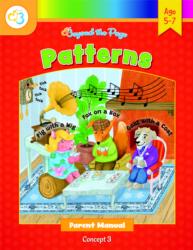
Students read aloud pp. 1-11 of Pattern by Henry Pluckrose, which explicitly names the author. Students are asked to identify and describe the pattern in each picture and to match or create patterns on animal illustrations, so they engage directly with the book's pictures and visual information. Students draw and label favorite patterns and copy sentences from the reading, reinforcing interaction with the text and its images.
4: Change
Unit 2: Characters Change
Lesson 1
What's in a Name
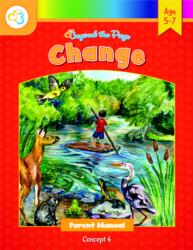
Students are asked to pay close attention to the illustrations as the narrator reads and to listen to phrases that Kevin Henkes uses in the book Chrysanthemum. Activity 3 explicitly explains that authors try to make books interesting and shows students how an author communicates characters' feelings through words and actions. The materials name Kevin Henkes as the author when directing students to read and interpret his phrases.
Lesson 3
Is It a Problem?
Students are asked to read What Do You Do With a Problem? by Kobi Yamada, so they are exposed to the author's name. Students answer a question that asks, "How does the author illustrate the problem at the beginning of the story?" and are prompted to look through the pages and watch how the problem grows and changes in the illustrations. Students complete an activity in which they illustrate the problem at different points in the story, engaging directly with the book's pictures.
Lesson 4
Comparing Characters
Activity 3 notes that "the two authors take different approaches in how they tell their story," which prompts discussion of how authors present problems and solutions. The Wrapping Up section explicitly names two authors (Kevin Henkes and Kobi Yamada) and asks whether the child would like to read more books by either author, prompting recognition of author names. Several activities (summaries and comparisons) ask students to compare how stories teach the same lesson, which involves noticing differences in authors' presentation choices.
Lesson 5
The Raft
The lesson directs an adult to show the cover of The Raft by Jim LaMarche and to tell the child that, like Kevin Henkes, the author of this book is also the illustrator. The lesson also instructs the adult to read the Author's Note and to read pages aloud, providing opportunities for students to see the author/illustrator credit and associated text.
Unit 3: A First Look at History - Change Over Time
Lesson 3
Communities Change
Students are asked to read the title and the author's name from the cover of The House on Maple Street (Activity 1). Students are prompted to look at and describe the pictures on the cover and in the book and to point out differences in transportation, clothing, homes, and activities (Activities 1 and 3). Students also complete drawing and cut-and-paste activities that require them to use pictures as information (several Student Activity Pages).
6: Reading

Unit 1: Semester 1
Lesson 17
Semester Review
Students are asked to write the title and their name on the cover when creating their own reader, and they are invited to add pictures if they'd like. The lesson also has students reread and discuss readers, pointing to or naming characters and talking about what the characters do. Students create and plan their own book (Planning My Reader) which requires them to produce text and illustrations.