


First Grade - ELA
1: Environment

Unit 1: Habitats and Homes
Lesson 1
My Environment
Students complete the 'The Most Important Room' page by filling in 'The most important room in my house is the ____,' which introduces the topic and names the subject. They list uses of the room in three slots and answer 'The ____ is the most important room because ____,' which requires them to state an opinion and supply a reason. Students are asked to read the paragraph aloud and draw a picture, producing a short written paragraph and an oral ending to the piece.
Lesson 3
Guide to Animal Habitats
Students are asked to identify the book title and author's name (Introduction), which supports naming the book they are writing about. In Activity 5 students choose which habitat they would most like to visit and are prompted to tell a story or draw about visiting it, including questions like "Which animals would you be most interested in seeing? Why?" that ask for a preference and a reason. Activity 6 also asks students to pick their favorite habitat and an animal they like, reinforcing selection of a preference.
Lesson 8
Animal Care
Students listen to and discuss the book The Salamander Room and are asked directly opinion questions such as "Do you think the boy should have kept the salamander in his room? Why or why not?" and "Would you keep it? Why or why not?" Students are prompted to give reasons for their answers and to answer questions about a text, connecting literature to prior knowledge.
Unit 2: Weather
Lesson 1
Reading the Skies
Activity 3 (My Favorite Kind of Weather) asks students to say what kind of weather they enjoy most and explain why, and allows them to tell a story or dictate it for recording. Activity 1 (Whatever the Weather) asks students to look at a book cover and answer questions such as "What type of weather is best for playing outside?," prompting students to state opinions about weather. Activity 2 asks students to dictate sentences (and record one at the bottom), providing opportunities for students to produce written or dictated sentences about weather vocabulary and preferences.
Lesson 5
Fall
Students are asked directly "Do you like the fall? Why or why not?", which prompts them to state an opinion and provide a reason. Students are given three lines on the activity page to write sentences about the fall scene, allowing them to record opinions or reasons in writing. Handwriting practice asks students to write or copy sentences using words like "fall" and "fun," supporting sentence-level composition about the topic.
Unit 3: Community
Lesson 1
On the Town
The lesson asks students to look at the cover of the book On the Town and to answer questions such as what the book might be about, which names the book as a topic for discussion. Students are asked which place is their favorite and what places they visit regularly, prompting them to state a personal preference (opinion). Activity 3 asks students to draw a new page for the book and to write or dictate a sentence or two about Charlie visiting this place, providing an opportunity to write about the book topic.
Lesson 2
My Community Environment
Students are asked in Wrapping Up to say what they think is the most important place in the community and to explain why, which requires stating an opinion and supplying a reason. Students can write or dictate a brief description on the My Community Poster about how a place serves the community, giving them an opportunity to put reasons into written or dictated form. Students copy the titles of three books in Activity 3, which has them record book names that could serve as an introduction or identification of a book they are writing about.
Lesson 3
Jobs in the Community
Activity 4 ("When I Grow Up") asks students to write a paragraph about a chosen community worker and provides an example paragraph that begins with "When I grow up I could be a firefighter" (introducing the topic). The example continues with "I would like being a firefighter because…" and lists reasons, and ends with a concluding sentence "this would be a good job because people would need me" (stating an opinion, supplying reasons, and providing a sense of closure). Activity 5 also has students record one simple sentence about how each worker helps, and students are encouraged to attempt to write or dictate sentences, supporting practice in composing opinion-like statements.
Lesson 6
A Good Community Citizen
In Activity 1 students decide whether each scenario shows a good citizen and are asked to explain how they made their decision, which requires stating a judgment and giving a reason. Option 2 asks students to draw three positive and three negative family behaviors and label each picture as they explain what is happening, prompting short written labels or captions with explanations. Activity 3 has students name family members and describe observed examples of good citizenship beneath each name, allowing students to record reasons for their judgments by dictation or independent writing.
Lesson 7
A Citizen with Character
Students read scenarios and mark them as respectful or disrespectful and complete the prompt "I am respectful when I __," producing a written personal statement. Students score pictures on the Kindness Award page and are asked to explain why they chose each score; an extension asks them to apply the scoring to a favorite picture book. Students respond in writing or orally to questions after "A Lesson in Honesty" (e.g., "What would you have done?") and in retelling the Boy Who Cried Wolf they write or dictate sentences for beginning, middle, and end.
Lesson 8
Rules and Laws
Students are asked in Activity 1 to choose which home rule is most important and to explain why, and they write numbers on sentence strips and paste them in order. In Activity 3 students are asked whether they would stay in "the house with no rules" and to explain why or why not. Students are encouraged to make a written list of 3–5 rules for their house, which requires them to record their opinions.
Final Project
I Can Make A Difference
Students write a plan using the starter "I am planning to __," which has them introduce their topic. In the reflection section students complete "I made my community a better place because __," prompting them to state an opinion and give a reason. Additional reflection questions ("Did your plan help make your community better? How?" and "How did you affect the person/people you helped?") require students to supply reasons and explanations, and students are asked to "write about her experience at the bottom of the plan sheet," producing a concluding statement.
2: Similarities and Differences
Unit 1: Amazing Attributes
Lesson 7
More Attributes
The Wrapping Up section asks the child to answer whether it would be fun to play with toys if they were all the same and to explain why or why not, prompting the child to state an opinion and give a reason. Several activities (e.g., asking the child to explain what an attribute is and to describe what makes each person in her family unique, and asking her to choose groups for sorting) require the child to state a position or choice and justify it verbally.
Unit 2: Senses
Lesson 1
My Five Senses
Activity 3 (Option 1) asks the child to choose her favorite sense and explain why, and to write the sense on the provided page and draw the associated sense organ. Activity 4 asks the child to write or copy a sentence about a sense and sense organ, providing practice in composing a simple written statement. Activity 3 (Option 2) has the child dictate four complete sentences describing a sensing experience, which practices composing multi-sentence descriptions.
Lesson 3
Smelling and Tasting
Students conduct a survey of taste preferences and answer questions such as "If you were to give a friend a snack, what flavor would you make it? Why?", which asks them to state a preference and provide a reason. Students record survey results on a chart and are asked to write one sentence on handwriting paper: "________ people liked ________." Students also sort and label foods into taste categories (sweet, bitter, sour, salty) and discuss which flavors people liked most or least.
Lesson 6
Experimenting With Our Senses
Students are prompted to state preferences and judgments: Activity 2 asks which spice he likes and whether he thinks it would taste good on food, and Activity 3 asks the child to name his favorite flavor and list foods with that flavor. Activity 3 also asks the child to tell a story about a time he ate or drank his favorite flavor and records it, and Activity 4 asks the child to write or dictate a sentence about something he smelled or tasted. The Skills section explicitly notes using descriptive words in speech and writing.
Final Project
A Sensible Party
The Wrapping Up section asks students to answer "Did the party go well? Why or why not?" and other reflective questions, which prompt students to state an opinion and give reasons. The Party Planner and invitation tasks require students to write plans, lists, and invitations, showing some written work connected to the party topic. The Game 1 prompt asks students to compare their plan with a sample, which supports giving judgments about similarities and differences.
Unit 3: We're the Same, We're Different
Lesson 1
You're Special
Students are asked directly, "Would you enjoy being exactly like everyone else? Why or why not?", which prompts them to state an opinion and give a reason. In Activity 1 students complete a short paragraph about themselves using answers from the first page and are asked to read and share their story aloud. The prompt "Ask him what he likes about his story" prompts students to express a personal judgment about their writing.
Lesson 4
Interests and Hobbies
Students are asked to dictate and write a few sentences that describe a chosen hobby to someone unfamiliar (Activity 1). Students complete Hobby Survey prompts such as "What do you enjoy most about your hobby?" and "What could you teach someone about your hobby?" that require stating preferences and describing reasons. The My Interest sheet asks "What is one thing you liked about _______?" and "What most interests you?", prompting students to express likes or opinions about a topic.
Lesson 6
Different Families
Students complete written sentence prompts that ask them to state similarity or difference with a family from another country using sentence stems such as "My family is similar to a family from _______ because we both _______." and "My family is different from a family from _______ because we _______, but they _______." Students practice writing words and sentences (including the word "different") and are prompted to draw and write comparisons after reading A Life Like Mine.
Lesson 7
Different Homes
The Wrapping Up questions ask the child to say whether they would enjoy living in a different type of home and to explain why, prompting an opinion and a reason. The Introduction asks the child what he enjoys most about his house, which elicits a stated preference. Activity 4 asks the child to write a sentence about his home, providing an opportunity for written expression.
Lesson 8
Different Holidays and Traditions
Activity 3 (My Favorite Holiday) asks students to draw themselves celebrating a holiday and to write three sentences explaining what they enjoy about that holiday, which prompts students to name the topic and give reasons. Activity 5 (Book of Holidays) requires a cover with a title and each page to include the name of the holiday and a sentence such as "___ is important because ___," which prompts students to state reasons. The wrapping up question asks students to explain why holidays are important, encouraging students to articulate opinions about holidays.
Lesson 9
Different Modes of Transportation
Students are asked in Activity 3 to select a favorite mode of transportation and draw a picture of themselves using it, then tell a story about the trip while an adult records the story and the child attempts to read it aloud. The activity prompts students to identify and state a preference (favorite mode) and to produce an oral narrative that can be recorded in writing. Activity 4 asks students to write or copy a sentence about a mode of transportation they have taken, providing at least one explicit writing opportunity related to the topic.
Lesson 10
Wants and Needs
Students are asked in Activity 3 to make lists of their wants and needs, decide which list is longer, and explain whether it is more important for needs to be met or to get wants, which requires stating a position and giving a reason. Activity 4 asks students to survey four people, record two things they want and two they need, and discuss whether shared items are truly needs or wants, prompting students to evaluate and justify categorization. Activity 2 has students write (or dictate) about how it felt to give away toys and clothes, giving practice in producing a written personal response.
Lesson 11
Being Part of a Group
Students complete Activity 2 by drawing a group and filling prompted sentence stems such as "One group I belong to is ________________," "The members in the group are alike because ________________," and "One thing I like about the group is ________________." Activity 3 asks students to state which community group they find most interesting and explain why, prompting an opinion and a reason. Students are asked to read pages 98-113 of A Life Like Mine for context about identity, nationality, and religion, which provides topical material they could write about.
Final Project
Differences Make the World Go 'Round
Students are prompted to introduce their book with a cover labeled "A story about (name) and (name)," which addresses naming the topic of their writing. Several page prompts ask students to state preferences (e.g., "I like to eat _______" and "My hobby is _______"), giving opportunities to write simple opinions. The activity instructions encourage students to write the sentences themselves and include a final page labeled "The End," which can serve as a closing page.
3: Patterns
Unit 1: Identifying and Creating Visual Patterns
Final Project
Patterns Poster or Patterns Presentation
Students are asked to write an introduction on the "Script For Presentation" page that welcomes the audience and explains the focus on different types of patterns, which supports introducing the topic. Students are prompted to name and describe each of the seven patterns on the script pages, organizing what they will present. The Wrapping Up questions include prompts such as "Which pattern did you enjoy creating most? Why?" and "Which pattern was hardest to create? Why?", which ask students to state a preference (opinion) and supply a reason.
Unit 3: Patterns in Your World
Lesson 1
Patterns in Nature
The lesson asks students which patterns are "the most interesting and beautiful," prompting students to state personal preferences. Activity 1 asks students whether they have seen particular patterns and whether they can think of other patterns to add to the book, eliciting student judgments and ideas about the book's content. Activity 4 asks students to write or copy a sentence from the reading, providing a basic writing practice opportunity tied to the book.
Lesson 10
Tracing Patterns
Activity 4 asks students to "write or copy a sentence on handwriting paper about his favorite holiday," so students are prompted to produce a written sentence that names a topic and indicates a personal preference. Activities also prompt students to identify the holiday associated with each pattern and to tell a story about objects they create, which require students to generate and express ideas in sentence form.
4: Change
Unit 1: Changes on Planet Earth
Lesson 4
Changes in the Environment
Students are asked to write two sentences about a time when weather caused them to change an activity (Activity 1), which requires composing brief personal writing. Students are asked to write or copy a sentence about their favorite season (Activity 4), which prompts them to state a preference. Students are prompted to explain what causes environmental changes and how those changes affect people's activities during the wrap-up, which elicits reasons in an explanatory context.
Lesson 11
People Change the Environment
In Activity 3 students are prompted to describe each illustration, explain how it is changing the environment, and decide if the change is positive, negative, or neutral and why, which requires stating a judgment and giving a reason. In Activity 1 students brainstorm positive and negative ways humans change the environment and dictate their ideas, practicing forming opinions about a topic. The Wrapping Up prompt asks students to share ways to reduce, reuse, and recycle, giving additional opportunities to state opinions or recommendations aloud.
Unit 2: Characters Change
Lesson 4
Comparing Characters
Activity 5 asks the child to choose a favorite story and complete prompts such as "I liked _______ more than _______" with space to write reasons and to draw a favorite part. The "Two Stories, Same Problem" page asks "Which story did you like most? Why?" and includes boxes labeled with the three book titles (Wemberly Worried, Chrysanthemum, What Do You Do With a Problem?), allowing students to name the book they are writing about. Several activity pages provide space for students to write their preference and explain reasons for that preference.
Lesson 5
The Raft
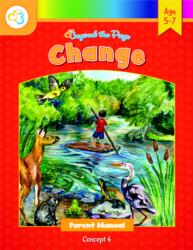
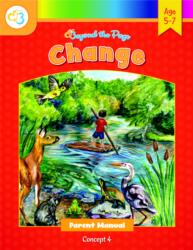
Students are asked explicit opinion questions such as Day 3 Question #5: "Would you like to spend your summer on a river? Why or why not?", which prompts students to state a preference and give a reason. Multiple discussion prompts (e.g., asking why the boy changed how he felt about staying with his grandma) require students to explain reasons for opinions about characters and events. Activity 8 asks students to describe how the boy changed, prompting written or written-like responses comparing beginning and end.
Lesson 6
Positive and Negative Change
In Activity 3 students are asked to think about a time they changed and to "write or dictate a sentence or two to describe the change, whether it was positive or negative, and what choices he made for the change to occur," which has students state a judgment (positive/negative) and give reasons (choices). In Activity 2 students dictate a new ending for the rat story and explain how and why the rat changed, which asks them to state a viewpoint about the character's change and justify it.
Unit 3: A First Look at History - Change Over Time
Lesson 1
People and Families Change
Students are asked to state a preference in Activity 4 with the question, "What do you think is the best change you see in the pictures?" The Student Activity Page in Activity 5 asks for evaluative wording such as "The biggest change I see is ______," and students dictate ideas about how the family has changed and then fill in the writing sheet. Activity 3 has students write a sentence about one way they have changed, giving practice in composing a written statement.
Lesson 3
Communities Change
Students are asked to choose which character they would like to be (the Native American boy, Ruby, or Jenny) and to explain why, which requires stating an opinion and giving a reason (Activity 1). Students are asked to say whether they would have wanted to live in a different time (Native-American boy, pioneer girl, or Jenny) and to explain their answer, prompting opinion and justification (Activity 5). Students are prompted to write a sentence about The House on Maple Street on handwriting paper, providing a written response about the book (Activity 7).
Lesson 4
Past and Present
Students are asked in Activity 3 to decide and explain whether they would enjoy living in a past time period and to justify their answer ("Would you enjoy living in the past... Why or why not?"). In Activity 6 students list advantages and disadvantages of living in the past, providing reasons that support a viewpoint. Activity 8 has students write a sentence describing how life in the past was different, giving practice in putting thoughts into written form.
Lesson 6
Predicting Future Change
Students are asked in Activity 2 to decide whether predicted outcomes are positive or negative and to label each change with a "P" or "N", which requires them to state an opinion about each change. They are instructed to record a sentence describing one positive change and its result and another sentence describing one negative change and its result, which asks them to provide a reason for their opinion. Activities 1, 3, and 4 require students to write or dictate sentences about changes and their effects, giving practice in stating viewpoints and supporting them with outcomes.
Final Project
My Past, Present and Future
Students create a titled book ("Past, Present, and Future") and complete pages with sentence frames such as "I was different because," "Now I am," and "In the future I will be," which prompt students to write explanatory sentences. Students are also asked to write or dictate the sentences "In the past __________" and "Today __________" when comparing cultural elements. The wrap-up asks students to read through and present their book or comparison pages aloud.
6: Reading

Unit 2: Semester 2
Lesson 12
Other Vowel Sounds oi, oy
Day 5, Activity 5.1 asks the child to answer "What is your favorite toy? Why?," prompting the student to state a personal opinion and give a reason. Activity 4.1 (Making Sentences) and the Sentence Dictation (Activity 5.2) require students to compose and write sentences, giving practice with written sentence formation that could support expressing opinions in writing.