


Second Grade - ELA
1: Community

Unit 1: Communities Around the World
Lesson 1
Exploring a Community
Students label community buildings and complete sentence frames such as "The ___ is important because ___" (Activity 1), and they write three sentences stating whether they'd rather live in the country or city (Activity 3). The lesson also asks students to list advantages of rural and urban living and discusses facts/definitions (e.g., rural vs. urban) that students can use when explaining their choices. Students measure and label maps and build three-dimensional buildings to include on a labeled community map, then write labels and short explanatory sentences about those places.
Lesson 2
Roles of People in Communities
Students are asked in Activity 4 to choose a community worker, read about the worker, and write a paragraph about being that worker, with prompts such as "When I get older I could be a ___" and "People who do this job ___, ___, and ___." Option 2 has students write a sentence about each community worker and encourages identifying nouns and verbs, and Activity 3 directs students to gather information from books or the Internet about jobs in other communities. The lesson also reviews that a paragraph is a group of sentences that usually describe an idea.
Lesson 6
Uses of Money
Students are asked to write about giving money using two activity options: a structured worksheet that prompts an introduction ("I have ___ dollars to give," "I have decided to give it to ___") and three explicit reason lines, and an advanced option that asks the student to write a paragraph. The Skills list includes writing goals ("Use writing to communicate an idea," "Compose complete sentences with punctuation," "Use new vocabulary in writing") that students practice while completing the giving-money writing tasks. The lesson also presents facts and definitions about spending, saving, and giving that students could draw on when composing their responses.
Lesson 7
Work and Money
Students are asked to write about choices and explain their reasoning in Activity 3 (Making a Choice), providing lines for a response and a why statement. The Skills list explicitly includes "Compose sentences and paragraphs to communicate ideas," and Activity 4 has students use a spelling journal and write sentences with unit vocabulary. In Activity 2 (Working Together) students record predictions, measure and record times, and circle words in a conclusion, which engages them in recording information and drawing conclusions.
Lesson 8
Customs and Holidays
Students are asked to write the name and date of each holiday and to "write sentences about why the holiday is celebrated and what your family does to celebrate the holiday" in the Holiday Book (Option 1 and 2). The lesson provides facts and definitions about Memorial Day and the Fourth of July that students can use as supporting facts. Students also complete map pages where they color and label a country and write the holiday and date, which involves locating factual information and recording it in writing.
Lesson 9
Different Communities
Students research a chosen country and record factual information on a Country Research graphic organizer with labeled sections (Food, Goods, Homes, Clothing, Holidays). Students use a Venn diagram to list similarities and differences between an American community and a community in the chosen country, and they draw and label goods, homes, clothing, and foods on a Similarities and Differences page. Students also produce written work such as an acrostic poem and write five interview questions for someone from the researched country.
Lesson 10
Communities Change
Students write a sentence beneath each seasonal illustration on the Changing Seasons Wheel (Activity 2). Students identify and record items as natural or human resources, listing or drawing examples on the Natural and Human Resources pages (Activity 3). The lesson provides explicit facts and definitions (natural resource, human resource, history) and asks students to summarize events and respond to open-ended questions (Skills).
Lesson 11
Government and the People
Students read explicit definitions for "vote" and "tally mark" and then use that vocabulary while collecting and recording family votes with tally marks on the "Voting" activity. Students write short explanatory sentences on the "The Government Helps Citizens" pages about why listed services (schools, libraries, police, fire, etc.) are important or how they have benefited personally. Students label leader titles and record leader names on the "Government Flowchart," and they are prompted to explain why everyone should be allowed to vote during the wrap-up questions.
Final Project
Community Brochure
Students are asked to create a brochure with a Cover that welcomes readers and lists the community name and location, which functions as an introduction. Organizer prompts ask students to write sections that describe goods and services (explaining how they meet wants and needs), list celebrations with dates and reasons, describe jobs, money, and how the community has changed — all prompting factual and definitional content. The vocabulary box (money, goods, services, wants, needs, rural/urban, human resource, natural resource) and the Skills note to "compose a variety of written products" encourage use of specific terms and informational writing.

Unit 2: Citizenship
Lesson 1
A Good Citizen
Students are asked to write about times they demonstrated each characteristic of good citizenship (Option 2) with a definitions box present, which prompts writing about a clear topic using provided definitions. Students write sentences describing events in the story (Scene by Scene) and list ways the community changed (Communities Change), practicing organization of factual details. Students record short sentences describing actions that earned stickers and write about a community service activity (Citizenship Chart/Graph and Community Citizen), producing explanatory accounts of real events.
Lesson 3
Diversity in the Community
Students are asked to write the name of the country and continent of an interview subject, record five interview questions, and later write short answers based on the person's responses. Students are given facts and definitions about diversity (for example, "Diverse means to be different" and descriptions of traditions, beliefs, and physical differences) that they can use to develop points. Students practice locating information in texts and ending sentences with correct punctuation, supporting the use of facts when writing responses.
Lesson 4
Living in America
Students complete short written sentences on the activity page describing why there are 13 stripes and 50 stars, using the provided facts and definitions. Students explain the meaning of lines of the Pledge of Allegiance in discussion and answer comprehension questions about why a pledge exists and why America should be free and fair. Students design a family flag and are asked to include symbols that mean something special, connecting personal meaning to factual ideas about flags.
Lesson 5
Citizens Share and Help
Students complete the "A Helping Hand" sheet where they circle where they will help, write an "I plan to" statement, record who will help, note "There will be ___ of us," and describe "Each of us will" do specific tasks. In "Citizens Sharing" students illustrate examples for Resources, Time, and Money and then explain their drawings. The lesson includes a Facts and Definitions note that "Fractions are parts of a whole" and gives examples (e.g., dividing seeds or $10 among people) that students can use when planning how to share.
Lesson 6
Leaders in the Community
Students are prompted to introduce a topic by titling their work with "___'s Life" and writing an author line and subject name. Students record factual information and definitions by filling in birthplace, childhood events, challenges, and specific leadership characteristics on the Biography Book pages and by answering guided comprehension questions about the biography. Students practice organizing points and using facts to develop ideas when they list five leadership qualities on the web and give examples of how the biographee showed each quality. Students are asked to write a paragraph about a leader (Activity 4) with prompts such as "The community is a better place because ______," which serves as a concluding/reflective statement.
Lesson 7
Inventors
The lesson defines "invention" and asks students to write sentences about how specific inventions helped people (Famous Inventors options), which has students introduce a topic (the invention) and state its effects. The Invention Scavenger Hunt asks students to name inventions, describe how their family uses each one, identify important parts, and write a paragraph about their favorite invention using guided sentence starters. Activity 3 (biography) and Activity 4 (My Own Invention) prompt students to describe an inventor or their invention and explain what it does and who it would help, providing opportunities to use facts and definitions.
Final Project
Community Citizens Mobile
Students are asked to write about four community-related topics (Community Leader, Flag, Inventor, You) by recording names, characteristics, what the person/object does, where a flag is found, what it means, and how inventions or people helped the community. Students must list character traits and write and illustrate three community items on the back of each shape, which requires providing factual details and examples. Students also write a title for the mobile and explain the parts when sharing with the family, providing an opportunity to present their information.

Unit 3: Plants and Animals
Lesson 1
Living and Nonliving
Students record objects on the "Living Things Scavenger Hunt" page and answer structured questions such as "Does it change?" "Does it move?" "Does it grow?" and "Does it need food or water?". Students decide whether each item is living or nonliving based on those answers and select six items to record. Students also write the names of items and list three descriptive words or phrases on the "Describing Attributes" pages and may dictate or compose responses and stories per the listed writing skills.
Lesson 3
Classifying Animals
Students are asked in Activity 9 to write a paragraph pretending to be an animal and to review the features of a paragraph, including that the paragraph begins with an introducing sentence and ends with a sentence that ties the other sentences together. Option 1 gives sentence-starter prompts that require students to introduce the animal, state where it lives, and list reasons (I enjoy being a __ because __, __, __, and __). Option 2 asks students to develop their own unique paragraph, supporting independent composition. The lesson's Facts and Definitions section and multiple classification activities give content knowledge students could draw on when writing.
Lesson 5
Animal Needs
Students are asked to write sentences describing how the community helps meet needs (Activity 1) and to name an animal, its habitat, and explain how its food, water, and shelter needs are met (Activity 2). The Facts and Definitions section states that habitats meet the needs of living things, which students use as factual content for their descriptions. Activity 4 directs students to write a descriptive label for a zoo exhibit using fill-in-the-blank prompts for habitat, diet, shelter, and physical characteristics.
Lesson 8
The Role of Plants
The Skills list includes 'Compose a variety of written products using a writing process,' and several activities ask students to write: Activity 1 has students record plant names and look up information, Activity 5 asks students to find plant products and write a sentence beside each describing how it is used, and Activity 4 directs students to write a thank-you letter mentioning specific items the tree gave. The Facts and Definitions section provides factual statements (e.g., plants provide oxygen; many items are made from plants) that students can use in writing.
Lesson 9
Comparing Living Things
Students complete charts and checkboxes that identify factual needs of plants, animals, and humans, and they complete sentence starters such as "Plants and animals need ____" and "Plants, animals, and humans all need ____." Option 2 directs students to "Write three sentences about how plants, animals, and humans are the same and different," and Activity 1 has students complete a Venn diagram comparing themselves and an animal.
Final Project
Nature Guide or Habitat in a Box
Students complete structured pages that ask for factual information (Name, Size, Body Covering, Diet) for multiple plants and animals, fill in a Life Cycle section with instructions to "Describe and illustrate the life cycle," create two Food Chain sections with space for diagrams and explanations, and complete an Endangered Species section that asks for Name, Food, and Why it is threatened. Students assemble their entries into a Nature Guide book or Habitat Community in a Box, organizing the collected facts on pages or cards and presenting the habitat components together.
2: Matter and Movement

Unit 1: States of Matter
Lesson 3
Liquids
Students are asked to write five sentences about how they use liquids (Activity 5), identifying nouns and verbs and using capitalization and punctuation. In Activity 8 (Liquids Everywhere) students draw containers, label the liquids, and write one or two sentences about each liquid and how they use it. The lesson provides explicit facts and definitions about liquids (e.g., liquids take the shape of their container; liquids can be poured) that students can reference when describing liquids.
Lesson 4
Bartholomew and the Oobleck
Students are asked in Activity 4 to write three sentences that describe the oobleck substance after observing and experimenting with it, which asks them to record descriptive facts. The Story Quilt activity asks students to list or draw characters, setting, three important events, the problem, and the solution, which has students organize and summarize informational elements of the story. Activity 3 (Option 2) asks students to write three true sentences about what happened in the story, reinforcing use of factual statements.
Lesson 5
Comparing Matter
Students are given explicit facts and definitions about molecules, solids, liquids, nouns, and adjectives at the start of the lesson. In Activity 3, students are asked to write a sentence about each picture using selected adjectives and to draw and label one liquid and one solid with two adjectives each. Activity 1 and the Student Activity Pages require students to label pictures (solid/liquid/gas) and draw molecule arrangements, and Activity 4 asks students to record number words and numerals for counted molecules.
Lesson 6
Changes in States of Matter
Students are asked in the Skills section to "write sentences with correct capitalization and punctuation" and to "use new vocabulary in speech and writing." In Activity 1 students draw water in three states and "write a sentence about each picture." In Activity 7 students "write a complete sentence to describe the change" for each food and in Activity 8 students "explain what can cause one state to change to another," using the fact that temperature can change states of matter.
Lesson 7
Exploring Solids and Liquids
Students are asked in Activity 1 to write three sentences that describe three things that happened in the book, which requires composing short explanatory/descriptive sentences. In Activity 6 (Dancing Raisins) students write a hypothesis and record results on a structured experiment page, documenting observations and indicating whether their hypothesis was correct. Activity 8 asks students to look up definitions and write spelling words, which gives practice with facts and definitions that could be used in explanatory writing.
Lesson 8
Our Bodies and Our World
Students are asked to write their own short story (Activity 5) using a graphic organizer with labeled sections for Setting, Characters, Problem, Events, and Solution, and the task requires inclusion of at least five solids, three liquids, and one gas. The introduction gives a definition of matter (anything that has mass and takes up space) and the Skills list includes composing products using the writing process, which prompts students to plan and produce a written piece. The activity instructions tell students to introduce setting and characters at the start and to end with how the problem was solved.
Final Project
States of Matter
Students create two labeled collages ('Solid' and 'Liquid') in which they find and arrange pictures and label each item. For solids, students write the name of the material, mark whether it is natural or human-made, and write three adjectives describing each solid. For liquids, students write a sentence beneath each picture about what the liquid is used for; the assessment also asks students to fill in the three states of matter and identify examples.

Unit 2: Earth
Lesson 1
Our Planet Earth
Students are asked to write three sentences that tell someone what the book You're Aboard Spaceship Earth is about (Activity 3). Students are directed to write a letter to an alien describing Earth, using the book for information; Option 1 provides structured fill-in-the-blank prompts about breathing, food, weather, and features of living things, and Option 2 gives an open-ended letter format (Activity 4). The lesson includes a Facts and Definitions section listing the world's oceans and map activities that provide factual content students can use in their writing.
Lesson 3
Digging Into Dirt
Students are asked to write about ways the Earth is important to them in Activity 8, producing four complete sentences and an illustration that introduce a topic (ways the Earth is important). In Activity 7 students make written predictions and record results with sentences such as "The seeds grew in ___ because ___," which asks them to use facts and cause-effect reasoning to support points. In Activity 5 students write two to three sentences explaining how they solved the soil mystery, using observations about soil composition to justify their conclusion.
Lesson 4
From the Earth
Students are asked to record in a journal where each resource is found and note how they are used, and to write a sentence about how their family uses each circled material. In Activity 3 students label pictures as food/water/clothing/shelter, describe how each item helps meet needs, and record what natural resources make each example. The lesson includes explicit facts/definitions (e.g., the Law of Conservation of Matter) and directs students to write sentences about intangible examples and to self-monitor composition by rereading, use capitalization, and write complete sentences.
Lesson 5
Rocks
Students are asked to write sentences on the back of the "Rocks All Around" sheet describing five items made from glass, metal, or concrete (Activity 4). Students can write their own sentences summarizing the "Rules for Finding a Rock" as an optional, more challenging task (Activity 7). Students examine and discuss facts and definitions about minerals ("minerals are the building blocks of rocks") and identify minerals in rocks and in the rock-cookie activity, which provides factual content they can use in writing (Activities 2 and 5).
Lesson 6
Water, Water Everywhere
Students are asked in Activity 8 to write a short paragraph that tells where a newly imagined ocean creature is found, what it eats, and what some of its unique features are. In Activity 3 (Fresh Water) students are asked to write a sentence or two describing how freshwater bodies are different from the ocean. In Activity 7 students write a sentence about the importance of different uses of water and illustrate an example of how they use water.
Lesson 7
Taking Care of the Earth
Students are asked in Activity 4 to "write two or three sentences that explain why recycling is important," which requires composing an informative explanation. Activity 8 gives students options to make an informative poster or to "write a free verse poem that explains why it is important to take care of Earth and not pollute," asking them to include negative effects and ways to reduce pollution. The lesson provides explicit facts and definitions (e.g., definitions of recycling and pollution) and a skill statement to "compose a variety of products using the writing process," which students can use in their writing.
Final Project
Earth Exhibit
Students plan and write exhibit cards that name solids, liquids, and a gas and record two sentences for each: where each material is found and why it is important for living things. Students complete planning pages for two solids, two liquids, and one gas with prompts for "Where it is found" and "What it is used for," requiring factual statements. Students write a "Description" and "Directions" on display cards, and include a poem or poster about caring for the Earth as part of their exhibit.
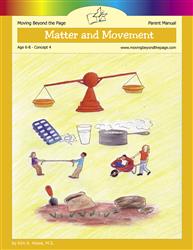
Unit 3: Balance and Motion
Lesson 1
What Is Balance?
Students are asked to write two or three sentences that describe the main idea of the book (Activity 1). Students write step-by-step directions that tell someone how to use a balance, using complete sentences, sequencing words (first, next, then), and revising when steps are confusing (Activity 9). A Facts and Definitions section provides content about balance (definitions of balance, what a balance does, gram weights) that students can draw on when writing.
Lesson 2
What Can Be Balanced?
The lesson asks students to "write a paragraph about one example that you read about" when discussing balance in nature (Activity 4). The "Facts and Definitions" section provides explicit content (definitions of balanced equation and balanced diet) that students can reference. The "Wrapping Up" prompt asks students to describe examples of balance, reinforcing opportunities for explanatory writing and verbal organization.
Lesson 3
Symmetry
Students are asked in Activity 3 to create a symmetrical picture and then "write three sentences about the picture," which requires composing a short written response about their work. The Wrapping Up section asks students to explain what symmetry means and to name different lines of symmetry, prompting students to state facts or definitions orally. Several activities require students to draw and label lines of symmetry and to decide whether shapes have vertical/horizontal/both/neither, reinforcing factual content about symmetry that could be used in writing.
Lesson 4
Force and Motion
The lesson provides explicit facts and definitions (motion = moving, force = push or pull) that students can use as content. Students are asked to write sentences about three pictures (Activity 3) and to label examples of motion and then write a short paragraph or story describing what is happening in their drawn picture (Activity 4). Students also record data in writing for the throwing experiment (Activity 5) and complete sentence-fill spelling practice using key vocabulary (Activity 8).
Lesson 5
Gravity
The lesson asks students to "write a short paragraph (three to four sentences) about what life would be like without gravity," giving them a direct writing task. The lesson provides explicit facts and definitions about gravity and center of gravity earlier, which students can reference when composing their paragraph. The wrapping-up prompt has students explain what gravity is, reinforcing content knowledge they could include in their writing.
3: Culture
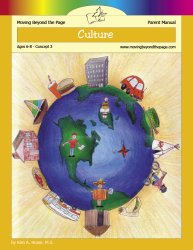
Unit 1: Geography
Lesson 1
Using Maps and Globes
Students are asked to write a paragraph pretending to take a trip to a location in Texas (Activity 5), which requires producing a short written piece about a topic. The Facts and Definitions section provides factual content (what maps are, parts of a map, and definition of culture) that students can reference. The "Where in the World Am I?" activity has students fill in factual statements about their location from home to planet, practicing putting factual information in writing.
Lesson 2
Cardinal Directions
Students are asked to write a journal entry in Activity 5, "Shiver Me Timbers! A Pirate's Journal," recording a day at sea and required to include all four cardinal directions. The lesson provides explicit facts and definitions about north, south, east, and west and asks students to use geographic vocabulary in writing (skills list). The Treasure Map activity asks students to answer directional questions and label/draw map features, which connects map facts to written responses.
Lesson 3
Landforms and Bodies of Water
Students learn and practice definitions through a Facts and Definitions section and a matching Student Activity Page that has them cut and match pictures to definitions (ocean, lake, river, pond, mountain, hill, valley, island). In Activity 2 (Options 1 and 2) students are prompted to list positives and negatives for each body of water and to "write a paragraph to someone who is trying to decide which body of water he wants to move near," using sentence-completion prompts ("I would like to live near ______. If I lived near ______, I could ______ and ______..."). Activity 4 asks students to create posters labeling landforms and bodies of water and to "write a sentence about how people who live on or near the landform are affected by it," which asks students to use facts to explain effects on people.
Lesson 4
Natural Resources
Students are asked to complete the "Researching Resources" sheet where they name a natural resource, record where it is found, explain how it is made, describe a related job, and list how people use it. The lesson provides facts and a definition of natural resources and prompts students to gather information from books or the internet to answer the research questions. The activities include structured prompts and spaces for students to illustrate the resource and its products, supporting development of informational content.
Lesson 5
Habitats and Geography
Students are asked in Option 1 and Option 2 to label habitats, research a plant or animal used by people, and "write a sentence beneath each box about why the animal/plant is an important resource," which requires recording factual information. The curriculum directs students to read pages 14–21 of an atlas or use the Internet/encyclopedia to locate information about habitats and living resources, so students use facts and definitions to support their sentences. Activities repeatedly prompt students to write sentences about habitats (If I Lived..., Living Resources) that connect factual ideas about environments and human uses.
Lesson 6
Geography, Weather and Natural Disasters
Students are asked in Activity 3 to write questions about floods, hurricanes, and tornadoes, read about each disaster, and then "write three or four sentences that describe each disaster." Activity 5 asks students to read a weather forecast and "write three or four sentences that describes the weather today and some activities." The lesson provides facts and definitions (for example, definitions of the equator and natural disaster) that students can use when composing their sentences.
Final Project
Geography of a Continent
Students choose a continent and write the continent name at the top of a poster or prepare a presentation, which serves as an introduction to the topic. Students use the provided research page to record factual information (bordering oceans, major landform, major body of water, natural resources, habitats, animals, how people use the water, natural disasters, and effects on people). Students gather facts from the book and other sources and then record or display those facts on the poster or in a presentation with props and descriptions.

Unit 2: People Around the World
Lesson 1
Exploring Culture
The lesson provides a clear definition under "Facts and Definitions" that students can use as factual content about culture. In Activity 3, students are asked to "illustrate and write about" examples of jobs, holidays, food, clothing, and homes in their community, prompting them to produce written explanations about a topic. In Activity 4, students conduct an interview and fill in answers about cultural elements, which requires them to record and use facts from a source.
Lesson 2
Traditions
Students are prompted to write an introduction when they complete "My Favorite Holiday" ("_____ is my favorite holiday") and to write multiple sentences about why the holiday is important and how it is celebrated. Students draw holiday symbols and "write a sentence about the importance of each holiday" on the Holidays activity, and they write sentences describing unique cultural Christmas traditions on the "Celebrating Christmas" page and complete a Venn diagram comparing celebrations. The lesson includes an explicit definition of "tradition" in the Facts and Definitions section that students can use as background information for their writing.
Lesson 3
Different Religions
Activity 4 "Writing About My Beliefs" asks students to write responses to prompts such as "My family believes ________________" and "Because we believe these things, we ________________ and ________________." The Facts and Definitions section gives explicit definitions (e.g., "Religion describes the beliefs and practices held by a group of people") that students could use to support their writing. The Life Application directs students to write questions they would ask a friend of a different religion, which involves composing informational questions about beliefs.
Lesson 4
Homes and Culture
Students are asked to write a paragraph about a tradition in their home using prompts (e.g., "One tradition we have is…, We do this…, This is an important tradition in our family because…, I enjoy this tradition because…"), which has them introduce a topic and explain when and why it occurs. In Activity 4 students write the names of rooms and a description of the purpose of each room, practicing explanatory writing to develop points about how a house meets needs. The Facts and Definitions section provides concrete statements (e.g., "Homes are built from a variety of materials," "Families in homes have traditions") that students can draw on when explaining their topics.
Lesson 5
Transportation in Culture
Students are asked to write about a time they took a form of transportation (Activity 1), producing one or more sentences about that experience. In Activity 3, students write a structured piece "My Day as a _____" using guided fill-in-the-blank sentences about a transportation job. The lesson also provides explicit facts and definitions (e.g., "Transportation refers to the way people get from one place to another") and asks students to label and draw resources carried by vehicles (Activity 4), which requires selecting and recording factual details.
Lesson 6
American Culture
Students are asked to write and illustrate information about American culture inside an outline of the United States (Activity 4), filling labeled sections for a famous song, a symbol, a home, a leader, and jobs. Activity 5 asks students to write a letter to a child from another country explaining important cultures in America and offering tips, with explicit opening and closing formats provided. Activity 1 has students draw a personal symbol and write a sentence about its meaning, and the lesson includes a Facts and Definitions section (freedom, symbol, diversity) that students can use.
Lesson 7
History of America
Students are asked in Activity 8 to write about three ways American culture has changed since colonial days, which requires composing explanatory statements. The Facts and Definitions section supplies specific facts (for example, that Native Americans lived in North America for thousands of years and that the Pilgrims came from England) that students can use to develop points. The Skills list includes "Discuss and explain how, why, and what if questions in sharing narrative and expository texts," supporting practice with expository writing.
Lesson 8
Asian Culture
Students are asked in Activity 8 to "Write a paragraph about what you would enjoy about living in Asia," which requires them to introduce a topic and compose an explanatory paragraph. In Activity 2 students create a "Guidebook to Asia" and are instructed to write about each topic using information from the book Explore Asia and other resources, collecting facts and definitions to fill guidebook pages. In Activity 5 (The Giant Panda) students record specific factual information (country, habitat, diet, reasons for endangerment), practicing using facts to develop points about a topic.
Lesson 9
African Culture
Students use facts from Africa Is Not a Country to complete a "Guidebook to Africa" by filling in blanks and drawing the continent, which requires locating and recording informational details. Students complete a Venn diagram to record similarities and differences between themselves and a child from an African country, organizing factual observations. Students write the name of a game and list materials, rules, and strategy for a game they create, which requires producing procedural/explanatory text and using specific details. Students record foods from the book and tally family taste-test votes, practicing collecting and reporting factual information.
Lesson 10
South American Culture
Students are asked to research a South American animal and complete the "A South American Animal" worksheet by filling in facts about habitat, diet, dangers, and behavior, then read their description aloud. Students are instructed to complete a "Guidebook to South America" using information learned from books and research, which requires collecting and organizing factual information about the continent. The lesson also has explicit facts and definitions (for example, how the equator affects weather) that students review and use to answer questions about life in South America.

Unit 3: Stories Around the World
Lesson 1
Fiction or Nonfiction
Students are asked to write the title and author and to write one sentence describing each of two fiction stories (Activity 2), which requires them to introduce what the story is about. The lesson provides explicit facts and definitions distinguishing fiction and nonfiction that students use to classify books (Getting Started; Facts and Definitions). In Activity 3 students read titles/covers and decide if books are fiction or nonfiction and create a title and cover for one fiction and one nonfiction book, producing short written work that connects to those definitions.
Lesson 2
Character
Students identify and record facts and definitions about characters (e.g., "A character is a person or animal", adjectives) and write descriptive words on the "Describing a Character" graphic organizer. Students collect explicit evidence from texts about what a character thinks, says, and does on the "Understanding a Character" page and write names, describing words, an action, and a thought for supplied characters. Students compare two characters by recording similarities and differences on a Venn diagram, which requires organizing factual details about each character.
Lesson 3
Story Setting
The lesson defines setting and asks students to identify and describe settings from multiple books (Activities 1 and 4), which requires students to introduce a topic (the story setting) and use descriptive details. Activity 1 has students sort books into categories and graph counts, and prompts questions that ask for comparisons and factual answers about which settings are most/least common. Activity 3 asks students to provide specific examples from text and illustrations showing cultural features of a setting, and Activity 2 asks students to draw scenes using "loaded words" and to label parts of their pictures.
Lesson 5
Folktales and Fairy Tales
Students answer focused comprehension and descriptive questions about folktales (e.g., Who were the characters? What is the setting? What natural event does this story explain?) on the Yeh-Shen student activity page. Students record cultural examples (people, clothing, homes, food, animals, landforms, bodies of water) on the Folktales and Culture charts and are asked to illustrate or describe each example. The Skills list asks students to respond and elaborate by answering what, when, where, why, and how questions and to discuss and explain responses in narrative and expository texts.
Lesson 7
Theme
Students are asked to read fables and explain the lesson/theme in their own words (Activity 2), which has them identify and paraphrase main ideas and definitions. In Activity 5 students read information about animals they selected and are encouraged to update their story to integrate factual details about those animals. Activity 4 has students compose a new story with a chosen theme, dictate it, revise it, and read it aloud, providing practice in organizing ideas and incorporating content from research.
Lesson 8
Myths and Legends
The Facts and Definitions section gives explicit definitions of myths and legends that students can use as content knowledge. Activity 3 prompts students to write down two things from the Paul Bunyan story that could be true and two things that are fiction, which requires students to produce written statements distinguishing fact from fiction. The Wrapping Up prompts ask the child to describe what myths and legends are and to explain why they enjoyed a story, eliciting explanatory responses.
4: Relationships
Unit 1: Living Things and Their Environment
Lesson 5
Rivers
Students draw an animal life cycle and write a simple sentence describing each of the four stages (Activity 4). Students complete a "Producers and Consumers at the River" chart, categorizing organisms using factual labels and definitions (Activity 3). Students produce short written responses to comprehension questions and create a picture dictionary with written vocabulary, practicing concise explanatory or definitional writing.
Final Project
Investigating the Environment
Students are asked to record and organize data using pictures, numbers, and words and may "write a sentence about what she saw" when analyzing photographs. Students research a selected plant or animal and complete a Life Cycle page with four stages and written descriptions, and a traits page that asks for three traits for a parent and three for an offspring. Students are prompted to create a Food Chain organizer and to communicate observations and justify explanations using student-generated data, and to share and explain their observations, investigations, and research to family.
Unit 2: The Miraculous Journey of Edward Tulane
Lesson 3
The Queen Mary
The lesson asks students to "fill in the 'Queen Mary Research' sheet" as they explore provided websites and includes specific factual questions (e.g., when the Queen Mary first sailed, how she was transformed during the war). The Skills section lists "Participate in shared research and writing projects" and "Recall information from experiences or gather information from provided sources to answer a question," which directs students to collect and record factual information.
Lesson 10
Illustrations
The "Explain an Illustration" activity asks students to record a quote and identify who, what, when, and where for an illustration, and to write why it is their favorite, which requires writing explanatory sentences. The "Illustrate a Scene" option asks students to copy a quote beneath their drawing, prompting them to connect text to a chosen scene. The wrapping-up prompts ask students to briefly describe, in chronological order, the environments Edward experienced and to explain which family they preferred and why, which elicits sequential description and reasons.
Unit 3: Connecting with the Past
Lesson 2
Colonization and the Revolution
Students are asked to identify and label dates on an American timeline (e.g., Jamestown 1607, Declaration of Independence 1776) and to shade and label the New England, Middle, and Southern colonies on a map, which introduces historical topics and uses factual labels. Students complete a George Washington page by filling in sentences such as "George Washington was a leader in the ______" and "He became the first ______ of the ______," using facts to develop those points. On the "Colonists and the American Revolution" activity page, students are asked to write two things we enjoy today because of the colonists' fight for freedom, drawing on facts and definitions presented earlier.
Lesson 3
Slavery and the Civil War
Students write short descriptions for timeline entries and complete "Famous Americans" pages for Harriet Tubman and Abraham Lincoln, using dates and factual descriptions. They list five character traits for Henry and explain each trait with evidence from the book, and they complete a concluding sentence on the "Slavery and the Civil War" page that begins "Because the Civil War was fought, today ___." The lesson includes a "Facts and Definitions" section (definitions of slavery, freedom, abolitionists) that students can use to develop their written points.
Lesson 4
Immigration
Students are asked to write on the "Connecting with the Past" page to draw and write about how immigration has impacted the country and to keep this for a final project, and they complete the "American Immigration" activity that begins the sentence "Because immigrants were brought to Ellis Island...today ___." The lesson provides explicit facts and definitions students encounter and use (e.g., the definition "An immigrant is a person who comes to a country to live permanently," comprehension Q&A about Ellis Island, and oral histories students retell). Students also add dates, pictures, and descriptions to a timeline, which requires them to record factual information about the topic.
Lesson 5
Civil Rights
Students are asked to fill out and color "Famous Americans" pages for Rosa Parks and Martin Luther King, Jr., which requires them to write short informational descriptions about each person. Students place dates and descriptions on a timeline for Rosa Parks and Martin Luther King, Jr., which asks them to write brief explanatory text attached to events. In Activity 4, students are instructed to draw and write about how the Civil Rights Movement impacted the country and complete the prompt "Because Americans fought peacefully for people of all colors to be treated equally, today ___________ and ___________." The lesson provides explicit facts and definitions (e.g., racism, segregation) that students can use in their writing.