


Kindergarten - ELA
1: Letters

Unit 1: A - A Is for Musk Ox
Lesson 3
Day 3
Students are asked to move a finger under the words as an adult reads, e.g., while reading "Hey! Hey you!" and to say the sight word "you" when they come to it. Students are encouraged to point to the first letter of each marked word and to say the letter aloud as they locate words in the book. Students practice locating a specific word on a page and matching it to an illustration.

Unit 3: I - The Little Island
Lesson 3
Day 3
The teacher asks the child to read the title together while pointing to each word, and then reads the title again omitting the word "little" and asks the child to supply it when pointed to. The teacher also points out the word "little" on the front cover and shows the sight word card, providing a focused, single-word/multi-word visual. These actions require the child to attend to individual words in print and to link a spoken word to a distinct printed word.

Unit 4: T - What Do You Do With a Tail Like This?
Lesson 5
Day 5
Students spend independent time reading a book in Activity 2, which exposes them to printed text where words appear separated. In Activity 3, students are encouraged to write 1–3 facts and then dictate facts while an adult writes complete sentences under their writing, so students see adult-produced print with conventional spacing between words. Students may therefore observe word separation both when reading and when viewing the adult-written sentences.

Unit 5: L - We're Going on a Leaf Hunt
Lesson 3
Day 3
Students are asked to locate and point to the printed word "go" on the page while an adult reads the line and while the student reads it, and they are shown a separate sight-word card for "go." The instructions direct the student to say the word each time it appears in the story, with the adult pointing to the word during read-alouds. This practice requires students to identify the printed word as a discrete unit within a line of text and to match spoken words to their printed form.
Lesson 5
Day 5
In Reading Workshop students are reminded to read from left to right and to use their finger to guide across the words, which encourages tracking across printed words. In Writing Workshop Option 2 students are asked to write describing words next to pictures and are given examples like "soft dog" and "big book," which show words written as separate units.

Unit 6: F - Fireflies
Lesson 3
Day 3
The teacher directs the child to the third page and points out the single word "said" in the sentence, then reads the sentence again and encourages the child to "read" that word. During reading, the teacher again encourages the child to read the word "said" when it is encountered. The handwriting and letter activities require reading and writing letters and words (e.g., the word frog and practice writing f), which provide incidental exposure to printed words in context.

Unit 7: E - But No Elephants
Lesson 1
Day 1
The Skills list explicitly asks students to "follow words from left to right, top to bottom, and page to page," which directs students to track print direction. Activity 2 has students arrange animal pictures in a left-to-right sequence and refer to the book for reference, giving practice with left-to-right ordering. Reading prompts ask the child to look at the cover and read the title, which could involve tracking words across the title.

Unit 8: C - Millions of Cats
Lesson 1
Day 1
The Skills section explicitly lists "Understand that words are separated by spaces in print." The Reading and Questions portion asks students to look at the cover and read the title together, which has students view printed words in context. The Venn diagram activity directs students to "list" characteristics, which involves producing or recording word phrases in print.
Lesson 5
Day 5
Students examine two written sentences on sentence strips where an adult points out that there is a space between each word. Students place a penny in each space between the words, giving tactile practice identifying word boundaries. Students are prompted to follow the lines from left to right and to notice the spaces between words while the adult points to the words as they read.

Unit 9: G - The Real Mother Goose
Lesson 1
Day 1
The lesson instructs an adult to "move your fingers along the lines as you read," which has students track print across a line. The lesson also directs the adult to "show her the word 'saw' in the first line and have her practice reading the word" and to add the word card to a file box, which has students identify and isolate an individual printed word. The activity of reading a poem while leaving off end words and asking the child to supply them focuses attention on individual words in sequence.

Unit 10: O - Owl Babies
Lesson 3
Day 3
Students practice a sight word ('want') by reading it aloud and locating that exact word on the page, then adding the card to a review box. Students read the line "I want my mommy!" aloud while an adult points to the words, guiding students to align spoken language with printed words. Students engage in word-level reading practice when prompted to read and practice sight words in context.

Unit 12: D - Dinosaurs Big and Small
Lesson 3
Day 3
The lesson directs an adult to point to the word "BIG" and then point to the lowercase "big" while reading, and has the child practice reading that word as it occurs in the book. The poem activity instructs the adult to "point to the words as you recite," encouraging the child to join in and follow the text. While reading, the child is asked to look back at specific pages and to read or identify words on the page.

Unit 13: P - Harold and the Purple Crayon
Lesson 2
Day 2
Students cut out the 4 shapes and the word boxes and glue a title and its corresponding picture in order (e.g., full moon, half moon, crescent, sliver, new moon). The student pages include printed labels under each phase illustration and a multiword title "PHASES OF THE MOON," so students handle printed words and word boxes while matching and placing them.

Unit 14: B - Blueberries for Sal
Lesson 3
Day 3
The lesson directs an adult to show the sight word card "she," read it aloud, and ask the child to read it back. The lesson instructs the adult to open the story and, when encountering the word "she," point to that word and ask the child to read it. The lesson has the child repeatedly search for and read the word "she" in the running text of Blueberries for Sal while the adult points to instances of that word.

Unit 15: R - Rain
Lesson 1
Day 1
The lesson instructs an adult to read the book with the child and to "point to the words as you read," and it has the child examine the cover and notice the small words on the cover. The skills list includes "Read emergent-reader texts with purpose and understanding," which implies guided print reading practice.
Lesson 3
Day 3
The text instructs an adult to read the book while "pointing to each word as you read," and to have the child "point to the words and read what she knows" when reading back. The lesson models and asks the child to read a single sight word ("on") while pointing to it. Multiple directions require the child to follow one-to-one word pointing across pages, including the sentence "Rain on the green grass."

Unit 17: M - Marshmallow
Lesson 3
Day 3
The lesson directs an adult to point to the word "out" on a page that begins "As Oliver never went out..." and to show a matching word card so the child can practice reading that word. It then has the child reread the book and read the word "out" as it occurs in the sentence. These steps require the child to locate a single word in running text and match it to an isolated word card.

Unit 19: J - Jump Frog Jump
Lesson 3
Day 3
The Reading and Questions section directs the adult to point to the sight word card "how" and to point to the word "how" in the book and have the child read it. On a second reading, the child is asked to read the word "how" and the words "Jump, frog, jump!" when they appear, indicating practice with identifying and reading individual words in context.

Unit 20: K - Kindness
Lesson 3
Day 3
Students are asked to find and read the sentence "So, when someone need help, just give them a hand." and to point out and read the word "so" in that sentence. The lesson directs students to identify the same word "so" on other pages and to read it there, and it has them match a word card "so" to its occurrence in the text. These tasks require students to locate a single printed word within continuous text.
Lesson 4
Day 4
The activity that creates an "I Am a Good Citizen!" butcher-paper list asks the child to dictate 4–6 ideas while the adult writes them, producing multi-word phrases such as "I take care of my pet" that are posted for display. The child is invited to add illustrations to the written list, which requires the child to view the printed lines of text. These actions expose the child to connected print where separate words appear on the page with spaces between them.

Unit 22: Y - Little Blue and Little Yellow
Lesson 2
Day 2
Students are exposed to printed words on the book cover and title page (the text notes the publisher and city printed as "Alfred A. Knopf, New York"). The Student Activity Page shows printed words and labels such as the title "Uppercase Y" and the picture label "yo-yo." The lesson also presents a vocabulary list with words and definitions presented in print form.

Unit 23: W - George Washington's Birthday
Lesson 2
Day 2
Students cut out labeled word boxes (for example, 'Statue of Liberty', 'United States Flag', 'Bald Eagle') and read all four word boxes aloud. Students glue each label under the matching picture and place a title box at the top of the paper, which requires them to handle multi-word labels as discrete units.
Lesson 3
Day 3
The lesson directs an adult to read sentences aloud while pointing to each word ("Read the sentence to your child, pointing to each word") and to have the child read the sight word "went." This pointing is repeated for a second sentence on the next page, providing multiple instances where students track print word by word. The child is also asked to page back through the book, which requires tracking and referencing separate words in the text.

Unit 24: Q - The Quilt Story
Lesson 5
Day 5
Activity 2 asks the child to spend time looking at the book's words and pictures, giving the child exposure to printed text. Activity 3 has the child compose and write or dictate a few sentences and then read back his writing, which requires producing and viewing written words in sequence.
2: Holidays

Unit 27: Halloween
Lesson 3
Day 3
Students trace the word "Boo!" on the front of the card and trace the two-word phrase "Happy Halloween!" in pencil and then with crayon, giving them practice following printed words. Students open the card and are asked to draw a picture or write a message (a greeting) on a glued piece of paper, which requires producing printed words in sequence. The lesson text and image include multiword examples (e.g., "Dear Grandma and Papa, Trick or treat! Love, Jack") that display spaces between words for students to see and copy.

Unit 30: February Celebrations
Lesson 4
Day 4
Students are asked to write or trace a title such as "[Child's name] Has a Dream!" and to dictate or write 3–5 of their own dreams as sentences (for example, "I have a dream that all children would have plenty of food to eat"). These writing and tracing tasks require students to produce printed words in sequence, which would display spaces between words in their written sentences.
1: Environment
Unit 2: Weather
Lesson 1
Reading the Skies
Students are instructed to read the story slowly "using your finger to follow the words," which provides practice tracking printed text. In Activity 2 students read vocabulary words, match words to pictures, write words beneath pictures (Option 2), and write/dictate sentences at the bottom of the page. In Activity 3 students may dictate a story that an adult records in print, and in Activity 4 students record dates and daily weather on a calendar grid, all of which involve exposure to printed words and sentences.
Lesson 4
Simulating Weather
The Skills section explicitly lists "Recognize that written words are separated by spaces (LA)." The Weather Song activity asks the child to "read the words of the song aloud" and to "follow along by pointing to each word as you both sing it," which requires attending to individual words in print. The activity also asks the child to find specific words (e.g., "clouds," "rain") on the page, prompting students to locate whole words within the printed text.
Lesson 5
Fall
Students are asked to write and copy sentences about the fall picture (Option 1 and Option 2), giving them opportunities to see and produce multiword print. The handwriting activity has students practice whole words (fall, fun) and trace/write letters and words, exposing students to printed words on lines. Graph and label activities (Graphing Leaves) present word labels (Yellow Brown Red Orange) that students read and place, providing additional examples of separate printed words.
Lesson 6
Winter
Students are asked to dictate a story and have it written on the "Let It Snow" sheet, and they may attempt to write their own words on the provided lines. The student page includes a sentence prompt, "In the winter I _______," which presents multiple words separated by spaces for students to complete. Handwriting practice asks students to write or copy sentences and to trace the words "winter" and "wind," giving practice with word-level writing in print.
Lesson 8
Summer
Students read short passages and read along with the teacher in the A Summer Story activity, exposing them to printed sentences with separate words. In Option 1 and Option 2 students cut apart picture-word prompts or copy whole words from a word box into blanks, and they may write beginning letters or copy entire words into sentence blanks. In Activity 3 students write season names (single-word labels) into blanks beneath a temperature continuum and complete sentences by filling in season words.
Unit 3: Community
Lesson 1
On the Town
Students read and complete sentences by copying or cutting out community vocabulary words to fill blanks (Activity 2, Options 1 and 2), which places words into printed sentence contexts. Students draw a page and then write or dictate a sentence about Charlie visiting a place in the community (Activity 3), producing multi-word print. Students practice handwriting whole words such as "People" and "Park" and copy sentences containing those words (Activity 4).
Lesson 2
My Community Environment
Students are asked to label places on a poster and to write or dictate brief descriptions of those places, which requires interacting with printed words. Day 2 Activity 3 asks students to copy the title of each book they select, exposing them to printed titles that include multiword phrases. The Student Activity Page includes labeled buildings (e.g., "Grocery Store," "Fire Station") that students view and could use while copying or labeling.
Lesson 3
Jobs in the Community
The lesson lists the skill "Understand letters, words, and story" and explicitly includes "Voice-print match (LA)," which implies activities matching spoken language to printed text. Activity 4 provides sentence-level fill-in-the-blank prompts and asks students to attempt to read what they wrote. Activity 5 asks students to say each sentence aloud, attempt to write words they can sound out, and copy sentences, giving students practice with printed sentences.
Lesson 8
Rules and Laws
The lesson lists the skill "Follow print word by word (LA)" and asks the child to "read each sentence by herself or with your assistance" (Activity 1). Activities prompt the child to read short items aloud on the "Rule or Law" page and to listen to and discuss a multi-sentence story (Activity 2 and Activity 3). The Student Activity Page presents six short sentences/phrases to be sorted, providing repeated exposure to print sequences.
2: Similarities and Differences
Unit 1: Amazing Attributes
Lesson 1
Describe It
Students are asked to copy or write words beneath pictures on the "Describing Words" activity pages (Option 1 and Option 2), using the provided Word Box and lines under each image. The Student Activity Page includes horizontal lines beneath each picture for writing descriptive words and two extra lines for students to add words of their own. Activity 4 asks students to write or copy a sentence on handwriting paper describing an object from the bag, which requires producing sequences of words in print.
Unit 2: Senses
Lesson 1
My Five Senses
Students copy individual vocabulary words from the "Senses Word List" (copy each word three times) and cut or place word labels onto the Senses Webs, giving repeated exposure to printed words. Students are asked to dictate and have four sentences recorded about a sensing experience and to write or copy a sentence on handwriting paper (example: "I smell with my nose."). Students locate and read the title and author on the book cover and refer to the word list to find words in the text, which requires noticing word boundaries in context.
Lesson 3
Smelling and Tasting
Activity 4 asks the child to write a sentence on handwriting paper: "________ people liked ________." The Student Activity Page and survey/chart require the child to record names of foods and Y/N responses in table cells, which involves writing words and short entries. These tasks require the child to produce print text in multiword contexts.
Lesson 6
Experimenting With Our Senses
Students are asked to copy the name of each spice onto index cards (Activity 2) and to have a story recorded and then read aloud (Activity 3). Activity 4 asks students to write or dictate and copy a sentence on handwriting paper about something they smelled or tasted, which requires producing print with word boundaries.
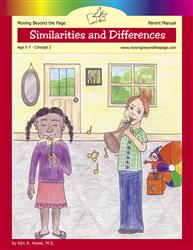
Unit 3: We're the Same, We're Different
Lesson 3
Different Personalities
Students are instructed to read through a list of personality words and, as an extension, cut the words apart and lay them face up on the table, treating each word as a separate unit. Students are asked to circle first and last letters and sound out whole words, and they trace and write the whole word "quiet" repeatedly in the handwriting activity. Students also write or paste individual personality words into webs for themselves and peers, placing words as separate items around the graphic organizers.
Lesson 5
Shapesville
Students are asked to point to the title of the story and sound out letters, which has them look at printed words. Students are encouraged to write or copy a sentence on handwriting paper describing an interest or personality trait. Students fill in and write responses on the "What Is Your Shape?" worksheet and are prompted to attempt to read their description aloud.
Lesson 6
Different Families
Students practice handwriting by tracing letters and the printed word "different" multiple times and are asked to use the word in a sentence (Activity 3). Students complete sentence frames and write responses on lined response areas in the "Families Around the World" activity (Option 1) and list similarities/differences in the Venn diagram (Option 2). Skills list includes "Complete sentences" and "Attempt to write words and sentences using inventive spelling," which requires students to produce multiword text on the provided pages.
Lesson 10
Wants and Needs
Students practice writing the word "need" and the letters Nn on a handwriting sheet (Activity 6), which requires forming words in print. Students make lists of their wants and needs (Activity 3) and record survey responses by drawing or writing items in labeled boxes (Activity 4), which involves placing words on a page. Several student pages show paired images and printed labels (e.g., "car," "computer," "home," "water") that present words separated on the page.
3: Patterns
Unit 2: Patterns in Sounds, Words, and Actions
Lesson 6
Sound Patterns
Students are asked to copy the words at the top of the activity page ("Slap, Clap, Tap") or use the first letters of each rhythm word, and there is a Pattern writing space where students can record the sound sequence. The handwriting activity asks students to write a sentence such as "I heard a pattern that went..." on handwriting paper, giving them practice producing printed words in sequence.
Unit 3: Patterns in Your World
Lesson 4
Daily Routines
Students are asked to write or dictate and copy a sentence on handwriting paper (Activity 4), which requires producing printed words in sequence. In Activity 2 students dictate or write a sentence for each of four steps, using the provided lines, and can illustrate each step. Activity 1 includes pictures labeled with short phrases (e.g., get dressed, eat breakfast) that present printed words in sequence. Activity 3 asks students to record activities in words or simple symbols and to write the time when each activity occurs.
Final Project
Patterns All Around Lapbook
The Skills list includes "Understand that spoken words represent written language" and "Recognize that text moves from left to right," which relate to print conventions. Students are instructed to write multiword titles and labels (e.g., write "Symmetrical Pattern" on the cover, write "Pattern in Nature" on the matchbook front, write the days of the week on fan blades, and write "Patterns" on the lapbook cover). Several activities require students to write labels and short phrases on their mini-books and parts of the lapbook.
4: Change
Unit 1: Changes on Planet Earth
Lesson 3
Changing Position
The Skills list explicitly includes "Demonstrate understanding of the organization and basic features of print," indicating students will work with print features. Students are asked to read (or be read) Zoom! Zip! Whoosh!, use the index to find words like "gravity" and "inertia," and copy whole sentences from the book onto the activity page. Several student pages provide lines for writing sentences and words, giving students repeated exposure to printed text and opportunities to reproduce printed sentences.
Lesson 5
Changes in Location
Students are asked to write prepositional words or phrases in Activity 1 (Option 2) and may cut and glue individual words from a provided word box in Option 1. In Activity 2 (Option 2) students are encouraged to write simple sentences describing the mouse's location. In Activity 3 students are asked to record three or four sentences describing relationships, and the Wrapping Up asks students to write directions on a sheet of paper for reading and following.
Lesson 11
People Change the Environment
Students encounter printed multi-word labels when the adult writes titles such as "Positive Change" and "Negative Change" on the folded paper, exposing them to spaces between words. Students also see multi-word item labels on the activity pages (e.g., "aluminum can," "cardboard box," "plastic bag," "egg carton") and read or are shown these printed words when sorting items into the recycle or trash bins.
Final Project
Mobile of Change
Students are asked to write the word "CHANGES" on the hanger, and the skills list includes "Write most letters and some words" and "Use new vocabulary in speech and writing," indicating students will produce printed words. Student activity pages display multi-word headings such as "Change in the Environment" and "Changes in Position (before)" and labeled before/after boxes, so students encounter printed phrases where words appear separated. Students cut, paste, and glue labeled cards and arrange them on the mobile, engaging with printed labels and words while assembling their projects.
Unit 3: A First Look at History - Change Over Time
Lesson 6
Predicting Future Change
Students are asked to write or copy a sentence on handwriting paper in Activity 4, which requires composing printed text. Several activity pages provide lines and fill-in-the-blank prompts (e.g., "One way I have changed is __________") where students must write responses. Activity 1 and Activity 2 ask students to record ideas or let them record their own ideas on provided lines.
Final Project
My Past, Present and Future
Students are asked to write short sentences on multiple activity pages (e.g., prompts such as "I was different because," "My family was different in the past because ______," and spaces for completing "In the past __________" and "Today __________"). Option 2 directs students to write or dictate full sentences on folded pages and then illustrate each side. The materials include lined spaces and prompts for students to produce connected written phrases or sentences, and an instruction notes providing help when the child writes sentences.
6: Reading

Unit 1: Semester 1
Lesson 1
Letter Sounds Review I
The Skills list explicitly includes "Understand that words are separated by spaces in print." In Activity 1.1 the student is told to point to each word as the Weekly Message is read and the script directs the adult to say, "Notice that there are spaces between each of the words in this message" while pointing to spaces. Multiple reading activities (e.g., modeling pointing to each word while reading Reader #1 and instructions to point to words as you read) require students to track words visually and attend to word boundaries.
Lesson 2
Letter Sounds Review II
Students are explicitly instructed to point to each word as the adult reads the Weekly Message and other texts (Activity 1.1 and Activity 5.3). Students are asked to follow words from left to right and top to bottom (Skills) and to point to or find sight words in the message (Activity 3.1). Students are repeatedly prompted to point to each word as they read the reader The Pig Can and to begin reading in the correct place, supporting recognition of word boundaries.
Lesson 3
Letter Sounds Review III
The Skills list explicitly includes "Understand that words are separated by spaces in print." In Activity 1.1, students are asked to point to and read words in the Weekly Message while the adult reads and points to each word. In Activity 5.2 students read The Bug aloud while pointing to each word, and Activity 5.3 has students write missing words in sentence blanks, requiring recognition of individual word slots.
Lesson 4
Letter Sounds Review IV
The Skills list explicitly includes "Understand that words are separated by spaces in print." Students are asked to point to and read words in the Weekly Message (Activity 1.1) while the adult points to words, and to point to each word as they read sentences on Activity 3.1 and Activity 5.2. Activity 3.1 also has students circle target sight words within sentences, requiring them to identify individual words in continuous print.
Lesson 5
Adding s, More Word Families, Ending with ck
The Skills list explicitly includes "Understand that words are separated by spaces in print." In Activity 1.1 students are asked to point to words in the Weekly Message and to point to the first word in each sentence. In Activity 1.3 students point to sight word cards as the teacher says them, and in Activity 5.3 students are told to "leave a small space between words" when writing dictated sentences.
Lesson 6
Open Syllables and Digraph th
The Skills list explicitly includes "Understand that words are separated by spaces in print." Activity 5.3 (Sentence Dictation) tells students to "leave a small space between words" while they write dictated sentences. Activity 5.1 has students assemble cut-out word boxes into sentences, and Activity 5.2 asks students to point to each word as they read the reader, both practices reinforcing words as separate units in print.
Lesson 7
Consonant Digraphs ch, sh, wh, ph
The Skills list explicitly includes "Understand that words are separated by spaces in print." Activity 1.1 asks the child to point to any words in the Weekly Message and read along, which requires locating individual words. Activity 3.3 tells the child to "take his time and point to each word as he reads it," and Activity 5.3 instructs the child to "leave a small space between words" when writing sentences.
Lesson 8
Blends with s
The lesson's Skills list explicitly includes "Understand that words are separated by spaces in print." Multiple activities ask students to point to and read words in the Weekly Message and to "point to each word as she reads it" (Reader #8), which requires tracking individual words. Activity 1.2 directs placing letter and word-building cards with spaces between them and asking the child to point to beginning sounds, modeling separated word units.
Lesson 9
Blends with l
The Skills list explicitly includes "Understand that words are separated by spaces in print." Activity 1.1 asks the child to point to and read words in the Weekly Message and read along, prompting left-to-right word tracking. Activity 4.3 directs the child to "point to each word as he reads it" in Reader #9, and Activity 5.1 has the child build sentences with individual word cards, which requires arranging and reading separate words.
Lesson 10
Blends with r
The Skills list explicitly states "Understand that words are separated by spaces in print." Students are asked to point to each word as the teacher says words in Activity 1.3 and to point to each word as they read the reader in Activity 4.2, providing practice tracking individual words. In Activity 5.3 students write dictated sentences, and in Activity 5.1 they trace and write individual sight words, giving repeated opportunities to produce and recognize separate word units in print.
Lesson 11
Ending Blends
The lesson's skills list explicitly includes "Understand that words are separated by spaces in print." Activity 1.1 asks the child to point to and read words in the Weekly Message while the adult reads aloud. Activity 4.2 (Reader #11) instructs the child to "point to each word as he reads it," and Activity 5.2 asks the child to think about how sentences begin and end and then read the dictated sentences.
Lesson 12
Double ll, ss, ff, zz (FLOSS)
The Skills list explicitly includes "Understand that words are separated by spaces in print." Students are asked to read the Weekly Message aloud while pointing to and reading any words they know, and to read along as the message is read. Activity 1.3 and Activity 4.3 ask students to point to each word when they hear it and to point to each word as they read the reader, practicing one-to-one matching of spoken words to printed word units. Activity 5.2 (sentence dictation) asks students to write sentences and reminds them how sentences begin and end, which involves writing and attending to separate words in written sentences.
Lesson 13
Glued Sounds ng and nk
The lesson's Skills list explicitly includes "Understand that words are separated by spaces in print," stating the learning target. Students are asked to point to and read words in the Weekly Message and to "point to each word as he reads it," which requires identifying words as separate units. Activities ask students to cut out, place, and glue individual words into columns and to use word cards to make sentences, providing repeated practice treating words as discrete items.
Lesson 14
Three-Letter Beginning Blends
The Skills list explicitly includes "Understand that words are separated by spaces in print." Students are repeatedly asked to point to words as they read (Activity 1.1: point to and read words in the Weekly Message; Activity 1.3: point to each sight word card; Activity 4.3: point to each word as she reads the reader). The lesson also directs students to "follow words from left to right, top to bottom, and page by page" and to pay attention to how sentences begin and end during sentence dictation (Day 5).
Lesson 15
More Ending Blends
The Skills list explicitly includes "Understand that words are separated by spaces in print." In Activity 1.1 students are asked to follow along as the adult reads the weekly message while the adult points to words, and they are asked to point to and read words they know. In Day 5 Activity 5.2 students are instructed to take their time and point to each word as they read the reader aloud. Activity 5.1 has students write dictated sentences, reminding them to pay attention to how sentences begin and end.
Lesson 16
R-Controlled Vowels (ar)
Students are asked to point to and read words in the Weekly Message and to point to specific words (can, there, have, this, that), which practices tracking individual words in print. Students are instructed to "point to each word as she reads it" when reading the reader and to "follow words from left to right, top to bottom, and page by page," reinforcing tracking across spaced words. Sight-word and word-reading activities require students to point to, turn over, and read individual word cards, giving repeated practice with distinct word units separated on the page.
Lesson 17
Semester Review
The Skills list explicitly includes "Understand that words are separated by spaces in print." Activity 1.1 asks students to point to and read any words in the Weekly Message and to read along, which has students identify individual words in running text. Activity 3.2 has students write dictated sentences and pay attention to how sentences begin and end, and Activity 4.2 has students create and write their own reader, both requiring students to produce separate words in print. Activity 1.3 and the Student Activity Pages have students underline or point to specific sight words in sentences, reinforcing identification of words within a line.

Unit 2: Semester 2
Lesson 1
Long Vowels a and i with Silent e
Students are asked to point to and read words in the Weekly Message and to point to each word as they read the reader (Activities 1.1 and 5.1). The Skills list includes following words from left to right, top to bottom, and page by page and demonstrating understanding of basic features of print. Multiple activities require students to point to specific words (e.g., highlighting "make," "made," and "like") and to point to the letter cards corresponding to vowel sounds, which requires attending to individual printed words.
Lesson 2
Long Vowels o, u, and e with Silent e
The skills list and multiple activities require students to follow print left to right, top to bottom, and to demonstrate understanding of basic features of print. Students are asked to point to and read individual words in the Weekly Message and to point to specific words (e.g., time, cane), which has them locate words in continuous text. Students also write dictated sentences and place words into columns or onto handwriting lines, practices that require producing and attending to separate word units on the page.
Lesson 3
Hard and Soft c and g
The lesson asks students to point to and read words in the Weekly Message and to follow words from left to right, top to bottom, which engages print tracking. The skills list includes "Demonstrate understanding of the organization and basic features of print" and activities require students to write dictated sentences and attend to how sentences begin and end. Several reading activities (pointing to words, reading sight words, sorting and spelling words) require students to locate and read individual words on a page.
Lesson 4
More R-Controlled Vowels (er, ir, or, ur)
The Skills list explicitly includes "Follow words from left to right, top to bottom, and page by page" and "Demonstrate understanding of the organization and basic features of print." Activity 1.1 asks the child to point to and read words in the Weekly Message and to read along, and Activity 3.2/Activity 1.3 ask the child to point to sight word cards as the adult reads them. Activity 5.3 directs the child to pay attention to how sentences begin and end during sentence dictation.
Lesson 5
Long a Spellings ai, ay
Students are asked to point to and read words in the Weekly Message (Activity 1.1) and to point to particular words within that message (e.g., words with bossy r, two-syllable words). The Skills list and multiple activities require students to follow words from left to right, top to bottom, and to read individual sight-word cards (Activity 1.3) and sentences during dictation (Activity 5.2). Students also read and write individual words on activity pages and place words into word-sorting columns, treating each printed word as a separate unit.
Lesson 6
Long e Spellings ee, ey, ea
The Skills list includes "Follow words from left to right, top to bottom, and page by page" and "Demonstrate understanding of the organization and basic features of print," which relate to print conventions. In Activity 1.2 students cut out individual words and place or glue them onto Short e and Long e pages, treating words as discrete units. Activity 4.2 has students use individual word cards to build sentences, requiring them to arrange separate word tokens in sequence. Activity 1.1 asks students to point to and read words in the Weekly Message, prompting word-by-word tracking.
Lesson 7
Long i Spellings y, igh, ie
Students are asked to point to and read words in the "Weekly Message #7" (Activity 1.1), and to point to each sight word as the adult says it (Activity 2.1). The skills list explicitly includes "Follow words from left to right, top to bottom, and page by page" and "Demonstrate understanding of the organization and basic features of print." Students also find and circle sight words in a word search (Activity 2.3) and write dictated sentences while being reminded to pay attention to how sentences begin and end (Activity 5.3).
Lesson 8
Long o Spellings ow, oa, oe
Students are asked to point to and read words in the Weekly Message (#8), and later to point to any long o words in that message, which requires identifying individual printed words within a sentence. The skills list explicitly includes following words left to right and demonstrating understanding of basic features of print. Students cut out individual word boxes from the Short o/Long o page and pick up, read, and place each cut-out word on the correct page, treating each printed word as a separate unit.
Lesson 9
Long u Spellings ue, ew, ou
Students are asked to point to and read words in the "Weekly Message #9" (Activity 1.1) and to point to words as sentences are read aloud with sight word cards (Activity 1.3). The skills list explicitly includes "Follow words from left to right, top to bottom, and page by page" and "Demonstrate understanding of the organization and basic features of print." Activity 5.2 asks students to pay attention to how sentences begin and end, and multiple activities require students to point to individual printed words as they read.
Lesson 10
Other Long Vowel Patterns
The Skills list explicitly includes "Follow words from left to right, top to bottom, and page by page" and "Demonstrate understanding of the organization and basic features of print," and activities repeatedly ask the child to point to and read individual words in the Weekly Message (Activity 1.1) and to point to long-vowel words as the message is reread. The child is asked to write dictated sentences (Activity 3.1 and Day 5 Activity 5.2) and to read words aloud while the adult points to them (sight word activities and spelling test), which requires treating words as discrete units on the page.
Lesson 11
Long Vowel Sounds Review
Students are asked to point to and read words in the Weekly Message (Activity 1.1), and to point to long-vowel words as the message is reread, which requires identifying individual words in print. The skills list includes following words left to right and demonstrating understanding of basic features of print. Students cut out word cards and place whole words into columns during multiple word-sorting activities (Activities 1.2, 2.2, 4.2) and use a word bank to fill blanks (Activity 3.1), which requires treating words as discrete units.
Lesson 12
Other Vowel Sounds oi, oy
Students are asked to point to and read words in the "Weekly Message #12," explicitly prompting them to locate individual words in running text. The skills list includes "Follow words from left to right, top to bottom, and page by page" and "Demonstrate understanding of the organization and basic features of print," which frame print-unit awareness. Students also manipulate individual word cards to make sentences (Activity 4.1) and cut out and sort single words (Activity 2.2), treating words as separate units.
Lesson 13
Other Vowel Sounds ou, ow
Students are asked to point to and read words in the Weekly Message and to point to each sight word as the adult says it (Activity 1.1 and Activity 1.3). The Skills list includes "Follow words from left to right, top to bottom, and page by page" and "Demonstrate understanding of the organization and basic features of print." During wrap-up students are asked to point to specific words in the Weekly Message, and sentence dictation asks students to pay attention to how sentences begin and end.
Lesson 15
These Make More Than One Sound: oo and ea
The Skills list explicitly includes "Follow words from left to right, top to bottom, and page by page" and "Demonstrate understanding of the organization and basic features of print." In Activity 1.1, students are asked to point to and read words in the Weekly Message and to read along as the adult reads. In Activity 1.3, students are instructed to point to each sight word card as the adult reads it, and in other activities students underline or circle individual words and write dictated sentences while being reminded to pay attention to how sentences begin and end.
Lesson 16
Silent Starts: kn, wr, gn
The lesson lists as a skill that students should "follow words from left to right, top to bottom, and page by page" and "demonstrate understanding of the organization and basic features of print." Activity 1.1 asks the child to point to and read words in the Weekly Message and read along as an adult reads. Activity 3.3 and other parts ask the child to point to words as the teacher says them and to read sight-word cards, which requires treating individual printed words as discrete units.
Lesson 17
Year-End Review
Students are asked to follow words from left to right, top to bottom and to demonstrate understanding of the organization and basic features of print. Students point to and read words in the Weekly Message and read, cut out, sort, and place individual words during word-sorting and sight-word activities. Students write sentences and are reminded to think about how sentences begin and end, and they locate and read sight words in a word search.