


Kindergarten - ELA
1: Letters

Unit 1: A - A Is for Musk Ox
Lesson 1
Day 1
Students are asked to point to the names of the author and illustrator on the book cover and are prompted to answer what an author does (writes books) and what an illustrator does (draws the pictures for books). The Skills section explicitly lists naming the author and illustrator and defining the role of each in presenting ideas or information in a text. The reading directions instruct adults to ask these questions with prompting and support during shared reading.
Lesson 5
Day 5
The Reading Workshop asks children to explore the illustrations in the book and to spend time tracing the words from left to right, drawing attention to text versus pictures. The Writing Workshop directs students to draw a picture to accompany a dictated story and explicitly states that the picture should relate to the story "in the same way that an illustrator's pictures enhance the author's words." These items connect students' attention to both words and pictures and state the illustrator's role relative to the author's words.

Unit 2: H - Hondo and Fabian
Lesson 1
Day 1
The text instructs the child to find the name of the author and illustrator on the book cover and to read the title aloud. It directs the child to note that the author and illustrator are the same person in this book (Peter McCarty). It asks the child to discuss what two jobs Peter McCarty had to do to be both the author and the illustrator, connecting names to roles.

Unit 3: I - The Little Island
Lesson 1
Day 1
The text instructs the child to "find the names of the author and illustrator" and to answer whether "the same person write and illustrate the book, or did different people do those jobs?" It directs the adult to "point out the Caldecott seal and explain that the illustrator won a special award for the paintings that go along with the story," which links the illustrator to the pictures. The cover exploration (finding title and observing the illustration) gives students occasion to identify the creator names on the cover.
Lesson 5
Day 5
Activity 2 directs the child to look at the front cover and explicitly asks what she sees, listing the title and the names of the author and illustrator. The activity also has the child open the title page and discusses the purpose and contents of the title page. These steps ask the child to notice and identify the author and illustrator names in the book.

Unit 4: T - What Do You Do With a Tail Like This?
Lesson 1
Day 1
The reading directions tell the adult to "preview the book with your child, noting the title and authors/illustrators," which prompts students to identify who created the book. The directions also tell students to "refer back to the pictures together as you discuss," which engages students with the book's illustrations and the visual contribution to the story.
Lesson 5
Day 5
Activity 2 directs students to "pay close attention to how the author put the parts of the book in order" and to identify the sequence of sections and body parts. Students are asked specific comprehension questions about the book's sequence (e.g., "What was the first section of the book about?"), which focuses on the author's organization of content.

Unit 5: L - We're Going on a Leaf Hunt
Lesson 1
Day 1
Students are prompted to look at the cover and read the title and the names of the author and illustrator (Reading and Questions: "Read the title and the names of the author and illustrator and then read the book with your child"). The lesson instructs adults to ask the child what she notices on the cover and to read the names aloud, which directs students to identify those contributors. The skills list also includes retelling familiar stories with prompting and support, which could accompany discussion of contributors.

Unit 6: F - Fireflies
Lesson 1
Day 1
Students are asked to look at the cover and describe what they see and what the children are doing, which engages them with the book's pictures. The Questions to Explore include "How do books use both pictures and words to tell a story?" and a listed skill states: "With prompting and support, describe the relationship between illustrations and the story in which they appear (e.g., what moment in a story an illustration depicts)." These items require students to attend to and explain how illustrations and words contribute to narrative.

Unit 7: E - But No Elephants
Lesson 5
Day 5
During Reading Workshop, students read pages with an adult and then talk about the book, including questions such as whether they enjoyed it and what their favorite part was. The teacher prompt explicitly asks the child "If she could think of a different ending than the author chose," which references the author's choices in the story. The reading activity asks students to retell the story in their own words or trace the words, providing opportunities to discuss story elements related to authorship.

Unit 11: S - Seasons of Arnold's Apple Tree
Lesson 1
Day 1
Students are asked to look at the front cover and describe what they see and to take a close look at the pictures, prompting observation of cover art. The skills list explicitly includes: "With prompting and support, describe the relationship between illustrations and the story in which they appear," which has students link pictures to story moments.

Unit 12: D - Dinosaurs Big and Small
Lesson 1
Day 1
The Skills section explicitly lists: "Name the author and illustrator of a text and define the role of each in presenting the ideas or information in a text." In Reading and Questions Question #2, students are asked to identify the author and illustrator from the front cover and to explain the job of each. The provided answer text has students state that the author researched and presented facts and the illustrator drew accurate pictures, directly defining each role.

Unit 14: B - Blueberries for Sal
Lesson 1
Day 1
Students are prompted to look at the cover of Blueberries for Sal and asked to find the name of the illustrator. The lesson explicitly notes that there is only one name on the cover and states that Robert McCloskey both wrote the words of the story and drew the pictures. Students are also directed to notice the silver medal for the book's pictures, linking illustrations to how the story is told.

Unit 15: R - Rain
Lesson 1
Day 1
Students are directed to look at the book cover and to read the book while pointing to words, supporting awareness that text is produced by someone. Students are asked explicit comprehension questions that reference the author (e.g., "How did the author make you feel about rain?" and "How did the author make you feel like it was raining?"), prompting students to attribute mood and sensory language to the author. Students retell and recreate the story using die-cuts, which reinforces understanding of story progression and elements that an author selects.

Unit 16: N - Night in the Country
Lesson 1
Day 1
The lesson directs the child to look at the cover of Night in the Country and explicitly names the author, Cynthia Rylant. It asks the child questions about what the author seems to think about nighttime and how the child can tell, prompting the child to use words and pictures as evidence of the author's perspective.
Lesson 4
Day 4
Students go through the book Night in the Country by Cynthia Rylant and act out examples of onomatopoeia from the text. The lesson text explicitly names Cynthia Rylant as the author of the book used in the activity. Students interact directly with the story text and its language features while examining pages together.

Unit 17: M - Marshmallow
Lesson 1
Day 1
The activity asks the child to look at the cover and discusses the book title, engaging attention to the book's credits. Before reading it directs the adult to tell the child that this is a true story "written and illustrated by a woman who had a bunny named Marshmallow," explicitly identifying that a person both wrote and illustrated the story. The reading prompts and follow-up questions center on story content and a vocabulary word but include an explicit statement about authorship and illustration.
Lesson 4
Day 4
The lesson explicitly names Clare Turlay Newberry as the illustrator and directs students to look at the pictures and observe the colors and charcoal technique. Students are asked to note how the illustrator made bold outlines and smudged color, and to experiment with black chalk to reproduce the illustrator's effect. Students are instructed to draw and display a picture of a favorite animal, practicing the visual techniques that illustrate the story.

Unit 19: J - Jump Frog Jump
Lesson 1
Day 1
Students are prompted to look at the cover of Jump, Frog, Jump! and notice the credit "by Robert Kalan," which directs them to the author. The Student Activity Page header also lists the book title and the author's name, reinforcing author identification. The teacher prompts include reading the book with the child and discussing elements visible on the cover.

Unit 20: K - Kindness
Lesson 1
Day 1
The Skills section includes: "With prompting and support, describe the relationship between illustrations and the story in which they appear (e.g., what moment in a story an illustration depicts)," which asks students to connect illustrations to story events. The Reading and Questions section asks students to look at the cover and read the title, prompting them to notice visual elements and predict the story from the cover art.

Unit 22: Y - Little Blue and Little Yellow
Lesson 1
Day 1
The lesson directs the child to look at the front cover of the book Little Blue and Little Yellow by Leo Lionni, explicitly naming the author. The lesson instructs an adult to read the book aloud and to ask detailed comprehension questions after reading, which supports attention to book-level information. The note about the author's capitalization choices calls attention to the author's text conventions and names. These items provide explicit opportunity for students to see and hear the author's name.
Lesson 4
Day 4
Activity 2 explicitly tells students that Leo Lionni is the author of Little Blue and Little Yellow and describes how he invented the story on a subway ride. Students are asked to look back through the story and answer how Mr. Lionni shows parents, feelings, the park, and the mountain (for example, using bigger shapes, torn brown boxes, black and red pages, and green paper). Students are then asked to tear construction paper to create characters and settings and to tell and record a scene, practicing using visual elements to convey story events.

Unit 23: W - George Washington's Birthday
Lesson 1
Day 1
Students are directed to look at the cover of George Washington's Birthday by Margaret McNamara, making the author's name visible. They are asked to compare the picture of George Washington on the cover to the picture on the dollar bill, so students examine and discuss the book's illustration. The teacher is instructed to tell the full title and ask whether the book is fiction or nonfiction, which draws attention to the book's bibliographic information and authorship.
Lesson 5
Day 5
Activity 2 directs students to notice that the author places information in regular text and in boxes and asks students why an author might include information in those boxes. The activity has students point out the words "FACT" and "MYTH" and to look at illustrations (for example, where George writes down rules) to find information and think about the purpose of different text placements. Students are asked to independently search the text and illustrations and then share observations about purpose and enjoyment.

Unit 24: Q - The Quilt Story
Lesson 1
Day 1
Students are prompted to look at the cover of the book and make observations, and to read The Quilt Story with an adult. The lesson's listed skills explicitly include: "With prompting and support, describe the relationship between illustrations and the story (e.g., what moment in a story the illustration depicts)," which requires students to talk about what illustrations show and how they connect to the narrative.
Lesson 5
Day 5
Activity 2 asks the child to consider what role illustrations play in a story and prompts the child to look at pictures and facial expressions to understand characters' feelings. The child is asked to spend independent time looking at the words and pictures and then to point out an expression and explain what they learn about the story from it. The guidance explicitly links illustrations to communicating ideas and feelings along with the words.
2: Holidays

Unit 28: Thanksgiving
Lesson 3
Day 3
The lesson text tells the adult to reread the story Thanksgiving Is... by Gail Gibbons to the child, explicitly naming the author. Students are asked to reread and discuss pages of the book, which gives them exposure to the named author. There is no mention in the activities of identifying or discussing who illustrated the book.
Lesson 5
Day 5
The Reading Workshop directs the child to study the illustrations and to consider how they help the author teach about Thanksgiving. It reminds the child that illustrations go along with the words and sometimes help explain what the author is trying to communicate. The teacher/parent is instructed to ask the child to point out observations about the illustrations.

Unit 29: Christmas
Lesson 1
Day 1
The reading prompts direct the child to explore The Christmas Wish by Lori Evert and to notice and predict aspects of the book, explicitly naming Lori Evert as the author. The text explains that Lori Evert was inspired to write the story and that her husband, Per Breihagen, took photographs of their daughter Anja to illustrate the story, thereby identifying the person who created the book's images and describing his role. The prompts ask the child to consider the illustrations (ask whether they are pictures and to look for edited photographs) which reinforces understanding of how images contribute to telling the story.
Lesson 2
Day 2
The lesson directs the child to look again at the story The Christmas Wish by Lori Evert, explicitly naming the author. The lesson also tells the child that the photographer is a native of Norway, thereby identifying the person responsible for the story's images.
1: Environment

Unit 1: Habitats and Homes
Lesson 2
What Is a Map?
Students are read the book Me On the Map by Joan Sweeney, so they hear the author's name during the activity. Students are also shown examples of maps in books and other print resources, exposing them to books as objects with creators.
Lesson 3
Guide to Animal Habitats
The Skills section explicitly lists 'Identify the title, author's name, and illustrator's name on a book,' and the Introduction directs the student to look at the cover of Crinkleroot's Guide and point to the title and the author's name. The teacher prompts ask students to recognize letters in the title and author's name and to answer questions about what the book is about while the story is read aloud.
2: Similarities and Differences
Unit 1: Amazing Attributes
Lesson 10
Earth Materials: Rocks, Soil, and Water
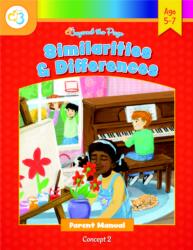
On Day 2 students are asked to read the title of Over and Under the Pond and compare the two covers, and they are specifically asked whether the two books have the same illustrator and why or why not. The Earth Materials Book cover template includes a labeled space "Author and Illustrator: ________________________" where students can record those names. The activities prompt students to look at book titles and illustrations and to discuss similarities in writing and illustrations between the two books.
Unit 2: Senses
Lesson 1
My Five Senses
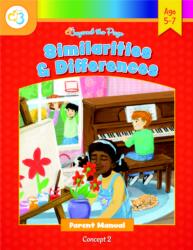
Students are shown the cover of My Five Senses by Aliki and are asked to find the title and to locate the author's name (including identifying the first letter of the author's name). Students are encouraged to attempt to read the book and to identify beginning letters of important words in the text. These prompts require students to observe and recognize the author's name on the book cover.
Lesson 2
Senses and Body Parts
The lesson's Skills section explicitly lists 'Identify the title and author of a book (LA).' The activities include reading a named story, 'Jackie's Day at the Pet Store,' aloud and having students listen for comprehension, which provides an opportunity for students to hear and respond to the story title and author. The wrapping up suggests reviewing book elements by pointing to parts (though it does not mention the illustrator).
3: Patterns
Unit 1: Identifying and Creating Visual Patterns
Lesson 1
What Is a Pattern?
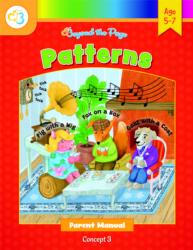
Activity 1 directs students to look at the cover of Busy Bugs and identify the title and the author's name; students are encouraged to read the title and to guess what the story is about. The activity has students listen to the story and follow along, then attempt to read it aloud themselves, which reinforces attention to the book's cover information (title and author).
Unit 2: Patterns in Sounds, Words, and Actions
Lesson 2
Making Word Patterns
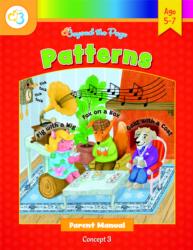
Students create a small book by gluing sentences and illustrations and are prompted to "name himself as the author," which gives them practice identifying an author. Students also produce or work with illustrations for their book (cutting/gluing pictures) and handle picture books in Activity 3, exposing them to published texts that have identifiable creators.
4: Change
Unit 2: Characters Change
Lesson 1
What's in a Name
The lesson explicitly names the author by referring to "phrases that Kevin Henkes uses in the book Chrysanthemum," which students are asked to read and interpret. Students are directed to listen to the story (linked) and "pay close attention to the illustrations as the narrator reads," which prompts attention to visual elements. Activities ask students to interpret author language and to use illustrations to infer character feelings.
Lesson 5
The Raft
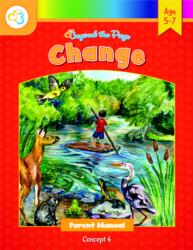
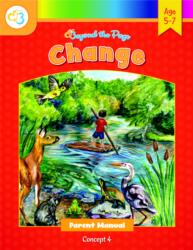
The teacher script instructs to show the child the cover of The Raft by Jim LaMarche and to tell her that, like Kevin Henkes, the author of this book is also the illustrator. The script also directs the adult to read the "Author's Note" at the beginning of the book. These parts explicitly identify the book's creator and note that one person served as both author and illustrator.
Unit 3: A First Look at History - Change Over Time
Lesson 3
Communities Change
Students are encouraged to read the title and the author's name from the cover of The House on Maple Street. Students are asked to point out and describe the pictures on the cover and in the book. Students write a sentence about The House on Maple Street, reinforcing attention to the book's bibliographic information and content.
6: Reading

Unit 1: Semester 1
Lesson 17
Semester Review
Students are instructed to create their own reader and "make sure that he knows to write the title and his name on the cover," which has students practice identifying the book's author by putting their name on the cover. The activity also allows students to add pictures to their book, giving them experience producing illustrations that accompany a text. The planning page includes a "Characters:" section and a place for the student to plan the reader, supporting student work on elements of a book's production.