


Second Grade - ELA
1: Community

Unit 1: Communities Around the World
Lesson 1
Exploring a Community
Activity 4 asks students to locate and read labels on a "Map of a Community," to review the different symbols in the map key, and to use the scale and a ruler to measure distances between buildings. Activity 1 provides a word box and labeled illustrations that students use to identify and label community buildings. Several student pages include headings and directions (e.g., "Directions: Locate and read the labels on the map," "Directions: Use the words from the box") which require students to read and use those text features to complete tasks.
Lesson 5
Money
Students encounter and use headings and subheadings (e.g., Getting Started, Activities, Activity 1–4) to navigate tasks. Students read labels on the activity pages (each group is labeled with its respective name) to identify which items to count. Students use the Values of Money grid with row labels for coin/bill types and numbered columns to write and find coin values and are explicitly told they can use that sheet to help with adding and making change.
Lesson 8
Customs and Holidays
Students follow numbered labels and directions when they cut and glue stars labeled 1, 2, and 3 onto corresponding sections of the flag and color the flag correctly. Students use labeled fields such as "Holiday," "Date," "On this day our family..." and "We celebrate this holiday because..." to record specific facts about holidays in the Holiday Book. Students locate countries on a world map, color and label each country, and write the holiday name and date beneath each country, using the map outlines and labels to find and record information.
Lesson 9
Different Communities
Students are instructed to read about a country in books or on the Internet and record information on a labeled graphic organizer with sections titled "Food," "Goods," "Homes," "Clothing," and "Holidays." Student pages include clear titles, directions, and labeled areas (for example, a Venn diagram labeled "A Community in America" and "A Community in ______") that students use to place facts. The lesson text notes the top of the country research page has the title written in bold, decorative font and includes web link descriptions that students could consult.
Lesson 10
Communities Change
Students are asked to read the title and the name of the author of The Little House and to identify shapes the artist used on the cover. Student activity pages include labeled sections and headings (for example the "Changing Seasons Wheel" labels Spring, Summer, Fall, Winter; the "Natural and Human Resources" pages are divided into "Natural Resources" and "Human Resources"; the "A Growing Community" page labels Small Town, Farm, Large City, Small Community). Directions on activity pages prompt students to look at lists and illustrations and to place or list items under the labeled categories.
Final Project
Community Brochure
Students are asked to "look over some examples of brochures" and to talk about the artwork/pictures and the information presented, which has them examine real brochure text and images. Students use a "Community Brochure Organizer" with labeled sections (Cover, Left inside third, Inside center, Right inside third, Back left, Back center) that function as headings/subsections for locating and organizing information. The organizer includes a vocabulary box of terms (money, goods, services, wants, needs, rural/urban, human resource, natural resource) that students are instructed to include in the brochure text.

Unit 2: Citizenship
Lesson 2
Decisions and Consequences
Students are asked to look at the cover of Lilly's Purple Plastic Purse and read the title and the author's name. Student activity pages present labeled actions in a two-column 'Action/Consequence' chart and a grid of short text labels paired with illustrations/icons (e.g., 'Brush your teeth', 'Get a stomachache'). Students read examples on the action chart and turn over labeled action and consequence cards in a Memory-style game.
Lesson 3
Diversity in the Community
The Skills list explicitly includes "Use text to locate important information (LA)." In Activity 3 students are asked to look at atlas pages and a world map, color and label each continent, and place people images onto continent and U.S. maps to show origins. In Activity 4 students read about a country in books or on the Internet to learn more and then record interview answers, demonstrating locating information in texts and resources.

Unit 3: Plants and Animals
Lesson 2
Animal Structure
Students are asked to circle the title of the graph and the labels and to record and label the x- and y-axes, which requires recognizing titles and labels as text features. Student activity pages include icons representing feathers, exoskeleton, fur, and scales that students use to match information. Section headings and titles such as "Body Coverings," "Coverings Graph," and "Animal Sort" appear and are read by students during activities.
Lesson 7
Plants
Students read the "A Plant" page and use the labeling instructions (caption-like labels) that describe leaf, root, stem, seed, and flower functions to fill labels on a plant diagram. Students use titled sections and category headings on the "Types of Plants" activity (Flowering, Non-Flowering with Leaves, Non-Flowering without Leaves) to sort illustrations into groups. Students follow directions and use labeled measurement fields on the "Measuring Plants" page to record height and width beside each plant.
Lesson 8
The Role of Plants
Students are asked to identify the author and title of The Giving Tree and to use books or websites to determine names of unfamiliar plants, showing they work with titles and external reference sources. The materials present explicit headings and subheadings (e.g., "Facts and Definitions," "Activities," and individual Activity titles) and titled student pages with directions that students read and follow. Student activity pages include labeled sections and prompts (e.g., boxes for drawings with instructions) that students use to locate where to record information.
Lesson 9
Comparing Living Things
Students interact with labeled charts and tables that list needs (columns: soil, sunshine, water, food, shelter, air, space; rows: Plants, Animals, Humans) and are instructed to check boxes for each category. The Student Activity Pages include icons (sun for sunshine, cloud for air, etc.) associated with each category that students use while categorizing and completing sentences. Students draw and label what each pictured living thing needs and use the table information to write sentences and create Venn diagrams to compare needs.
Final Project
Nature Guide or Habitat in a Box
Students encounter labeled sections and subheadings (e.g., Plant 1, Insect 1, Bird 1, Mammal 2, Reptile 1) and fillable fields (Name, Size, Body Covering, Diet) that organize information. The pages include icons and small graphics (flower, leaf, feather, paw print, lizard) beside sections and a suggested color-code circle with a key on the outside of the box. Students are directed to paste or draw images in designated boxes and to use the circle/color code to distinguish organism types and roles in the food chain.
2: Matter and Movement

Unit 1: States of Matter
Lesson 5
Comparing Matter
Students are directed to "Find two words from the adjective list that could be used to describe each noun," which requires them to use the provided adjective list (a text feature) to locate descriptive words. The Student Activity Pages include titles, directions, and labeled spaces (e.g., directions at the top of the Molecules and Counting Molecules pages) that students must read and follow to complete tasks. The Adjectives Describe page explicitly presents a word list that students consult to complete the activity.
Lesson 6
Changes in States of Matter
Students are asked to read and follow directions on the JELL-O box to measure water, which requires using product instructions to locate needed information. Students are directed to "look at the names of the solids... written along the x-axis" on the Melting Rates Graph, using axis labels to place data. Activity pages include titles, labeled axes, images/icons, and Day 1/Day 2 headings that students must read to complete tasks.
Lesson 7
Exploring Solids and Liquids
Students are asked to read the labels on the "Natural Resources" sheet and circle items found in nature, then color-code solids and liquids, which requires using labels to locate information. The Student Activity Pages include labeled illustrations (e.g., Cotton, Wood log, Milk) that students must read to complete tasks. In the Spelling activity students are instructed to put words in alphabetical order and to look up definitions of words they cannot define, which requires using alphabetic reference features (like a dictionary or glossary).
Lesson 8
Our Bodies and Our World
Students label items on a labeled human diagram in Activity 1 by identifying solids, liquids, and gases, using the diagram's labels to classify body parts. In Activity 2 students use the picture from Activity 1 to draw and trace the digestive path from mouth to anus, using the diagram to locate organs and substances. Several student pages have clear titles and illustrations (e.g., "A Short Story," "Rhyming Words") that students read and use to complete tasks.

Unit 2: Earth
Lesson 1
Our Planet Earth
Students are asked to look at the titled "Land and Water" map, use provided word boxes and an inset list of continents and oceans to label the map, and answer questions about which ocean is north/south/east/west of given continents. The materials include clear section headings (Activities, Activity 1) and an image title/labeling on the map that students use to find geographic information. Instructions prompt students to locate specific facts on the map (e.g., which ocean is west of North America), requiring them to use the map's labels and word boxes to find answers.
Lesson 5
Rocks
Students are asked to look at the cover of Everybody Needs a Rock and identify the title, author, and illustrator, which engages them with basic book features. Students use labeled charts (columns titled "glass," "metal," and "concrete") on the "Rocks All Around" activity page to record and organize information. Several student pages include illustrations and labeled boxes (e.g., rules presented in separate boxes, captions-like labels for sorting categories), which require students to attend to visual labels and headings.
Lesson 6
Water, Water Everywhere
Students are asked to read and use labeled ocean zones (Sunlight 0 ft, Twilight 300 ft, Midnight 3,000–6,000 ft) to identify which animals belong at each depth and to compare numeric depths. Students follow a color guide/legend on the Fresh Water pages to circle and color animals by classification (insect, fish, amphibian, mammal, reptile). In the "What a Catch!" activity students are directed to add a title and label the x- and y-axes and to use a color key to color fish by weight ranges.
Lesson 7
Taking Care of the Earth
Students read and follow titled sections and subheadings (e.g., "Facts and Definitions," "Activities," "Activity 1: Responsible Resources") to locate directions and information. Students read a materials list and step-by-step directions on the "Making Paper" activity page to gather materials and complete the procedure. Students use icons and labeled recycling bins on the "Is It Recyclable?" page (recycling symbols, labels like "plastic" and "glass and aluminum") to sort cut-out items by recyclability.
Final Project
Earth Exhibit
Students work with activity pages that are clearly labeled with headings such as "Solid," "Liquid," and "Gas," and prompts like "Where it is found:" and "What it is used for:" that scaffold locating specific facts. Students create exhibit cards that include labeled fields "Description:" and "Directions:" and arrange these labeled cards for visitors to read. Students are asked to visit a museum and "look at individual exhibits and how people discover and learn important information," which involves observing how information is presented and labeled.
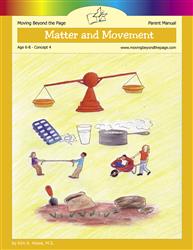
Unit 3: Balance and Motion
Lesson 2
What Can Be Balanced?
Students are told to read the definition of the word "balance" in a dictionary, which directs them to use a reference text to locate a word meaning. Students are asked to look at the MyPlate image and use its labels/diagram to determine which food groups take up more or less of a plate and then draw a meal that follows those labeled sections. Student activity pages include titles, labels, and directions (e.g., "MyPlate: A Balanced and Healthy Meal" and labeled plate sections) that students use to complete tasks.
Lesson 4
Force and Motion
The lesson directs students to read the title of the book and to look at the table of contents, explaining that the table of contents outlines topics and gives page numbers. Students are instructed to skip specified pages (pp. 8-9) and later to reread pages 16-19, which requires using page numbers to locate sections. The lesson also has students review and use illustrations and labeled columns on the activity page (Push/Pull) to identify information.
Lesson 5
Gravity
Students are asked to read the book title 'Forces Make Things Move' and use that title to predict what the book is about, showing use of a title as a text feature. Students are directed to reread specific pages (pages 20-21 and pages 22-23) in the book Move It!, which requires using page numbers to locate information. Student Activity Pages include clear titles, written instructions, and illustrations that students read and use when deciding true/false statements and when assembling patterns.
3: Culture
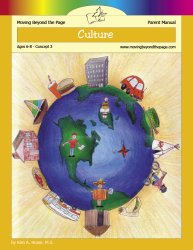
Unit 1: Geography
Lesson 1
Using Maps and Globes
Students are asked to read and label map symbols and the map key, and to practice drawing and labeling symbols on a separate page. They are instructed to circle the title, underline the capital city, circle bodies of water, and locate the compass rose and scale on a map. Students chart Armadillo's journey on a Texas map using labels and use the map scale and compass rose to measure distances and directions.
Lesson 2
Cardinal Directions
Students label and use a compass rose to identify north, south, east, and west (Activity 1). Students use the map key icons and compass rose on the Treasure Map activity to answer directional questions such as "What is north of Death Valley?" and to place drawn features in specified locations. Students follow cardinal-direction step instructions in room and yard activities (Activities 2 and 3), using the compass/compass rose as a guide to locate places.
Lesson 3
Landforms and Bodies of Water
Students cut out labeled pictures and match them to definitions on the Student Activity Page titled "Bodies of Water and Landforms," using a two-column table of names and definitions. Students view images with labels on the "Life Near the Water" pages and connect positive/negative statements to the pictured bodies of water. Students create posters that require labeling map symbols and writing sentences under titled sections for landforms and bodies of water.
Lesson 4
Natural Resources
Students are asked to use the "Natural Resources in the United States" map and place resource symbols in their correct locations using a provided legend, and to create a map key by gluing pieces of the materials in the key and labeling them. The Student Activity Page descriptions show a map with specific symbols depicting resources and a legend, which students must use to guide placement. The lesson includes headings and titled activity pages (e.g., "What Are Natural Resources?", "Researching Resources") that students read to follow instructions.
Lesson 7
The Seven Continents
Students are asked to locate answers by pointing to the continent on the map on page 1 and are encouraged to "look back at the page in the book" when they do not remember facts. Students use pictures and words to help find information about continents and animals (Activity 1 and Activity 2). Student pages include visual markers (a camera icon and decorative paw prints) and explicit page references (e.g., map on page 28, "Weather on the Continents" page) that students interact with when labeling, coloring, and matching.

Unit 2: People Around the World
Lesson 2
Traditions
Students read and follow labeled pages and headings such as "Holidays," "Directions for Making a Maraca," "Materials," "Chinese New Year Dish," and "Holiday Math." Student activity pages present organized text features (tables with column headings Holiday/Symbol/Sentence, labeled charts connecting foods to meanings, and step-by-step numbered directions) that students must read and use to complete tasks. Activities ask students to "show your child the sheet called 'Holidays'" and to "look at each food label and ask your child to draw the food in the box," requiring students to read labels and headings to find information.
Lesson 6
American Culture
Students read and use labeled images on the "AMERICAN SYMBOLS" activity page (e.g., Statue of Liberty, Liberty Bell, Eagle, Flag) and follow the directions to identify and describe symbols. Students read short biographical/contribution cards on the "Leaders in America" page and cut-and-match each leader to his or her contribution, requiring them to locate specific facts on the cards. Students use labeled sections inside the U.S. outline (A HOME, FAMOUS SONG, A LEADER, A SYMBOL, JOBS) to organize and record information about American culture.
Lesson 7
History of America
Students are instructed to open The Usborne Children's Picture Atlas and point to Canada, the United States, and Mexico on the North America pages and to use the world map to locate explorers' countries of origin and landing sites. Students are asked to refer to the back-of-book timeline in Three Young Pilgrims and to use the timeline graphic to sequence explorations/settlements. Students are directed to turn to the 'Indian' pages and to map pages to identify places and to point out animals and foods shown along the book border, using those page elements to find information.
Lesson 8
Asian Culture
Students are asked to locate Asia on the world map and to look at names of countries on a map, which requires using map labels to find geographic information. Students are instructed to look at the pages and pictures in the book Explore Asia and to use the pictures to understand the continent and culture. Students use the Chinese Zodiac sheets to find specific birth years and then read the descriptions for those animals, locating facts in a labeled list/calendar.
Lesson 9
African Culture
Students are asked to use the map at the front of the book and their "Map of Africa" activity sheet to identify and color countries and then locate the nations discussed as the book is read. Students are instructed to look closely at the pictures in the book to find types of homes, animals, and foods and to record foods from the book on the "Trying African Food" page. Students are asked to use information from the book to fill in a "Guidebook to Africa," which may require them to locate facts in the text or pictures.

Unit 3: Stories Around the World
Lesson 6
Cinderella Stories Around the World
Students are asked to look through book pages and use the pictures to identify story elements. Students complete a "Cinderella Elements Chart" that has column headers and directions prompting them to find and record specific information (hero/heroine, villain, magical help, proof of identity, royalty, happily ever after). Students are asked to locate Egypt on a map to identify the story's geographic origin.
Lesson 9
Poetry
Students are asked to locate specific words and details in poems (e.g., identify rhyming words in the "February" poem and reread selected months to answer questions). Activity 2 and the student activity pages instruct students to "fill in the chart using pictures and examples from the text," requiring students to find information in text and accompanying images. Activity 5 has students count words and syllables in lines of nursery rhymes, which requires locating and extracting specific textual information.
4: Relationships
Unit 1: Living Things and Their Environment
Lesson 3
Sun, Moon, and Stars
Students use a labeled world map and a color key on the "Temperature of the Earth" activity page to shade regions by temperature, requiring them to read and apply a legend to locate hot and cold zones. Students examine the Moon chart (pp. 12–13) and compare Day 1 and Day 30, using the chart as a visual/text feature to find patterns and specific information about moon phases. Students follow numbered directions on connect-the-dots constellation pages and use labeled maps on the "Hot Habitat" and "Cold Habitat" pages to identify regions near the equator and polar areas.
Lesson 4
Seasons and Living Things
Students label the seasons on the "Seasons on Earth" diagram, which includes four Earth positions each labeled with a different season and arrows showing orbit direction, so they interact with labeled diagrams to identify key information. Students are instructed to reread specific pages (p. 20-25) to find details for the activity, so they use page references to locate information. Students follow the "Bird Feeder" page that has a title, materials list, step-by-step headings, diagrams, and a small icon for peanut butter while completing the hands-on activity.
Lesson 5
Rivers
The Skills list explicitly includes: "Know and use various text features (e.g., captions, bold print, subheadings, glossaries, indexes, electronic menus, icons) to locate key facts or information in a text efficiently." Activity 2 directs students to look at the book's "Contents" page to determine where animals live and to check their map, giving a concrete task that requires using a text feature to locate information.
Unit 2: The Miraculous Journey of Edward Tulane
Lesson 3
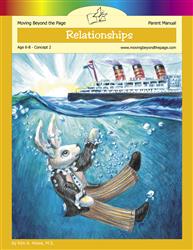
The Queen Mary
The lesson skill list explicitly names knowing and using various text features (e.g., captions, bold print, subheadings, glossaries, indexes, electronic menus, icons). In Activity 2 students are directed to explore web resources about the Queen Mary and to fill in a research sheet with factual questions, and the instructions say to "point out text titles that are bold" and discuss how these help a reader efficiently find information. The Student Activity Page requires students to locate specific facts (dates, nickname, wartime role, current location) from the provided sources.
Lesson 4
Pronouns
Students are asked to "look at the pictures in the chapters" and to point out significant details in the illustrations to understand the story. The Skills section directs students to "Use information gained from the illustrations and words in a print or digital text to demonstrate understanding of its characters, setting, or plot." Activities ask students to refer to illustrations and text when answering comprehension questions about chapters and character responses.
Lesson 9
Apostrophes
Activity 2 gives students a printed "Neal's Diner" menu with clear subheadings (Breakfast, Lunch, Drinks), item icons/illustrations, and prices. Students are instructed to use that menu to choose food, find prices, and determine whether a given amount of money will cover their order (e.g., Can you order a hamburger, French fries, and a milkshake?). The menu layout and specific ordering tasks require students to locate key facts (item names and prices) in the text feature to complete the activity.
Lesson 10
Illustrations
The lesson asks students to look through the book's illustrations and to retell the story using the illustrations as a guide. Activity 2 directs students to record the quote that accompanies a chosen illustration and to use an "Explain an Illustration" sheet to identify who, what, when, and where in the picture. The Skills section states students will "use information gained from the illustrations and words in a print or digital text to demonstrate understanding of its characters, setting, or plot."
Final Project
Chalkboard Presentation
Students are instructed to click interface elements such as the "Create" button, choose the "Education" category, select the "Chalkboard" template, and click the "Image," "Text," and "Add" icons to build slides. Students use the "Title" text element and regular "Text" boxes and the toolbar to change font, size, and color. Students search for images and navigate the Emaze site and the Slideshow Template site using menus and links.
Unit 3: Connecting with the Past
Lesson 1
Studying History
Students are directed to "Read over the vocabulary words and definitions" in a Vocabulary Box and then use those definitions to fill sentences, which requires using the boxed, bolded terms to locate information. Section headings such as "Facts and Definitions," "Skills," and labeled Activity headings organize the text into subparts that students navigate. The Primary and Secondary Sources activity includes illustrated symbols (icons) next to some items that students can use as cues when classifying items as primary or secondary sources.
Lesson 2
Colonization and the Revolution
Students are instructed to use the map key on the Thirteen Colonies page to shade the New England, Middle, and Southern regions, directly using a map legend to locate regions. The map is labeled with colony names and students are asked to find and identify specific states (e.g., Virginia/Jamestown) and add dates/labels to a timeline, requiring use of map labels. In the National Monuments activity, students cut out descriptive text and glue it next to the corresponding monument image, matching label/caption-like descriptions to pictures to locate key information.
6: Reading

Unit 1: Semester 1
Lesson 3
Complex Consonants Review
Students are asked to find the "RIDDLE ANSWER" section in the conclusion, which requires locating a labeled section by its heading. The Sounds of C and G Story page includes a reference box (a key) showing hard/soft sounds that students use to highlight and color-code words in the story. Several student pages have clear titles and labeled boxes (e.g., "Ending with ng", "SILENT STARTS") and students are directed to read or use those labeled areas to complete tasks.
Lesson 6
Other Vowel Sounds
Students are asked to read page titles and column labels (for example the oi/oy and ou/ow activity pages) and then place or write words in the correct labeled column. Students are prompted to "read the instructions on her own" and to "point to 'room' and 'wood' on the top of the 'oo Sounds' page," using those top-of-page words as reference categories. Several Student Activity Pages include labeled columns, headings, and small illustrations/icons that students use to guide where to write or how to sort words.
Lesson 11
Final e: ce, ve, ze, se
Students are asked to look at the book cover and flip through the first four pages to make predictions, which uses the cover as a text feature. Students are explicitly told to find the "RIDDLE ANSWER" section in the conclusion to locate the answer to the child riddle. In the word-search and Word Finding activities, students use a provided word list and read a short passage to locate specific words, using the list and passage as navigational features.
Lesson 13
Making Plurals
Students are asked to look at the book cover and read the title and to flip through the first two pages (Activity 4.2), which has them use the title/cover as a text feature to make predictions. Students sort words into labeled groups and glue words into columns on the "Plurals with es" page, using headings such as "ending in sh," "ending in ch," "ending in s," and "ending in x" to locate where words belong. The Color by Sight Word page provides a code/key mapping sight words to colors that students use to color sections, which requires using a simple legend to find information.
Lesson 16
Words Ending with er and est
Students are asked to read and use column titles on multiple activity pages (for example, the "just add er", "double last letter, add er", and "drop e, add er" columns on the Sorting er/est pages) to sort words. Students are instructed to read the column titles and all words on the "Missing Words" page and to use those headings to complete base, er, and est forms. Students are told to find the "RIDDLE ANSWER" section in the lesson conclusion and to look at the reader's cover and title when previewing the book, using those headings and titles to locate specific information.
Unit 2: Semester 2
Lesson 1
Compound Words
In Activity 2.2 students view the book cover and identify the animal shown, using the cover as a text feature to gather information about the book. In Activity 4.2 students search A Color of His Own to find specific words and are directed to look on the front and back covers and inside front covers, checking off words they locate. In Shared Reading (Activity 1.1) students point to words in different page regions (left, center, right) and read them aloud, practicing using page layout to find and read text elements.
Lesson 3
Open and Closed Syllables
In Activity 1.1 students are asked to find the "RIDDLE ANSWER" section in the conclusion, requiring them to locate a labeled section. In Activity 4.2 students are directed to search pages 6–21 of Mouse Soup to find and check off specific words, practicing scanning the text by page. Several activities use visual cues—theme word cards, pictures, and body-part words shown in bold—so students use images and bolded words as signals to find information.
Lesson 4
Syllables with R-Controlled Vowels
Activity 4.2 (Finding Words in the Text) directs students to turn to specific pages (pp. 22–30) of Two Large Stones and search the text to find a provided list of words, checking them off as they find them. The directions also ask students to write down words with r-controlled vowels found on p. 22 and to find at least three different examples, which requires scanning the page and using the page number to navigate to the correct section.
Lesson 6
Possessives
Students are asked to look at the cover and title to make predictions about the story, using the cover art and title as text features. In the "Finding Words in the Text" activity students search Chapter 1 for specific words and write the page number where each word appears (the answer key lists p. 5, p. 6, p. 7, p. 9, p. 10, p. 15). Students also circle or highlight theme words in a paragraph and locate those words in running text on the "Theme Words Paragraph" activity page.
Lesson 8
Two-Syllable Words with Silent e
Students look at the book cover and read the title and identify animals on the cover (Reading And Questions), which has them use the cover as a text feature to locate information. In Activity 4.2 students search through the story "Down the Hill" to find specific words and record the page numbers, practicing locating key words and facts in a text. In Activity 4.3 students scan sentences to find and highlight two-syllable silent-e words, practicing targeted searching of text for specific information.
Lesson 10
Consonant Teams
Students search the story "Christmas Eve" to find listed words and record the page numbers for specific Panther words (Activity 4.2). Students use illustrations from Frog and Toad All Year to infer the season of each story by examining pictures and noting visual clues (Activity 4.1). The lesson also has students read and use a Seasons and Holidays theme word card and suggests making index cards for additional holiday names.
Lesson 13
Prefixes
Students are asked to find specific words (two, four, seven, eight, remember, evening) in Part I of the Book of Poems and Verses and check them off, using page numbers and the book's sections. Students are directed to find two words that begin with the prefix re in the "Prefix Poem" on page 14 and to find words beginning with un and over in the "Words to Live By" on pages 12–13, which requires locating named poems/sections. Students are also asked to find the "RIDDLE ANSWER" section in the lesson conclusion, which requires locating a labeled section.