


Second Grade - ELA
1: Community

Unit 1: Communities Around the World
Lesson 1
Exploring a Community
Activity 2 asks the child to read The City Mouse and the Country Mouse aloud or to have it read to her and specifies reading the story at least two times, which requires successive readings. The skills list includes "Read and comprehend fiction" and "Listen and respond to stories read aloud," and Activity 4 asks the child to locate and read the labels on the map. Activity 2 explicitly invites the child to attempt oral reading of an on‑level story.
Lesson 3
Goods and Services
The Skills list explicitly includes "Read aloud independently with fluency and comprehension (LA)," indicating students are expected to read aloud. Activity 3 instructs the child to "read the book, If You Give a Pig a Pancake" and to "Read the story through one more time," providing practice with successive readings. Activity 2 asks the child to "read each word problem" aloud before recording answers, giving additional opportunities for oral reading practice.
Lesson 7
Work and Money
Students are asked to "read through the job descriptions" on the "Working Together" page and to "read each scenario" on the "Making a Choice" sheet, which requires oral reading of on-level text. The spelling activity asks students to say sentences aloud and to practice spelling words orally, providing additional spoken practice of word-level items.
Lesson 8
Customs and Holidays
The lesson explicitly instructs families to "read texts from the Bible or a children's books that talk about the holiday" when discussing religious holidays, and it tells students to "read more about these holidays on the Internet." The lesson also engages students in oral discussion by asking them to name holidays and explain why they are celebrated, and to act out traditions (speaking when prompted). These elements involve reading and oral language that could connect to oral reading practice.
Lesson 10
Communities Change
Students are asked to "attempt to read the story" and to read the title and author, providing an opportunity for oral reading. The caregiver is instructed to "then read the story aloud to him," giving students a fluent model to listen to. The lesson also tells students to "reread the pages about seasons," which creates at least one instance of successive reading of part of the text.
Lesson 11
Government and the People
The lesson instructs an adult to "Help your child read through each problem" (Activity 2) and includes multiple Student Activity Pages (Voting, Adding Votes, Government Flowchart, The Government Helps Citizens) with written directions and questions that students are expected to read and respond to. The lesson also prompts oral interaction: it asks the child to explain why voting is important and to answer spoken questions about leaders and responsibilities.

Unit 2: Citizenship
Lesson 2
Decisions and Consequences
Students are asked to read the title and author's name and to attempt to read Lilly's Purple Plastic Purse aloud. Students listen to an adult read the story aloud after their first attempt. Students read short text on the 'Lilly's Action Chart' and read or match short phrases on the Actions and Consequences cards during the game.
Lesson 4
Living in America
Students are asked to read the words of "The Star-Spangled Banner" and then sing the song with an adult, repeating the song a few times and practicing it over the next few days. Students are asked to read the Pledge of Allegiance with an adult, say it aloud, and practice memorizing and reciting it each day. The lesson prompts students to say the pledge and sing the anthem during wrap-up, providing multiple opportunities for oral performance.
Lesson 6
Leaders in the Community
Students are asked to attempt to read a biography aloud through the first time (Activity 1). Students listen carefully as an adult reads the same biography a second time, providing a model of fluent reading. Students are provided with a list of age-appropriate biographies to read and practice with.

Unit 3: Plants and Animals
Lesson 1
Living and Nonliving
Activity 4 directs the child to read Sylvester and the Magic Pebble aloud and then to listen as an adult reads the story aloud, providing at least two successive readings. The child is asked to look through the pictures, point out living and nonliving things in the illustrations, and answer comprehension questions after reading. The activity also asks the child to predict the story and to attempt reading before hearing the adult model.
Lesson 6
Extinct and Endangered Species
Students are given an "Endangered Species Puppet Show Script," and they are told to read through the script with help, practice the puppet show, create unique voices for each animal, and perform the script for the family. The Skills list explicitly includes "Demonstrate familiarity with a variety of texts (LA)," and Activity 4 asks the child to "read different theories" about dinosaur extinction. The puppet-show directions require oral rehearsal and performance, which involve reading text aloud with expressive voices.
2: Matter and Movement

Unit 1: States of Matter
Lesson 1
What Is the World Made Of?
Activity 1 instructs the child to read the book What Is the World Made Of? and then to listen as an adult reads the book aloud, with stops to discuss ideas. The activity explicitly says to "let your child read the book; provide assistance as needed," which requires the child to perform oral reading. Wrapping-up prompts ask the child to describe states of matter verbally, offering additional spoken practice.
Lesson 3
Liquids
Students are asked to "Read pages 12-13 in the book, What Is the World Made Of?" and to read the ingredients on the "Reading a Recipe" activity sheet. Students are also encouraged to "read the label on each container" during Activity 4. The Skills section includes language arts items (capitalization, punctuation, nouns, and verbs) that involve reading and writing tasks.
Lesson 4
Bartholomew and the Oobleck
The lesson asks the child to "read each statement" on the True or False sheets (Option 1) and to read the provided true/false examples and statements (Option 2), which requires the student to read text aloud or silently. Activity 5 directs the adult to "Reread the story and insert your child's new ending," implying the story is read again after the child composes a new ending. The Wrap Up and Activity 1 include oral discussion prompts that require the child to speak about story events and answer comprehension questions.
Lesson 6
Changes in States of Matter
Activity 5 instructs the child to "read the directions on the box" when making JELL-O, giving a direct instance of the student reading text. Activity 7 directs the child to "read each sentence and circle the nouns" after writing sentences, providing another explicit reading task for the student.
Lesson 7
Exploring Solids and Liquids
Students are asked to "Read the book, What's the Matter in Mr. Whiskers' Room?" and to "reread pages 32-35" and pages 36-39, which provides opportunities for repeated readings of on-level text. Students are also encouraged to "read the labels" on the Natural Resources sheet and to follow written procedures on experiment pages, which require decoding and oral/visual engagement with text.
Lesson 8
Our Bodies and Our World
The lesson's skills list explicitly requires students to "Independently read aloud with fluency and comprehension text designed for emergent readers." Day 2, Activity 4 directs students to "read the story twice," with the second reading used for a follow-up task, demonstrating successive readings. Multiple activities (Activity 6, Activity 3, and the short-story options) instruct students to read short, on-level passages or lists aloud and perform comprehension or classification tasks afterward.

Unit 2: Earth
Lesson 1
Our Planet Earth
Activity 3 instructs the child to "read the book, You're Aboard Spaceship Earth" and then "look through the book again," which indicates the student reads the same text more than once. Activity 5 directs the child to "read the sample poem and discuss each line," providing at least one instance of reading a modeled text aloud and engaging with its phrasing. These items show students are asked to read on-topic texts and revisit them.
Lesson 5
Rocks
Activity 6 asks the child to attempt to read Everybody Needs a Rock aloud and then to listen as an adult reads the story, providing a model of fluent reading. Activity 7 instructs the child to reread the story when cutting out and ordering the rules, which involves repeated exposure to the same text. The lesson also prompts the child to analyze illustrations and answer comprehension questions after reading, linking oral reading to understanding.
Lesson 6
Water, Water Everywhere
Students are asked to "help your child read the depth of each level," which involves reading labeled depth numbers aloud. Students are prompted to "read the names of the resources on the sheet called 'Resources from the Sea'" and to "reread pages 12-15 in the book, You're Aboard Spaceship Earth." Students are given a copy of the sea song to follow along while singing, which requires reading lyrics while listening.
Lesson 7
Taking Care of the Earth
The lesson instructs students to read aloud the materials list and the step-by-step directions for the "Making Paper" activity. The "Air Pollution" page asks students to read through a list of actions and circle those they or their family could do, which requires reading the text. Multiple activities prompt the child to read activity pages and directions aloud or to a family member.
Unit 3: Balance and Motion
Lesson 1
What Is Balance?
Students are asked to "attempt to read the book aloud" in Activity 1 and to reread the book if they cannot answer comprehension questions, which provides opportunities for oral reading and successive readings. Students are instructed to "read the weight given for each problem" on Activity 4 pages and to read their written directions aloud in Activity 9, requiring decoding and oral presentation of on-level text. Multiple activities prompt students to read aloud and listen (book, problem instructions, self-written directions), offering practice with oral reading in content contexts.
Lesson 4
Force and Motion
Students are asked to read the book Move It! aloud in Activity 1, and to answer comprehension questions from the text after reading. Activity 6 instructs students to reread pages 16-19, and Activity 7 has students read through the list of actions they recorded. The lesson's skills list includes "Read and comprehend both fiction and nonfiction text (LA)," indicating reading practice is an expected student activity.
Lesson 5
Gravity
Students are asked to reread pages 20–21 in Move It!, which indicates at least one successive reading of text. Activity 1 asks the child to read the book aloud or to read the book title and guess content, directly involving oral reading. The Skills list includes listening responsively to stories and discussing unfamiliar vocabulary after listening, which supports engagement with text and oral language.
3: Culture
Unit 1: Geography
Lesson 1
Using Maps and Globes
Activity 1 instructs the child to read The Armadillo from Amarillo aloud and to stop when encountering unknown words, then to reread sentences after vocabulary is explained. The activity then has the book reread aloud while the child listens, providing a model of fluent oral reading. The Skills list includes "Answer questions about text read aloud," indicating engagement with texts read orally.
Lesson 4
Natural Resources
Activity 3 instructs an adult to help the child locate resources in books or on the Internet and to read the information aloud while the child answers questions on the research sheet. Activity 4 explicitly asks the child to read each math problem on the "Math and Natural Resources" sheet and provide an answer. The introduction and wrap-up include prompts that require the child to speak about and explain ideas (e.g., describing ways he uses natural resources).
Lesson 7
The Seven Continents
The lesson directs an adult and child to "read the book with your child" and to "flip through the book again," prompting multiple exposures to the text. It instructs the adult to slowly name each continent aloud while pointing, and asks the child to point to answers on the book pages, encouraging oral naming and recall. The wrap-up directs continued singing of the continents song "over the next week," supporting repeated oral practice of the words.

Unit 2: People Around the World
Lesson 1
Exploring Culture
Students are asked to read about culture on pp. 10–13 in The Usborne Children's Picture Atlas and answer comprehension questions, which requires them to engage with grade-level text. The Culture Math activity explicitly asks the child to read each question on the worksheet, producing some oral reading practice. The Interview activity has students speak with and listen to a community member, giving an opportunity for oral language use.
Lesson 3
Different Religions
Students read informational paragraphs about Ramadan, Easter, Hanukkah, and Christmas and use a student activity page that requires reading directions and matching holidays, religions, and symbols. Activity 2 has students read a data table and transfer information to a bar graph, which requires reading the table entries. Activity 3 asks students to read a story from a book that is important in their religion, providing at least one occasion for oral reading.
Lesson 6
American Culture
Students are asked to "read about each person's contribution" on the "Leaders in America" cards and to cut out and match them, which requires reading short informational text. The Skills list explicitly includes "Participate in rhymes, songs, conversations, and discussions," and Activity 3 directs students to learn and sing three American classic songs with provided lyrics and simplified music. The music sheets include full lyrics for songs like "When the Saints Go Marching In," "Yankee Doodle," and "When Johnny Comes Marching Home," which students can read or sing aloud.
Lesson 8
Asian Culture
Students are asked to read descriptions on the Chinese Zodiac sheets aloud (Activity 3) — including circling years and reading the animal descriptions for family members. Students are prompted to read and follow the Panda Mask directions (Activity 6) and to share and act out the information they recorded about pandas. The plan also tells students to read Explore Asia (read and reread are mentioned in Activities 1 and 8) and to read other books about specific countries to gather information for their guidebook (Activity 2).
Lesson 10
South American Culture
The lesson directs the child to read Explore South America independently and then "read it aloud to her the second time through," providing an explicit successive reading activity. Multiple activities instruct the child to reread specific pages (pages 8-11, 16-17, 21-29), giving repeated opportunities to read text aloud. The Amazon "Paddling Down the Amazon" narrative is read slowly during a dramatized activity, creating an occasion for oral performance and expressive reading.

Unit 3: Stories Around the World
Lesson 5
Folktales and Fairy Tales
The lesson asks the child to "attempt to read the story aloud" (Activity 1) and to "let your child read each sentence strip" and arrange them, which gives opportunities for oral reading (Activity 2). The lesson recommends rereading the story while arranging sentence strips and when sequencing events, which provides repeated readings. The introduction also suggests taking turns telling different parts of Cinderella, offering additional oral practice and expressive retelling.
Lesson 7
Theme
The Skills list explicitly states students should "Read aloud with fluency and comprehension any text designed for emergent readers," and multiple activities ask the child to read aloud (Activity 4: read her composed story aloud; Activity 3: read clues on the activity page and decide order). Activity 2 includes acting out fables with stuffed animals, which requires students to use expression when retelling or performing the story.
Lesson 8
Myths and Legends
Students are asked to read the myth "How Rabbit Brought Fire to the People" and to read the provided script for the story aloud with a partner. Activity 2 directs students to practice the skit two or three times and then perform it for an audience, and the lesson's skills list explicitly includes "Present dramatic interpretations of stories." Students are given roles, props, and staging directions that require them to rehearse and deliver lines with expressive acting.
Lesson 9
Poetry
Students are asked to sing and recite nursery rhymes (Activity 4) and to "read along with you in English," providing opportunities for oral performance. Students are asked to reread selected month poems (Activity 1 and Activity 2) and to reread a favorite poem to explain why it is a favorite, indicating successive readings of the same text. Students complete the "Counting Words and Syllables" activity by working with lines from nursery rhymes, which requires them to read lines and analyze their words and syllables.
Final Project
A New Cinderella
Students are asked to read their draft story and make changes, and to attempt to read each question on the organizing sheet aloud. Students are directed to read the finished book aloud to family and friends. Students are also asked to reread each of the Cinderella stories, including their own version, and to compare and contrast versions.
4: Relationships
Unit 1: Living Things and Their Environment
Lesson 4
Seasons and Living Things
The lesson directs caregivers and children to read the book Sunshine Makes the Seasons, with the option that "you and your child can take turns reading pages," providing opportunities for oral reading. It tells the child she can "reread p. 20-25 in the book," which allows for successive readings of the same text. The lesson also includes read-aloud videos (e.g., Bear Snores On) that provide additional modeled oral reading.
Unit 2: The Miraculous Journey of Edward Tulane
Lesson 2
Point of View
The Skills list explicitly tells students to acknowledge differences in points of view "including by speaking in a different voice for each character when reading dialogue aloud," which requires students to read dialogue with expression. The lesson also directs an adult to "Read Chapters 3 and 4 ... aloud to your child" and then asks the child comprehension questions, providing at least an oral-reading context and potential modeling. Activity prompts ask the child to consider and discuss characters' viewpoints, which can involve reading or speaking about text aloud.
Lesson 4
Pronouns
Students are prompted to read sentences aloud in the Pronouns activity after an adult models the sentences using the nouns and then again using the pronouns. Students listen to chapters (Chapters 7–9) read aloud and answer comprehension questions about those chapters. Students are asked to reread specific pages (p. 23 and part of p. 69) as part of discussing changes in the character.
Final Project
Chalkboard Presentation
Students are asked to select a favorite paragraph and "practice reading it aloud a few times," which provides opportunities for successive readings. Students receive help with pronunciation as needed, supporting accuracy during oral reading. Students record their reading and rehearse presenting their slides aloud and receive feedback, allowing additional practice of their oral delivery.
Unit 3: Connecting with the Past
Final Project
Preparing Projects
Students are asked to practice presenting their "Connecting with the Past" poster and to explain how past events impact the present, which requires oral explanation. The materials instruct that family members can read the student's book and look over the timeline, and that the student should present the poster to family and friends. The presentation step explicitly directs students to practice speaking about their history project aloud.
6: Reading

Unit 1: Semester 1
Lesson 1
Word Families and Long Vowel Review
Students are asked to read the Shared Reading passage aloud after an adult models it, pointing to each word as they read and answering comprehension and vowel-sound questions. The lesson directs students to read Reader #1 (Fun and Then Cake) on their own and then read it aloud to an adult, and it includes multiple activities where students read word lists, word families, and sentences aloud. The Skills list explicitly names reading grade-level text orally with accuracy, appropriate rate, and expression on successive readings as a learning target.
Lesson 2
Vowel Teams Review
Students read aloud in the Shared Reading activity by reading the child lines while pointing to words, letters, and blends. Students read a grade-level story (A Thump on a Cold Night) first on their own and then aloud to an adult, with prompting to use sounding-out tips and to point to each word. Across multiple activities students read sight word cards, read and sort word lists aloud, and are asked to read words as the adult points to them for additional practice.
Lesson 3
Complex Consonants Review
Students are prompted to read aloud during Shared Reading where an adult first reads and then the child tries to read the same passage, with help sounding out words and pointing to words, letters, and blends. In Activity 5.2 the child reads a short reader on his own and then reads it aloud to an adult, answering comprehension questions afterward. The lesson explicitly teaches reading with expression by pointing out punctuation (exclamation point = read with feeling; question mark = a question) and asks the child to read sentences aloud after fill-in-the-blank and scrambled-sentence activities.
Lesson 4
R-Controlled Vowels Review
The lesson explicitly lists as a skill: "Read grade-level text orally with accuracy, appropriate rate, and expression on successive readings." Activity 5.2 asks students to read The Big Race first on their own and then aloud to the adult, which creates successive readings. Activity 1.1 (Shared Reading) has students take turns reading lines and encourages them to point to words and sound out unknown words, and multiple activities ask students to read sight words and word lists aloud.
Lesson 5
More R-Controlled Vowels
The lesson's skill list explicitly includes "Read grade-level text orally with accuracy, appropriate rate, and expression on successive readings." Activity 5.1 asks students to read All About Storms on their own and then read it aloud to a parent, and Activity 1.1 uses an "I read/you read" shared reading format so students read lines aloud after a model. Multiple activities and the Word Review prompt students to read word lists and sorts aloud, to read words again, and to read selected passages quickly as practice for accuracy and rate.
Lesson 6
Other Vowel Sounds
Students are asked to listen to an adult read the Shared Reading text and then try to read the message aloud themselves (Activity 1.1). Students are instructed to read the reader If Fish Could Talk on their own and then read it aloud to an adult, pointing to each word as they read (Activity 5.1). The Skills list explicitly includes "Read grade-level text orally with accuracy, appropriate rate, and expression on successive readings," and multiple activities require students to read word lists, sentences, and passages aloud and to practice until they can read them easily.
Lesson 7
More Long Vowel Spellings
Students hear modeled text and then read it aloud during Shared Reading (the parent reads first part, then the child reads it to the parent). Students read a reader on their own and then read it aloud to the parent (Activity 5.2), and multiple activities ask students to read words, sentences, and passages aloud while pointing to words and decoding as needed. The Skills list explicitly includes reading grade-level text orally with accuracy, appropriate rate, and expression on successive readings, and several activities require rereading (model + child read; independent read then read aloud).
Lesson 8
Vowel Sounds Review
The lesson learning goals explicitly state students will "Read grade-level text orally with accuracy, appropriate rate, and expression on successive readings." Students are directed to reread specific readers (e.g., Lesson 2 "A Thump on a Cold Night" and Lesson 6 "If Fish Could Talk") and to first read silently and then read aloud to a family member or friend. Students are also asked to reread words on word cards (Activity 1.1) and to reread a reader of their choice on Day 4 and Day 5, providing multiple opportunities for successive oral readings.
Lesson 9
Complex Consonants: dge vs. ge
Students are asked to read aloud in Activity 1.1 (Shared Reading), where they take turns reading lines and point to words, letters, and blends as they read. In Activities 4.2 and 5.1 students read the reader Moose on the Loose across two days, with an instruction to reread the first half before finishing, which creates successive readings of a connected text. The Skills list explicitly includes "Read grade-level text orally with accuracy, appropriate rate, and expression on successive readings," and multiple activities require students to read word lists and words they create aloud.
Lesson 10
Complex Consonants: tch vs. ch, ck vs. k
The lesson's Skills list explicitly includes "Read grade-level text orally with accuracy, appropriate rate, and expression on successive readings." Activity 1.1 has students point to words and read the Shared Reading text aloud while sounding out words as needed. Day 4 asks the child to read the first two pages on her own and then aloud, and Day 5 has the child finish the reader independently and then read it aloud to the adult, encouraging her to point to each word as she reads.
Lesson 11
Final e: ce, ve, ze, se
Students hear an adult model the Shared Reading text and then attempt to read the same text aloud with support (Activity 1.1). Students read the Aesop's Fables reader on their own and then read it aloud to an adult, with instructions to point to each word as they read (Activities 3.2 and 5.1). Students repeatedly read word lists and targeted vocabulary aloud during word-building, word-search, and choose-the-spelling activities, with prompts to read words again and to read aloud the words they circled or wrote.
Lesson 12
Homophones
The Weekly Focus skills list explicitly includes "Read grade-level text orally with accuracy, appropriate rate, and expression on successive readings." Activity 1.1 (Shared Reading) has students read the child lines aloud in an I read/you read format while pointing to words and letters. Activity 5.1 asks students to read the reader on their own and then read it aloud to an adult, and multiple activities require students to read words and sentences aloud (sight word cards, homophone sentences, memory game).
Lesson 13
Making Plurals
Students are asked to read aloud throughout the week: they read the Shared Reading text with an adult while pointing to words and sounding out letters and blends, and they read sight-word cards repeatedly (turning them over and reading them quickly three times). Students preview Reader #13 on Day 4 (read first two pages on his own and then aloud) and then finish and read the book aloud on Day 5, providing at least two separate readings of the text. Students also cut out and read word cards, read and say plural forms aloud during the Building Plurals activity, and read back the numbers and words produced by the die game.
Lesson 14
Uncommon Plurals
Students read aloud in multiple activities: they read the Shared Reading text (taking turns reading lines and sounding out words), search and read plural words in The Witches Go to the Beach, and preview then read The Storm at the Barn across two days (first reading pages on Day 4, finishing and reading aloud on Day 5). The lesson explicitly lists the skill "Read grade-level text orally with accuracy, appropriate rate, and expression on successive readings," and activities ask students to point to words, sound them out for accuracy, and take turns reading lines which supports oral reading practice.
Lesson 15
Words Ending with ed and ing
Students are asked to read aloud in multiple activities: during Shared Reading they take turns reading words and are encouraged to point to words and sound them out. In Pre-Reading Reader #15 and Day 5 students read the first pages on their own and then read The Red-Eyed Tree Frog aloud to an adult, providing at least two readings of the same text. Sight-word activities ask students to read target words aloud and to flip cards and read them "as quickly as he can," targeting oral accuracy and rate.
Lesson 16
Words Ending with er and est
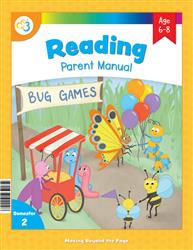
Students listen to an adult model reading (shared reading) and then try to read the same text aloud while pointing to words and sounding out letters and blends. Students preview the reader Bug Game Day (look at the cover and first pages) and then later finish reading it on their own and read it aloud to an adult, being encouraged to take their time and point to each word. Students are explicitly asked to read sight words and word lists aloud and the skills list states that students should read grade-level text orally with accuracy, appropriate rate, and expression on successive readings.
Lesson 17
Semester Review
Students are asked to read sight word cards aloud quickly (Activity 1.1) and to read words aloud during games such as Homophone Memory and Sight Word Sledding. Students are instructed to reread Reader #14 either independently or aloud to an adult and then complete a Word Hunt for plurals (Activity 2.2), and several activities (Build-a-Word, Fill in the Blank, What's the Word) require students to read the words and sentences aloud after completing tasks. The Wrapping Up and Life Application sections explicitly encourage students to reread favorite readers and read aloud to family members.
Unit 2: Semester 2
Lesson 1
Compound Words
Students read aloud in multiple activities: in Shared Reading they read the words on the right side while the adult reads the left and center, and they are asked to read the Child riddle aloud. Students are asked to read the paragraph in Activity 2.1 aloud and to read the book A Color of His Own aloud (with assistance) and answer comprehension questions. The lesson asks students to reread specific pages (Day 4: "Reread those pages in the book") and to practice reading theme word cards and color words aloud (Day 5: cover pictures and read words without picture clues).
Lesson 2
The Six Syllable Types
The Skills list explicitly includes "Read grade-level text orally with accuracy, appropriate rate, and expression on successive readings," and several activities require oral reading practice (shared reading where the child reads the right-side text aloud and rereading A Color of His Own). Students are instructed to read words and sentences aloud repeatedly (e.g., read words on theme cards, reread sight words, read and re-read words with images covered) and to pronounce syllables and combine them aloud. The shared-reading structure and repeated book reading give students multiple opportunities to read aloud with adult modeling nearby.
Lesson 3
Open and Closed Syllables
Students are asked to read the book Mouse Soup aloud (introductory section and the "Bees and the Mud" story) and to reread specific pages (e.g., reread page 14 and pages 17–19). Students switch roles so the child reads the story while the adult acts, and they are told to use a mouse voice when the mouse speaks, promoting expressive oral reading. Students repeatedly read words, sentences, and sight words aloud in multiple activities (e.g., read each divided word after syllable-splitting, read sentences aloud in the Tiger/Camel fill-in-the-blanks, and read sight words in Word Match or Word Path).
Lesson 4
Syllables with R-Controlled Vowels
Students read aloud in a Shared Reading activity where the parent and child alternate lines and the child is encouraged to point to words, letters, and blends. Students read two stories from Mouse Soup and answer comprehension questions, and they are asked in multiple activities to read words and short passages aloud (e.g., reading sight words, reading the quote on the Personification page, and saying words on laminated sheets). The skills list explicitly includes reading grade-level text orally with accuracy, appropriate rate, and expression on successive readings.
Lesson 5
Two-Syllable Words Ending in y
Students engage in Shared Reading where they read the words on the right side of the page while the adult reads the left and read center text together, pointing to words, letters, and blends as they read. Students read the book Mouse Soup across multiple days (including the story "The Thorn Bush"), locate words in the text, and are asked to write and pronounce two-syllable words that end in -y. Students are prompted to read words aloud in multiple activities (sorting words into Rabbit/Tiger columns and then reading each column aloud, reading sight words in games, reading labels and petals aloud, and completing sentence-fill activities orally).
Lesson 6
Possessives
Students are prompted to read aloud in multiple activities: Shared Reading (parent reads left, child reads right), reading Chapters 1 and 2 aloud, and reading the Theme Words paragraph out loud. The skills list explicitly includes reading grade-level text orally with accuracy, appropriate rate, and expression, and several activities (sight word reading, Word Hunt, reading words back from a timed list) require oral reading practice. Activities like acting out pretend-play events and having the child read sight words on index cards provide additional opportunities for expressive oral reading.
Lesson 7
Contractions
Students are asked to read aloud in Shared Reading (Activity 1.1) where the child reads the right-side text while the adult reads the left and they read center words together, and they are encouraged to point to words and letters as they read. Multiple activities require oral reading of contractions and sight words: students read sight word cards for "don't" and "it's," read contraction/expanded-form cards (Activity 2.1), and read all contractions on the Two Words to One page aloud (Activity 2.2). Students are directed to finish reading Penny and Her Marble and to locate and read specific contractions in the text (Finding Words in the Text), and Day 5 activities (Word Pyramid/Word Bracelets) prompt repeated oral reading of targeted words throughout the day.
Lesson 8
Two-Syllable Words with Silent e
The lesson's Skills list explicitly includes "Read grade-level text orally with accuracy, appropriate rate, and expression on successive readings." Activity 1.1 (Shared Reading) has the child read her lines aloud while pointing to words, and Activity 1.3 and 3.2 require students to read sight words and word lists aloud. Day 4 instructs the child to reread the story "Down the Hill" and then give an oral summary, and Activity 4.3 has the child read sentences aloud after highlighting two-syllable silent e words.
Lesson 9
Vowel Teams
The lesson's Skills list explicitly includes "Read grade-level text orally with accuracy, appropriate rate, and expression on successive readings," which directly references the standard. Students are asked to read aloud in Shared Reading (the Child riddle), read the Frog and Toad stories "The Corner" and "Ice Cream," and read word lists and sight words aloud during multiple activities. Activities such as the Word Path hop, sorting and reading word lists, and prompts to read lists when finished provide repeated opportunities for oral reading practice.
Lesson 10
Consonant Teams
Students are asked to read aloud in a Shared Reading activity where the parent reads the left-side text, the child reads the right-side text, and center text is read together, with encouragement to point to words and blends as they read. Students will read Frog and Toad All Year passages aloud and answer comprehension questions aloud after reading. Multiple activities ask students to read sight words, theme word lists (including reading the list again from the bottom), and to read sentences aloud after completing worksheets. The lesson's skills list explicitly includes reading grade-level text orally with accuracy, appropriate rate, and expression on successive readings.
Lesson 11
Consonant + le Syllables
The Skills list explicitly includes "Read grade-level text orally with accuracy, appropriate rate, and expression on successive readings." In Shared Reading, students read the words on the right side aloud while the adult reads the left, point to words and letter blends, and read words together. Students are asked to read pages 1–19 of Alexander and the Wind-Up Mouse aloud (with assistance for multisyllable words) and to read sight words and sorted consonant+le words aloud in multiple activities (Word Match, Word Swat, Turtle Word Sorting).
Lesson 12
Suffixes
The lesson's skills list explicitly states that students will "Read grade-level text orally with accuracy, appropriate rate, and expression on successive readings." In Activity 1.1 (Shared Reading) students read aloud their lines while a parent reads other lines and the child is encouraged to point to words, letters, and blends. Day 2 and other activities ask students to read theme and sight words, cover images and read them again, and to read passages (e.g., the Alexander passage) aloud to fill in blanks and underline target words, providing multiple opportunities to read the same words/text aloud.
Lesson 13
Prefixes
Students are asked to read poems on pages 2-14 aloud and to reread specific poems (Day 4) and to read along with nursery-rhyme recordings (Day 3). Multiple activities require oral reading: Shared Reading riddles, Word Path where students hop and read words aloud, reading sight words aloud, reading base words and newly formed prefixed words, and checking off found words in the text. The Skills list explicitly includes "Read grade-level text orally with accuracy, appropriate rate, and expression on successive readings."
Lesson 14
Words Starting with q or a
Students read aloud in a Shared Reading activity where the parent reads left-column words and the child reads right-column words, pointing to words and letters as she reads. Students are asked to read Part 2 of the Book of Poems and Verses aloud, choose a poem and read it aloud, and listen while a parent reads a poem aloud. Students are asked to read the story "The Quail" aloud and to memorize and perform a sung verse for the family, providing multiple opportunities for oral reading and performance.
Lesson 15
Semester Review
Students are asked to read grade-level books aloud across days (Day 2: read half of a chosen book aloud or take turns; Day 3 and Day 5: finish reading those books aloud). Several activities require oral reading and repeated practice (Roll and Read: have him read aloud the word he lands on; Speedy Sight Words: time how fast he can accurately read a pile of sight-word cards and repeat to beat his time). Phonics and decoding activities prompt oral production (Syllable Division: ask him to say each divided word; Two-Syllable Sound Review and sight-word games require students to read word lists aloud).
Final Project
Write Your Own Story
Students read through sight word cards and theme word lists and are prompted to read words from saved Word Collection pages and the Interactive Binder. Students are directed to use readers from Semester 1 as models and to review any words they have struggled with. At the end of the project, students read their self-authored book aloud to the family.