


Second Grade - ELA
1: Community

Unit 1: Communities Around the World
Lesson 1
Exploring a Community
Students read and listen to a story about city and country mice (Activity 2) and discuss differences, showing use of a text as a source of information. Students complete written tasks: they label community buildings and write sentences about why each building is important (Activity 1), make lists of advantages for rural vs. urban living and write three sentences about where they would rather live (Activity 3), and create a labeled two- and three-dimensional map of a community including measuring distances (Activities 4, 5, 6). Students cut, fold, and glue nets to build 3D shapes and then use those shapes as labeled buildings on a community map, producing a tangible multi-step project.
Lesson 2
Roles of People in Communities
Students are asked in Activity 3 to look through books or on the Internet to find communities in other parts of the world and to identify jobs shown in pictures, which requires gathering information from multiple sources. In Activity 4 students are directed to read about a chosen worker in an encyclopedia or on the Internet and then write a paragraph about being that worker, with options to dictate to an adult or write independently. Option 2 and Activity 1 ask students to write sentences about community workers, practicing composing written descriptions tied to researched or observed roles.
Lesson 3
Goods and Services
Students read If You Give a Pig a Pancake and decide for each situation whether it represents a good or a service, recording examples on a two-column chart. Students complete a writing organizer and write their own 'If You Give a ___ a ___' story, sequencing two goods and one service and illustrating a cover. Students search the home to name goods and state where they were bought, and they record answers on activity pages for goods and for simple market math problems.
Lesson 4
Wants and Needs
Students are asked in Activity 4 to look at pictures of other countries in books or on the Internet and discuss similarities and differences, which involves gathering information from external sources. Option 2 of the "Meeting Needs" activity asks students to use a bubble map to organize examples (e.g., refrigerator, grocery store, garden) showing where needs are met, demonstrating information organization. The "My Wants and Needs" page asks students to list and prioritize five wants and five needs, requiring students to record and order their findings. Activity 2 has students collect pictures from catalogs and magazines to sort into "Wants" and "Needs," which has them gather and categorize information from printed sources.
Lesson 7
Work and Money
In Activity 2 students make predictions about whether tasks will take longer or shorter with two people and record those predictions on a datasheet. Students time themselves performing tasks alone and then with another person, recording the Time Alone and Time Together on the datasheet and marking the actual shortest times. The lesson's skills explicitly list conducting simple experiments, collecting and recording information, drawing conclusions, and communicating findings, which align with recording science observations.
Lesson 8
Customs and Holidays
Students create a "Holiday Book" by writing holiday names, dates, and sentences about why each holiday is celebrated and how their family observes it, then cut out and staple pages to make a book and list themselves as author. Activity 4 explicitly instructs students to locate countries on a world map, color and label the country, write the holiday and date beneath the country, and "read more about these holidays on the Internet." The lesson prompts reading of texts (e.g., Bible or children's books) for religious holiday background and discussion with an adult about holiday significance and family practices.
Lesson 9
Different Communities
Students are asked to read about a chosen country in books or on the Internet and record information on the "Country Research" graphic organizer (Food, Goods, Homes, Clothing, Holidays). Students complete written tasks that require organizing and presenting information, including a Venn diagram comparing communities, a "Similarities and Differences" drawing/writing page, and an acrostic poem about the country. Students are prompted to write five questions for someone from the researched country and to describe what they learned, which requires composing written responses.
Lesson 10
Communities Change
Students read and discuss The Little House and answer guided questions about how the community changes over time. Students write a sentence beneath each season illustration on the Changing Seasons Wheel, recording observations about the community in each season. Students list or draw natural and human resources found in the book and sort/cut-and-glue pictures into appropriate community types in the "A Growing Community" activity. The Life Application invites students to look for historical and current pictures of their community online or in a local museum, which prompts additional information-gathering.
Lesson 11
Government and the People
Students collect votes from family members, draw tally marks, and total results on the "Voting" activity page, showing shared data-gathering and recording. Students solve addition and comparison problems about votes on the "Adding Votes" pages, using manipulatives to represent and record vote counts. Students write leader titles and names on the "Government Flowchart" and write sentences and draw pictures about services on "The Government Helps Citizens" pages, producing a poster-style display of information.
Lesson 12
Rules and Laws
Students are asked to write examples of rules and laws (Option 2 asks students to write three rules and three laws). The materials explicitly suggest that an adult can help the child "research laws in your community or state," providing an instance of guided research. Students complete written activity pages: labeling items as rule/law, writing the most important rule and law, and composing consequences for situations, which require short written responses.
Final Project
Community Brochure
Students are instructed to look over examples of brochures and use a "Community Brochure Organizer" to record ideas, which requires gathering information and organizing it for a written product. Students are asked to locate pictures online or visit community buildings, collect vocabulary, and record sentences for each brochure section, then create the final brochure. Students are prompted to share the finished brochure with family and friends and to make copies to send to others.

Unit 2: Citizenship
Lesson 1
A Good Citizen
Students dictate ideas while an adult records them (Activity 4), providing explicit shared writing practice. Students collect daily evidence of behavior with star stickers, write a short sentence describing each instance, and then glue stickers onto a Citizenship Graph to record and interpret observations (Activity 7). Students plan and carry out a community action, take a photo of the activity, and write about the experience on the "Community Citizen" page, engaging in a small research/action project with a written report (Activity 8).
Lesson 3
Diversity in the Community
Students are asked to read about a country on the Internet or in books and to watch videos and atlas pages to learn about people from different continents (Activity 3, Activity 4). Students generate five interview questions, practice writing question marks, conduct or participate in an interview (with an adult taking notes or recording), and then write short answers for each question (Activity 4). The Skills list explicitly includes "Use text to locate important information (LA)."
Lesson 5
Citizens Share and Help
Students record and write a plan on the "A Helping Hand" page by circling where they will help, writing what they plan to do, listing who will help, and describing what each person will do. Students complete the "Citizens Sharing" activity by illustrating examples of sharing for resources, time, and money and explaining their drawings. Students are asked to ask one to three people to help and to divide tasks or amounts (e.g., deciding how many seeds each person plants or how much money each person raises), which involves collaborative planning and writing down roles.
Lesson 6
Leaders in the Community
Students read a biography with an adult (Activity 1) and listen to a second reading, which provides shared reading support. Students create a short written biography by filling templates or writing their own sentences (Activity 3) and write a paragraph about a leader they know (Activity 4). The Skills section also notes that students 'Read a variety of different texts,' indicating practice with multiple text types.
Lesson 7
Inventors
Students read a short biography with an adult (Activity 3) and answer guided questions about the inventor and the invention. Students conduct an Invention Scavenger Hunt (Activity 2) in which they find five inventions, draw them, name them, describe how their family uses each, identify important parts, and write a paragraph about their favorite invention. Students write sentences about how famous inventions helped the community (Activity 1) and practice composing complete sentences and identifying subject and predicate.

Unit 3: Plants and Animals
Lesson 1
Living and Nonliving
Students record observations in the Living Things Scavenger Hunt by listing objects, answering questions about change, movement, growth, and needs, and deciding if each is living or nonliving. Students draw and write descriptive words for selected items on the Describing Attributes pages and share those descriptions with family members for guessing. Students participate in shared writing when they dictate an imaginative story about a magic stone and an adult records it, and the skills list explicitly includes "Write or participate in writing using an author's model" and composing products using a writing process.
Lesson 2
Animal Structure
Students are asked to locate pictures of animals in books or online and discuss their body coverings, and to write the four body coverings from a word box on the "Body Coverings" sheet. Students cut out animal names/pictures and paste them on a "Coverings Graph," with an advanced option to record a title and label axes and then answer comparative questions about counts. An extension invites students to create a touch-and-feel book, choosing materials and assembling pages that show animals and similar textures.
Lesson 3
Classifying Animals
Students are asked to look on the Internet or in books/encyclopedias to decide whether animals are reptiles or amphibians (Activity 3) and to peruse different books on a wide variety of animals to classify them and describe body coverings (Activity 6). Students record traits and make decisions on the provided chart "A Closer Look at Mammals" and in Activity 5 they draw an animal, label body parts and record whether it is warm- or cold-blooded and its group. Students write a paragraph pretending to be an animal (Activity 9) using either a scaffolded or independent format.
Lesson 4
Animal and Plant Communities
Students are asked to write names and draw pictures of animals observed on a trip to the zoo, aquarium, or museum, which has them record real-world observations. In Activity 2 students count animals in a rainforest picture, write animal types on the x-axis, number the y-axis, and create a titled bar graph, practicing collecting and displaying data. Several activities instruct students to record animal names, classify them (bird, amphibian, mammal, reptile, fish), and list animals in order by measurements, all involving writing and organizing information. Activity 3 directs students to read about forests in books or on the Internet if they need help finding animals, introducing use of external sources for information.
Lesson 5
Animal Needs
Activity 2 instructs the student to select an animal and "help him to locate information about the animal," then draw the animal in its habitat and write the animal's name, habitat, and how its food, water, and shelter needs are met. Activity 4 asks the student to "write a description of the animal" for a zoo label using fill-in-the-blank sentences, providing a guided writing product. Activity 1 asks the student to write a sentence describing how the community helps meet each need, and Activity 3 includes prompts for students to record details about a created animal (habitat, diet, shelter), which requires recording information in writing.
Lesson 6
Extinct and Endangered Species
Students are asked to "read different theories about why the dinosaurs disappeared," which has them read multiple informational texts on a single topic. Students dictate at least two lines for each dinosaur and have an adult "record her ideas in script form," showing shared writing. Students also read and rehearse the provided puppet-show script with help, and the lesson's skills list includes "Demonstrate familiarity with a variety of texts" and "Write using an author's model of language."
Lesson 7
Plants
Students plan and carry out a plant experiment (Activity 6) by planting seeds, placing them in different conditions, checking them daily for seven days, drawing predictions and results, and measuring roots and sprouts. Students record measurements of plant height and width on the "Measuring Plants" page (Activity 5) and are instructed to write and illustrate a story about a planted seed (Activity 7). The Skills list explicitly includes "Communicate explanations about investigations," and several activities ask students to record ideas and measurements beside images on student pages.
Lesson 8
The Role of Plants
Students create a nature journal by drawing or collecting leaves from at least six plants, record the plant names, and look on websites or in books to identify unfamiliar plants, which shows students recording science observations and using informational sources. Students explore their home and community to find plant products, draw or label them, and write a sentence about how each is used, which shows students investigating and writing about real-world plant information. Students write thank-you notes and sequence story events, providing additional practice composing written products.
Lesson 10
Life Cycles
Students are asked to find pictures in books or on the Internet of frogs, butterflies, and people and discuss each stage of the life cycle, which has them gather information from sources. In Activity 1 students write the name of the life cycle stages and number pictures in sequence (Option 1) or read stage labels and draw each stage (Option 2). Activity 3 has students compose a diamante poem about a chosen animal, using words from reading and allowing dictation to an adult. The instructions include collaborative elements (discussing with an adult and dictating words), showing shared research and shared writing practice.
Lesson 11
Community Members Depend on One Another
Students are directed to look up animals if unsure: the activity tells them they "can read about the animal in an encyclopedia or in the Internet." Students read about an animal's food sources in Activity 4 and then create a food chain that places themselves at the top. Students also label, draw, cut, and glue habitats and food chains in Activities 2 and 3, producing visual records of ecological relationships.
Final Project
Nature Guide or Habitat in a Box
Students choose a habitat and gather information and images from magazines or the Internet to create a Nature Guide or a Habitat Community in a Box. They fill out structured project pages with entries for three plants, multiple animals, a life cycle illustration, two food chains, and an endangered species, using a draft copy and producing a final written book or cards to paste in a box. Students record details (name, size, body covering, diet) on activity pages and assemble their findings into a physical report to present to others.
2: Matter and Movement

Unit 1: States of Matter
Lesson 1
What Is the World Made Of?
Students read and listen to a nonfiction book about matter and discuss questions about states of matter (Activity 1). Students identify, label, cut, draw, and sort examples of solids, liquids, and gases on activity sheets (Activity 2 and Option 2). Students perform hands-on investigations (balloons and freezing) and are encouraged to write a sentence describing each balloon, and the wrapping up section asks students to perform experiments and observe water changing states.
Lesson 2
Solids
Students record observations and descriptions in Activity 3 by listing solids and writing sensory words and then composing sentences about two solids. In Activity 6 students draw containers, identify and label the contents as solid/liquid/gas, and explain how they know. In Activity 5 and the Measuring Solids pages students measure objects with a ruler and write down length and width; in Dividing Solids students record the number of pieces and represent fractions. Activity 8 asks students to write spelling words three times and use each in a sentence.
Lesson 3
Liquids
Students read pages 12-13 of a science book with an adult and are asked to describe and review properties of liquids, showing shared reading. Students use the "Investigating Liquids" sheet to record descriptive words or phrases using each of the five senses for three liquids, and they record predictions and results for dissolving, measuring (tablespoons/teaspoons), and weighing liquids on provided charts. Students write sentences about how they use liquids, label nouns and verbs, and complete the "Liquids Everywhere" drawing and sentence activity.
Lesson 4
Bartholomew and the Oobleck
Students mix cornstarch and water (Activity 4), explore the mixture, and are asked to write three sentences that describe the oobleck, which constitutes recording science observations. Students are prompted to experiment with different proportions and judge which mixtures behave more like solids or liquids, providing additional observation and comparison tasks. Students also practice writing by composing a new ending (Activity 5) and completing a Story Quilt organizer that summarizes characters, events, problem, and solution.
Lesson 5
Comparing Matter
Students label pictures and draw molecule arrangements to identify solids, liquids, and gases (Activity 1). Students count clusters of dots representing molecules and record the numeral and number word for each item (Activity 4). Students write sentences using adjectives to describe drawn nouns, including a prompt to draw and label one liquid and one solid and write two adjectives for each (Activity 3).
Lesson 6
Changes in States of Matter
Students measure and record data from experiments (Activity 3: timing melts; Activity 6: measuring height and weight of ice and water) and enter those results on provided activity pages. Students organize and display data by creating a bar graph of melting times (Activity 4) and answer follow-up questions about their observations. Students write sentences describing state changes (Activities 1 and 7), label states of matter, and use vocabulary in speech and writing.
Lesson 7
Exploring Solids and Liquids
Students read the book What's the Matter in Mr. Whiskers' Room and write three sentences describing events, showing engagement in writing about a topic. Students plan and conduct simple investigations (listed in Skills) and follow experiment pages where they record a hypothesis and observations (Dancing Raisins page). Students are prompted to predict and record results for dissolving and sink-or-float activities, documenting science observations.
Lesson 8
Our Bodies and Our World
Students conduct a hands-on investigation in Activity 2 (the coffee-filter absorption experiment) that involves observing how liquids pass through a filter while solids are held back. Skills list explicitly includes "Plan and conduct simple investigations" and "Compose a variety of products using the writing process," which students practice in Activity 5 by writing their own short story with specified references to solids, liquids, and gases. Students also read and respond to texts (Day 2 short story options) by circling or filling in states of matter, integrating reading with written responses.
Final Project
States of Matter
Students search for pictures in magazines, catalogs, newspapers, or from the Internet to create two collages labeled "Solid" and "Liquid." Students write the name of the material for each solid, mark natural or human-made, and write three adjectives beneath each solid; for liquids they write a sentence beneath each picture about its use. Students are prompted to locate information from previous activities to correct answers on the States of Matter test.

Unit 2: Earth
Lesson 1
Our Planet Earth
Students read You're Aboard Spaceship Earth and are asked to locate examples of living things and examples of solids, liquids, and gases (Activity 3), then write three sentences that tell someone else what the book is about. Students use information from that book to write a letter to an alien and may add drawings and diagrams of Earth materials and processes (Activity 4). Students also produce written work about Earth in the acrostic poem activity (Activity 5).
Lesson 3
Digging Into Dirt
Students make and record science observations in Activity 7 (Experimenting with Soil) where they write predictions, plant seeds in three soil types, observe roots/stems/leaves after 5–7 days, and record actual results on the provided page. In Activity 5 (Who Did It?) students analyze soil samples, choose which site matches the shoe, dig for the coin, and write two or three sentences explaining how they solved the case. Activity 8 asks students to write four complete sentences about ways the Earth is important and to illustrate one sentence, and Activities 3 and 4 require students to draw and label soil layers and places where soils are found.
Lesson 4
From the Earth
Students read multiple informational web pages about natural resources (Precious Gems, Granite, Oil, Natural Gas) and are instructed to record in a journal where each resource is found and how it is used. Students cut resource words, put them in alphabetical order, color resources found in their state, and write descriptions of how people use each resource. Students label pictures, write what natural resources make each item, and write sentences identifying non-matter with attention to capitalization, punctuation, and nouns.
Lesson 5
Rocks
Students record science observations and changes by drawing the sugar-cube erosion experiment (Activity 3). Students collect real rocks and record examples of items made from glass, metal, and concrete on the "Rocks All Around" chart and write a sentence about five chosen items (Activity 4). Students participate in shared reading of Everybody Needs a Rock, arrange the book's rules and may write summary sentences for each rule (Activities 6–7). Students dictate and/or copy a short story about their found rock, naming it and describing its imagined past and uses (Activity 9).
Lesson 6
Water, Water Everywhere
Students are asked to read pages from You're Aboard Spaceship Earth and are prompted to look up unfamiliar plants or animals online to get more information. Students write short sentences in several activities (e.g., comparing freshwater and ocean, listing uses of water) and are asked to write a short paragraph describing a newly imagined ocean creature including where it is found, what it eats, and its features. Students collect and represent data by completing and labeling a bar graph in "What a Catch!" and observe outcomes in experiments (making waves and watching objects move) that can be recorded.
Lesson 7
Taking Care of the Earth
Students make and record predictions and observations in the water pollution experiment (Activity 6) where they are asked to "record her answer," "record her prediction," and "describe what she observes." Students write explanatory text in several places, including writing two or three sentences about why recycling is important (Activity 4) and composing a poster or a free-verse poem about taking care of the Earth (Activity 8). Students read directions aloud and follow step-by-step procedures when making recycled paper (Activity 3), demonstrating they produce written and experimental products.
Final Project
Earth Exhibit
Students reread You're Aboard Spaceship Earth and review completed unit activity pages as background information. Students visit a museum to observe exhibit design and gather ideas for presenting information. Students plan and write exhibit materials: they name solids, liquids, and a gas, write where each is found and why it is important, and write description and directions on cards that they display for an audience.
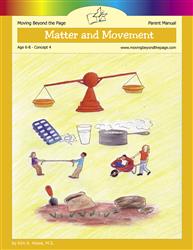
Unit 3: Balance and Motion
Lesson 1
What Is Balance?
Students weigh items and record measurements in multiple activities (Activity 3: record different amounts used to balance the scale; Activity 4: record different combinations to balance given gram weights; Activity 5 and Day 2 Activity 6: total and record weights on each side). Students write short explanatory text (write two or three sentences describing the main idea after reading the book) and compose step-by-step directions for using a balance (Activity 9) and have another person try to follow them.
Lesson 2
What Can Be Balanced?
In Activity 4 students are asked to "share and read about other examples of how nature balances or how it has become unbalanced" and to "look for examples on the Internet," then to "write a paragraph about one example that you read about." The Balanced Diet extension asks students to "keep track of what he eats for a day and determine if he is eating a balanced diet," which requires recording observations. These directions require students to gather information from external sources and produce written work based on that information.
Lesson 3
Symmetry
Activity 3 asks students to create a symmetrical picture and then write three sentences about the picture, which requires students to produce a short written response. Activities 1, 2, and 4 require students to decide whether figures have horizontal/vertical/both/none and to draw lines of symmetry, which has students record answers and produce completed work pages.
Lesson 4
Force and Motion
Students read the nonfiction book Move It! and answer comprehension questions, use the table of contents, and read pages aloud. Students conduct hands-on investigations (Push It experiment, Who Can Throw the Farthest, Building a Track) in which they form hypotheses, measure distances, and record results. Students record observations on a neighborhood walk, circle examples of pushes and pulls, draw examples, and write sentences and a short paragraph describing motion in their pictures.
Lesson 5
Gravity
Students read and/or listen to books about forces and gravity (Move It! and Forces Make Things Move) and answer a True/False activity about force concepts. Students carry out hands-on investigations and demonstrations (table/paper, the kit investigation, and constructing a center-of-gravity mobile) that require observation and manipulation. Students write a short paragraph (three to four sentences) imagining life without gravity and draw a supporting picture.
Lesson 6
Friction
Students are asked to read pages in two different books (Move It and Forces Make Things Move) about friction and to help conduct investigations described in those books. Students set up and perform a friction experiment, measure how far a toy car travels on different surfaces, compare results, and discuss conclusions. Student activity pages provide spaces for recording the order of skaters on different surfaces and include a "Science Sentences" page where students select verb forms and identify singular/plural nouns.
Final Project
A Wordless Skit
The lesson tells the child to "reread the books on balance and motion to gather ideas," which asks students to consult texts on a single topic. Students fill out a "Balance and Motion Skit" graphic organizer that records actions and props for Balance, Push, Pull, Gravity, and Friction. The lesson also asks students to create invitations and a program and to record ideas on the student activity pages, which involve planning and written recording of their skit ideas.
3: Culture
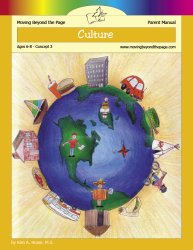
Unit 1: Geography
Lesson 1
Using Maps and Globes
Students read The Armadillo from Amarillo and are directed to consult an encyclopedia or Internet source about armadillos, providing multiple sources for information. Students use those sources to locate city names and chart the Armadillo's journey on a map and to measure distances with a map scale. Students produce written work by filling in the "Where in the World Am I?" pages and by writing a paragraph pretending to take a trip to a Texas location, and they draw and label a map of their state.
Lesson 2
Cardinal Directions
Students are asked to write a pirate journal entry in Activity 5 and must include all four cardinal directions; the instructions allow the child to dictate while an adult records, which indicates a shared writing process. In Activity 4 students draw and label places on a treasure map and answer four direction-based questions, producing a written/map product. The Skills section explicitly lists composing products using the writing process and selecting/using new vocabulary in speech and writing.
Lesson 3
Landforms and Bodies of Water
Students are asked to read about rivers, lakes, mountains, valleys, and islands in The Usborne Children's Picture Atlas and to look at pictures or books or search the Internet, showing they gather information from multiple sources. Students create two posters and write sentences about how people are affected by landforms and bodies of water, and they are asked to write a paragraph advising someone which body of water to live near. Students model landforms with clay and draw/picture activities, recording observations and representations of physical features.
Lesson 4
Natural Resources
Students are asked to select a natural resource and use the "Researching Resources" sheet to record information, where an adult helps locate books or Internet sources and reads the information aloud. Students answer guided questions on the sheet (Where is it found in the U.S.? How is it made? Describe a job related to the resource; How is the resource used?) and illustrate the resource and its products. Students create a U.S. resource map by placing materials in correct locations and making a map key, which requires gathering information and producing a physical product.
Lesson 5
Habitats and Geography
Students read about habitats in The Usborne Children's Picture Atlas (pages 14–21) and are directed to read additional information in an encyclopedia or on the Internet about specific animals or plants. Students label habitat diagrams, cut/glue illustrations, draw animals/plants in habitats, and write a sentence beneath each box about how the organism is used by people. The skills list and activities explicitly ask students to "record or dictate knowledge on topics," and Activity 3 asks students to read information about a local animal and write a poem using that information.
Lesson 6
Geography, Weather and Natural Disasters
In Activity 3 students write a question for each natural disaster, then read about each disaster with adult help to find answers. Students cut apart pictures and paste them on a poster and write three or four sentences describing each disaster, then identify the subject and verb in each sentence. In Activity 5 students read a weather forecast and write three or four sentences describing today's weather and related activities.
Lesson 8
People Change Geography
Activity 2 directs students to find household items, look on the Internet or in books for pictures and descriptions of farms that cultivate the resources, and write a sentence about each crop/farm. The Farming student activity page provides lines for students to record the natural resources and the farm source for a canned food, a boxed food, and an article of clothing. Several activities prompt students to observe local land use (walk/drive around the neighborhood) and discuss changes people make to the land.
Final Project
Geography of a Continent
Students are asked to use Discover the Seven Continents as a first source and then "look for additional information in other books and on the Internet," which requires reading multiple sources on a single topic. Students complete the provided research page "About the Continent of ____" by reviewing books and online sources to find facts (e.g., bordering oceans, major landforms, natural resources) and then record those facts. Students then produce a final product (a poster or an oral presentation with props and a costume) that communicates the gathered information to an audience.

Unit 2: People Around the World
Lesson 1
Exploring Culture
Students read about culture on pp. 10–13 of The Usborne Children's Picture Atlas and answer guided questions (Activity 1). Students conduct an interview with a community member from a different cultural background, take notes or record the interview, and fill in answers on the Interview sheet (Activity 4). Students illustrate and write examples of cultural elements for their own community on the "Looking at My Culture" page (Activity 3).
Lesson 2
Traditions
Students are asked to read about Christmas celebrations of at least three or four countries from the book Christmas Around the World and to locate each country on a world map, which involves guided informational reading and shared work with an adult. Students draw holiday symbols and write sentences about why each holiday is important (Holidays sheet, Chinese New Year Dish, Celebrating Christmas). Students produce written comparisons (a Venn diagram) and a short composition about their favorite holiday, and they complete several worksheets that require recording information and responses.
Lesson 3
Different Religions
The materials ask caregivers and students to "explore books and websites that present the different religions," which directs students to consult external informational sources. Activity 2 has students take collected community-religion data and create a bar graph, recording and representing information. Activity 4 asks students to write and illustrate their family's beliefs, producing a written product related to the topic.
Lesson 4
Homes and Culture
Students are asked to write a paragraph about a family tradition and draw the event (Activity 1), which practices composing a written product. Students are instructed to write the names of rooms and describe the purpose of each as they plan and build a house (Activity 4), which requires recording information in writing. Students are asked to record materials of homes during a community walk and optionally make a tally chart and graph, which practices collecting and recording observational data (Activity 5).
Lesson 5
Transportation in Culture
Students read pages in The Usborne Children's Picture Atlas and are asked to use that text to discuss transportation. Students are prompted to "read more about the job in a book or on the Internet" (Activity 3) and to write about a time they used a form of transportation and to complete a "My Day as a ___" writing template. Students also draw and label resources carried by different vehicles (Activity 4) and use the atlas to identify places.
Lesson 6
American Culture
Students are prompted to find pictures of American symbols in an encyclopedia or on the Internet and to color, draw, and write a sentence describing a personal symbol. Students read brief descriptions on the "Leaders in America" page, cut out cards, match leaders to contributions, and glue the pairs onto a titled "American Leaders" poster. Students write and illustrate cultural information inside a U.S. outline, write a letter to a child from another country, and conduct a "culture hunt" where they draw or photograph observations.
Lesson 7
History of America
Students read and use multiple sources about early America (The Usborne Children's Picture Atlas, the book Three Young Pilgrims, the atlas timeline, and an online map) and are asked to locate places, read informational pages about Indians, and discuss explorers. Students create written artifacts: they make lists of wants and needs, record food groups and circle foods from The First Thanksgiving Foods sheet, and write three ways American culture has changed on a Venn-diagram activity page. Students also produce a Venn diagram comparing their life to a Pilgrim child's and answer comprehension questions after reading nonfiction and narrative texts.
Lesson 8
Asian Culture
Students are instructed to read the book Explore Asia and to complete a multi-page "Guidebook to Asia" (Activity 2) as they learn, writing about each topic and drawing pictures to illustrate information. The lesson tells students they may use additional resources (other books, an encyclopedia, or the Internet) to complete guidebook pages and to talk with people from the continents. Students record factual information on topic-specific pages (e.g., "The Giant Panda" sheet) and write a paragraph about living in Asia and three tips to help a child from Asia adapt to America (Activity 8).
Lesson 9
African Culture
Students read the book Africa Is Not a Country together and identify nations discussed on their Map of Africa, linking text to the map. In Activity 5 students use information from the book to fill in a "Guidebook to Africa" and are allowed to look for additional information on the Internet or in an encyclopedia. In Activity 3 students record or draw foods from the book, research a recipe online or at the store, prepare the food, and record family members' votes. In Activities 4 and 6 students write or draw comparisons (Venn diagram) and list materials, rules, and strategies for games, producing written artifacts.
Lesson 10
South American Culture
Students are asked to read Explore South America and use web links to find additional information (Activity 1, Activity 6). Students select a South American animal, help find information, fill in the "A South American Animal" information sheet, draw the animal and read their description to family (Activity 6). Students are directed to complete a "Guidebook to South America" using information learned from books and additional sources and to draw an outline of the continent (Activity 7).

Unit 3: Stories Around the World
Lesson 1
Fiction or Nonfiction
Students look through fifteen to twenty books to determine whether each book is fiction or nonfiction (Activity 1), and they read two fiction storybooks and write each book's title, author, and a one-sentence description (Activity 2). Students also create book covers and decide fiction vs. nonfiction for pictured titles (Activity 3), and arrange books by authors' last-name letters, including a suggested library visit to view shelf organization (Activity 5).
Lesson 3
Story Setting
Activity 1 asks students to look through ten to twelve books, identify and describe each book's setting, sort the books into categories (Imaginary, Real inside, Real outside, Past), and record the counts on a graph. The Skills list includes "Gather information from pictures, print, and people," and Activity 4 has students listen to a book, draw and label a setting based on textual details. Activity 3 has students read multiple culturally diverse picture books and discuss how setting reflects culture, using specific examples from text and illustrations.
Lesson 4
Plot
Students dictate a story while an adult records it and then read it back to revise and perform, which is explicit shared writing (Activity 5). Students estimate, measure with a ruler, and record those measurements for the duckling and swan (Activity 4), which is recording observations. Students fill in plot charts and reuse the "Writing Events in a Story" chart over multiple days, practicing organized documentation of story information.
Lesson 5
Folktales and Fairy Tales
Students read multiple folktales (Why Mosquitoes Buzz in People's Ears, Yeh-Shen, and The Egyptian Cinderella) and answer guided comprehension questions about characters, setting, and events. Students complete activity sheets that ask them to record details (e.g., who the characters are, magical animals, how animals help people) and fill two "Folktales and Culture" charts comparing food, homes, clothing, traditions, landforms, and animals across stories. Students are instructed to record ideas as they reread the stories, arranging events in sequence and classifying animals, which requires collecting and noting information from texts.
Lesson 6
Cinderella Stories Around the World
Students read multiple Cinderella versions (Yeh-Shen, The Egyptian Cinderella, and The Irish Cinderlad) and locate the origin countries on a world map. Students complete the Cinderella Elements Chart and the Folktales and Culture sheet, recording story elements and cultural details for each book. Students write similarities and differences in a Venn diagram and answer guided comprehension questions about characters, setting, and cultural information.
Lesson 7
Theme
Activity 4 asks students to make up a story, dictate it while an adult records it, read it aloud, revise it, and share it with the family. Activity 5 directs students to read information about the animal(s) they selected for their story and then update the story to integrate facts learned. The lesson provides a web link to an online story resource, supporting students in accessing external information about animals.
Lesson 9
Poetry
Students read multiple poems from A Child's Calendar (Activity 1) and reread six selected month-poems to answer guided questions about activities, homes, clothing, and landscapes (Activity 2). Students record examples from text and pictures on the provided "Life in America" charts, writing or drawing evidence they find. Students also compose their own month poem (Activity 3) and analyze lines for words and syllables (Activity 5), producing written products based on their reading.
Final Project
A New Cinderella
Students plan, draft, revise, and produce a final Cinderella story using the provided outline and a two-copy draft/final process, including writing text and adding illustrations. Students are asked to read the example Cinderella story and to reread multiple Cinderella stories (including their own) and compare and contrast their version to the others. An adult may record dictated sentences and support spelling and sentence structure, and students are encouraged to read their finished book aloud to family and friends.
4: Relationships
Unit 1: Living Things and Their Environment
Lesson 1
Relationships Among Organisms
Students watch two instructional videos and complete an "Inheritance Vocabulary" page that requires reading/listening to sources for definitions. Students cut and match parent and offspring pictures and identify shared and differing traits, then record trait data by listing family members and filling in a "Shared Traits" chart. Students categorize characteristics as inherited or learned on a worksheet and circle matching plants or the odd sibling in pictured groups, demonstrating observation and data recording.
Lesson 2
Heredity Lab
Students assemble and color Generation 1–3 creatures and fill in the "Generations of Species" activity page, recording traits visually and naming the species. Students select parent traits to create offspring and color those offspring on the activity page, which documents parent-offspring trait choices. Students write spelling words (trait, offspring, species, parent) three times in a Spelling Journal and use each word orally in a sentence. The lesson's listed skills explicitly include "Record and organize data using pictures, numbers, and words" and "Communicate observations... using student-generated data."
Lesson 3
Sun, Moon, and Stars
Students read the book Does the Sun Sleep? aloud and view linked videos and websites (e.g., habitat pages and star videos) to gather information. They record and represent findings by shading a world temperature map, drawing three hot and three cold habitat organisms from web resources, labeling and describing temperatures/types of three stars, and creating labeled moon-phase drawings. Students also simulate day/night and note observations from that demonstration.
Lesson 4
Seasons and Living Things
Students read Sunshine Makes the Seasons together with an adult (taking turns or listening), and they listen to Bear Snores On and several informational videos, providing multiple sources on the topic. Students build and use an orange-and-flashlight seasons simulation and label a 'Seasons on Earth' diagram, practicing observation of patterns. Students are instructed to make a bird feeder and record how many birds they see feeding in summer and winter, which asks them to record science observations over time.
Lesson 5
Rivers
Students read the book Life Cycles: River and answer comprehension questions, use a video and text features to locate facts, and label freshwater sources. They identify and record producers and consumers on a chart, classify river animals by category, and draw and write four simple sentences describing stages of an animal's life cycle in their own words. Students also create a picture dictionary and write spelling words, which involves writing vocabulary tied to the river topic.
Final Project
Investigating the Environment
Students select a local habitat, spend at least an hour observing it, take photographs, and write questions and notes in a journal. Students plan two investigations, decide on data collection methods (tally, graph, measurements), and then carry out those investigations to collect data. Students research one plant or animal they observed, create a food chain and a life-cycle diagram with written descriptions, and list traits for parent and offspring. Students organize their pictures and pages and share their completed project and explanations with family.
Unit 2: The Miraculous Journey of Edward Tulane
Lesson 3
The Queen Mary
Students are directed to explore three different Queen Mary resources (a PDF, a video, and a kid-friendly facts page) and to fill in a "Queen Mary Research" sheet with specific questions. The instructions tell the adult to read aloud as needed and to point out text features such as bold titles to help students locate information efficiently. The Skills list explicitly includes "Participate in shared research and writing projects," connecting the activity to the standard.
Lesson 5
Emotions
Students listen to Chapters 10–12 read aloud and answer comprehension questions, engaging in shared reading and discussion about Edward's relationships. Students discuss quoted passages together to infer Edward's feelings, participating in collaborative talk about text-based ideas. Students compose a 'Goodbye Note' as Edward and are explicitly invited to dictate the note to an adult while the adult writes it, which constitutes a shared writing activity.
Final Project
Chalkboard Presentation
Students create a digital opinion presentation about The Miraculous Journey of Edward Tulane using Emaze (or Google Slides/PowerPoint), selecting images and typing or dictating title and opinion sentences for slides. Students select and add a slide for their favorite part and favorite relationship, dictate sentences explaining their choices, and arrange images and text. Students record a favorite paragraph aloud and practice and give an oral presentation of their slides to family.
Unit 3: Connecting with the Past
Lesson 1
Studying History
Students are instructed to create a timeline of important events in American history as an ongoing final project, cutting and assembling the "Timeline of American History" pages and filling in events and years. Students will make a "Timeline of Your Life," labeling and illustrating events for each year they have lived. Students will also create a book of famous Americans and famous landmarks and symbols as they work through the unit. Students complete activities that identify and classify primary and secondary sources and watch instructional videos about how to make timelines.
Lesson 2
Colonization and the Revolution
Students read multiple texts and watch videos on the single topic of Colonization and the Revolution (read-aloud of Your Life as a Settler in Colonial America, selected pages from O, Say Can You See?, and several linked videos). Students gather information and produce written artifacts: they add dated labels to an ongoing timeline, complete a "Famous Americans" page for George Washington, and fill out the "Colonists and the American Revolution" page with written responses and a drawing.
Lesson 3
Slavery and the Civil War
Students read assigned book pages and watch multiple videos about slavery, Henry Box Brown, Harriet Tubman, and Abraham Lincoln. Students identify and record dates, pictures, and descriptions on a timeline and complete pages in a "Famous Americans" book for Tubman and Lincoln. Students list five character traits for Henry with evidence from the book, assemble a cube model, and complete a "Slavery and the Civil War" page by drawing and finishing a sentence about consequences of the war.
Lesson 4
Immigration
Students read and listen to multiple sources about immigration (pages from Ellis Island, O, Say Can You See?, National Monuments pages, and recorded oral histories) and answer comprehension questions. Students investigate primary sources by selecting photos, imagining and retelling immigrant stories, and add entries to a timeline. Students complete a "Connecting with the Past" page that asks them to draw and write about how immigration has impacted the country and keep these pages for a final project.
Lesson 5
Civil Rights
Students read The Story of Ruby Bridges and view linked photos and videos about the Civil Rights Movement (Dr. Martin Luther King, Jr., and Rosa Parks). Students complete timeline work by affixing dates, descriptions, and images, fill out "Famous Americans" pages for Rosa Parks and Martin Luther King, Jr., and complete a "Civil Rights" page that asks them to draw and write about impacts. The materials instruct students to save the Civil Rights page for use in a final project.
6: Reading

Unit 1: Semester 1
Lesson 11
Final e: ce, ve, ze, se
Students participate in shared reading (Activity 1.1 and Day 5) where they preview and read Aesop's Fables together and answer comprehension questions. Students write and read target words aloud (Activities 1.2, 2.1, 3.1) and record words by gluing sorted words into a Word Collection folder. Students complete written tasks such as the "Choose the Correct Spelling" page and sight-word sentences, demonstrating collaborative reading-to-writing practice.
Unit 2: Semester 2
Lesson 5
Two-Syllable Words Ending in y
Students work with a parent in shared reading (Activity 1.1) and are directed to locate and record specific information from the book: Activity 4.1 asks students to identify the ingredient added after each story by referring to the book (pages cited) and write those ingredients on the "Mouse Soup Recipe" page. Activity 4.1 then has students plan and write their own soup by listing ingredients from four favorite stories, producing a written product that synthesizes information from multiple texts. Activity 4.2 has students search the text to find and record words, demonstrating text-based information gathering.
Lesson 6
Possessives
Students engage in shared reading of Penny and Her Marble with a parent, alternating lines and pointing to words. Students record observations and ideas about the marble by writing as many words and phrases as they can (Activity 3.1). Students search Chapter 1 to find specified words and write page numbers, and they copy theme words onto index cards to note real-world neighborhood observations (Activities 4.2 and 5.1).
Lesson 9
Vowel Teams
Students use an online weather site to examine forecasts and pick words from the theme list that apply to specific forecast days (Activity 2.1). Over five days students record one or more weather words on a Weather Conditions chart, writing daily observations about the sky (Activity 5.1). Students also locate and write words from Frog and Toad pages and complete short written tasks (Finding Words in the Text; Just Around the Corner), practicing recording information from texts.
Final Project
Write Your Own Story
Students read readers from Semester 1 for inspiration and read sight word cards and theme word lists (Activities 1.1–1.2). Students brainstorm and plan a story using the Story Idea page, identifying characters, setting, beginning/middle/end, and selecting specific theme and sight words to use (Activity 2.1 and Student Activity Page). Students draft six pages on notecards, revise with adult help (Activity 4.1), and produce a final written and illustrated booklet (Activities 2.2, 5.1–5.2).