


Second Grade - ELA
1: Community

Unit 1: Communities Around the World
Lesson 1
Exploring a Community
The lesson has students read (or listen to) "The City Mouse and the Country Mouse" and directs reading the story aloud at least twice. After reading, students are asked questions that require comparing the two mice (e.g., "How were the City Mouse and the Country Mouse different?", "Was it better living in the city? Why or why not?", "Would you rather live in the city or the country? Why?"). These tasks require students to identify and discuss differences in the characters' experiences and preferences.

Unit 3: Plants and Animals
Lesson 3
Classifying Animals
Students are asked to pretend to be an animal and write a paragraph describing what it would be like to live in its community (Activity 9), which requires adopting an animal's point of view. Students are asked to act out different animals and answer questions about being that animal (Activity 10), which involves speaking and responding from another being's perspective. Students also compare themselves to animals using Venn diagrams (Activity 8), which requires thinking about similarities and differences in perspectives and traits.
Lesson 6
Extinct and Endangered Species
Students are instructed to "practice her puppet show, creating unique voices for each animal," which has them read scripted dialogue aloud using different voices. The provided puppet show script contains distinct lines for Panda, Alligator, and Elephant that show different needs and responses, giving students characters with differing perspectives to perform. Activity 4 asks students to dictate at least two lines for each dinosaur and perform finger-puppet dialogue, requiring students to produce and speak distinct character voices.
Lesson 7
Plants
Students read "Jack and the Beanstalk," which includes dialogue and multiple pages of character speech, and answer questions about who the characters were and what happened. Students participate in a role-play activity ("A Tiny Seed") in which they physically act out the seed's experience and take on another perspective. Students are also asked to imagine and draw the view from the top of the beanstalk, encouraging imaginative viewpoint-taking.
Lesson 8
The Role of Plants
Students are asked to listen to and discuss The Giving Tree, identifying the two characters and answering questions about what the tree gave the boy and whether the boy was nice to the tree. In Activity 4, students are instructed to pretend they are the boy and write a thank-you letter to the tree (either guided or open-ended), which asks them to adopt the boy's perspective and express gratitude for specific items from the story.
Lesson 10
Life Cycles
Activity 2 asks students to role-play being a frog or butterfly, with prompts that have them imagine sensations, actions, and emotions (e.g., "You are inside an egg... Hatch out of your egg..."). The lesson states role-play helps the child "learn to express feelings and emotions and can help her understand foreign situations," which has students take on an animal's perspective. Activity 3 asks students to select a frog or butterfly and compose a diamante poem using descriptive and action words, encouraging students to express characteristics and changes from the animal's point of view.
2: Matter and Movement

Unit 1: States of Matter
Lesson 4
Bartholomew and the Oobleck
Students are asked to describe the king and compare Bartholomew and the king through guided questions (e.g., "How would you describe the king?" "How were Bartholomew and the king different?" and "Are you more like Bartholomew or the king?"). Students complete a Story Quilt where they list or draw the book's characters, setting, three important events, the problem, and the solution, which requires naming and distinguishing characters. The skills list and activities prompt students to listen responsively to the story and use words that describe and name characters and actions.
3: Culture
Unit 1: Geography
Lesson 5
Habitats and Geography
Activity 3 provides a model poem—"I am a lion"—and a poem template that asks students to write in first person as an animal, prompting students to adopt an animal's perspective. Activity 4 asks students to imagine "what life would be like in each habitat" and write a sentence about what they would enjoy, which has students take on a situational perspective. Activity 1 asks comparison questions such as "What would be different about living at the North Pole than living in the tropical rainforest?", prompting students to consider differing viewpoints tied to place.

Unit 2: People Around the World
Lesson 5
Transportation in Culture
Students are asked to "act out forms of transportation" and to "present dramatic interpretations of stories" (Skills). In Activity 3 students write a first-person piece "My Day as a _____" and then role-play being a bus driver, pilot, etc., interacting with a passenger. Getting Started and the role-play directions ask students to pretend and speak as vehicle operators while a partner guesses the transportation type.
Lesson 9
African Culture
Students listen to and/or read pages from Africa Is Not a Country and are asked to identify the nations and children described. Students answer guided questions comparing how the children's lives are similar to and different from their own and complete a Venn diagram activity in which they record similarities and differences between themselves and a child from the book. Students are prompted to "listen to the words and look at the pictures to find similarities and differences," which engages them in noticing different perspectives.

Unit 3: Stories Around the World
Lesson 2
Character
Students analyze what characters think, say, and do in Activity 2 by recording examples of thoughts, words, and actions. Students role-play as the main character in Activity 5, responding to scenarios as that character and comparing two characters using a Venn diagram. Students also describe characters with adjectives and create actions and thoughts for pictured characters in Activity 3.
Lesson 5
Folktales and Fairy Tales
Students are asked to analyze characters (traits, feelings, relationships, and changes) and to answer character-focused questions for multiple folktales (e.g., Who were the characters? Describe Yeh-Shen at the beginning and at the end). Students are invited to retell and take turns telling parts of Cinderella and to attempt to read stories aloud. Activities prompt students to discuss how each animal is involved in the plot and to sequence events, which requires attention to character actions and perspectives.
Lesson 6
Cinderella Stories Around the World
Students are asked to analyze characters including their traits, feelings, relationships, and changes (listed under Skills). Students answer targeted questions about characters (e.g., "Who is the main character?", "Describe her at the beginning of the story.", "How do Cinderlad's sisters treat him?") and complete charts and Venn diagrams comparing characters and their experiences across the three Cinderella stories. Students retell folktales and compare similarities and differences among characters from different cultures using the Cinderella Elements Chart and Comparing Stories and Cultures activities.
Lesson 7
Theme
The lesson asks students to analyze characters including their traits, feelings, relationships, and changes (Skills) and asks comprehension questions about characters in each fable (Activity 2). It asks students to act one of the fables out with two stuffed animals or figures (Activity 2) and to write and then read aloud an original two-animal story (Activity 4), and it emphasizes reading aloud with fluency (Skills, Activity 5). These activities require students to engage with multiple characters and to perform or read stories aloud.
Lesson 8
Myths and Legends
The lesson includes a scripted dialogue for "How Rabbit Brought Fire to the People" with labeled character lines (The People, Rabbit, Weasel, Thunderbirds) and directs students to read the script, practice the skit, and perform for an audience. The skills list explicitly includes "Present dramatic interpretations of stories" and "Analyze characters including their traits, feelings, relationships, and changes," and activities ask questions about characters' motives and feelings (e.g., why the weasels didn't want to share fire; how Paul Bunyan felt about his ox). These elements require students to take on roles, read character dialogue aloud, and consider character traits and feelings.
4: Relationships
Unit 2: The Miraculous Journey of Edward Tulane
Lesson 1
Relationships
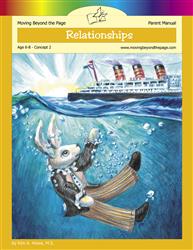
Students are asked to read Chapters 1 and 2 aloud and to discuss and analyze characters, which prompts them to consider character perspectives. Specific comprehension questions ask students how Abilene felt about Edward and how Edward felt about himself, requiring students to identify differing feelings. Activity 2 asks students to describe the relationship between Edward and Abilene and to imagine and write sentences about the stuffed animal's personality, encouraging perspective-taking.
Lesson 2
Point of View
Students are asked to identify the narrator and to think about who is telling the story, showing they can recognize point of view. Students are prompted to describe Abilene's point of view and Edward's point of view with specific guiding questions and to discuss how they view each other differently. Students compare characters using a Venn diagram and retell Pellegrina's story in their own words, reinforcing differences in characters' perspectives.
Lesson 3
The Queen Mary
Students are asked to listen to Chapters 5 and 6 read aloud and answer questions about characters' feelings (e.g., why Abilene didn't want others to hold Edward, how Abilene felt when Edward went overboard, and how Edward felt when he went overboard). Students identify actions that show character treatment (the boys ripping Edward's clothes and tossing him) and infer emotional responses (answers include sad, angry, afraid). The activity prompts discussion of word choices that convey meaning about characters' actions and feelings.
Lesson 4
Pronouns
Students listen to Chapters 7–9 read aloud and answer questions about what Edward thinks and feels (e.g., what he thought while lying on the ocean bottom and whom he felt had thrown him overboard). Activity 2 asks students to compare Edward's relationship with Abilene and her family to his relationship with Nellie and Lawrence, and to read and reread specific pages to discuss differences in Edward's attitude. The Pronouns activity has students read sentences aloud first with nouns and then with pronouns and discuss how the sentences sound differently.
Lesson 5
Emotions
Students are asked to compare Edward's relationship with Abilene to his relationship with Lawrence and Nellie and to describe how the two relationships are different. Students read Chapters 10–12 aloud and answer questions about Edward's feelings and how he is different now. In Activity 2, students discuss quoted passages showing Edward's emotions and then pretend to be Edward to write a goodbye note that expresses his feelings in his own voice.
Lesson 7
Figurative Language
The lesson asks the child to think about how Edward must feel and to discuss how he has lost relationships, prompting the child to consider the character's perspective. The lesson prompts the child to name a favorite character and explain why, which requires the child to articulate a character's traits or motivations. The lesson has the adult read Chapters 15 and 16 aloud and then asks the child comprehension questions (e.g., whether Bryce should have taken Edward down), requiring the child to respond about characters' actions and feelings.
Lesson 8
The Falling Star
Students are asked to read Chapters 17 and 18 aloud and answer comprehension questions about characters (e.g., who Sarah Ruth is, Bryce's relationship with his sister, what Edward wished). Students are prompted to discuss whether Bryce did the right thing when he took Edward, and to give reasons for different viewpoints; the parent note explicitly tells students there is not a single right answer. The skills list asks students to "Describe how characters in a story respond to major events and challenges," which directs students to consider character reactions and perspectives.
Final Project
Chalkboard Presentation
Students are asked to identify a favorite relationship Edward has and dictate a sentence that describes that relationship and why it is her favorite, which requires considering character interactions. Students select a favorite paragraph or two from the story, practice reading it aloud, and make an audio recording of their reading. Students practice presenting their slides aloud to family and play their recorded reading during the presentation.
Unit 3: Connecting with the Past
Lesson 4
Immigration
The lesson has students listen to immigrant oral histories and retell one of the stories, which exposes students to different first-person perspectives. Students are asked to imagine what a person in a historical photograph is thinking or feeling and to describe that person's experiences and emotions. The skills list and activities prompt students to recognize that multiple sources communicate varied perspectives about the same time period.
Lesson 5
Civil Rights
The lesson has students read The Story of Ruby Bridges and answer questions that ask them to consider characters' feelings and motivations (e.g., asking whether Ruby was scared and why white people protested). Students discuss the perspectives of historical figures such as Rosa Parks and Martin Luther King, Jr., and are prompted to explain who wanted change and why. The activities ask students to describe how people were treated differently and to explain actions taken by various people during the Civil Rights Movement.
6: Reading

Unit 1: Semester 1
Lesson 2
Vowel Teams Review
In Activity 1.1 (Shared Reading) students are assigned parts: the adult reads the Parent lines and the child reads the Child lines, so students practice reading dialogue by taking distinct speaking roles. Activity 5.2 and other reader activities ask students to read a short story aloud to the adult, giving practice in oral reading of characters' lines. Multiple activities prompt students to read aloud successive readings with accuracy, rate, and expression.
Unit 2: Semester 2
Lesson 3
Open and Closed Syllables
Activity 3.1 asks students to act out the mouse and to use a "mouse voice" when reading the mouse's dialogue, then to switch roles so the child reads while the adult acts. The lesson prompts students to read pages of Mouse Soup aloud with different voices for the mouse and to act out the mouse's actions. The comprehension questions ask about characters' actions and motivations (e.g., why the weasel caught the mouse, how the mouse solved his problem).
Lesson 4
Syllables with R-Controlled Vowels
Students answer a comprehension question asking why the bird and the mouse saw different things, requiring them to explain differing perspectives based on vantage point. In Activity 4.1 (Personification) students read aloud a stone's quote and draw faces based on the stones' conversations, linking speech to character perspective. The Shared Reading activity has students read assigned lines aloud (parent reads left, child reads right, center together), giving students opportunities to read character text and point to words.
Lesson 6
Possessives
Students answer comprehension questions that ask why Penny hid, whether the marble belonged to Mrs. Goodwin, and whether they would have taken the marble, prompting consideration of characters' thoughts and motives. Students are asked to act out Penny's pretend-play events using actions, words, and props (Activity 4.1). The lesson's skills list includes practicing oral reading "with accuracy, appropriate rate, and expression," which supports practicing varied vocal expression when reading aloud.
Lesson 7
Contractions
The lesson requires students to read grade-level text orally with accuracy, appropriate rate, and expression on successive readings (Skills list). Students engage in shared reading (parent reads left, child reads right, center read together) and perform a labeled Parent/Child poem ("Apostrophe Fun!") that involves taking different lines. Activities ask students to think about and describe how Penny felt before and after events and to discuss how characters change (Before and After; Theme of a Story).
Lesson 8
Two-Syllable Words with Silent e
Students are asked to read Frog and Toad All Year and answer comprehension questions that probe character perspectives (e.g., Day 3 Activity 3.1 asks how Frog felt about winter and how Toad felt, and Day 4 questions ask why Toad hit a tree). The shared reading activity has students read assigned lines aloud (parent reads left side, child reads right side), and students are prompted to reread the story and give an oral summary, which requires considering characters and events.
Lesson 9
Vowel Teams
Students read Frog and Toad stories aloud and answer comprehension questions about how characters feel (for example, asking how the animals felt when they saw Toad and why). The skills list explicitly includes identifying words and phrases in stories that suggest feelings and reading grade-level text orally with accuracy, appropriate rate, and expression. Several activities require oral reading (shared reading, reading riddles, reading and summarizing stories) which gives students practice with vocal expression.
Lesson 10
Consonant Teams
Students discuss how Frog and Toad act differently and list 3–5 character traits for each (Activity 3.1), and they read those trait charts aloud. Students read Frog and Toad stories and answer comprehension questions about characters' actions and feelings (e.g., why Toad was worried), which requires considering characters' motivations. Shared reading has students alternate reading lines (parent reads left, child reads right), exposing students to different speakers in dialogue.
Lesson 11
Consonant + le Syllables
Students answer direct comprehension questions about how Willy felt and why Alexander was sad (Reading and Questions Q3), which asks them to consider differing character perspectives. Students complete a Making an Inference activity that requires them to use textual details to infer characters' feelings and motivations. Students complete a Venn diagram task requiring them to list ways Alexander and Willy are similar and different, prompting explicit comparison of characters.
Lesson 12
Suffixes
Students identify and describe characters and story elements in Activity 3.1 (Characters: Alexander and Willy; Setting; Problem; Solution). The comprehension question asking, "If you were a mouse, would you rather be Alexander or Willy? Why?" asks students to take a character's perspective and give reasons. The Shared Reading activity has alternating Parent/Child/Together lines (dialogue-style reading) that requires students to read assigned parts aloud.
Final Project
Write Your Own Story
Students are asked to plan characters on the Story Idea page and are explicitly told the story should have at least two characters. Students write multiple pages of a narrative (6 notecards / pages) with beginning, middle, and end and are guided to incorporate sight and theme words. Students are also directed to read their completed book aloud to the family.