


Second Grade - ELA
1: Community

Unit 1: Communities Around the World
Lesson 2
Roles of People in Communities
Students are asked in Activity 4 to write a paragraph about being a community worker (prompts: "When I get older I could be a ____, People who do this job ____, I would like this job because ____"), which prompts them to produce multi-sentence writing and to express reasons/feelings. The activity includes role-play scenarios (for example, acting as a mail carrier in cold, windy weather with many deliveries) that require students to describe actions and respond to situational prompts. Option 2 asks students to write a sentence about each worker's job, encouraging them to compose descriptive sentences and to identify nouns and verbs.
Lesson 3
Goods and Services
Students are prompted in Activity 4 to plan and write a short sequential story using the frame "If you give a _____ a _____," and an "Organize your ideas" area with arrows that asks them to outline a sequence of events. The story prompts include temporal phrasing such as "He might ask for a _____." and "Then before you know it, he'll ask for _____." Students are also asked to put a sentence and an illustration on each page and can fold pages to make a book, supporting practice in recounting a short sequence of events.
Lesson 10
Communities Change
The lesson explicitly asks students to retell and summarize events from The Little House (Skills: "Retell the order of events in a story" and "Summarize events in a story") and asks probing questions about "What happened in the story?" and "What happened at the end of the story?". Activity 2 requires students to write a sentence beneath each season illustration describing the community during that season, and Activity 1 has students attempt to read and then respond to the story pages while analyzing pictures and activities.
Final Project
Community Brochure
The skills list asks students to "use words that describe, name characters and settings, and tell action and events in simple texts" and to "compose a variety of written products using a writing process," which asks students to write and organize sentences. The brochure organizer requires students to describe celebrations (including dates and reasons) and to explain "ways the community has changed over time," which prompts students to recount events or sequences related to community change. Students are asked to plan sentences for each brochure section and to include vocabulary that supports describing actions, goods, services, and changes.

Unit 2: Citizenship
Lesson 1
A Good Citizen
Students retell the fable The Boy Who Cried Wolf by arranging scene boxes in order and writing a sentence for each scene (Activity 3), practicing sequencing and short narrative sentences. Students are asked to write about personal events—times they demonstrated care, help, responsibility, or honesty (A Good Citizen Option 2) and to write about a time they lied and a time they told the truth (Activity 4), producing firsthand recounts. Students recount changes in a wordless book by making up a sentence or two for each page and by drawing and describing beginning, middle, and end scenes (Activity 6), reinforcing ordering of events and brief descriptions.
Lesson 2
Decisions and Consequences
Students read and respond to Lilly's Purple Plastic Purse by answering questions about what Lilly did, why she felt bad, and how she fixed the situation, which has them recount events and analyze feelings. Students complete an "Actions and Consequences" chart by writing the consequences for specific actions and create action/consequence cards, which has them describe actions and outcomes in writing. The skills list explicitly includes "Use words that tell action and events" and "Respond to stories through writing," indicating some targeted practice with event-focused writing and analyzing character feelings.

Unit 3: Plants and Animals
Lesson 1
Living and Nonliving
The lesson asks students to tell and dictate an imaginative story about finding a magic stone and to draw a picture to accompany it. The skills list explicitly includes composing stories, oral retellings, and writing using an author's model, which requires students to produce narrative products. Follow-up questions about what Sylvester learned and what the student would have done encourage students to reflect on outcomes and personal reactions.
Lesson 3
Classifying Animals
Students are asked in Activity 9 to write a paragraph pretending to be an animal and to describe what it would be like to live in its community, with Option 1 providing sentence starters and Option 2 asking for an original paragraph. The lesson reviews paragraph features (multiple sentences, topic sentence, related sentences, and a final sentence that ties ideas together), which teaches paragraph structure and a sense of closure. The skills list includes "Use vocabulary to describe feelings and ideas," which can prompt students to state reasons or preferences in their writing. Activity 10 has students act out animals and answer questions about actions and body parts, which could inform descriptive writing about actions.
Lesson 6
Extinct and Endangered Species
Activity 4 asks students to make up a short puppet-show script for three dinosaurs and to dictate at least two lines for each dinosaur while an adult records the ideas in script form. Activity 3 has students read through and practice an endangered-species puppet-show script and perform it, and students create three paper bag puppets to support their performance. The lesson includes a provided scripted dialogue (Panda, Alligator, Elephant) that students read, voice, and act out.
Lesson 7
Plants
Students are asked in Activity 7 (A Special Seed) to imagine planting a unique seed, draw what will grow, and "tell a story about the experience he has once the seed has grown," with the adult recording his ideas and illustrations. Activity 8 has students role-play the sequence of a seed becoming a plant, acting out roots growing, breaking the soil, feeling the sun and rain, and becoming a plant. Activity 3 (Jack and the Beanstalk) asks students to identify characters, setting, and "What happened in the story?", prompting them to recount events from a narrative.
Lesson 8
The Role of Plants
Students draw five scenes from The Giving Tree and cut and arrange them in the order they occurred (Activity 3), which requires identifying and sequencing a short series of events. Students write a thank-you letter 'pretending they are the boy' with prompts such as 'Thank you for...' and 'The best thing you ever gave me was...', which requires naming specific items and expressing gratitude/feelings (Activity 4). The read-aloud includes questions about what the tree gave the boy and predictions about what will happen, which prompt students to recall events and character actions.
Lesson 10
Life Cycles
Students are asked to write the name of each life-cycle stage and number pictures from 1 to 3, practicing sequencing of events. Students create a diamante poem, selecting describing words and -ing action words that show change in an organism. Students role-play life-cycle stages and are asked to describe the life cycle of a butterfly, frog, and human, practicing oral recounting of stages.
2: Matter and Movement

Unit 1: States of Matter
Lesson 4
Bartholomew and the Oobleck
Students complete a Story Quilt that asks them to name characters and setting, and to list three important events plus the story's problem and solution, which requires them to recount a sequence of events. Students are asked to write a new ending starting from a specific point and to write as much as possible independently, giving practice composing narrative text. The lesson's skills list explicitly includes using words that describe, naming characters and settings, telling actions and events, and writing different endings using an author's model.
Lesson 7
Exploring Solids and Liquids
Students are asked in Activity 1 to write three sentences describing three things that happened in the book, which has them recount events. The Activity 1 follow-up questions ask students to name their favorite part and explain why and to state something new they learned, prompting students to describe thoughts and reactions. The "Dancing Raisins" student page asks students to write a hypothesis and record results after following a numbered procedure, giving practice with describing a short sequence of steps and outcomes.
Lesson 8
Our Bodies and Our World
Activity 5 asks students to plan and write their own short story using a graphic organizer that includes Setting, Characters, Problem, Event 1, Event 2, Event 3, and Solution. The directions tell students to introduce setting and characters in the first sentences, describe the problem and events in the next sentences, and end with how the problem was solved. The skills list also includes composing products using the writing process and explaining what will happen next in a story, supporting narrative sequencing practice.

Unit 2: Earth
Lesson 3
Digging Into Dirt
Students are asked in Activity 5 to analyze a narrative scenario (Jake sleepwalking and losing a coin) and then write two or three sentences explaining how they solved the case, which requires them to recount actions that led to their conclusion. Activity 8 asks students to write four complete sentences about ways the Earth is important to them, providing practice with sentence-level writing and connecting ideas to personal experience. Several activities (Experimenting with Soil, Layers of the Earth) include pages where students record predictions and results, giving additional opportunities to write short explanatory or observational statements.
Lesson 5
Rocks
Activity 9 directs students to write a short story about what the rock was doing before they found it and to describe the fun things they plan to do with the rock friend, prompting narrative writing about events. Activity 3 asks students to draw what happened to sugar cubes at the start, after shaking a little, and after shaking a lot, prompting students to represent a short sequence of events in order. Activity 7 has students cut out rules and put them in order and optionally write sentences summarizing each rule, providing practice with sequencing and writing brief explanatory sentences.
Lesson 6
Water, Water Everywhere
Activity 8 asks students to pretend they are a marine biologist who has just returned from a dive and discovered a new form of ocean life; students are told to draw or build the creature, give it a name, and write a short paragraph that tells where the creature is found, what it eats, and what some of its unique features are. Activity 7 asks students to write a sentence about different uses of water and to write and illustrate an example of how they use water. Several activities prompt students to write short sentences or paragraphs tied to the science content.
Unit 3: Balance and Motion
Lesson 1
What Is Balance?
Activity 9 asks students to write step-by-step directions in complete sentences and to use temporal words such as "first," "next," and "then," and to number sentences. The activity requires students to read their directions aloud, follow them, and make corrections, which practices sequencing and revision. Other parts of the lesson ask students to write two or three sentences describing the main idea of the book, providing additional sentence-writing practice.
Lesson 3
Symmetry
Students are asked in Activity 3 to create a symmetrical picture and then write three sentences about the picture. The wrapping up prompts ask students to explain what symmetry means and to name lines of symmetry, which could prompt short written or spoken responses. Several activity pages include space for students to draw and sometimes label or write brief captions for their drawings.
Lesson 4
Force and Motion
Activity 4 asks students to draw a detailed setting showing examples of motion and then "write a short paragraph or story that describes what is happening in the picture," giving students a direct opportunity to produce narrative text. Activity 3 requires students to write a sentence about three pictures, which has students practice composing sentences that describe actions. Activity 7 has students record at least ten actions observed on a walk, providing raw material that students could use to recount events.
Lesson 5
Gravity
Activity 4 asks students to write a short paragraph (three to four sentences) about what life would be like without gravity and to draw a picture of their description. The Skills list includes "Use vocabulary to describe clearly feelings, ideas, and experiences," which supports descriptive writing. The wrapping up asks the child to explain what gravity is and demonstrate center of gravity, connecting content vocabulary to the writing prompt.
Final Project
A Wordless Skit
Students use a graphic organizer titled "Balance and Motion Skit" with named sections (Balance, Push, Pull, Gravity, Friction) that ask them to list Actions and Props, so they plan and describe specific actions. Day 2 directions ask students to decide on the order in which to present each word and to rehearse the sequence, which requires them to arrange events in a defined order. Students are prompted to create invitations and a program for the performance, providing occasions for brief written organization related to the skit.
3: Culture
Unit 1: Geography
Lesson 1
Using Maps and Globes
Activity 5 asks students to write a paragraph pretending to take a trip to a location in Texas and to describe what they did during the visit and what they enjoyed. Activity 1 asks students to recount Armadillo's journey with questions about where he was at the beginning, what state he lived in, where the eagle took him, and what he learned, which requires students to retell a sequence of events. Activity 6 has students chart Armadillo's journey on a map, supporting students' understanding of event order and movement across places.
Lesson 2
Cardinal Directions
The lesson's Activity 5, "Shiver Me Timbers! A Pirate's Journal," asks students to record the date and "describe one day of her life at sea or in port," which requires recounting events in writing. The activity directs students to include all four cardinal directions in their journal entry and offers dictation or assisted writing options. The Skills section also lists composing products using the writing process, indicating students will produce a written narrative piece.

Unit 2: People Around the World
Lesson 2
Traditions
Students are prompted to write about holidays on multiple pages: the "Holidays" sheet asks students to "write about why the holiday is important or write about an important activity that people practice," and Activity 8 "My Favorite Holiday" asks students to complete several sentence prompts about their favorite holiday (reasons, how the family celebrates, and a favorite thing). The "Chinese New Year Dish" activity asks students to write about why a food means happiness, which elicits expression of feelings. The materials also review sentence conventions (subject/predicate, capitalization, end punctuation), supporting students' sentence-level writing.
Lesson 4
Homes and Culture
Activity 1 asks students to write a paragraph about a tradition in their home, including when the tradition occurs and why it is important. The prompt explicitly includes a sentence starter "I enjoy this tradition because___," which asks students to state feelings. Option 2 asks students to compose their own complete sentences and to identify nouns and verbs, practicing sentence-level writing mechanics.
Lesson 5
Transportation in Culture
Students are asked to write about a time they took a form of transportation (Activity 1) with an example that models an elaborated sentence. In Activity 3 students complete a guided narrative "My Day as a _____" that prompts sequential phrases ("Today I got in my...", "On the way...", "When we were finished...") and asks for actions and a concluding statement ("The thing I like most about being a _____ is..."). The guided prompts also ask students to describe events, list people on the trip, and correct capitalization of proper nouns.
Lesson 10
South American Culture
Students listen to and reenact a first-person "Paddling Down the Amazon" journey (they put on snorkel gear, jump in, get back on the raft, and greet villagers), and they are given an "An Amazon Journey" page with event illustrations that they cut out and put in the order in which they occurred. Students are asked to answer questions about what they enjoyed most about the journey, prompting them to recount events orally. The activity explicitly has students sequence a short series of events from the narrated journey.

Unit 3: Stories Around the World
Lesson 1
Fiction or Nonfiction
Students are asked to read two fiction storybooks and write the title and author and "one sentence to describe each story." The student activity page prompts students to answer "What was the story about?" and "Did you like or dislike the story? Why?" The lesson's skills list includes "Respond to a variety of stories and poems ... through ... writing," indicating students will produce written responses about stories.
Lesson 2
Character
Students are asked to record what a character THINKS, SAYS, and DOES (Activity 2), and to write a character's name, three describing words, one action, and one thought (Activity 3), which gives practice including actions, thoughts, and feelings. Students are prompted to tell a short story about each character (Activity 3) and to draw and tell a story after listening to a character description (Activity 4), providing opportunities to recount events and describe character reactions. Students role-play responses as the character (Activity 5), practicing expressing words, actions, and feelings in scenarios.
Lesson 4
Plot
Students cut out and sequence scenes from "Jack and the Beanstalk" to put events in logical order. Students fill a "Writing Events in a Story" chart and a "Creating the Plot of a Story" organizer to identify the story title, the problem, three main events, and the solution. Students compose and dictate an original story about a character who loses something, then listen as it is read back and revise or read it aloud.
Lesson 6
Cinderella Stories Around the World
Students are asked to retell stories (Introduction: "ask him to retell what he remembers") and to explain the plot/events of a Cinderella story (Wrapping Up). Students complete a "Cinderella Elements Chart" identifying elements such as heroine, magical help, and "Happily ever after," and they draw the beginning, middle, and end of The Irish Cinderlad (Activity 6). The skills list also includes "Retell folktales and legends" and "Use words that describe characters, settings, actions, and events in simple texts."
Lesson 7
Theme
Students read fables and are asked to describe the main characters, major events, and the theme in their own words (Activities 1 and 2). Students act out or illustrate fables and explain how lessons apply to their lives, practicing retelling and adding concrete action details. Students create an original two-animal story, dictate it, revise it, read it aloud, and share it with family (Activity 4), and they integrate factual details about chosen animals to enhance their narratives (Activity 5).
Final Project
A New Cinderella
Students plan and write a short Cinderella narrative using graphic organizers that prompt for a main character, setting, villain, difficulty, magical helper, lost-and-found item, and sequence of events. The activity pages include sentence starters and temporal prompts such as "Once upon a time," "One day," "Then," and "After searching everywhere," and students create a draft and a final copy with opportunities to revise. Prompts explicitly ask students to state actions and feelings (for example, "was treated very poorly by" and "was very upset because") and the example story models a clear ending that "lived happily ever after."
4: Relationships
Unit 1: Living Things and Their Environment
Lesson 5
Rivers
In Activity 4 students pick a life cycle, draw the animal in four sequential stages (connected by arrows), and write a simple sentence describing each stage in their own words, which requires recounting a short sequence of events. In Activity 5 students illustrate a river food chain by drawing plants/animals on linked chain pieces and arrange them starting with the producer, which practices ordering events in a sequence. The graphic organizer for life cycles and the arrows explicitly emphasize sequence and stages.
Final Project
Investigating the Environment
Students are asked to keep a journal and "write down questions" and may "write a sentence about what she saw," providing opportunities for short descriptive writing. Students complete a "Life Cycle and Genetics" page that asks them to illustrate and describe four stages in sequence, with arrows indicating order. Students organize observations and photographs into ordered displays such as the "Food Chain" organizer and plan investigations across Day 2 and Day 3, which requires sequencing actions (plan, carry out, finish).
Unit 2: The Miraculous Journey of Edward Tulane
Lesson 2
Point of View
Students are asked to retell Pellegrina's tale in their own words (Question #3 and the Wrapping Up prompt), which requires recounting a sequence of events. Students discuss and describe Abilene's and Edward's feelings and viewpoints (Activity 1), practicing inclusion of thoughts and emotions. Students create a Venn diagram comparing Edward and the princess (Activity 2), elaborating on character actions and traits that support narrative detail.
Lesson 3
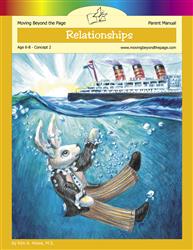
The Queen Mary
Students read Chapters 5 and 6 of The Miraculous Journey of Edward Tulane and answer questions that require them to recount events (e.g., describing that boys ripped Edward's clothes off and tossed him) and identify characters' feelings (Abilene's sadness; Edward's fear). In the Shades of Meaning activity, students substitute more descriptive verbs and adjectives in sentences that describe actions (e.g., packed, threw, fell) and pleas (begged). The Queen Mary Research and related questions have students recall and record factual sequences about the ship's history.
Lesson 5
Emotions
Students are asked to write a "Goodbye Note" as Edward to Lawrence and Nellie, with explicit instruction to show emotions (e.g., "I cried silent tears when I left") rather than simply listing feelings. Students read and discuss quotes from the text that illustrate Edward's feelings and changes (e.g., "Life, for a very long time, was sweet") and answer comprehension questions about how Edward felt and how he changed. Students also compare Edward's relationships and describe differences between them.
Lesson 10
Illustrations
Students are asked to retell the story using the illustrations as a guide (Activity 2), which prompts them to recount events. The "Explain an Illustration" page has students record a quote and answer who, what, when, and where, prompting description of scene elements. The Wrapping Up prompt asks students to briefly describe each environment in chronological order, which requires ordering events.
Lesson 11
Building Sentences
Students practice connecting and expanding clauses using FANBOYS conjunctions in Activity 1, which has them place conjunctions and expand sentences. Students add adjectives to make sentences more descriptive and rearrange sentence order in Activity 3, practicing description of actions and details. Students sequence Edward's relationships by writing simple sentences on timeline boxes in Activity 4 and reflect on how each relationship changed him. Students locate and copy a poem quote and are asked to describe Edward's heartbreak and darkness in Activity 2, which elicits description of feelings.
Final Project
Chalkboard Presentation
Students are asked to dictate sentences that describe their opinion of the story, explain why they like a favorite part, and describe a favorite relationship, which elicits details about thoughts and feelings. The Skills section explicitly notes creating audio recordings and adding drawings or visual displays to stories or recounts to clarify ideas, thoughts, and feelings. Students select and record a favorite paragraph aloud, practicing oral recounting of a section of the narrative.
Unit 3: Connecting with the Past
Lesson 3
Slavery and the Civil War
Students add dates, pictures, and short descriptions to a timeline for Harriet Tubman, Abraham Lincoln, and Civil War events, which requires them to place events in chronological order. Students write and explain five character traits for Henry from Henry's Freedom Box and provide evidence from the book for each trait, practicing describing actions and supporting details. Students complete a "Slavery and the Civil War" page by drawing and finishing the sentence "Because the Civil War was fought, today _______" which asks them to state consequences and provide a concluding idea.
Lesson 5
Civil Rights
Students read The Story of Ruby Bridges and answer questions that probe character background and emotions (e.g., whether Ruby was scared). Students place dates, descriptions, and pictures for Rosa Parks and Martin Luther King, Jr. on a timeline, practicing ordering of historical events. Students complete a "Civil Rights" writing/drawing page and fill-in prompt ("Because Americans fought peacefully..., today ___ and ___"), producing written responses about impacts of events.
6: Reading

Unit 1: Semester 1
Lesson 15
Words Ending with ed and ing
Students write short sentences recounting something they did yesterday and something they will do tomorrow (Activity 1.2) and place sentences under Past/Present/Future headings during the sorting activity. Students complete fill-in-the-blank sentences that include temporal cues such as "Last week," "Two days ago," "The children will be," and "Last year" (Activity 5.2). Students read, sort, and glue sentences labeled as past, present, or future, practicing use of temporal words to signal event time.
Unit 2: Semester 2
Lesson 4
Syllables with R-Controlled Vowels
Students are asked to "think of a story about a walk outside" and write words as they use them (Activity 2.1), which prompts composing a brief narrative. Students complete a Plot Diagram for "The Crickets," identifying the problem, rising/falling action, climax, and solution and writing the sequence of crickets that appear (Activity 3.1), which practices ordering events. Activity 5.2 asks students to write sentences that include sight words and a two-syllable r-controlled word, providing some written composition practice.
Lesson 5
Two-Syllable Words Ending in y
Students write the soup ingredient that was added after each story on the "Mouse Soup Recipe" page, which requires identifying and recording events in the order they occurred. Students create their own "Mouse Soup" by selecting four favorite stories and writing an ingredient from each story into boxes being poured into a soup, a task that asks them to relate story elements to a sequence. Students also list things that make them feel happy on the "A Yellow Rose" page, which has them express feelings in writing.
Lesson 7
Contractions
Students finish reading Penny and Her Marble and answer comprehension questions about events (e.g., why Penny's stomach hurt, what she dreamed, where she took the marble), which requires them to recount and interpret story events. Students complete a "Before and After" activity in which they draw Penny and write three words describing how she felt before and after the event, addressing characters' actions and feelings. Students are asked to write the theme and record responses to moral scenarios, and sometimes to write sentences using contractions, showing some written expression tied to the story.
Lesson 8
Two-Syllable Words with Silent e
Students are asked to give an oral summary of the story "Down the Hill" and to reread the story before summarizing (Activity 4.1). Students are prompted to describe how Frog and Toad felt about winter and to write descriptive words about feelings on a snowflake (Activity 3.1). Students are asked to write short sentences using sight words and to write sentences that contain chosen two-syllable words (Activity 5.2).
Lesson 9
Vowel Teams
Students are asked to summarize the story "Ice Cream" (Activity 4.1), which requires them to recount the main things that happen to characters. In Activity 3.1 ("Just Around the Corner") students write three things that will happen soon and pick one to write about and illustrate, producing short written accounts of events. The skills list and reading questions prompt students to identify words and phrases that suggest feelings and to answer questions about how characters felt, connecting emotion to events in text.
Lesson 12
Suffixes
Students practice story structure by labeling characters, setting, problem, solution, and beginning/middle/end in the Story Elements activity and by placing cut-out boxes into those categories. Students are asked to tell a story out loud that uses eight theme words and to write each theme word as they use it, and they complete a Magic Purple Pebble task in which they illustrate and write a before-and-after sentence about a wished-for transformation. Students are also prompted to explain characters' motives and feelings (e.g., why Alexander changed his mind) when answering comprehension questions.
Final Project
Write Your Own Story
Students are asked to plan characters, setting, and a beginning, middle, and end using the Story Idea page, and to jot ideas for what will happen at the beginning, middle, and end. Students write a short multi-page narrative (six notecards then a final booklet) with about 2–3 sentences per page and revise/edit their draft for spelling and grammar. Students must incorporate theme and sight words and are guided to use Semester 1 readers as models for story types (day-in-the-life, problem/solution, event).