


First Grade - ELA
1: Environment

Unit 1: Habitats and Homes
Lesson 1
My Environment
The introduction asks the child to briefly describe her environment and to explain that environments must provide food, water, and shelter. In Activity 2 students label rooms, number rooms in the order they explore them, circle an item that adds to a healthy environment, and explain why that item is important. In Activity 3 students choose the most important room, state how the room is used and why it is most important, record or dictate their ideas, and read the paragraph aloud.
Lesson 2
What Is a Map?
Students answer and practice questions that require them to name and locate their country, state, town, and address, and they identify places on a world and U.S. map. Students label and locate objects on a house floor plan and respond to positional questions (e.g., What is beside the refrigerator? What is in front of the couch?). Students create a map of their own room by choosing important objects to include, placing or drawing them in correct locations, and are asked to describe the environment in which they live.
Lesson 3
Guide to Animal Habitats
Students are prompted to describe environments and habitats orally (Introduction asks the child to describe the environment where she lives and to answer questions about Crinkleroot and the book). Activity 5 asks students to draw or tell a story about visiting a chosen habitat and to answer guided questions about what they see, what it would feel like, what they would do, which animals they'd want to see, and whether they'd want to live there. Activities require students to sequence events (Option 1 and 2 Habitat Journey; identify sequence of events skill) and to point out and describe plants and animals in each habitat while the story is read aloud.
Lesson 4
Animals Live and Grow
Students name and describe places and things when they list and draw plants and animals for specific habitats (Wetlands, Woodlands, Grasslands, Drylands) in Activity 1. Students describe events and observations by answering questions about the book (e.g., identifying the season and explaining how they know, explaining why harvest must happen quickly). Students express ideas and feelings when asked opinion questions (e.g., "Would you enjoy planting a garden? Why or why not?") and when completing open prompts such as "Plants can..., Plants are..., Plants have...".
Lesson 5
Discovering Animal Habitats
Students are prompted to identify and describe animals found in each habitat (Activity 1 Option 1 and Option 2) and to draw additional animals in those habitats. Students answer guided questions naming habitats and discussing plants, animals, and natural resources (Activity 2). Students draw a favorite habitat, add pictures showing what animals eat and drink, and label those parts (Activity 3), and are asked to describe each environment during the wrap-up.
Lesson 6
Exploring Animal Habitats
Students are asked to observe an animal habitat, draw and label what they see, and answer focused questions about plants, animals, and actions (e.g., Where are the plants? What are the animals doing?). Students are prompted to narrate a story using the page "A Day in the ___: A ___'s Life," where they dictate a beginning/middle/end story about an animal, include what the animal eats/drinks, and reflect on what would be enjoyable or hard (expressing ideas and feelings). The skills list explicitly includes "Make connections through the use of oral language" and "Use words that name, describe, and tell action," supporting practice in describing with relevant details.
Lesson 7
Tools in My Environment
Students are asked to find and name tools (Activity 1) and to answer focused questions such as "What is the tool used for?" and "How does the tool work?" (Activity 2), which requires them to describe things with relevant details. Students sort tools by use and size and put tools in order from shortest to longest (Activities 2 and 3), which prompts them to state attributes and compare objects. The Wrap Up asks students to tell what a tool is, which tools they use, and which tool they used to measure today, providing multiple opportunities to express ideas verbally.
Lesson 8
Animal Care
The lesson asks children to answer questions after caring for a pet (e.g., "What do pets need?" and "What would happen if we didn't provide a healthy environment for our pets?"), prompting them to describe animals and needs with details. During the read-aloud of The Salamander Room, students are asked specific questions about the animal, where it was found, what environment it needs, and to give reasons for whether the boy should keep it, which requires describing places, things, events, and expressing opinions. The wrapping-up and life-application prompts ask students to draw and discuss how it would feel to live in different habitats and to explain what environment a pet would need, eliciting feelings and relevant details about places and things.
Lesson 9
Animal Designs
Students name habitats and animals and explain how each animal moves and which body parts help (Activities 1 and 2). Students analyze pictures to identify animals that do not belong in a habitat and state reasons why (Activity 2), and they produce spoken sentences such as "A zebra can't live in the ocean. A zebra lives in the savanna" (Activity 3). Students tell a creative story about an animal in the wrong habitat, describing how it gets there, what happens, and how it returns, and they demonstrate and explain movements and the body parts used (Activity 4 and Wrapping Up).
Lesson 10
Amazing Animals
Students are prompted in Activity 2 to role-play animals in specific scenarios and to explain what they would do and how they would feel (e.g., "How would you feel if you were the starfish?" and "What would you do if you were the lizard?"). Students are asked in Activity 1 to analyze pictures and read descriptions of how each animal changes, then select an animal to learn more about from books or websites, which requires describing that animal. The Wrapping Up section asks students to tell about animals they learned about today, prompting oral description and recall.
Lesson 11
Amazing Me
Students are asked to describe how they would change to fit different environments (Activity 1) by answering questions about cold, sun exposure, and vision. Students identify and express feelings about pictured items by circling faces and drawing things that make them happy, sad, scared, or surprised (Activity 2). Students recall a personal time they changed because of the environment, have their ideas recorded, read the ideas aloud, and illustrate them (Activity 3 and Wrapping Up).
Final Project
Animal Research / My Environment
Students are prompted to describe the environment in which they live through guided discussion questions (e.g., "Can you describe the environment in which you live?"). Students create a multi-page book that requires them to describe themselves, what they eat and drink, their home environment, activities they do, and a change in themselves, using drawings and labels. Students in the animal option research and record where an animal is found, what it eats and drinks, its habitat, and interesting facts, then explain each page aloud and share what they enjoyed.
Unit 2: Weather
Lesson 1
Reading the Skies
Students are asked to look outside and describe the weather and how it affects activities and feelings in the Introduction and Life Application. In Activity 1 students answer questions about how different weather makes them feel and what weather is best for playing outside. Activities 2 and 3 require students to dictate or write sentences using weather vocabulary and to tell or illustrate a story about their favorite weather, and Activity 4 has students record daily weather and temperatures on a calendar.
Lesson 2
Types of Precipitation
Students are asked to describe habitats and the weather they see in book pictures and to describe how characters look when they are hot or cold (Activity 1). Students identify and label types of precipitation from pictures and draw scenes showing what a child might be doing in rain, snow, or hail (Activity 2 Option 2). During the rain experiment (Activity 4) students make a prediction, watch the event, count raindrops, and describe what is happening in the sky; the wrap-up asks students to explain why precipitation is important and where our water comes from.
Lesson 3
Measuring and Charting Weather
The lesson asks students to describe what would happen if an animal's habitat got too warm or cold and to describe what the weather can be like in different habitats, prompting spoken descriptions of places and things. Several discussion prompts (e.g., asking how to measure rain, asking for examples of how weather can be measured, and the Rain acrostic) require students to generate words, explanations, or ideas related to weather. Activities ask students to record temperatures and explain measurements, which engages them in explaining observations and ideas about weather and its effects.
Lesson 4
Simulating Weather
Students are asked to name three things the wind can move and discuss what those things have in common, requiring them to describe objects and attributes. Students are prompted to explain what happens when they squeeze and release the bottle in the cloud activity and to answer what happens in the sky to cause rain, which requires describing events and causal details. Students sing, read, and are invited to make up their own weather song, providing opportunities to express ideas orally about weather.
Lesson 5
Fall
Students are asked specific descriptive questions in Activity 1 (e.g., What are the people wearing? What do the plants and trees look like? What does the sky look like? What do you think the weather feels like?), prompting them to describe people, places, and things. Students write three sentences about the autumn scene, circle items they like, name them, and use each word in a sentence, which practices expressing ideas in complete sentences. The wrap-up asks students to explain what happens to the weather in fall and to say what they enjoy doing, prompting expression of ideas and feelings.
Lesson 6
Winter
Students are asked to describe the outside environment in winter during the Introduction and to describe winter scenes in Whatever the Weather (Activity 1). In Activity 1 students dictate a story about something they like to do in winter using target vocabulary (cold, snow, freeze), illustrate it, and attempt to read it aloud. Activity 3 and the Wrapping Up prompt students to compare winter and summer weather and to describe what a winter environment can be like.
Lesson 7
Spring
Students are asked to read short spring poems, state what each poem was about, and draw or add illustrations that tell the poem's story, which requires describing events and things with details. Students are prompted to write or dictate their own spring poem (Language Arts Extension), offering practice expressing ideas and feelings in words. In the wind activity and wrapping-up questions, students describe what wind feels like, explain why objects moved or didn't, and review what special things happen in spring and what seeds need, prompting description of places, things, and events.
Lesson 8
Summer
Students are asked to describe the environment, explain what is happening in the Summer Fun picture, and say how the kids in the picture feel. Students read and complete an "A Summer Story" passage aloud, choosing words to fit blanks and (in the advanced option) copy, write, or create their own summer story and illustrate it. Students complete a temperature continuum and write season names and sentences comparing seasons, practicing descriptive vocabulary about weather and events.
Final Project
Weather Games
Students are asked to observe and describe current weather using specific prompts (e.g., What does the sky look like? Is there precipitation? What is the temperature?), and they record answers on the "Weather Forecast" page. Students prepare and give a three-day oral weather forecast to the family, practicing presentation language and using weather vocabulary. In Activity 3 students answer observational questions about wind, clouds, precipitation, and suitability for outdoor activities, and in Activity 1 students sort pictures of people and clothing by season, linking people and clothing choices to seasonal conditions.
Unit 3: Community
Lesson 1
On the Town
Students are asked oral comprehension questions after reading (e.g., "What is a community?," "What places did Charlie visit?," and "Why did Charlie write down the places?") that prompt them to describe places and explain reasons. Students are instructed to describe vocabulary words and use them correctly in a sentence and to review those words daily. In Activity 3, students draw a new page showing a unique place in their community and write or dictate a sentence or two about Charlie visiting that place, producing a brief descriptive statement. Wrapping up asks students to discuss what a healthy community provides and how places meet citizens' needs, prompting explanation of functions and relationships.
Lesson 2
My Community Environment
Students identify and describe community places by discussing the purpose of buildings on the Community Map (court, police, fire station, library, museum, grocery store) and tracing paths between them. Students create a My Community Poster where they label places and write or dictate brief descriptions of how each place serves the community. Students prepare and conduct brief interviews with community workers, ask and record questions, and answer prompts such as why people come to a place and what workers do. Students examine books to describe different types of communities and discuss similarities and differences.
Lesson 3
Jobs in the Community
Students are asked to describe what each community worker does and how his/her job makes the community better (Activity 1 and Activity 1 Option 2). Students observe a chosen community worker and are prompted to pay attention to what the worker does and whom he/she helps, then describe what they saw (Activity 3). Students complete a "When I Grow Up" paragraph that asks why they would like a job and what they could do, and they are encouraged to read their paragraph aloud and record simple sentences about how each worker helps (Activities 4 and 5).
Lesson 4
Goods and Services in the Community
Students are prompted to name important places in their community and to say how each place helps people, requiring them to describe places with relevant details. The wrapping-up prompts ask students to describe goods and services offered in the community and to explain why people have jobs and how they use the money they earn, which requires describing people/roles and things. Activity 1 has students read labels and match buildings to the goods or services they provide, giving practice connecting places with their functions and describing those relationships.
Lesson 5
Resources
Students are asked to gather three natural and three manmade resources and explain how each resource is used, where it is found, and/or write a sentence about the resources (Activity 3). Students are prompted at the end to explain the difference between resources found in nature and resources made by humans (Wrapping Up). Students sort pictured items into "Natural" and "Manmade" categories and then draw one natural and one manmade resource after sorting (Activity 1), which provides opportunities to describe items.
Lesson 6
A Good Community Citizen
Students are asked to decide whether depicted actions show good citizenship and explain how they made each decision (Activity 1). Students draw and label pictures of behaviors in a "Good Home Environment" and a "Not a Good Home Environment," and/or sort illustrated scenarios into those two categories (Activity 2). Students identify family members, paste or draw their pictures, and describe specific examples of good citizenship beneath each name, either by dictating or writing (Activity 3 and Wrapping Up).
Lesson 7
A Citizen with Character
Students are asked to discuss and define characteristics of a good citizen and answer reflective questions (e.g., "Ask your child what it means to be a good citizen") that require describing people and community places. In Activity 4 students read a story about honesty and respond to questions (predict what will happen next; What would you have done?) that prompt describing events and expressing feelings and ideas. Activity 5 asks students to retell the beginning, middle, and end of a fable (or create their own version), and Activity 6 has students record actions and consequences, all of which require describing events with relevant details. Additional prompts ("I am respectful when I __", Kindness Award explanations, and the Life Application chart) require students to explain why they assigned scores or stars, expressing their ideas and feelings clearly.
Lesson 8
Rules and Laws
Students are asked to read and respond to the story "The House with No Rules," answering questions such as "What kinds of things happen in the house with no rules?" and "What would you like about the house?" which prompt description of events and personal feelings. In Activity 1 students generate six household rules, read each sentence aloud, decide which is most important and explain why, and order the rules from 1st to 6th, requiring them to express ideas and reasons. In Activity 2 students read items aloud and sort statements into "Rules" or "Laws," practicing categorizing and describing differences between community laws and household rules.
Lesson 9
Caring for Our Communities
Students retell the story of Katy by answering questions about the beginning, middle, and end and by identifying where she lives and what she does, which requires describing events and a character. Students compare two community pictures and mark problems versus positives, and an extension asks them to discuss setting details that make communities safe or not. Students identify three things that make their community healthy and then take pictures/draw or make a video and explain why they chose them, and students role-play needing help or helping others and create a thank-you drawing or song to express ideas and feelings.
Final Project
I Can Make A Difference
Students use the planning worksheet sentence starters ("I am planning to...", "The first thing I will do is...", "Next I will...", "Finally I will...") to describe an event and sequence the steps they will take. Students complete reflection prompts that require them to describe who they helped, what they did, how they felt ("I helped __ with __. The thing I enjoyed the most was __. I felt __ when doing this project."), and how their actions affected the community. Unit assessment questions and introductory prompts ask students to name and describe community people, places, and jobs, and adults prompt students to give examples verbally of how people make communities better.
2: Similarities and Differences
Unit 1: Amazing Attributes
Lesson 1
Describe It
Students are prompted to orally describe a chosen object in the introduction and to guess objects from attribute-based clues in Activity 1, practicing use of size, color, shape, and texture vocabulary. In Activity 2 students compare pairs of objects and state ways they are similar and different, practicing relevant descriptive detail. Activity 3 has students select, copy, and compose descriptive words for pictures (milk, tree, lollipop) and encourages writing additional descriptors. Activity 4 asks students to write or copy a sentence that describes an object from the bag, practicing expressing descriptions in writing.
Lesson 2
Animal Attributes
Students compare two stuffed animals and explain how they are alike and different. Students circle living things and are asked to describe how they know which objects are living, and in Option 2 they write names and sort items into Living and Nonliving columns. Students identify animal body parts, circle W/F/L, draw missing legs, and explain how body parts help animals move. Students sort animals by body coverings and (in the advanced option) write and add additional examples to categories.
Lesson 3
Size, Shape, and Color
Students are asked to describe an object's size, shape, and color (e.g., describing a metal spoon and a wooden mixing spoon) and to compare similarities and differences. Students organize 5–8 toys by size and explain the process used, practicing use of descriptive details (largest to smallest, small/medium/large). Students identify shapes by finding and drawing real-world examples and mix colors then describe what they learned about color combinations.
Lesson 4
How Does It Feel?
Students are asked to feel hidden objects while blindfolded and describe how each object feels, recording the words they use (Introduction). Students practice choosing and using texture adjectives from a provided word box to label pictures of objects and to write or copy a sentence of the form '______ feels _________' (Activity 2, Handwriting). Students are prompted to use new vocabulary in conversation and writing and to discuss whether descriptions of texture were enough to identify objects (Skills, Activities).
Lesson 5
How Old?
Students put family pictures in order from oldest to youngest and discuss what features (height, size) do and do not indicate age. Students are asked to name people, explain what they look at to determine age, write a question for each pictured person (practicing question sentences and punctuation), and describe tree age by observing trunk thickness and rings. The Skills list explicitly includes 'Express ideas and ask questions' and 'Compare attributes of two objects (size, color, weight, height, length, and texture),' which students practice in activities.
Lesson 6
The Measure of Things
Students are prompted to describe and compare physical properties (e.g., "Ask him to describe the milk, the water in the bowl, and the sugar" and "describe how the sugar, water, and milk are similar and different"). Students explain measurement reasoning when estimating and then measuring capacity and length (e.g., recording guesses, measuring, and being asked to explain differences between estimates). Students orally compare and order objects by attributes (e.g., deciding which glass is longest, which is heaviest, and explaining ordering from heaviest to lightest).
Lesson 7
More Attributes
Students are asked to explain what an attribute is and to describe ways to find similarities and differences, including describing how each family member is both similar and different. Students describe shapes, colors, sizes, weights, and textures of attribute blocks, sort them into groups, and identify blocks that match two attributes. Students place toys into Venn diagram circles and explain which toys go in each section, and they answer reflective questions such as whether it would be fun if all toys or family members were the same and why.
Lesson 8
Amazing Attributes
Students are asked to use descriptive vocabulary and to "use words that describe in speech and writing" as listed in the Skills. Students predict, test, and record whether objects are magnetic on the "Magnetic or Not?" page, and they predict, sort, and explain which objects sink or float in Activity 2. Students are prompted to compare similarities among objects that floated or sank and to discuss the term "density" and why objects sink or float.
Lesson 9
Solids and Liquids
Students are asked to explain the difference between solids and liquids and to write definitions for each (Solid -- keeps its size and shape; Liquid -- can be poured and takes the shape of the container). Students examine and describe observations of an ice cube melting and water freezing, answering what happened and what caused the change (heat or cold). Students discuss and compare materials (e.g., sugar, Goldfish, marbles, syrup) and categorize pictures into 'Solid' and 'Liquid' while noting specific attributes like individual grains or pourability.
Lesson 10
Earth Materials: Rocks, Soil, and Water
Students are asked to describe how dirt "looks, feels, and smells" and to compare two soil samples, providing attributes and reasons for which soil would grow plants better. Students are asked to "describe the habitat of the pond" and to identify and describe solids and liquids pictured in the books. Students create an "Earth Materials" book in which they write properties of dirt, rocks, and water and glue pictures, requiring them to state relevant details. Students are prompted to give preferences and reasons (e.g., "Would you rather spend time on the pond or in the garden? Why?") which elicits expressing ideas and feelings.
Lesson 11
Using Earth Materials
Students are asked to "describe the three Earth materials" they explored previously and to "discuss the properties of the soil" while gardening, which requires them to state attributes and reasons. In the Water Log activity, students record every time water is used, may dictate uses, take photos, and create a collage, giving opportunities to recount events with details. In the Uses of Rocks activity students keep a list or take photos of rock uses and discuss why rocks are important, practicing descriptive talking about things and places (inside/outside, countertops, landscaping).
Final Project
Presenting Attributes
Students select at least five attributes (color, size, shape, texture, weight, etc.) and plan how to explain each attribute to show similarities and differences. Students gather materials, decide what to say about each attribute, and practice giving a demonstration or presenting a poster aloud. Students are prompted to use new vocabulary and 'words that describe in speech and writing' and to present their work to family or a small group.
Unit 2: Senses
Lesson 1
My Five Senses
Students are asked to describe a variety of objects using their senses and to explain how they figured out each object's attributes (Introduction and Activity 1). In Activity 2 students categorize items onto a Senses Web, choosing which sense(s) they would use to experience each item, which practices giving relevant details. In Activity 3 Option 2 students dictate four complete sentences describing a sensing experience (an event or place) and are prompted to name the primary sense and sense organ; Activity 3 Option 1 asks students to draw and write about themselves using a sense and explain which sense is their favorite and why.
Lesson 2
Senses and Body Parts
Students are asked to name the five senses and give an example of how they use each sense, and to point to the body parts used for each sense. In Option 2 students are asked to make up a story about Jackie, decide where the story will take place and what will happen, organize the story with a beginning, middle, and end, and tell the story aloud while pausing to glue sense organs when Jackie uses a sense. Option 1 and the read-aloud also require students to listen for events in a story and respond by selecting the sense organ that Jackie uses.
Lesson 3
Smelling and Tasting
Students are asked to "describe how objects look, smell, taste, and sound" (Skills) and to tell situations where they use smelling and tasting (Introduction). In Activity 1 students smell blindfolded items, state whether they like the smell, decide whether to taste, guess what they are tasting, and explain how smell influenced their decision. In Activity 2 students identify foods as salty/sweet/bitter/sour, conduct a four-person survey recording Y/N responses, total results, and answer questions about which flavor people liked most/least and why. Activity 4 has students write a sentence summarizing survey results, practicing clear expression of preferences.
Lesson 4
Hearing and Seeing
Students are prompted to describe people (Activity 1: "How would you describe Ms. Frizzle?"), places and events (Activity 5: listening stories and guessing places; Activity 7: Listening Walk and comparing lists of sounds and sights), and things (Getting Started: comparing noisy objects) using oral responses. Students are asked to record and read aloud their descriptions (Activity 4: record blindfold experience and read ideas; Activity 5: record a noisy-place description and attempt to read it aloud). The Skills list explicitly includes "Describe experiences and ideas orally," aligning student actions with descriptive speaking practice.
Lesson 5
Touch
Students choose and write adjectives to describe how pictured objects feel on the "Touch It" page, sometimes writing opposites and generating their own descriptive words. Students categorize items on the "Touch Chart," checking boxes (Hot, Cold, Wet, Dry, Hard, Soft) and draw and label two of their own objects, applying tactile details. Students finger-paint with Jell-O and are asked to describe their painting and identify the senses used, and they play a blindfold "Feel It!" game where they describe items by texture and practice writing sentences with the words touch and taste.
Lesson 6
Experimenting With Our Senses
Students taste colored drinks and describe what each one tastes like and then compare sighted versus blindfolded descriptions (Activity 1). Students smell scratch-and-sniff spice cards, name the spices, say whether they like the smells and whether they think they would taste good (Activity 2). Students tell and have recorded a story about a time they ate or drank a favorite flavor and read it aloud, and they write or dictate a sentence about something they smelled or tasted (Activity 3 and 4).
Lesson 7
Using All of Our Senses
Students record and describe sensory observations on the Nature Walk chart by writing or drawing what they "hear," "see," "smell," and "feel." Students identify and circle which senses are used in pictured situations on the "How Many Senses?" activity and explain how each sense is used, then tally and compare totals. Students are asked to write or copy a sentence about something they observed and to answer questions about what they would say if someone asked about their walk.
Lesson 8
Writing About Our Senses
Students practice using sensory adjectives to describe objects in the introduction (e.g., describing an apple and ice cube with words like red, delicious, smooth, crunchy, juicy). Students complete Activity 2 by writing a sensory report about popcorn with fill-in-the-blank sentences for how it felt, sounded, smelled, and tasted, and draw before/after pictures. Students complete Activity 3 by illustrating a memorable event and listing sensing words/phrases for each of the five senses to describe that event.
Final Project
A Sensible Party
Students plan a multi-sensory party by listing ideas and supplies for each sense and completing a Party Planner chart, which requires them to describe how objects look, smell, taste, sound, and feel. Students create invitations with place, date, and time and count guests and supplies, which involves describing aspects of the event. After the party, students are asked questions such as "Did the party go well? Why or why not?" and "Did the guests use their senses? How?" that prompt them to describe the event and explain observations.
Unit 3: We're the Same, We're Different
Lesson 1
You're Special
Students answer prompted questions about themselves (name, where they live, hair/eye color, favorite color, what makes them happy or sad, talents, and future dreams) and complete a personal paragraph using those answers. Students are asked to read their answers aloud, fill in blanks to create a short story about themselves, and share and discuss what they like about their story. Students compare personal numeric facts (house number, age, shoe size) with others and are prompted to discuss similarities and differences.
Lesson 2
Physical Characteristics
Students identify and describe physical attributes by cutting, pasting, coloring, or drawing missing features on two figures and answering guided comparison questions about hair, eyes, hands, and legs (Activity 1). Students retell and sequence events from the "Different Friends" story and answer comprehension questions about what happened and how characters felt (Activity 2). Students dictate and illustrate an original friendship story with a beginning, middle, and end, choose a setting, and write a sentence describing a personal physical characteristic (Activities 3 and 4).
Lesson 3
Different Personalities
Students select and explain descriptive personality words for themselves (Activity 1) and circle words that describe them most of the time. Students write or paste personality words and draw self-portraits and friend-portraits in graphic organizers, then circle shared words and count similarities and differences (Activity 2). Students record and illustrate main characters from movies or books and choose two words to describe each character's personality (Activity 3). Students are encouraged to present webs to family and to sing a song substituting personality words, providing opportunities to express ideas aloud.
Lesson 4
Interests and Hobbies
Students select a hobby and dictate or write a few sentences describing that hobby to someone unfamiliar (Activity 1). Students research an interest, answer focused prompts on the "My Interest" sheet, and teach their interest to a family member (Activity 2). Students interview three people using the Hobby Survey, read the questions aloud, and record descriptive responses about others' hobbies (Activity 3).
Lesson 5
Shapesville
Students are asked to explain ways people can be alike and different and to describe how they are like or different from family members in the Introduction. In Activity 1 students identify each character's shape, count sides and angles, and describe physical characteristics (color, sides, angles, eye color) and personalities/interests. In Activities 2 and 3 students choose a shape that represents themselves or family members, draw and color it, dictate a short description of personality and interests, and explain why a shape represents a person; in Wrapping Up students state what is important in a friend and why they are a good friend.
Lesson 6
Different Families
Students are asked to name family members and explain what it means to be part of a family, prompting verbal descriptions of people and relationships. Students are prompted to identify and describe clothing, physical characteristics, activities, and interactions of families pictured in A Life Like Mine and to compare their family to families from other countries using sentence frames or a Venn diagram. Students are asked to talk about basic needs (water, food, shelter, health) and draw illustrations, and to dictate ideas and complete sentences, providing multiple opportunities to speak and express ideas aloud.
Lesson 7
Different Homes
Students are asked to identify and describe different homes from A Life Like Mine, including materials used and reasons people have homes. Students add details to pictures of homes and record country names for each home type, and they sketch and construct a "dream home" adding visual details. Students are prompted to say what they enjoy about their house, explain why they would or would not enjoy living in a different home, and write a sentence about their home.
Lesson 8
Different Holidays and Traditions
Students are prompted to draw and write three sentences about a favorite holiday (Activity 3), explaining what they enjoy about it, which asks them to express ideas and feelings. In Activity 5 students create a Book of Holidays with a sentence about each holiday (e.g., "On ___ we celebrate by..." and "___ is important because..."), which requires describing events and reasons. Activity 2 asks students to look at pictures and answer questions about what people are celebrating, the activities, clothing, and foods, prompting descriptive answers with relevant details. The skills list also directs students to use new vocabulary in conversation and writing and to represent spoken language, supporting descriptive practice.
Lesson 9
Different Modes of Transportation
Students are asked to draw a picture of themselves using a chosen mode of transportation and then tell a story about the trip (Activity 3), with the story recorded and read aloud. In Activity 1 students draw a box around each mode of transportation they have taken and talk about where they went. The Skills section explicitly lists using vocabulary to describe ideas, feelings, and experiences, and Activity 4 asks students to write a sentence about a mode of transportation they have taken.
Lesson 10
Wants and Needs
Students are asked to describe what people (children) need and why by discussing pages about education, play, and love, and by answering guided questions about needs versus wants. In Activity 4 students interview four people, record two wants and two needs for each person, and place those responses on webs, then discuss and rearrange items, which requires describing items and explaining reasoning. In Activity 2 students sort items to donate and then write or dictate how it felt to give them away, which requires expressing ideas and feelings about an event.
Lesson 11
Being Part of a Group
Students cut out pictures and sort children into groups and then answer questions such as "Which group would you be in?", practicing describing group membership and preferences. In Activity 2 students draw members of a group and complete a prompted paragraph (One group I belong to is ___. The group does ___. The members in the group are alike because ___. One thing I like about the group is ___.), then read or dictate their ideas. In Activities 3 and the Wrapping Up students brainstorm community groups, describe the purpose of each group and what members do, and discuss what they enjoy about groups and why people join them.
Final Project
Differences Make the World Go 'Round
Students create a book comparing themselves and a child from another country, completing sentence prompts about location, food, hobbies, homes, clothing, transportation, holidays, and similarities. Students are encouraged to write the sentences themselves and to illustrate or paste pictures for each page. Students share their finished book with family and are invited to meet a person from the chosen country to ask questions and talk about life there.
3: Patterns
Unit 1: Identifying and Creating Visual Patterns
Lesson 1
What Is a Pattern?
Students are asked to describe patterns orally using sequence language (e.g., Activity 4: "First, there is ______. Next, there is _______…," and Activity 3: have your child explain each one). Multiple activities prompt students to name and describe objects in order as they occur (Activity 2 Option 2 asks children to name objects in the pattern aloud). Activity 7 requires students to write or copy three sentences that describe a pattern using the provided sequencing frames.
Lesson 2
Recognizing Types of Patterns
Students are asked to describe the pattern of each caterpillar and to sort them into categories (ABAB, AAB, ABB, ABC), requiring them to articulate pattern attributes. Students are prompted to explain how they decided whether a set of letters or objects makes a pattern (Activity 2) and to explain the difference between ABAB and AABB during the wrap-up. Students label objects A and B and record letters beneath pictures and are asked to write or copy a sentence about the book Busy Bugs, which gives practice expressing ideas in writing.
Lesson 3
What Comes Next?
Students are asked to explain what it means for something to have a pattern and to explain how they know what would come next (Introduction). In Activity 2 students must describe features of shapes (e.g., "Describe the center square. Are the lines that form the square thick or thin?") and decide what kind of shape to add, requiring use of specific descriptive details. Wrapping Up prompts ask students to describe how they know what comes next in a pattern and to describe different kinds of patterns, and Activity 4 has students write a question about what comes next, prompting them to express their idea in a sentence.
Lesson 4
Extending a Pattern
Students recreate and extend given object patterns (Activity 1, Activity 2/Option 1 and Option 2) and identify the order of items (ABAB, AABB, ABBA). Students complete activity pages that ask them to name the first, second, and third objects in sequences and to repeat patterns two more times. Students write or copy a sentence about a pattern they made (Activity 4) and are asked to explain orally how they extend a pattern during the wrap-up.
Lesson 5
Making Color Patterns
Students are asked to describe the patterns they create (Activity 1) and to demonstrate a variety of color patterns using blocks and other materials (Wrapping Up). The skills list explicitly includes using words that describe color, size, and location, and Activity 3 asks students to write or copy a sentence that describes something they created today. Activity 2 has students create patterned necklaces and can verbalize or label those patterns (e.g., ABAB, AABB, ABC).
Lesson 6
Shapes and Patterns
Students are asked to describe the order of shapes aloud using ordinal words (e.g., "The first shape is a small circle...") and to decide and state whether a sequence is a pattern (Activity 1). Students create patterns from written prompts, sound out words, and then describe patterns as ABAB, AABB, or ABC (Activity 2). Students describe and sort caterpillars by their shape patterns and are asked to write or copy a sentence about a pattern they found (Activity 4 and Activity 3).
Lesson 7
Making Number Patterns
Students are asked to "demonstrate or explain ways numbers can be used to make patterns," which requires them to describe numeric patterns orally. Students write numbers to represent object-based patterns (labeling quantities 1-5) and create/identify pattern types (ABAB, AABB, ABC, ABBC), which requires describing the structure of patterns. Students are encouraged to explain new pattern rules using letters, which prompts them to articulate pattern features.
Lesson 8
Creating and Writing About Patterns
Students are prompted to describe patterns using sentence stems such as "First comes ___", "Then comes ___", and "Next comes ___" on multiple activity pages. Activity 5 provides a "Describe the Pattern" sheet where students fill in First through Eighth positions and use "___ comes before ___" and "___ comes after ___" to articulate order. Activity 7 asks students to write two or three sentences that describe a pattern they made, and Activity 3 has students practice the sequence words first, then, and next.
Final Project
Patterns Poster or Patterns Presentation
Students write a Script for Presentation that prompts them to describe each of seven types of patterns and to record what materials they will use, providing practice in producing descriptive details about those patterns. Students prepare and practice an oral presentation in which they describe each pattern and demonstrate examples to an audience, practicing clear expression of ideas. Students answer wrap-up reflection questions such as which pattern they enjoyed most and why, which prompts students to state feelings and reasons.
Unit 2: Patterns in Sounds, Words, and Actions
Lesson 1
Word Patterns
Students are asked to pick a favorite nursery rhyme and then act out or illustrate that rhyme, which requires them to represent events and characters. The lesson states that poems often describe an object or situation using descriptive language and asks students to read poems (Bear Hugs) and identify rhyming words. Activity 4 asks students to identify animals from the text, name their habitats, sort them into groups, and (optionally) make habitat pictures and draw the animals.
Lesson 3
Poetry Patterns
Students are asked to read poems and answer "what each poem is about," which requires them to state the poem's topic (Activity 1). The skills list asks students to "Discuss, illustrate, or dramatize a story or poem," and Activity 2 has students write another verse to a song and illustrate it, which asks them to produce descriptive lines about an animal. Activity 4 asks students to write a line from the song on handwriting paper, reinforcing verbal/written expression tied to the poem/song.
Lesson 4
Sentence Patterns
Students make and read aloud sentences using provided nouns and verbs (Activities 1, 3, and the sentence starters), and they act out situations and then produce sentences that describe those actions (Activity 2). Students are asked to extend sentences orally (e.g., "The dog eats... its food from the bowl."), copy sentences from books, and underline/circle the noun and verb to identify who/what and the action (Activities 2, 4, and 6). Students practice generating sentences from random noun/verb pairs (Activity 5) and complete sentence prompts that require them to describe people, places, or things performing actions (Completing a Sentence Pattern pages).
Lesson 5
Story Patterns
Students are asked to identify and describe the beginning, middle, and end of stories by answering questions such as "What happened at the beginning/middle/end of the story?" and by predicting and discussing important events. Students cut, sequence, illustrate, and "dictate a sentence to describe each event" in the Story Pattern Boxes activities and complete boxes labeled Beginning/Middle/End with illustrations and descriptions. In the My Own Story activity, students plan characters, decide what will happen in the beginning/middle/end, dictate or write their story, and act it out with puppets or dolls.
Lesson 6
Sound Patterns
Students listen to and identify sound patterns (e.g., clap, stomp) and name the repeating sounds when prompted. Students extend patterns using instruments or body sounds and record how many times each sound occurs in a segment (Activity 1 and Activity 2). Students write about a sound pattern they heard (Activity 4) and are asked to describe how to make a sound pattern during the wrap-up.
Lesson 7
Making Sound and Action Patterns
The Introduction asks the child to explain how sounds can be used to make patterns and to provide an example, prompting verbal description. Activity 4 directs the child to write or copy a sentence that describes a pattern she made, requiring a written description of a thing (the pattern). The Wrapping Up section asks the child to explain what a sound pattern and an action pattern mean and to demonstrate examples, which elicits spoken explanation and clarification.
Final Project
Patterns Video
Students write or dictate video scripts that label the type of pattern, list the elements that make the pattern, note where they found or made it, and sequence the steps ("First comes...Then..."). Students practice speaking their script on camera and use props or pictures to support their spoken messages. The activities ask students to describe sound, action, rhyming/word, and story patterns and to share the video with others so viewers can learn about the patterns.
Unit 3: Patterns in Your World
Lesson 1
Patterns in Nature
Students are asked to identify and describe the pattern in each picture (Activity 1) and to answer follow-up questions about which patterns they have seen or not seen. Activity 3 asks students to name which patterns they find most interesting or beautiful and to draw and label 3–5 favorite patterns, prompting expression of ideas and feelings. The Wrapping Up section asks students to share examples of patterns they find in nature, encouraging spoken description and detail.
Lesson 2
Patterns of Growth
Students are asked to look at pictures of themselves from different ages and describe how they are different now from when they were a baby and toddler, prompting verbal description of a person. Students draw a plant every few days and write a sentence under each drawing to record how the plant is changing, prompting descriptive writing about a thing over time. Students cut apart and sequence pictures of a person, plant, and dog and are asked to illustrate stages and explain what makes some animals' life cycles unique, prompting description of events and differences between stages.
Lesson 3
Night and Day
Students are asked to explain how they know when it is daytime and when it is nighttime and to describe what kinds of things happen during the day and at night. During the globe/flashlight activity, students are asked to describe when it is daytime where they live and when it is nighttime. In Activity 3, students draw a picture of something they do during the day and another at night and then record or dictate a few sentences explaining those activities. The wrapping up prompts ask students to explain the pattern of night and day.
Lesson 4
Daily Routines
Students are asked to break a routine into four steps and either dictate a sentence about each step or write the sentences (Activity 2), which requires them to describe an event with relevant details. Students are asked to write or dictate and copy a sentence that describes one of their routines (Activity 4), which practices expressing an idea in a clear sentence. Students also record activities in chronological order with words or simple symbols (Activity 3) and add or label pictures of morning routine actions (Activity 1), reinforcing descriptive detail about events and actions.
Lesson 5
Calendar Patterns
Students fill in a weekly calendar and dictate or write their scheduled daily activities, identifying events tied to specific days. Students record activities for the current and next two months (with pictures or words) and then look across months to find and record events that recur weekly, biweekly, or monthly. Students practice saying and sequencing the days and months and record the month, date, and weather on a laminated calendar, prompting them to state basic details about daily events.
Lesson 6
Seasonal Weather Patterns
Students are asked to identify and describe different types of weather and to observe and describe weather changes (Skills list and Activity 1/3). Students select the weather that describes the day and circle it on a calendar, name the four seasons and the activities and weather associated with each season (Introduction and Wrapping Up). Students look at a map and discuss how weather differs by place, and they record weather words beneath the season that each month represents (Activity 2 and Activity 3).
Lesson 7
Patterns at Home
In Activity 1 students are asked to identify specific patterns from the book and "describe each pattern she finds," prompting oral description of things. In Activity 3 students identify patterns on pillows and quilts, name each shape, and state the number of sides and angles, which requires giving descriptive details about objects. In Activity 5 students write or dictate and then copy a sentence that describes a pattern found in their closet, providing practice in producing a clear descriptive sentence.
Lesson 8
Symmetrical Patterns
Students are prompted to look closely at a butterfly and describe the pattern in its wings, stating whether the wings look the same or different and explaining symmetry. In Activity 1 and Activity 2 students fold letters and shapes, draw lines of symmetry, sort shapes into symmetrical and non-symmetrical groups, and tell which group has more and by how many. The Wrapping Up prompts ask students to describe what it means to have a symmetrical pattern and to give examples of shapes, letters, or objects that are and are not symmetrical. The Handwriting activity has students write a sentence identifying a figure and its number of lines of symmetry.
Lesson 9
Counting Patterns
Students are asked to listen to and act out a story about clowns (Skills: "Listen to a story read aloud," "Act out a story") and to tell their own story about the clowns, changing numbers as they go (Activity 3). Students are directed to write or dictate and then copy a sentence about the clowns in the car and to identify the subject and verb in that sentence (Activity 4). The lesson also includes answering questions about a read-aloud (Skills), which provides an opportunity for students to speak about story events.
Lesson 10
Tracing Patterns
Students are asked to tell a story about one or more objects they create (Activity 1), which prompts them to describe things and events. Students identify the holiday associated with each traced shape, count and discuss the shapes, and decorate them (Activity 2), which asks them to name and talk about holiday events and objects. Students explain why stencils help keep designs the same size and spacing and explain how to use a traced pattern or stencil in art (Activity 3 and Wrapping Up).
Lesson 11
Patterns in Graphs
Students are asked to circle the title and labels and then explain what each label means and the purpose of the graph. Students describe any patterns in a bar graph (e.g., how many books John read on specific days) and answer directed questions about a chart that ask "What does this chart tell us?" and to count types of people and shirt colors. Students color-code and describe patterns (ABAB, AABB, ABC), decide whether charts have patterns, and write a sentence describing whether an object sank or floated. The wrap-up asks students to describe how to find patterns in graphs and charts.
Final Project
Patterns All Around Lapbook
Students are asked to talk about different patterns in the Introduction and to name types of patterns they find in their environment. The Skills list includes using props and pictures to support spoken messages and recording or dictating knowledge on a topic, which gives students opportunities to speak about their work. In the Wrapping Up students are prompted to say which mini-book they are most proud of and to explain what their book teaches, and they are encouraged to share the lapbook with others.
4: Change
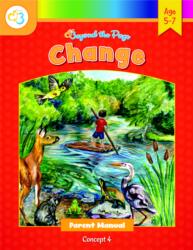
Unit 1: Changes on Planet Earth
Lesson 1
What Causes Change?
Students draw before-and-after pictures and complete sentence stems such as "Once I saw ___ change," "___ changed because ___," and "The change happened over a ___ amount of time" (Activity 3), and then attempt to read their paragraph aloud. Students examine paired pictures and explain what changed between the first and second images and match cause/effect pairs (Activity 1). Students categorize changes as fast or slow and record "F" or "S," and they are prompted to illustrate their own fast and slow examples (Activity 2); skills list also notes practicing naming words, action words, and expressing ideas through writing and conversation.
Lesson 2
What Changed?
Students read and answer guided questions about changes in "Things Change," verbally identifying examples of physical and chemical changes and explaining differences (e.g., burned paper vs. frozen water). Students examine picture pairs on the "How Did It Change?" page and circle which attributes (weight, color, size, amount, location) changed, then record sentences describing examples. Students perform and respond to prompts in "Make a Change," changing amount, color, size, location, and weight and explaining causes and whether changes are positive, negative, or neither.
Lesson 3
Changing Position
Students are asked to look at the book cover and say what is happening and what they think the book will be about, prompting them to describe a scene. Students answer and discuss explicit questions such as how objects start moving and give examples of pushes and pulls, which requires describing actions with details. Students record sentences from the book, list examples found on a neighborhood walk, draw or write names of toys that are pushed or pulled, and explain why objects come back down (gravity), all of which require them to express ideas and observations.
Lesson 4
Changes in the Environment
Students are asked to describe types of weather and discuss how weather changes can force people to change activities (Activity 1), and to illustrate or write two sentences about a time when weather caused them to change an activity. Students are prompted to read about seasonal changes, label and color trees for each season, and explain causes of changes (Seasons Change and Wrapping Up). Students are asked to write or copy a sentence about their favorite season (Handwriting), which invites expressing a personal idea or preference.
Lesson 5
Changes in Location
Students complete picture-based prompts (Where Did He Go?) by supplying prepositions or writing full prepositional phrases to describe a cat's location. Students cut out and move a mouse to match read-aloud sentences and are encouraged to write simple sentences describing the mouse's position (Mouse in the House). Students go outside or look out a window to record three or four sentences that describe the relationship of one object to another and follow or give spoken directions to change and describe their own locations.
Lesson 6
Changes in the Sky
Students list adjectives and phrases to describe the Sun and the Moon (Activity 1), either by writing or dictating their ideas. Students explain why the Sun is important, giving relevant details (plants need sunlight; plants provide food and oxygen). Students act out and then describe the Earth's rotation and revolution and the Moon's revolution, and are asked at the end to describe how objects in the sky change positions.
Lesson 7
Living Things Change
Students are asked verbally to describe how they and animals change (Introduction) and to give examples of changes that occur in animals (Wrapping Up). In Activity 2, students observe paired pictures and describe what changed (number, size, shape, place) and mark whether changes are fast or slow. Activity 3 has students create before-and-after illustrations of changes, and Activity 4 has students write or copy a sentence describing how something changes in size. The skills list also includes presenting dramatic interpretations, which implies opportunities to express ideas aloud.
Lesson 8
Plants and Change
Students are asked targeted oral questions after reading (e.g., What are some things plants are used for? How are plants similar to and different from animals?) that require them to describe things with details. Students name and label plant parts, list what plants need, and sequence life-cycle stages by cutting and gluing pictures or drawing and labeling plants. Students make and record predictions for the plant experiment and discuss observations, providing multiple opportunities to state ideas about events and things aloud.
Lesson 9
Heat Causes Change
Students are asked to describe observable changes and explain causes: they are asked what burned and how it looked different, to observe ice melting and draw/label ice, water, and steam, and to describe batter and the finished cake. Students measure and record candle height over time and answer questions such as "How did the candle change?" and "What caused the candle to change?" Students write or copy a sentence about an observation, organizing details in drawings and data tables.
Lesson 10
Chemical Changes
Students are prompted to observe and explain physical versus chemical changes through hands-on activities (breaking, beating, and cooking eggs; mixing baking soda and vinegar) where they must note observable signs like bubbles or inability to revert to the original state. Students complete a labeled activity page identifying six paired scenarios as chemical or physical and are asked to explain how they made each decision. Students are asked at the end to describe the difference between a physical and a chemical change and to give an example of each, requiring them to use relevant details to support their descriptions.
Lesson 11
People Change the Environment
Students are asked to brainstorm and dictate ideas about positive and negative ways humans change the environment (Activity 1), which requires them to name and describe actions. Activity 3 asks students to describe what is happening in each illustration, explain how it changes the environment, and decide whether the change is positive, negative, or neutral, prompting verbal explanation and justification. Students are also prompted to share ways to reduce, reuse, and recycle and to point out environmental changes on a walk, giving multiple opportunities to speak about people, things, and events.
Final Project
Mobile of Change
Students are asked to discuss and report daily on weather changes and how weather forces people to change activities, which requires verbal description of events and conditions. The skills list explicitly includes "Express ideas through writing and conversation" and "Use new vocabulary in speech and writing," and the final project asks students to explain each mobile piece (before/after) and tell family members what they learned. Classroom prompts (e.g., "Which example of change is your favorite?" and "What have you learned about changes that happen on our planet?") require students to speak about changes and justify their choices.
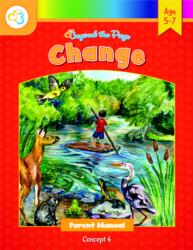
Unit 2: Characters Change
Lesson 1
What's in a Name
Students answer direct comprehension questions about how Chrysanthemum felt before and after school and how others' words affected her (Questions #1-#4), requiring them to describe feelings and events. In Activity 3 (Feeling Phrases) students identify what each phrase communicates about Chrysanthemum's emotions and draw the face she might have, practicing expressing feelings with relevant details. In Activity 5 (Characters Change) students list three characteristics of Chrysanthemum at the beginning and end of the story and write short sentences explaining how and why she changed, practicing descriptive detail and explanation.
Lesson 2
Why Worry?
Students are prompted to talk about their own worries at the start, sharing what they worry about and why. Students answer comprehension questions about Wemberly (e.g., whether she needed to worry and why), which asks them to explain events and feelings. Students complete a "Characters Change" activity where they describe how Wemberly was at the beginning and at the end and fill in "Before Wemberly was ____, but now she is ____," practicing description of a person and reasons for change. The wrap-up asks students to state which story they preferred and explain why, prompting them to express ideas and feelings clearly.
Lesson 3
Is It a Problem?
Students describe character changes on the "Characters Change" page by completing sentence frames (e.g., "At the beginning... you could have said the boy was __ or __" and "The boy changed because __"). In the "Tackling a Problem" activity students write a description of a personal problem, explain why it worries them, identify what is within/out of their control, and list steps to address it, expressing ideas and feelings. In Activity 1 students examine and illustrate how the problem (a thing) changes across the beginning, middle, and end, and Activity 4 has students identify the beginning, middle, and end events of stories.
Lesson 4
Comparing Characters
Students use Venn diagrams to list similarities and differences of characters (Chrysanthemum, Wemberly, and the boy), writing about personalities, situations, families, and illustrations. Students dictate three- or four-sentence summaries that state the beginning, middle, and end of each story. Students complete reflection prompts and the "I Change" page in which they describe who they were before and after solving a problem and explain why, and they answer questions such as which character is most like them and why.
Lesson 5
The Raft
The Skills list explicitly includes "Describe characters, settings, and major events in a story, using key details." Students are prompted to identify character, setting, problem, and solution on the Story Elements activity pages and to complete a Characters Change page comparing the boy at the beginning and end of the story. Multiple discussion prompts and comprehension questions ask students to explain how the boy feels and why, and Activity 4 asks students to create and explain three symbols on their raft that signify important personal details.
Lesson 6
Positive and Negative Change
Students are asked to describe the rat's feelings and to dictate a new ending that shows how and why the character changed (Activity 2). Students discuss their own past changes, illustrate the cause and effect, and write or dictate a sentence or two describing the change, whether it was positive or negative, and what choices they made (Activity 3). The lesson provides example descriptive phrases and encourages students to use interesting words, and it asks students to share their examples of change with family, prompting oral expression.
Final Project
My Own Story
Students are asked to describe 2–3 characters and write three traits for each one, providing explicit practice in describing people. Students are instructed to illustrate and explain the story setting on a blank sheet, giving practice describing places. Students complete a Problem and Solution page with prompts such as "How does the character change from the beginning to the end?" and "Why did the character need to change?", and they dictate and read their story aloud when it is typed and shared, practicing clear expression of events and ideas.
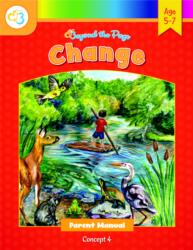
Unit 3: A First Look at History - Change Over Time
Lesson 1
People and Families Change
Students put pictures in chronological order and answer questions comparing how they were different at various ages (Activity 1), which requires them to describe people with specific details. Students measure and record heights on a growth chart and answer questions about when they were tallest/shortest and how much they grew, using numeric and descriptive detail (Activity 2). Students dictate and write about how their family has changed, include non-physical changes, read their ideas aloud, and predict and describe the family in ten years, practicing spoken and written description (Activities 5 and 6; Wrapping Up).
Lesson 2
Understanding Time
Students are prompted to name and talk about something that happened to them in the past, something happening now, and something they would like to happen in the future, supporting practice in speaking about events. In Activity 1 students write or draw responses in the three boxes titled "Yesterday I," "Today I," and "Tomorrow I will," giving opportunities to describe events and plans. Activity 2 asks students to answer spoken questions about changes in their lives and to explain whether items occurred in the past, present, or future, which encourages verbal description of events and sequencing.
Lesson 3
Communities Change
Students are prompted to describe the cover pictures and predict the story (ask what he thinks the story might be about; point out pictures and ask him to describe what he sees). During reading students answer questions about where the story happened, who the characters are, how the environment changed, and which character they would choose and why. In Activity 3 students identify and number communities, point out differences in transportation, clothing, homes, and activities, and in Activity 5 students explain how life would be different in the past and justify which time period they would prefer.
Lesson 4
Past and Present
Students are asked to describe people, places, and things by drawing themselves in a chosen time period and telling a dictated adventure that includes a beginning, middle, and end (Activity 2). Students compare and contrast clothing, homes, transportation, and school and fill a four-column grid to record relevant details for Today, Medieval Europe, Ancient Rome, and Ancient Egypt (Activity 5). Students answer targeted questions about similarities and differences, list five clues about a time period and read them to family, and write a sentence describing how life in the past differs from today (Activities 3, 7, and 8).
Lesson 5
Exploring the Past
Students are asked to find details about elements of culture (homes, clothes, food, travel) and to draw and write or dictate descriptions from the book (Activity 1). Student Activity Pages provide sections for Ancient Egypt, Ancient Rome, and Medieval Europe where students fill in information about homes, clothes, food, and transport. In Activity 4 students write one sentence about each element of culture, assemble a book, and give a presentation to the family to share what they learned.
Lesson 6
Predicting Future Change
Students answer scenario prompts (e.g., "Your dad has gotten a new job in a different town," "You used to forget to brush your teeth most nights") by describing how the change will affect their family, parents, or future, and they record those ideas. Students respond to prompts about feelings (e.g., how the child who receives toys might feel; "How might this change how the old friend feels about you?") and fill in an "I feel ___ about the change" sentence on the "A Change In Me" page. Students dictate and then attempt to read a written description of a personal change, and they write/copy sentences about changes and label outcomes as positive or negative.
Lesson 7
People of the Past
Students read simple biographies and answer explicit prompts such as "How would you describe this person?" and "What did this person do to make a positive change?" (Activity 1). Students read short descriptions of five historical figures, point to the individual described, cut and order them chronologically, and glue descriptions beneath pictures (Activity 2). Students discuss times they or others made positive changes and generate ideas for actions, then write a sentence about a historical person (Activity 3 and Activity 4). The wrap-up asks students to describe people from the past who made positive changes, reinforcing spoken description practice.
Final Project
My Past, Present and Future
Students write descriptions about themselves, their family, home, and actions using prompts such as "I was different because," "Now I am," and "In the future I will be," across multiple activity pages. Students compare elements of culture by writing sentences beginning "In the past __________" and "Today __________" and illustrate those descriptions. Students are asked to read through and present their book or comparison pages to their family, which requires them to express ideas aloud about changes and future feelings.
6: Reading

Unit 1: Semester 1
Lesson 1
Letter Sounds Review I
Students are asked to look at the book cover and answer "What else do you see on the cover?", allowing them to share observations aloud (Activity 5.3). Students identify objects from a video that begin with the short a sound and the teacher prompts recognition that "angry" is a feeling (Activity 1.2). The Weekly Message activity models punctuation and expression, and students are prompted to shout "Exciting!" to show an exclamation point indicates saying something with feeling (Activity 1.1). The Life Application asks students to look for objects that begin with reviewed letter sounds and report them, which requires naming and describing things in the environment.
Lesson 2
Letter Sounds Review II
Students are asked to read the title of The Pig Can and describe what is on the cover (Activity 5.3). Students are asked to answer comprehension questions such as "What do you think this book is about?" and to explain their thinking about whether the pig and the cat can fit in the box. The lesson also asks students to share words they know how to read and spell aloud and to read the simple reader to others, providing opportunities for oral expression.
Lesson 3
Letter Sounds Review III
On Day 5, Activity 5.2 students are asked to "read the title and describe the cover" and then to read the book aloud, pointing to each word. After reading they answer questions such as "What is the bug able to do?", "What does the bug want to be able to do?", and "Why can't he do that?", which prompt students to describe events and actions. In Activity 5.3 students use pictures to determine missing words in sentences and then read each completed sentence aloud, linking images to sentence content.
Lesson 4
Letter Sounds Review IV
Students are asked to answer comprehension questions about the reader (Activity 5.2) such as "Why are the dog and the fox napping?" and "Why aren't the cat and the pig napping?", which asks them to explain events. In Activity 5.3 students build and fill in sentences using word cards, creating and speaking simple sentences. The Life Application "I Spy" activity asks students to find and name objects by sound or color, prompting them to identify and state attributes of things.
Lesson 5
Adding s, More Word Families, Ending with ck
In Activity 4.3 students read Ducks Are Fun and are asked, "Which duck do you think is having the most fun? Why?," prompting them to state an opinion and give a reason. The same activity encourages students to read the book aloud in different voices (whale, mouse, duck) to convey feelings and expression. Activity 1.1 models reading sentences with different intonation (louder for exclamation, rising for question), which gives students practice expressing ideas and feelings through voice.
Lesson 6
Open Syllables and Digraph th
Students are asked to answer comprehension questions after reading the reader This Is..., including "Which of the animals in the book do you think you'd prefer as a pet?", which prompts students to state a preference. The lesson also asks students to read aloud with expression (pointing out the exclamation point and to read "loudly and with feeling") and to form and read complete sentences in Activities 5.1 and 5.3.
Lesson 7
Consonant Digraphs ch, sh, wh, ph
Students are asked to predict and answer comprehension questions about the reader They Get Wet (e.g., "What do you think will happen in this book?"; "Where is the ship at the beginning of the book?"; "Why are the rat and the cat wet at the end?"), requiring them to describe events and locations. Students write sentences from dictation and read them aloud, practicing expression in complete sentences. Students create and say silly sentences that emphasize sounds, which gives them practice producing oral sentences that convey ideas.
Lesson 8
Blends with s
Students read the reader Meg and Dan and the Sled and are asked comprehension questions that require explanation of events ("Near the end, why are Meg and Dan no longer on the sled?" and "Why do you think they stop for a snack?"). Students are also asked a personal-response question that asks them to express a preference ("What would you want for a snack if you were them?"). These tasks require students to state reasons and give a personal reaction aloud.
Lesson 9
Blends with l
Students read Reader #9 (The Club) and answer questions about it such as the color of the flags and what the kids do at the club, which requires them to state details about a place and activities. In Activity 4.3 students are also asked, "If you were in the club, what fun things would you want to do?" which asks them to express ideas and preferences. In Activity 5.1 students create and read sentences aloud using word cards, practicing putting ideas into clear spoken sentences.
Lesson 11
Ending Blends
Students read the reader At Camp and are asked comprehension prompts such as "What do the kids do at camp?" and "What are the kids hunting for?" that require them to describe events. The lesson also asks "What do you think your favorite camp activity would be?" which asks students to state a preference and express an idea or feeling. In Activity 3.2 students name each picture and say the words in each column, providing brief spoken descriptions of pictured items.
Lesson 12
Double ll, ss, ff, zz (FLOSS)
Students read the reader Huff and Puff and answer questions about the story (e.g., identify the insects, explain why the insects follow the kids, and explain why characters are huffing and puffing). Students make up and write sentences using sight words and are asked to read sentences aloud and point to words as they hear them. Students also write dictated sentences and compose a simple sentence on their own (e.g., "The bugs buzz.").
Lesson 13
Glued Sounds ng and nk
Students answer comprehension questions about the reader King Hank (Activity 4.3), including a prompt that asks, "What would you want to do if you were a king?", which asks them to state a personal idea or preference. Students use Making Sentences cards (Activity 5.2) to build sentences from word cards and are encouraged to come up with their own sentences. Students also practice writing and saying dictated sentences (Activity 5.3), reading aloud, and rereading the Weekly Message while locating words that end with ng or nk.
Lesson 14
Three-Letter Beginning Blends
Students read the reader Spring Has Sprung! and are asked comprehension questions such as "What do the kids do at the track?" and "What are some things that you like to do in the spring?", which require orally describing events and personal activities. The Life Application and Wrapping Up sections ask students to share new words they can spell and to make up silly sentences (e.g., "The shrimp shrank in the shrub."), prompting students to express ideas aloud.
Lesson 15
More Ending Blends
Students read Reader #15 (The Raft Trip) and answer comprehension questions, including the open-ended question, "What would you like to see if you went down a river on a raft?" Students also complete Sentence Dictation and are asked to read the dictated sentences aloud to the teacher, practicing oral expression of simple ideas.
Lesson 16
R-Controlled Vowels (ar)
Activity 4.2 asks students to answer open-ended oral questions about a reader (e.g., "What else might you find in a barn on a farm?" "What else might you do when it's dark?"), which requires students to speak about places and things. The Sight Words activities have students generate questions using "which/what/when" and underline question words, requiring them to form and respond to question-based descriptions. Activity 5.2 (Guess My Word) has students listen to descriptive clues and write and say the target word, which engages them in producing brief descriptive responses.
Lesson 17
Semester Review
Students are prompted to name and point to characters and to talk about the different things the characters do (swim, camp, sing, go on a raft trip) in Activity 4.1. Students are asked which reader is their favorite and to explain why, providing an oral prompt to express ideas or preferences. In Activity 4.2 students plan and create their own reader using a planning page with sections for "Characters" and "What Characters Do," and then share their finished reader with others. Several student pages provide space for drawing and writing a scene, which can be used to describe people, places, or events.

Unit 2: Semester 2
Lesson 1
Long Vowels a and i with Silent e
Students read the shared reader In the Fall and answer comprehension questions that ask them to list things Lin and Dev like to do and to identify what one character does while the other bakes, requiring students to describe events and actions. The reader activity also asks students to respond to the question "Of all the things that Lin and Dev do in the fall, which do you like to do most?", prompting students to state a personal preference (an expression of feeling). The Wrapping Up activity asks students to share long a and long i words they know, providing an opportunity to speak about things with relevant examples.
Lesson 2
Long Vowels o, u, and e with Silent e
Students read the short reader They Chose To Doze and answer comprehension questions such as "What did the family do on their trip?" and "Who fell off of the mule?", which requires them to describe events and characters. Students are also asked a preference question—"Would you rather ride mules up the dome or slide down the dome using ropes?"—prompting them to state a choice and express an opinion. Students read aloud and reread passages and are asked to identify words and parts of the text (quotation marks and dialogue), which provides opportunities for oral response.
Lesson 3
Hard and Soft c and g
Students read the reader These Mice and answer comprehension questions asking what the mice use to make beds and what they sit on to eat cake, and they are asked "Why do you think the mice like their home?" (Activity 5.2). The Weekly Message and Activity 1.1 prompt students to say and list words that begin with c and g and to read or sound out words aloud. Activity 5.3 has students write and then read sentences such as "Many mice are in the cage," providing brief opportunities to express ideas about characters and settings.
Lesson 4
More R-Controlled Vowels (er, ir, or, ur)
Students read The Bird Is Third and answer comprehension questions such as "Who won the race?" and "Which animal came in last?" that require them to describe events. They are also asked, "Are you surprised that the cat won the race? Who did you think would win? Why?" which prompts students to express their reactions and reasons. At the end of the week, students are asked to use sight words in a sentence and to read the Weekly Message aloud and point to or read words they know, giving brief opportunities to state observations (e.g., what they notice about a word).
Lesson 5
Long a Spellings ai, ay
On Day 5 students read The Gray Day and answer comprehension and opinion questions such as "What do the boys play with indoors?," "What animal do they see on the drain outside?," "What do you think the boys would do if they went outside?," and "Do you like rainy days? Why or why not?," which require describing events and stating feelings. The Life Application asks students to create silly long a sentences (e.g., describing a snake and a snail playing with a train in the rain), prompting students to produce descriptive sentences about people/animals and events.
Lesson 6
Long e Spellings ee, ey, ea
Students answer comprehension questions about the reader What Do You Eat?, including factual recall (e.g., "What does the worm eat?" and "How many beans are the birds eating?") and a prompt to state personal preferences ("What foods do you most like to eat? What foods do you like the least?"). Students make sentences using word cards and read them aloud during the Making Sentences activity, practicing spoken sentence construction. Students read and then read aloud dictated sentences such as "We eat a lot" and "The cake is sweet," which require simple descriptive language and expression.
Lesson 7
Long i Spellings y, igh, ie
Students read The Dark Night and answer comprehension questions that ask them to identify what Tom and Val see in the sky and what they dream about. The lesson also asks students to respond to a personal prompt: "What kinds of dreams do you have when you're sleeping?", which requires students to describe their own experiences. The Life Application asks students to explain to a family member or friend what they know about ways to spell long i and to give examples, providing an opportunity for oral explanation.
Lesson 8
Long o Spellings ow, oa, oe
Students read The Slow Boat aloud and answer specific comprehension questions (e.g., "How many boats are in the race?" and "What color is the boat that wins the race?"), which requires them to identify and state relevant details about an event. Students are also asked to answer a preference question ("If you were on a boat, would you want it to go fast or slow?"), prompting them to express an idea or feeling. The lesson asks students to read the weekly message aloud and to point out long-o words, providing brief opportunities to speak about text content.
Lesson 9
Long u Spellings ue, ew, ou
Students answer comprehension questions about the reader (e.g., "What does Tom add to the stew?", "What color does Val add to the stew?") and are asked a personal-response question ("If you were going to make a funny stew, what would you put in it?") that asks them to express an idea. Students are asked to explain word meanings in their own words (e.g., explain "blue" vs. "blew" and explain what changed when adding silent e), which requires them to speak and clarify ideas.
Lesson 10
Other Long Vowel Patterns
Students answer comprehension questions after reading The Wild Colt (e.g., "Why is the colt hard to find in the herd?" and "How does the man stop the colt from bolting?"), requiring them to describe events and give reasons. Students are prompted to express opinions and feelings about the story with a question like, "Would you want to take care of a wild colt? Would you want to try to train one?" Students practice putting words into sentences during sight-word activities and sentence dictation (e.g., "The child is kind."), producing descriptive statements aloud and in writing.
Lesson 12
Other Vowel Sounds oi, oy
Students read a short reader and answer questions such as "What do you think Dan's new toy is?" and "What is your favorite toy? Why?", prompting them to state preferences and give reasons. Students create sentences from word cards (Activity 4.1) and are asked to read and say sentences aloud, and the Life Application asks them to make up silly sentences using learned words. Sentence dictation and oral reading activities require students to express ideas clearly in spoken and written form.
Lesson 13
Other Vowel Sounds ou, ow
Students read The Hound and the Owl and answer comprehension questions such as "What does the hound do during the day?" and "Why do you think the hound howls at the owl?", prompting them to describe an animal's actions and infer reasons. In the word-sorting activity, students must sort cut-out words into groups and then explain their grouping choices aloud. Students are also asked to explain how they knew how to spell words and to explain in their own words when to use ou versus ow, which requires oral explanation of ideas.
Lesson 14
Other Vowel Sounds aw, au
On Day 5 (Reader #14) students read The Pups and answer questions such as "Where do the pups sleep?" and "What are some of the things the puppies in the story do?", prompting them to describe places and actions. In Activity 2.1 students sort words and are asked to explain their groups, requiring them to describe their reasoning and characteristics of word sets. In Activity 3.1 and other activities students are asked to explain word meanings (e.g., multiple meanings of "saw") and to read aloud, which elicits spoken descriptions of words and concepts.
Lesson 15
These Make More Than One Sound: oo and ea
In Activity 5.1 students read The Bad Bear and then answer questions such as "What are some of the naughty things the bear does?" and "What happens when the bear's mom finds her?", which asks them to recount events and actions. Activity 4.2 (Question Words) includes a sample question, "Why is the bear mad?", prompting students to consider and verbalize a character's feelings. Several comprehension prompts (e.g., "What else do you think the bear can do to cause trouble?") ask students to generate ideas about events and character behavior.
Lesson 16
Silent Starts: kn, wr, gn
Students are asked to answer specific comprehension questions about Reader #16 (The Gnats), e.g., "What do the gnats do to the kids at the playground?" and "What do the gnats do at the picnic?", which asks them to describe events. Students are also asked, "What do gnats do that you think is annoying?", which prompts them to express an opinion or feeling. Other activities ask students to list things they have learned about reading and to explain what they know about letters and vowel sounds, providing additional opportunities to describe ideas.
Lesson 17
Year-End Review
Students look at pictures and write one or two sentences describing each image (for example, ducks on a dock and children playing soccer) in Activity 2.2 and then read their sentences aloud. Students are prompted to use words they have worked with previously and to think about how sentences begin and end, which supports clarity of expression. In the Wrapping Up section, students are asked to talk about favorite activities and share their work, prompting them to express ideas and feelings about their experiences.