


Kindergarten - ELA
1: Letters

Unit 2: H - Hondo and Fabian
Lesson 1
Day 1
The Skills list explicitly states the target: with prompting and support, compare and contrast the adventures and experiences of characters. Questions #1–#3 ask students to identify the two characters and to describe differences and specific activities each character did, requiring students to note each character's experiences. Activity 1 asks students to sort various activities as Hondo or Fabian and to act out each activity, which has students directly compare which adventures belong to which character.
Lesson 3
Day 3
Students are asked in Review to name the two animals in Hondo and Fabian and to give one way the two characters are alike and one way they are different. The retelling prompt asks students to recount what happened at the beginning, next, and the end of the story, which has them recount the characters' experiences. Questioning about how the characters feel at the end of their day and Activity 4 asking students to describe and record words or phrases about Fabian and Hondo ask students to consider characters' experiences and attributes.
Lesson 4
Day 4
Activity 2 directs the child to notice that Hondo and Fabian "were two animals that did some things together and some things apart" and to look at pictures of them together. Activity 1 asks the child to page through the book to see if Hondo or Fabian moved in other ways, prompting attention to each character's actions. The painting task has the child describe an activity they do with a friend, linking personal experience to the characters' shared and separate actions.

Unit 3: I - The Little Island
Lesson 2
Day 2
Activity 1 has students page through The Little Island and note how the pictures progress through the seasons, with prompts to talk about how the different seasons affected the island. Students are asked to compare those effects to their own experience by being asked how the different seasons affect them. Students role-play a picnic on the island and respond to imagined seasonal changes by choosing appropriate gear and describing what is changing.

Unit 5: L - We're Going on a Leaf Hunt
Lesson 1
Day 1
Students are prompted to retell familiar stories, as shown by the listed skill 'With prompting and support, retell familiar stories, including key details.' Students answer targeted questions about the characters' experience (e.g., What do the children want to find? Do you think the children enjoyed their leaf hunt? What challenges or obstacles did the children face? How did the children feel at the end?), which requires describing characters' adventures and feelings. Students are asked to relate the story to personal experiences (Have you ever gone on a search for something?), supporting discussion of experiences.

Unit 7: E - But No Elephants
Lesson 1
Day 1
QUESTION #1 asks students to describe Grandma Tildy's life at the beginning and at the end of the story and to identify what changed, prompting comparison of different points in the character's experience. QUESTION #3 asks students to name predicaments Grandma Tildy faced and explain how she solved each, having students identify and recount the character's adventures and responses. Activity 2 has students put the animal visitors in order and retell who came first, second, third, etc., supporting retelling of characters' actions and sequences.
Lesson 4
Day 4
Students examine a single story (Grandma Tildy) and discuss what each pet did (canary, beaver, turtle, woodpecker, elephant) and whether each provided a "want" or a "need." Students sort a collection of household objects into wants and needs and explain their choices, counting items in each category. Students create stick puppets and retell the story, holding up each animal as it is introduced, which requires them to recount the characters' actions and experiences.

Unit 8: C - Millions of Cats
Lesson 1
Day 1
The Skills list explicitly includes the target standard: with prompting and support, compare and contrast the adventures and experiences of characters in familiar stories. Activity 2 directs students to reread Hondo and Fabian and Millions of Cats, then construct a large Venn diagram to compare the cats from both stories. The Venn diagram prompts students to list similarities and differences, including experiential items such as Fabian staying indoors versus the Millions of Cats having a long outdoor adventure.

Unit 10: O - Owl Babies
Lesson 4
Day 4
In Activity 1, students are asked to look at pictures of different owls, observe what is different and similar about them, and click to learn what makes each owl like other owls and what makes them unique. Students are explicitly asked to compare the owls in the book Owl Babies with real owls by identifying attributes the book owls have that real owls do not (for example, talking and human-like feelings). The Reader's Theatre provides characters (Sarah, Percy, Bill) expressing different emotions and reactions, which presents distinct character experiences students can hear and perform.

Unit 11: S - Seasons of Arnold's Apple Tree
Lesson 1
Day 1
Students are asked to look at what Arnold does with his tree during each season and to describe those activities (Question #2), prompting them to attend to a character's experiences across different parts of the story. Students are also guided to look at the cover and illustrations and to describe what they see, supporting attention to story events and moments. The skills list explicitly includes that, with prompting and support, students identify characters, settings, and major events and describe relationships between illustrations and the story, which prepares them to notice and talk about characters' experiences.
Lesson 3
Day 3
Students reread The Seasons of Arnold's Apple Tree and are asked to locate and read the sight word "some" in context. Students answer a comprehension question asking, "What gift did the tree give Arnold in each season?", which requires identifying Arnold's experiences across the seasons. Students also describe seasonal characteristics using adjectives from a poem, connecting seasonal experiences to language.
Lesson 4
Day 4
Activity 1 directs the child to look at the page where Arnold's family works together to make the apple pie and the cider and asks how each family member contributes to the project. The activity asks the child to explain why the family worked together, prompting discussion of character actions and motivations. These prompts require the child to consider multiple characters' roles and experiences in that story.

Unit 14: B - Blueberries for Sal
Lesson 1
Day 1
Students are asked who was looking for blueberries and why each wanted blueberries (Questions 1 and 2), which prompts comparison of characters' goals and motivations. Students are asked what each child was supposed to do and what happened when they met the wrong mothers (Questions 3 and 4), prompting comparison of actions and experiences. Students are asked how the bears and the people felt about each other (Question 5), prompting comparison of characters' emotions and reactions.
Lesson 2
Day 2
During Review, students are asked to name one similarity and one difference between Little Sal and Little Bear, prompting a direct comparison of characters. In Activity 3, students page through the book, read descriptions of how characters move (e.g., hustled, padded up, walked slowly) and physically act out each character's movements, which requires noticing different character experiences and behaviors. Activity 1 has students find picture clues about the story's time setting, prompting them to infer aspects of the characters' context.

Unit 16: N - Night in the Country
Lesson 2
Day 2
Students cut out and dress two paper-doll characters as a farm (country) worker and a city office worker, then glue craft sticks to make puppets. Students take roles and ask and answer a set of parallel questions (Where do you get your fruit? Where do you get your vegetables? What do you like to do for fun? etc.), comparing where each character gets food, shops, and spends leisure time. Students practice speaking and responding about differences in daily experiences by role-playing the two characters.

Unit 17: M - Marshmallow
Lesson 1
Day 1
Students read the book Marshmallow and answer targeted comprehension questions that ask how Marshmallow acted when he first came, why Oliver hesitated before pouncing, and why Oliver decided to be friendly, which requires describing characters' actions and experiences. Question #2 asks students to identify an advantage and a disadvantage of having a rabbit, prompting students to analyze a character-related experience. Activity 2 has students respond to friendship scenarios, practicing perspective-taking about social experiences similar to those in the story.
Lesson 4
Day 4
The lesson instructs an adult to "Talk with your child about how Owen and Mzee's friendship was similar to and different from Owen and Marshmallow's," explicitly prompting students to compare and contrast two sets of characters. The text provides concrete examples of similarities and differences for discussion (older vs. younger animal, indoor vs. outdoor, danger/separation vs. pet context). An optional extension asks students to create a Venn diagram comparing Owen and Mzee and Oliver and Marshmallow, giving a graphic organizer for comparing experiences.

Unit 19: J - Jump Frog Jump
Lesson 1
Day 1
Students are asked to identify which animals the frog escaped and which did not (Questions #3 and #4), requiring them to note different outcomes for characters. In Activity 1, students cut out and order story sequence pictures showing interactions between the frog and other characters (fish, snake, turtle, fly, kids), so students reconstruct multiple characters' experiences across the story. The student activity pages present scenes with captions for each character interaction, which students handle as separate events to sequence and review.

Unit 20: K - Kindness
Lesson 3
Day 3
Students reread Harry the Happy Mouse and are asked which act of kindness they found especially kind and how Harry helping the frog resulted in a series of kind acts, which has them consider events and outcomes for characters. Students reread pages about the mole and the bat and are asked questions about those characters. In Activity 3 (Animals in Fiction) students identify for each animal (mouse, frog, mole, bat) actions that are animal-like and actions that are human-like and record those differences on a chart.

Unit 22: Y - Little Blue and Little Yellow
Lesson 1
Day 1
Students are asked detailed comprehension questions about Little Blue and Little Yellow's actions and experiences (e.g., what they did for fun, what happened when they hugged, what they did while green, and how their families felt). One question explicitly asks a comparative question: "Where does Little Yellow live compared to Little Blue?" Students are prompted to make observations and predictions from the cover and to recall and describe events from the story after a read-aloud.
Lesson 2
Day 2
Students are asked to recall what they remember about friendship from the story Marshmallow and what makes a good citizen from Harry the Happy Mouse. Students are prompted to look back at pictures in Little Blue and Little Yellow and identify ways the characters were good friends and good citizens. Students are asked about a specific experience (Little Blue leaving home and ignoring rules) and to explain why obedience mattered for safety.
Lesson 4
Day 4
Activity 2 has students look back through Little Blue and Little Yellow and answer questions about how the author shows parents, feelings, the park, and the mountain (e.g., using bigger shapes, black/red pages, green for the park). Activity 2 also asks students to tear two pieces of construction paper to represent two characters, tell what happened to those characters, choose one scene to glue, and write or dictate what is happening.

Unit 24: Q - The Quilt Story
Lesson 1
Day 1
Students read The Quilt Story and are asked Question #2: "How did the quilt help both girls?", which prompts them to identify a shared experience of two characters. Students are also asked to identify clues about when parts of the story take place (style of dress, travel by horse vs. car), which engages them in noticing differences in story events across time.
Lesson 2
Day 2
Students are asked to identify ways the pioneer family in The Quilt Story used natural resources to meet needs (wood for furniture, candles, tea, etc.) and to identify landforms mentioned or shown (hills, prairie, river). Students view information and a reenactment about Daniel Boone and are prompted to talk about the character qualities he must have had and whether they would enjoy that kind of exploration. Students are prompted to see that life as a pioneer was both dangerous and exciting, which engages them with characters' experiences and adventures.
Lesson 3
Day 3
Activity 3 directs the child to compare and contrast the setting and the characters at the beginning of the story to those at the end using a Then and Now Venn diagram and to record ideas on the page. The provided Venn diagram answers list specific experiences and events (e.g., Abigail having a tea party, playing hide-and-seek, traveling in a covered wagon vs. the later girl traveling in a car, having a cat) that students can use to identify similarities and differences. The instruction to have the child tell the story back in his own words also prompts recall of character experiences to support the comparison task.
Lesson 5
Day 5
Activity 2 asks the child to look at the picture of Abigail and the modern girl, consider their facial expressions, and explain how those expressions reveal what is going on in the story. The child is encouraged to spend independent time looking at words and pictures and then point out an expression or two and explain what he learns about the story from it. The prompts ask about both characters' faces, inviting attention to similarities or differences in their expressions.

Unit 25: X - An Extraordinary Egg
Lesson 1
Day 1
The Skills list explicitly includes the target standard. The lesson contains Question #3 that asks the child to talk about similarities and differences between the friendship of Chicken and Jessica and the friendship of Marshmallow and Oliver from another familiar story. The lesson provides guiding prompts and a sample answer describing specific similarities and differences (different kinds of animals, how they behave, whether they talk) for students to use in comparison.

Unit 26: Z - Greedy Zebra
Lesson 1
Day 1
Students are asked to predict how the zebra will be greedy and to explain after reading how the zebra was greedy and what happened because of that greed. Students are asked whether the zebra deserved the result and to give reasons for their thinking. The text identifies the story as a folktale and names other folktale examples (e.g., why giraffes have long necks) which situates the zebra story among similar tales.
Lesson 5
Day 5
Activity 2 asks students to identify books with animal characters and to choose two of those books and identify one similarity and one difference between the books' characters. Activity 2 also asks students to choose two books and identify the setting of each, and to recall subjects of nonfiction books. Activity 3 asks students to think about what they liked about the characters, the setting, and the events of their favorite book and to draw and write about a scene.
2: Holidays

Unit 27: Halloween
Lesson 1
Day 1
The lesson's Skills list explicitly names the standard: "With prompting and support, compare and contrast the adventures and experiences of characters in familiar stories." The reading activity directs students to read Goodnight Moon and Goodnight Goon and to observe and discuss similarities and differences between the two books (e.g., cover style, room layout, rhyming words). Question #2 specifically asks students to note similarities and differences after reading, prompting direct comparison of elements between the two stories.

Unit 28: Thanksgiving
Lesson 3
Day 3
Students reread the picture book Thanksgiving Is... by Gail Gibbons and discuss content from the pages about kinds of feasts. Students read a Pocahontas article and are asked to discuss how the help Pocahontas provided was different from the help the Native Americans at Plymouth provided. Students create and talk about a cornucopia of thanks that includes discussion of the Pilgrims' experience of receiving help from Native Americans.

Unit 30: February Celebrations
Lesson 1
Day 1
Students hear and discuss the story The Biggest Valentine Ever and answer specific questions about how Clayton and Desmond's argument started, what they did when they argued, and how they felt about the valentines they made. Students are asked what the characters decided to do the next day and how that turned out, prompting recall of each character's actions and experiences. Question prompts ask students to brainstorm other options the characters could have used when they had different opinions, which engages students in thinking about characters' choices and reactions.
2: Similarities and Differences
Unit 1: Amazing Attributes
Lesson 10
Earth Materials: Rocks, Soil, and Water
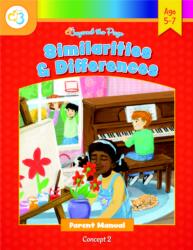
The lesson has students read two familiar stories (Up in the Garden and Down in the Dirt and Over and Under the Pond) and then answer guided questions that ask them to compare the books (e.g., compare the two covers and discuss whether they have the same illustrator). Day 2 includes explicit prompts asking students to compare writing patterns and to state "How are the characters similar and different?" and to explain preferences about spending time in the pond or garden. The Skills list also explicitly includes "Compare and contrast the adventures and experiences of characters in stories," signaling that students will practice that skill with prompting and support.
Unit 3: We're the Same, We're Different
Lesson 2
Physical Characteristics
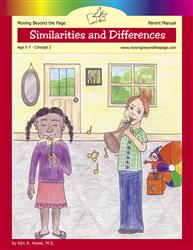
Students listen to the story "Different Friends," retell it in their own words, and put event boxes in order to sequence beginning, middle, and end. Students answer directed questions about what Susan and Casey wanted, whether they had fun, and whether they became friends, prompting consideration of each character's experiences. The teacher prompts discussion of how the two friends were physically different, and students describe physical characteristics of Susan and Casey.
Lesson 5
Shapesville
Students are asked to identify the shape of each character as the story is read and to describe each shape's physical characteristics (color, sides, angles, eye color). Students are prompted to "review the personality and interests of each shape" and answer questions such as "How are the shapes' personalities different?" and "What are some of the interests of the shapes?" Activities ask students to select a shape they are similar to and explain why, and to explain why a chosen shape represents a family member.
Lesson 6
Different Families
Students are asked to read selected pages of A Life Like Mine that profile children (Vincent, Natalie, Michael, Ivana) and to locate those children on a map. Students identify pictures of families, describe clothing, activities, and interactions, and complete comparison tasks by filling sentence prompts or a Venn diagram that ask them to state ways their family is similar to and different from a family in the book. Students draw and write (or dictate) illustrations and responses that directly compare experiences and daily activities of children in the text with their own family.
Lesson 11
Being Part of a Group
Students are asked to read pages 98–113 of A Life Like Mine and discuss identity, nationality, and religion, including ways their nationality or religion is similar to and different from the children in the book. In Activity 1 students cut out pictures of children and are prompted to think of ways the kids are alike and different and to sort them into groups. In Activity 2 students draw members of a group, complete and read a paragraph about that group, and discuss what it means to belong.
Final Project
Differences Make the World Go 'Round
Students create a book that directly asks them to compare themselves with a child from another country by completing sentence frames for location, food, hobbies, homes, clothing, transportation, and holidays. Students write or draw responses in labeled pages (e.g., "I live in..." and "___ lives in...") and complete a "Similarities" page that prompts them to state ways they are the same. Students are prompted to locate the country on a map and read about the life and experiences of the child they choose, gathering details to compare.
4: Change
Unit 2: Characters Change
Lesson 2
Why Worry?
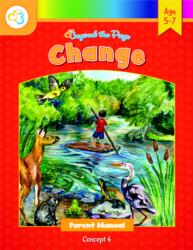
The Skills section explicitly lists "Compare and contrast the adventures and experiences of characters in stories." Activity 2 asks the child how Wemberly and Chrysanthemum are similar and different and directs the child to complete a "Characters Change" page describing how Wemberly changed from the beginning to the end. The lesson includes teacher prompts and discussion questions that provide prompting and support for students to compare the two characters' experiences.
Lesson 3
Is It a Problem?
Students are prompted to identify the beginning, middle, and end for three familiar stories (Chrysanthemum, Wemberly Worried, What Do You Do With a Problem?) and arrange events, which requires attending to each character's experiences over the story. Activity 5 explicitly asks students to state how the boy in What Do You Do With a Problem? is similar to and different from Wemberly, prompting direct comparison of characters and their changes. The skills list explicitly includes "Compare and contrast the adventures and experiences of characters in stories," and the Characters Change page has sentence prompts that require students to name similarities, differences, and reasons for change.
Lesson 4
Comparing Characters
Students are prompted to compare characters directly using Venn diagrams in Activity 1 (Chrysanthemum and Wemberly) and Activity 2 (Wemberly and the Boy with a Problem), writing similarities and differences for each character. Students dictate three-sentence summaries (beginning, middle, end) for Wemberly and the boy and answer explicit questions such as "How are the characters' situations similar?" and "What can we learn from both characters?" Students match causes and effects from the stories in Activity 4, linking events in characters' experiences to outcomes.
Lesson 5
The Raft
The lesson's Skills list explicitly includes "Compare and contrast the adventures and experiences of characters in stories." Activity 7 (Story Elements) asks students to identify character, setting, problem, and solution for each of the four stories and to paste titles/characters so they examine elements across stories. The matching page and comparison chart present four story summaries (Chrysanthemum, Wemberly Worried, What Do You Do With a Problem?, The Raft) and ask students to link characters with problems and solutions, which requires examining different characters' experiences. Activity 1 and Activity 8 prompt students to compare narrator perspective and how the boy changes from the beginning to the end, supporting cross-story and within-story comparisons.
Lesson 6
Positive and Negative Change
The lesson explicitly lists comparing and contrasting the adventures and experiences of characters as a skill. In Activity 3, students are asked to discuss multiple familiar stories (What Do You Do With a Problem?, Chrysanthemum, The Raft, Wemberly), consider how characters responded to situations, and reflect on choices that led to positive or negative change. In Activity 2, students dictate an alternate ending for the rat and explain how and why the rat changed, which asks them to analyze a character's experience over time.
Unit 3: A First Look at History - Change Over Time
Lesson 3
Communities Change
Students are asked to identify the characters in The House on Maple Street and to say which child they would like to be and why (Activity 1 and Activity 5). Students number and sequence the communities/children in the order they lived on the land and point out differences in transportation, clothing, homes, and activities (Activity 3). Students place events and nature scenes in chronological order and match event captions with pictures, which requires comparing how experiences and environments change over time (Activity 2 and Day 2 activities).
Lesson 4
Past and Present
Students read first-person day-in-the-life sections for two young people from different time periods (Activity 3) and are prompted to point out differences in setting, clothing, and other details. Students answer targeted compare/contrast questions such as how a school day for this boy is different from yours, how the teenagers' lives differ, and how the kids from the two time periods are different. Students draw one of the historical children and themselves, complete written comparison prompts (Activity 4), and order/compare homes, transportation, clothing, and school across time periods (Activity 5).
6: Reading

Unit 1: Semester 1
Lesson 4
Letter Sounds Review IV
Students read Reader #4 (The Cat, the Pig, the Dog, and the Fox) aloud and are asked specific comprehension questions about the characters' end-of-book states: "Why are the dog and the fox napping at the end of the book?" and "Why aren't the cat and the pig napping?" Students are encouraged to point to words as they read and to explain that the dog and fox had been running while the cat and pig had been sitting.
Lesson 5
Adding s, More Word Families, Ending with ck
Students read Reader #5 Ducks Are Fun independently and then are asked, "Which duck do you think is having the most fun? Why?" The lesson also asks students to re-read a previous reader (The Cat, the Pig, the Dog, and the Fox) and to read the first five readers to family and friends, giving opportunities to consider characters and events. The activities encourage students to talk about characters (e.g., which duck is having the most fun) and to express reasons for their answers.
Lesson 17
Semester Review
Students read multiple short readers (The Club, At Camp, King Hank, Spring Has Sprung!, The Raft Trip) and are asked to point to or name characters and describe what each character does (they swim, camp in a tent, sing songs, go on a raft trip). Students are asked which reader is their favorite and why, prompting them to compare the experiences or events across stories. Students complete a Planning My Reader page that asks for "Characters" and "What Characters Do," and then write their own reader with something different happening on each page, requiring them to represent different character experiences.

Unit 2: Semester 2
Lesson 1
Long Vowels a and i with Silent e
Students read the reader "In the Fall" and answer comprehension questions that ask about Lin and Dev's activities (e.g., "What are some of the things that Lin and Dev like to do in the fall?"). Students also answer a question about what one character does while the other makes cakes, requiring them to identify each character's actions. These prompts require students to recall the adventures and experiences of two characters in a familiar story.
Lesson 4
More R-Controlled Vowels (er, ir, or, ur)
Students read Reader #4 The Bird Is Third and answer directed questions such as "Who won the race?" and "Which animal came in last?" Activity 5.2 also asks students to reflect: "Are you surprised that the cat won the race? Who did you think would win? Why?" The lesson also encourages re-reading a previous reader (These Mice), so students engage with more than one familiar story over the week.
Lesson 7
Long i Spellings y, igh, ie
On Day 5 students read Reader #7 — The Dark Night and then answer questions asking what Tom and Val see in the sky and what each dreams about. The comprehension questions require students to identify each character's experiences (e.g., Tom dreams of pie; Val dreams of mice).
Lesson 9
Long u Spellings ue, ew, ou
On Day 5 students read the reader Would You Eat It? and answer questions about characters (e.g., "What does Tom add to the stew?" and "What color does Val add to the stew?"). The activities prompt students to identify and explain character actions and to retell details from the story. There is also an invitation to reread a previous reader (The Slow Boat), which could allow discussion of characters across readings.