


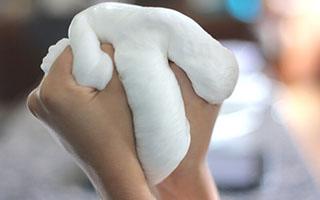
 From the day they're born, children instinctively use their senses to discover and understand the world around them. For example, babies put everything they can get their hands on into their mouths. These taste tests, while distressing to many parents, give children information about what is hard or soft, what is cold or warm, what is smooth or bumpy. Sensory play facilitates learning through children's use of sight, smell, touch, hearing, and taste, as well as two lesser-known senses: body awareness and balance.
Sensory play is important for all kids, but even more so for those who have sensory integration issues. These experiences help to create connections between nerves in the pathways of the brain, laying the groundwork for more complex learning down the road. Sensory play also has a calming effect on many children.
Benefits of Sensory Play
Sensory play feels like fun, not learning, but it helps kids better understand and process the stimuli all around them.- Sensory activities support both fine and gross motor skills (for example, playing with clay or a bowl of play-dough can help prepare kids for tasks like writing, buttoning buttons, and tying their own shoes!), cognitive improvement, problem-solving, and social interaction.
- Helps kids learn the attributes of sensory items (warm, cold, dry, fuzzy). This can help build your child's vocabulary and language development skills.
- This type of learning enhances memory.
- Sensory play is often useful for calming down a child who might be feeling anxious. Parents may notice their children are calmer after playing in the bath, running around outside, or playing a game.
- Activities that ‘exercise' your child's senses are known to help kids counteract restlessness or boredom.
- Sensory activities provide practice in processing situations with a lot of stimuli (think a loud environment with a lot of background noise). This practice allows children to sort through their senses more efficiently, while having fun at the same time.
Activity Ideas for Sensory Play
One of the best things about taking part in sensory activities with your kids is that they're tons of fun and oftentimes really easy to set up! Here are some fun and easy sensory play ideas:- Dance on a bubble wrap runway — Next time you receive a package in the mail, make sure you save the bubble wrap that came with it. Tape the bubble wrap to the floor and start a dance party. If you have more than one child, make it a contest to see who can pop all the bubbles first. Mark your calendar and do this on Bubblewrap Appreciation Day, Jan. 27!
- Start your own garden — Kids will love playing in the dirt as you plant flowers or even start an herb or vegetable garden. You can get crafty and make upcycled planters and homemade markers. If you're feeling ambitious, you can make your own mulch out of shredded paper, cardboard, or lawn clippings. After some patience, you and your kids can enjoy eating the results of your efforts.
- Set up an "emergency room" — Pretend to be emergency room staff and perform CPR on dolls or stuffed animals. (If you need a refresher for the sake of authenticity or because it's just a good idea, there are lots of great online CPR certification courses.)
- Make squishy bags — Made by mixing flour, water, and food coloring in a zip-top bag, these squishy bags can be used to help children learn letters, numbers, and shapes. The idea is to place the sealed bag (without any air trapped inside) on a flat surface and then use tools (fingers or Q-tips work great) to displace the flour and water mix, creating letters or a drawing. These bags are great because they don't make much of a mess.
- Make homemade musical instruments — Start a band together! Before you recycle that oatmeal canister, paper towel tube, or tissue box, consider using it to make a homemade instrument. Create maracas out of plastic Easter eggs filled with beans, or drums from tin cans. You might be surprised how many ways you can make music with household objects.
- Create sensory bins — Many families and classrooms utilize sensory bins. Their purpose is to create a tactile experience for your children while keeping all the mess that often accompanies sensory play bins contained. Here are some tips for making your own sensory bin:
- Sensory bins are available for purchase online but can be made out of something as simple as an old storage container, an old cardboard box, or even a baking dish, as long as the bin is large enough for your children to explore without spilling any of the contents out of the container. Larger sensory bins can also be used by more than one child at a time, promoting social skills, a sense of cooperation, and emotional development.
- After you've located your container, you just have to decide what to fill it with. Some options for filler include sand, rice, rainbow-colored noodles, cornmeal, ice cubes, shaving foam, wet newspaper — the possibilities are endless. Adding dye to your filler when possible helps your children experience multiple senses at the same time.
- When thinking about your filler, consider making your sensory bin based on a theme. Some themes include holidays, seasons, or favorite books, movies, or TV shows.
- Including various items your child can use to play with the filler — such as measuring cups, spoons, plastic jars or funnels — helps to improve their fine motor skills. If your sensory bin includes water, consider adding sponges and rubber ducks to the bin for your kids to play with.
- The younger your child is, the harder it is to avoid a mess when it comes to sensory play, so make sure you have a broom and dustpan handy to clean up any spills. Putting a sheet or tarp underneath your sensory bin can also help avoid too much mess. If you're playing with things like water or shaving cream, consider making the bathtub or kitchen sink your bin of choice.
- Play balloon volleyball — Let kids try to blow up balloons themselves. They'll be surprised how hard it is! Then lend a hand and start a rousing game of balloon tennis or volleyball, using your hands, heads, and feet to try to keep the balloons aloft.
- Make homemade "snow" — It takes only two ingredients — hair conditioner and baking soda — to make homemade snow. You can put it in the fridge or play with it at room temperature. Fill a plastic bin and use toy trucks to shovel it or have Arctic animals play in it.
- Feast on tasty textures — Make a dessert buffet with as many different textures as you can think of — crunchy, squishy, smooth, lumpy, crispy, hard. You can include flavored gelatin, strawberries with homemade whipped cream, pretzels dipped in chocolate, banana pudding, Rice Krispie treats, fudge, homemade hard candy, and more.
Author Note
Jackie Nunes is a blogger at WonderMoms.org. She is a former pediatric nurse and now a full-time homeschool educator. She and her husband have three children. Their middle child suffered a traumatic brain injury when she was 4. Now 11 years old, she is hearing impaired and uses a wheelchair. Jackie and two other moms created Wonder Moms as a project to share real talk, helpful information, and practical advice with parents of kids who have intellectual disabilities, Down syndrome, autism, language and speech delays, deafness, chronic illness, and traumatic brain injury.
